Hanoi Metro Expansion 2026–2035: New Lines, Airport Connections and What Travelers Should Know
Updated: November 2026
Hanoi, Vietnam's historic capital, is entering an ambitious new era of urban transportation. Famous for its ancient temples, bustling Old Quarter, colonial architecture, street food, and millions of motorbikes, the city is gradually developing a modern metro network that could transform how residents and international travelers move around.
The Hanoi Metro expansion from 2026 to 2035 is one of the capital's most important infrastructure initiatives. With new railway lines, planned connections to Noi Bai International Airport, and improved access to emerging urban districts, Hanoi aims to create a more efficient and sustainable public transportation system.
For international visitors, three questions matter most: Which metro lines can you use today? Which routes are expected to open in the coming years? And how will the expanding network make exploring Hanoi easier?
As of November 2026, Hanoi has two operational metro sections, three major construction projects underway, and five additional lines that entered implementation procedures in 2026.
Here is what travelers should know about Hanoi's changing transportation landscape.
1. Hanoi Metro in 2026: Which Lines Are Already Operating?
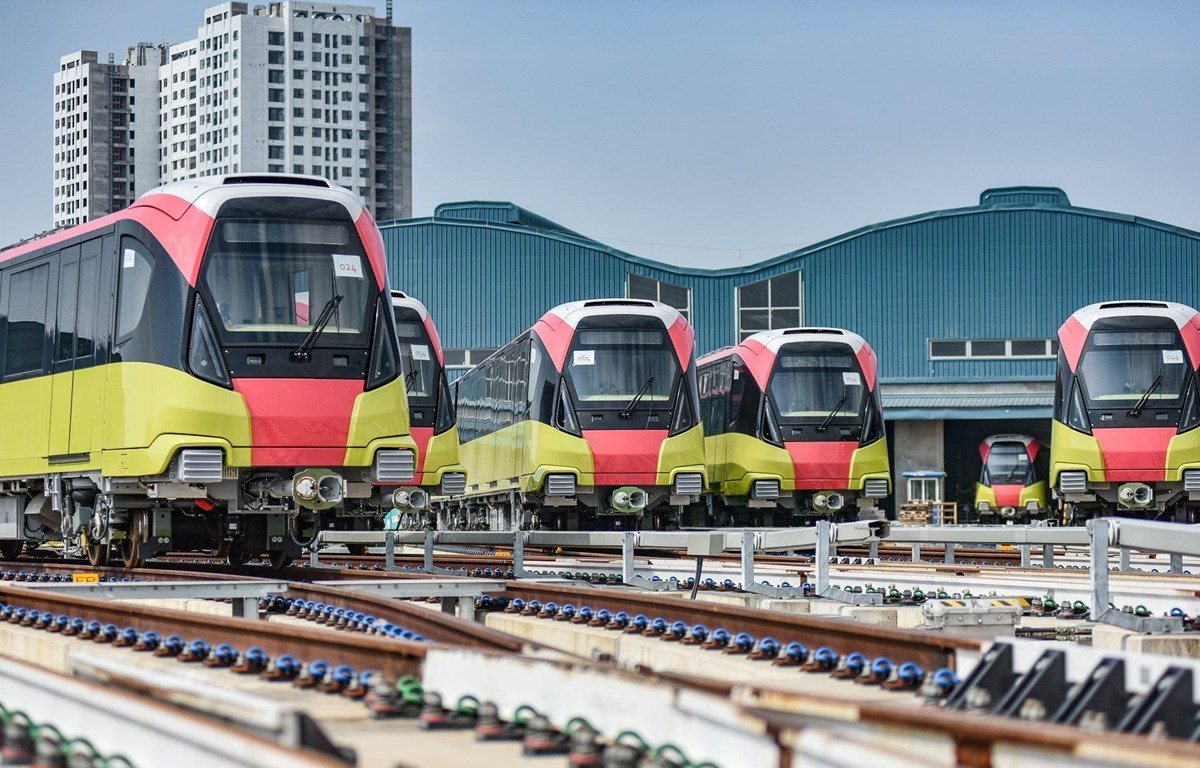
Hanoi currently operates approximately 21.6 kilometers of passenger metro services across two separate corridors.
Both are elevated railways, providing comfortable transportation above the city's busy streets.
Metro Line 2A: Cat Linh – Ha Dong
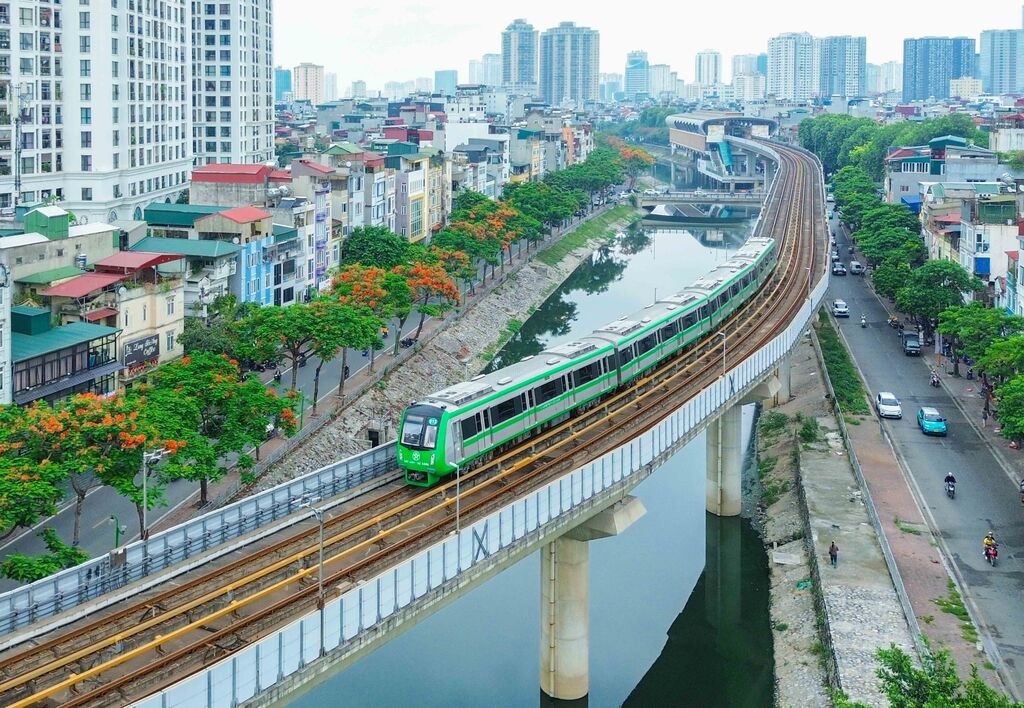
The Cat Linh – Ha Dong railway was Hanoi's first operational urban metro line, opening to passengers on November 6, 2021.
Key information:
-
Route: Cat Linh – Yen Nghia
-
Length: Approximately 13.1 kilometers
-
Stations: 12
-
Railway type: Fully elevated
-
Status: Operational
The line connects Cat Linh with neighborhoods including Thai Ha, Lang, Thanh Xuan, and Ha Dong.
For travelers staying in western Hanoi, it provides an alternative to road transportation, particularly during rush hours.
The elevated railway also offers an interesting perspective of Hanoi's changing urban landscape, with views of busy intersections, residential neighborhoods, and modern developments.
Although the line does not directly reach Hoan Kiem Lake or the Old Quarter, visitors can combine metro journeys with buses, taxis, or walking.
Metro Line 3: Nhon – Cau Giay
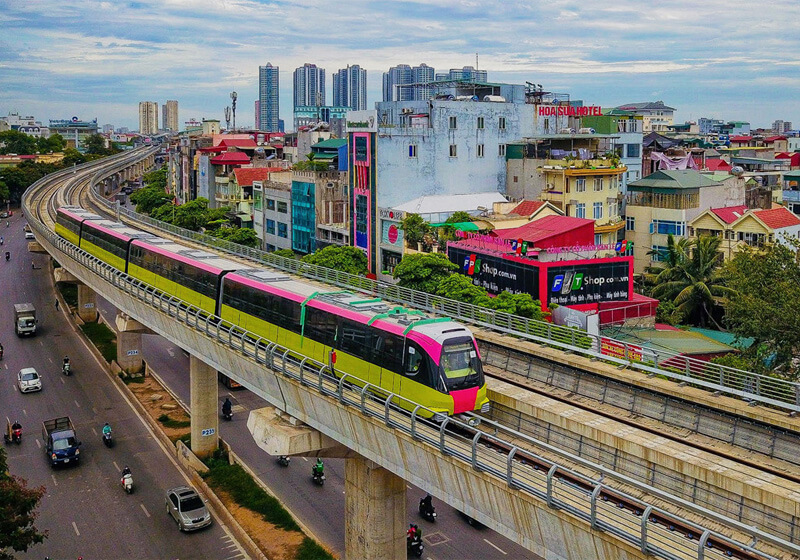
Hanoi's second operational metro service began carrying passengers on August 8, 2024.
It forms the elevated section of the larger Nhon – Hanoi Railway Station project.
Key information:
-
Operational route: Nhon – Cau Giay
-
Length: Approximately 8.5 kilometers
-
Stations: 8
-
Railway type: Elevated
-
Status: Operational, with the underground extension under construction
This route connects the western districts with important residential, educational, and commercial areas.
For international visitors staying near Cau Giay, the line provides a convenient way to explore parts of western Hanoi without relying entirely on taxis or motorbikes.
The railway is also useful for experiencing modern Vietnamese public transportation.
Operating hours and tickets
According to Hanoi Metro's passenger guidance, the two services generally operate from 5:30 AM to 10:00 PM.
Train frequencies vary throughout the day, with more frequent services during weekday rush hours.
Passengers should check current fares, ticket options, operating schedules, and station information before traveling.
Important: Hanoi's two operational metro corridors are not yet connected into a comprehensive citywide rail network. Travelers may still need other transportation between the lines.
2. New Hanoi Metro Lines Under Construction: What Is Coming Next?
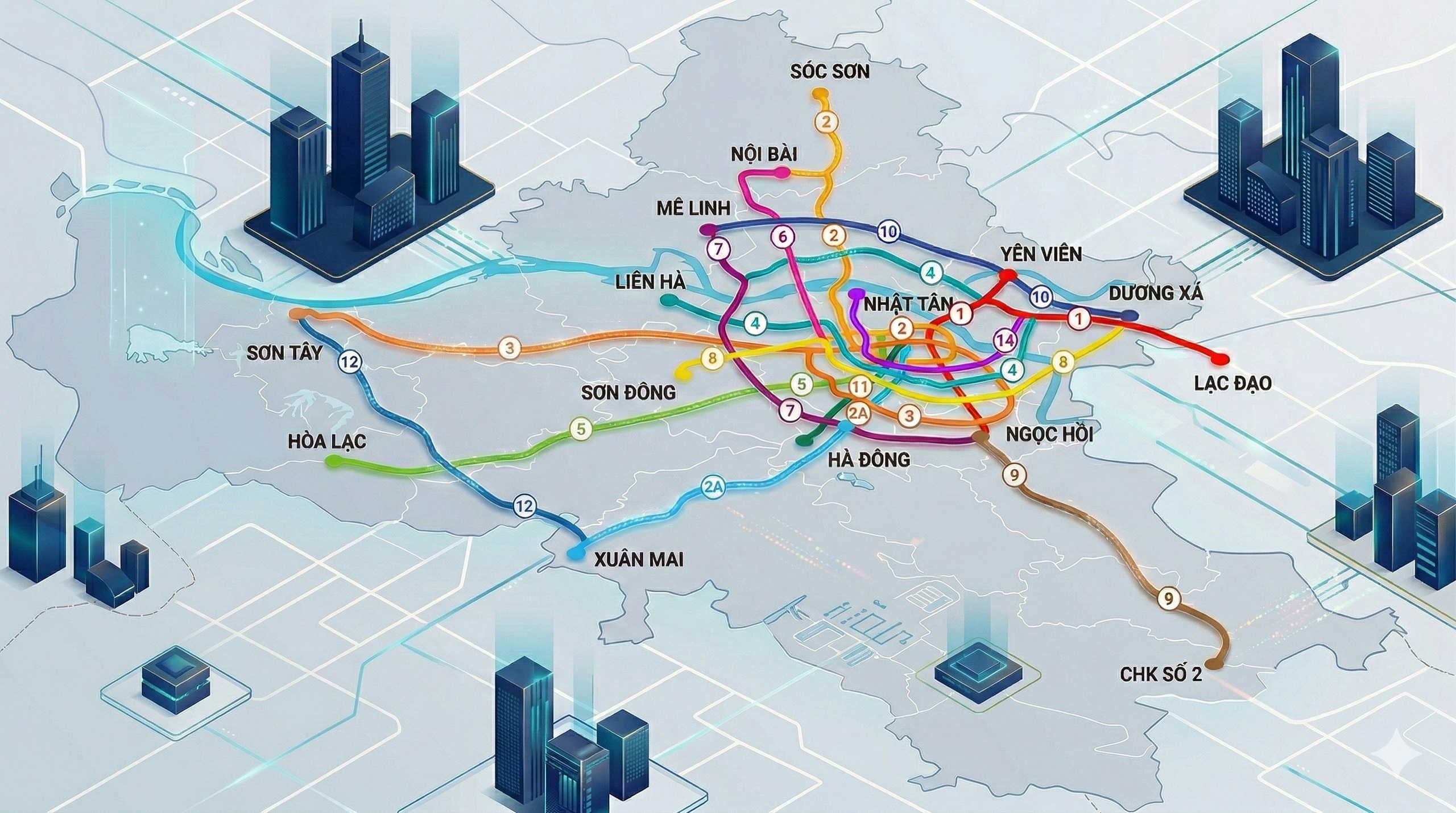
Hanoi is accelerating several major railway developments intended to extend metro services into the historic center, connect western satellite areas, and support future network integration.
Metro Line 3: Cau Giay – Hanoi Railway Station Underground Extension
One of the most important projects for tourists is the underground section of Metro Line 3.
This approximately four-kilometer extension will connect the existing elevated service at Cau Giay with Hanoi Railway Station through four underground stations.
The completed Nhon – Hanoi Railway Station route will measure approximately 12.5 kilometers.
Construction of the underground section has faced engineering challenges because it passes beneath densely developed urban neighborhoods.
Authorities are targeting commercial operation of the remaining section by the end of 2027, although the schedule remains subject to construction progress, testing, and safety certification.
Why does it matter for travelers?
The extension will bring metro services closer to Hanoi's historic central districts.
Visitors may find it easier to reach areas around the Temple of Literature, Hanoi Railway Station, and nearby cultural attractions.
It will also strengthen connections between western Hanoi and the central railway district.
For tourists staying outside the historic center, this could provide a more predictable alternative to road transportation.
Metro Line 2: Nam Thang Long – Tran Hung Dao
Another significant project is the approximately 11-kilometer section of Metro Line 2 connecting Nam Thang Long with Tran Hung Dao.
This route is particularly important because it is planned to serve central Hanoi, including the area around Hoan Kiem Lake.
The project includes underground sections designed to bring metro access closer to the city's historic and commercial heart.
Once operational, it could make visiting central attractions easier for residents and international tourists.
The wider Line 2 development also includes a planned corridor toward Noi Bai International Airport.
However, travelers should distinguish the Nam Thang Long – Tran Hung Dao construction project from the longer airport connection. They are not the same completed service.
There is no confirmed date when passengers will be able to travel directly from Noi Bai Airport to central Hanoi by metro.
Metro Line 5: Van Cao – Hoa Lac
Metro Line 5 is another major project, designed to connect the Van Cao area with Hoa Lac in western Hanoi.
The route is planned to extend approximately 39.6 kilometers and include 20 stations.
It will connect central and western urban areas with Hoa Lac, a major education, technology, and urban development zone.
The project has a target completion date around 2030.
What could this mean for tourism?
Although Line 5 is not primarily designed as a sightseeing railway, it could improve access to western Hanoi and support tourism development beyond the traditional city center.
Visitors interested in modern Hanoi, suburban experiences, and longer stays may benefit from improved connections.
Future tours could combine metro journeys with local transportation to cultural attractions and countryside destinations west of the capital.
3. Five Additional Metro Lines Launched in 2026
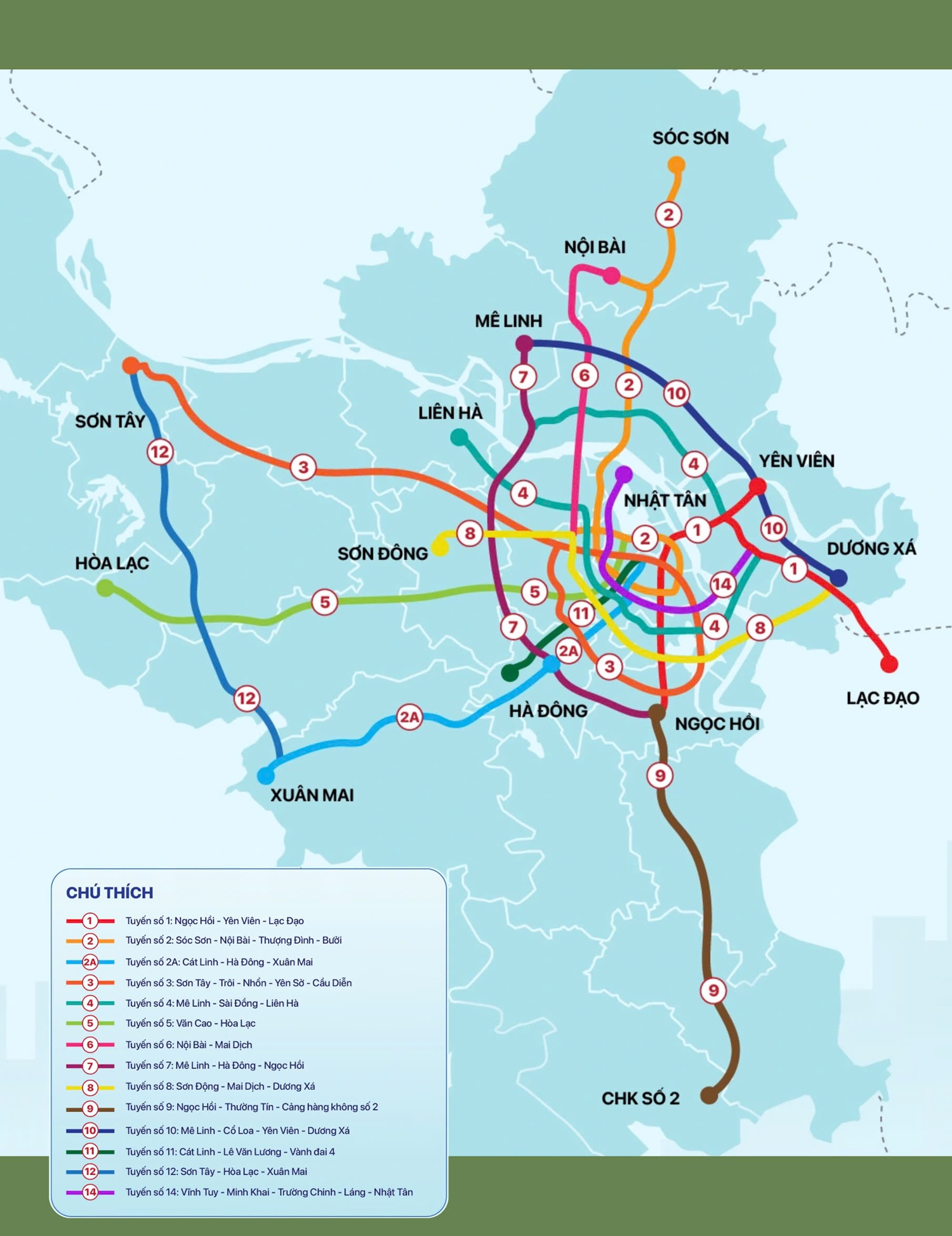
On June 22, 2026, Hanoi held a simultaneous groundbreaking ceremony for five major urban railway lines.
The initiative marked an important change in the city's transportation strategy, shifting from developing individual railway sections toward building an integrated network.
The five routes are Lines 1, 2, 8, 10, and 14.
| Metro line |
Planned connections |
Importance |
| Line 1 |
Ngoc Hoi – Hanoi Railway Station – Yen Vien – Noi Bai Airport corridor |
Airport and regional railway connectivity |
| Line 2 |
Noi Bai Airport – central Hanoi – southern districts |
Future airport access and central-city travel |
| Line 8 |
Hoa Lac – Mai Dich – Linh Nam – eastern Hanoi |
East–west urban connectivity |
| Line 10 |
Dong Anh – Vo Chi Cong – Times City – Dong Anh |
Cross-city and orbital connections |
| Line 14 |
Thang Long Bridge – Hong Ha – Gia Lam |
Northern and eastern urban connections |
These routes are part of an ambitious investment program targeting completion by 2030.
However, a groundbreaking ceremony does not mean that all railway sections are already undergoing full-scale construction.
Surveying, engineering design, land clearance, procurement, and other preparatory activities may continue before major construction proceeds along individual corridors.
Route lengths and alignments may also be refined as projects advance.
For travelers, the most important distinction is between planned infrastructure and operational railway services.
4. Hanoi Metro and Noi Bai International Airport: When Will Airport Trains Be Available?
One of the most frequently asked questions about Hanoi's metro expansion concerns airport transportation.
Noi Bai International Airport is located north of central Hanoi and currently relies mainly on road transportation for passenger access.
Travelers typically use airport buses, taxis, private transfers, and ride-hailing services.
As of November 2026, there is no operational metro connection between Noi Bai International Airport and central Hanoi.
However, the planned railway network includes major routes serving the airport.
Future airport railway connections
Metro Lines 1 and 2 are intended to provide rail connections involving Noi Bai International Airport.
These projects could eventually allow passengers to travel between the airport and important railway stations, business districts, and urban centers.
For international visitors, potential advantages include more predictable journey times, reduced dependence on road traffic, and easier transfers to other public transportation.
Airport rail connections could also benefit travelers arriving on international flights who prefer independent transportation.
Nevertheless, no reliable opening date for a complete airport-to-city metro service should be assumed solely from the 2030 development targets.
How to travel from Noi Bai Airport today
Until an airport railway becomes operational, visitors should continue using established transportation services.
Airport buses offer an economical option, while taxis and prearranged private transfers are convenient for travelers carrying luggage.
For families, first-time visitors, or passengers arriving late at night, an authorized taxi or confirmed private transfer may be more practical than combining several public transportation services.
Travelers should always verify airport transport availability and fares before arrival.
5. Hanoi Metro Expansion Timeline: 2026–2035
Hanoi's metro development program includes several important milestones.
| Period |
Planned developments |
| 2026 |
Two operational metro sections; construction and implementation activities across additional projects |
| 2027 |
Target completion of the Nhon – Hanoi Railway Station underground extension |
| 2028–2030 |
Target period for Line 5 and the five newly launched railway projects |
| 2031–2035 |
Further expansion, interchange development, and network integration |
Hanoi's long-term master plan identifies 18 urban railway lines with a combined length approaching 979 kilometers.
Authorities have also outlined an ambition to develop approximately 500 kilometers by 2035.
These figures represent planning objectives rather than guaranteed operating mileage.
Large metro projects require complex engineering, substantial financing, land acquisition, safety certification, and integration with existing infrastructure.
Actual opening dates may differ from published targets.
Hanoi's expanding metro network could gradually change everyday mobility in one of Southeast Asia's busiest capitals.
Reducing dependence on motorbikes and cars
Hanoi is famous for its streets filled with motorbikes, but road congestion can make journeys unpredictable.
An integrated metro system could provide an alternative for commuters traveling along major corridors.
As more lines open, passengers may be able to complete longer journeys without relying entirely on private vehicles.
More predictable travel times
Metro services operate on dedicated railway infrastructure, reducing their exposure to road congestion.
For visitors with scheduled tours, meetings, or transport connections, this predictability could become an important advantage.
Supporting greener transportation
Electric urban rail can contribute to lower transport-related emissions when it attracts passengers away from more polluting travel options.
However, environmental benefits depend on ridership, electricity sources, construction impacts, and the effectiveness of connections with other public transportation.
Connecting new urban districts
The metro expansion also supports Hanoi's development beyond its traditional urban core.
New railway corridors could improve access to residential neighborhoods, technology parks, universities, commercial centers, and satellite urban areas.
This may gradually reshape where people live, work, and travel.
7. How Will the Hanoi Metro Change Tourism?
For international travelers, the expanding metro network could make Hanoi easier to explore independently.
Easier access to cultural attractions
Future central-city metro connections may improve access to some of Hanoi's best-known landmarks.
These include the Temple of Literature, Hoan Kiem Lake, the Old Quarter, and neighborhoods surrounding Hanoi Railway Station.
Metro services will not necessarily stop directly outside every attraction, but they could reduce the distance visitors need to travel by road.
More opportunities for independent travelers
Many visitors from Europe, Australia, Japan, South Korea, and other international markets are familiar with metro systems.
A more extensive Hanoi Metro network could encourage independent exploration, particularly among travelers who prefer public transportation.
Clear station signage, accessible ticketing, route maps, and reliable interchange information will be essential.
New Hanoi sightseeing experiences
As the network expands, travel companies may develop new experiences combining metro rides with walking tours, street food, cultural attractions, and local neighborhoods.
Possible products include Hanoi by Metro, modern architecture tours, and half-day excursions combining public transportation with local guides.
Such experiences could offer visitors a different perspective on the capital beyond conventional sightseeing routes.
Exploring beyond the Old Quarter
Hanoi's tourism has traditionally concentrated on Hoan Kiem Lake, the Old Quarter, historical monuments, and central museums.
Better railway connections could encourage visitors to discover less familiar districts and emerging destinations.
This may help distribute tourism activity more widely across the capital.
8. Practical Hanoi Metro Tips for International Visitors
If you plan to use Hanoi Metro during your trip, keep the following advice in mind.
Check which sections are operational. A railway line shown on a future network map may still be under construction.
Confirm your nearest station. Hanoi's current metro services cover selected corridors rather than the entire city.
Allow time for transfers. Some journeys require walking, buses, taxis, or ride-hailing services.
Travel outside rush hours when possible. Weekday commuter periods may be busier than midday services.
Check ticketing arrangements. Available ticket types, payment methods, and fares may change.
Monitor construction updates. Metro works can occasionally affect roads, sidewalks, and traffic around station sites.
Plan airport journeys separately. Until airport metro services open, continue using existing road transportation.
The official Hanoi Metro website provides passenger guidance and operational information.
Hanoi Metro is gradually evolving from two separate operational corridors into a much more ambitious urban railway network.
As of November 2026, the capital has two metro sections serving passengers, three major construction projects progressing, and five additional railway lines that entered implementation procedures during 2026.
The underground extension of Line 3, the development of Lines 2 and 5, and future connections to Noi Bai International Airport could substantially improve transportation across the city.
If the planned network expansion progresses successfully, the period from 2027 to 2035 could bring major changes to Hanoi's mobility, urban development, and tourism experience.
For international travelers, the most important benefit will be greater freedom to explore the Vietnamese capital through convenient, reliable, and increasingly connected public transportation.
At Vietnamtravels.com, we follow Hanoi's metro developments, transportation projects, and travel updates to help visitors discover a changing Vietnam with practical and reliable information.
Sources and References
This article is based on information published by official Vietnamese government agencies, Hanoi's urban railway authorities, and public transportation operators. The following sources provide updates on Hanoi's metro expansion, construction progress, future railway connections, and passenger services.
-
Hanoi Metro – Official Passenger Guide
Information on operational metro lines, station locations, ticketing, operating hours, and passenger services.
https://metrohanoi.vn/metro-userguide/huong-dan-su-dung-he-thong-metro/
-
Hanoi People's Committee – Groundbreaking of Five Urban Railway Lines (June 2026)
Official announcement covering five new metro projects, their planned routes, investment programs, and development objectives.
https://hanoi.gov.vn/thong-cao-bao-chi-cac-so-nganh-xa-phuong/ha-noi-khoi-cong-dong-thoi-05-tuyen-duong-sat-do-thi-va-03-du-an-nha-o-cho-thue-4260622111321643.htm
-
Vietnam Government News – Hanoi Begins Construction of Five Urban Metro Lines
English-language government reporting on Hanoi's metro expansion program and infrastructure development plans.
https://en.baochinhphu.vn/ha-noi-begins-construction-of-five-urban-metro-lines-11126062210345142.htm
-
Hanoi Capital Government Portal – Hanoi's Metro Expansion Plans
Information about the city's long-term urban railway network, development targets through 2035, and future transportation connections.
https://hanoicapital.chinhphu.vn/english/ha-noi-to-break-ground-on-five-major-metro-lines-110260623154610116.htm
-
Hanoi Metropolitan Railway Management Board (MRB)
Official project information, construction progress, and announcements concerning Hanoi's urban railway development.
https://mrb.hanoi.vn/
Last updated: November 2026.
Editorial Note: Metro construction schedules, project specifications, planned routes, and opening dates may change. Travelers should consult official railway operators and government announcements for the latest information before planning their journeys. Future railway connections mentioned in this article should not be considered operational until officially announced.