Best Time to Visit Mui Ne: Weather, Beach Conditions and Kitesurfing Seasons
November 29, 202612 min read
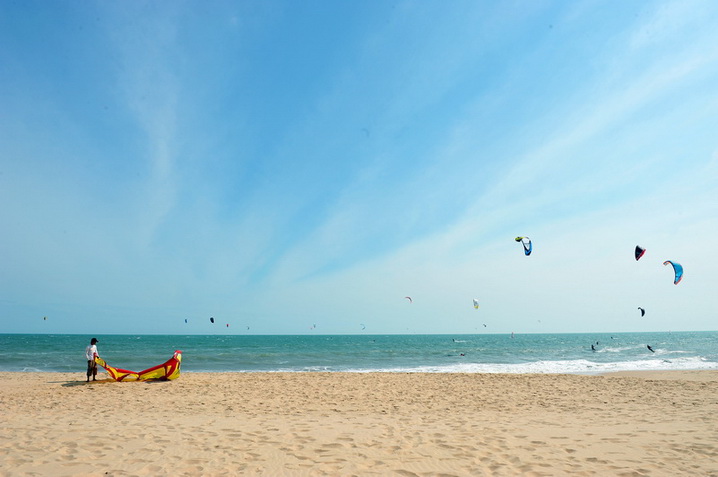
A beach full of colourful kites can make Mui Ne look like an obvious choice for a coastal holiday. For a rider, that wind may be the attraction. For a family hoping to swim and relax on the sand, it raises different questions.
The best time to visit Mui Ne depends on whether you want sightseeing, a resort break or time learning to kitesurf. November to April is the main period to investigate for relatively dry weather and wind sports, but dry weather does not guarantee calm water. Choose your dates around your priority, then check the actual beach. Our Mui Ne Travel Guide covers the wider trip.
When Is the Best Time to Visit Mui Ne?
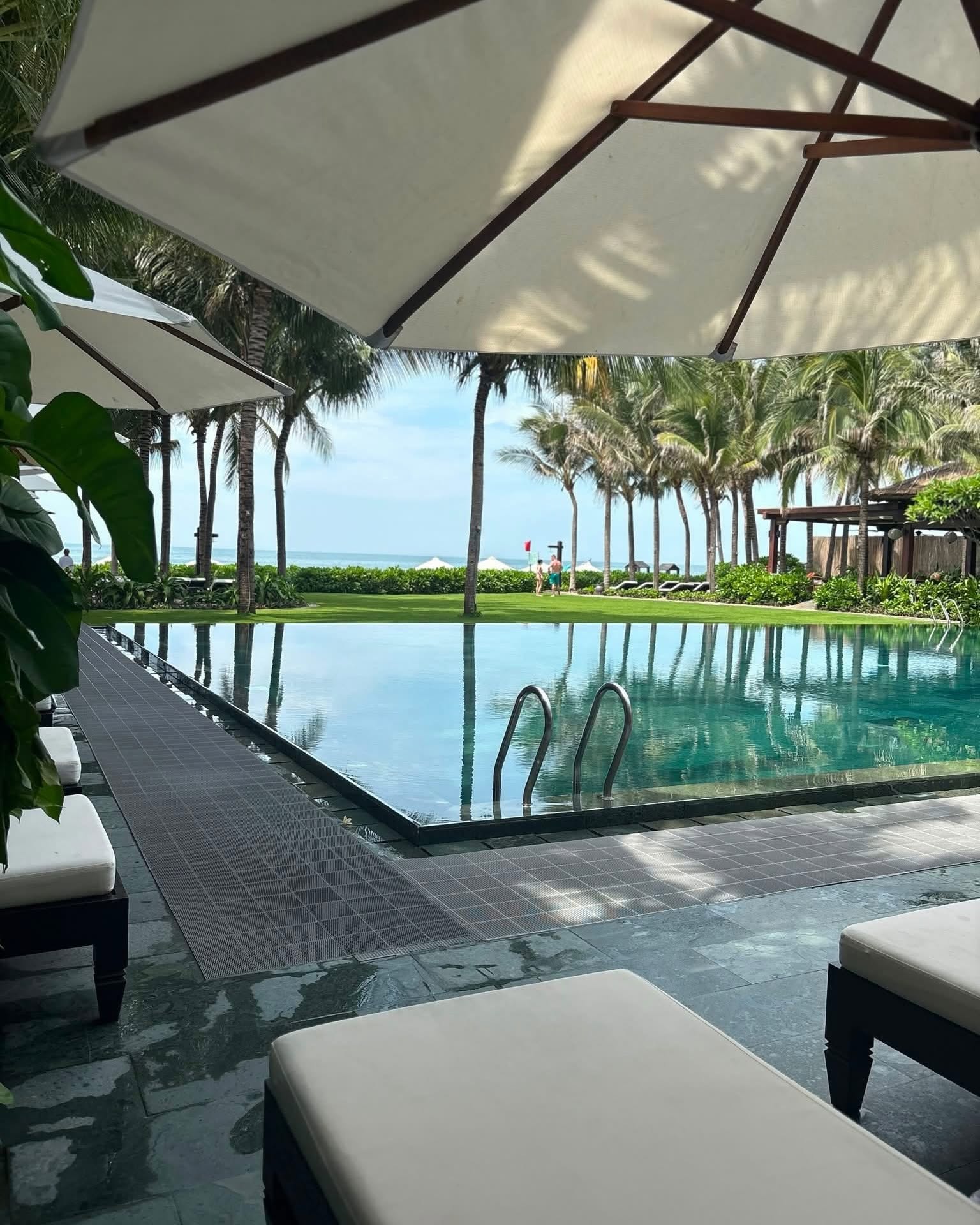
A shaded pool at The Anam Mui Ne illustrates the value of choosing accommodation alongside travel dates. Source: Collected.
For kitesurfing, begin with approximately November to April. The core northeast-wind period offers better prospects for a trip centred on the sport, although individual days can still be unsuitable. The start and end of the season vary, and April should be treated as a transition rather than an extension guaranteed to behave like January.
For sightseeing and resort time, the generally drier months are also useful starting points. However, a comfortable coastal stay involves more than avoiding rain: heat, blowing sand and the conditions immediately outside your hotel can affect the experience.
If swimming is essential, avoid choosing a month solely because it is recommended for kiteboarding. Investigate the shoreline, supervised swimming arrangements and alternatives at your selected accommodation.
Your priority
Starting point for choosing dates
Main consideration
Kitesurfing holiday
Approximately November–April
Daily wind, sea conditions and your ability
Sightseeing and downtime
Generally drier months, with flexible outdoor timing
Heat and wind still affect outings
Swimming-focused break
Assess the season and exact beachfront together
No month guarantees suitable water every day
Family resort stay
Choose a practical property as well as dates
Shade, pool arrangements and alternatives
Fixed summer travel
Keep bookings and activities adaptable
Rain and sea conditions require local checks
Mui Ne Weather by Month: What to Expect
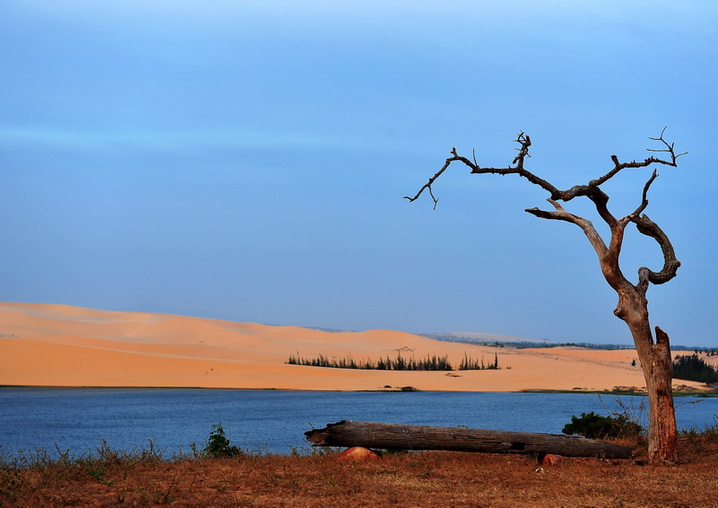
Sand dunes beside a lake near Mui Ne; seasonal guidance cannot guarantee the light or conditions on a particular day. Source: Collected.
Think in seasonal tendencies rather than fixed boundaries. The drier period broadly centres on November to April; the middle of the year generally brings a greater chance of rain. Conditions do not switch on the first day of a month.
This Mui Ne weather by month table is a planning guide for the coastal visitor area. It is not a numerical climate record or a forecast for a particular hotel. The kitesurfing column describes the seasonal outlook, not permission to enter the water.
Month
Typical seasonal pattern
Beach considerations
Kitesurfing outlook
Planning advice
January
Generally dry and within the main wind period
Wind can affect lounging and swimming
Within the core season
Choose the beach and room carefully
February
Generally dry; wind remains relevant
Sunny skies do not establish calm water
Within the core season
Check Tet dates and service arrangements
March
Generally dry, with heat increasingly relevant
Leave room for shade and breaks
Often still within the main season
Arrange activities around comfort and conditions
April
A transition towards the wetter part of the year
Do not assume it is consistently calmer
Conditions can become more variable
Ask schools about current prospects
May
Increasing potential for wet-season conditions
Keep water activities flexible
Outside the most dependable northeast-wind window
Prioritise adaptable plans
June
Wetter-season planning is appropriate
Assess the sea independently of rainfall
Opportunities depend on local conditions
Choose accommodation you will enjoy using
July
Rain can interrupt outdoor plans
Suitable swimming cannot be inferred from the month
Avoid relying on a fixed lesson schedule
Keep several possible activity windows
August
Wetter-season variability continues
Check the exact beachfront and daily advice
Conditions require individual assessment
Build a mixed-interest holiday
September
Continue allowing for rain and unsettled spells
Keep exposed outings adjustable
Outside the main seasonal window
Review forecasts nearer departure
October
Seasonal transition may develop unevenly
A change in season is not a swimming guarantee
The main season has no fixed restart date
Confirm the current situation with a school
November
Generally moving into the drier, windier period
Wind sports and swimming have different needs
Main-season prospects improve
Leave flexibility early in the season
December
Generally dry and within the main wind period
Expect to assess wind and waves locally
Within the core season
Check holiday availability and cancellation terms
Use the table to identify whether your expectations fit the season. Then use a forecast to organise the approaching days, and local guidance to decide individual activities. A monthly tendency cannot tell you how the hours of a three-night stay will unfold.
Beach Conditions: Why Dry Weather Does Not Guarantee Calm Water
The Mui Ne coastal road overlooks the sea; a seaside setting alone does not establish suitable swimming conditions. Source: Collected.
Rainfall describes only part of a beach day. Wind, waves, currents and the practical shape of the shoreline influence swimming and time on the sand. A sunny day can be appealing from a lounger while the water is unsuitable for your group.
The coastal accommodation strip is not one uniform beach. Check the exact property and access point rather than assuming that everything advertised as Mui Ne offers the same frontage.
Tides and changes in the shore can affect the width of sand available. An older hotel photograph may show a different situation from your dates. “Beachfront” identifies a location, but does not establish a wide sandy beach, easy entry into the water or lifeguard supervision.
Before booking, ask for recent information about the beachfront, the way guests reach it and where swimming is advised. Confirm pool facilities too, especially if daily water time is important to children.
Check the beach again on the day
Follow signs, restrictions and advice from staff responsible for the swimming area. Stay out when swimming is prohibited or conditions are unsuitable. Do not use the presence of other swimmers as your only test.
Keep clear of kite launching and landing areas and follow local arrangements separating activities. A busy watersports beach should not be treated as an unrestricted swimming space.
Morning conditions may differ from the afternoon, but neither time automatically guarantees safety. Ask about the actual situation instead of turning a common daily pattern into a rule. The right decision can be a beach walk, pool time or another activity.
Mui Ne Kitesurfing Season: Lessons and Riding Need Different Plans
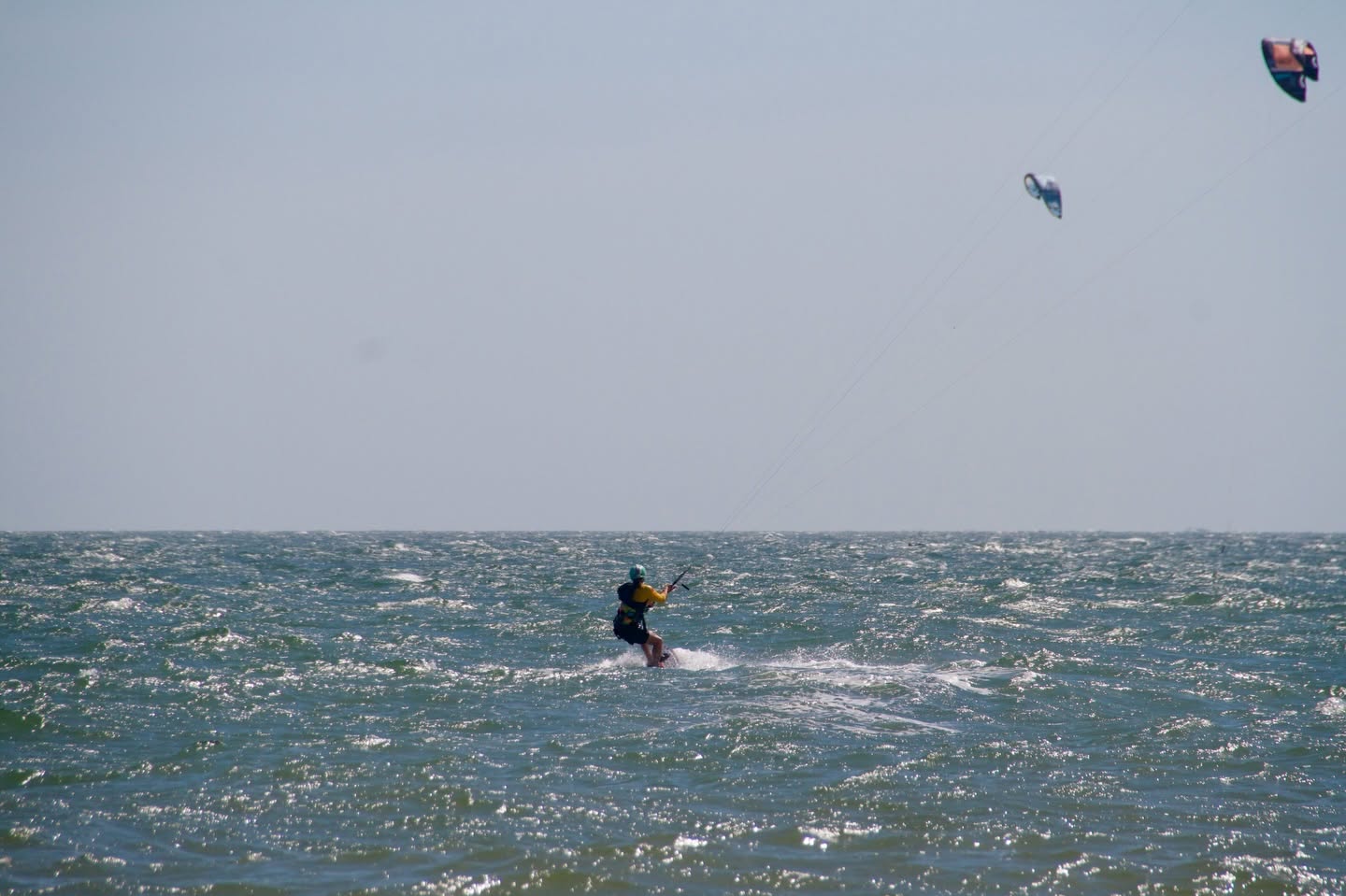
A kiteboarder rides off Mui Ne, where wind and sea conditions must be assessed for each session. Source: Collected.
Understand the main wind season
The Mui Ne kitesurfing season is generally associated with the northeast winds from around November to April. December to February is often identified by local schools as a core period, while the edges of the season deserve more flexibility.
That is useful for choosing travel dates, but it is not a guarantee of rideable conditions. Wind strength, direction, gusts, waves, launch space and your experience all matter. A forecast number alone cannot establish whether a session is appropriate.
Outside the main season, opportunities may still occur. However, a trip built around dependable daily riding requires different expectations from a resort holiday with an optional lesson.
Beginners should book assessment and instruction
The strongest wind is not automatically the best learning condition. Beginners need a school that assesses the beach and water for the stage of learning, rather than a promise that every windy afternoon is suitable.
Before committing, ask:
Who teaches the lesson? Confirm instructor qualifications and language.
How is instruction organised? Check group size, supervision and equipment.
What counts as lesson time? Distinguish teaching from waiting for conditions.
What support is provided? Ask about assistance and the operating area.
What happens to unused hours? Read rescheduling, refund and cancellation terms.
Allow several possible sessions if learning is a main reason for the trip. Do not expect a single booking to guarantee independent riding or completion of a course. Progress varies with conditions and the learner.
Experienced riders also need local information
Ask about the current launch area, local rules, equipment rental requirements and available support. If bringing your own equipment, confirm storage and how you reach the beach.
Kitesurfing, surfing, windsurfing and stand-up paddleboarding use different equipment and suitable conditions. If kite conditions are unavailable, another sport is not automatically an appropriate substitute. Discuss alternatives with the provider rather than choosing from the weather app alone.
Plan Dunes, Sightseeing and Resort Time Around the Conditions
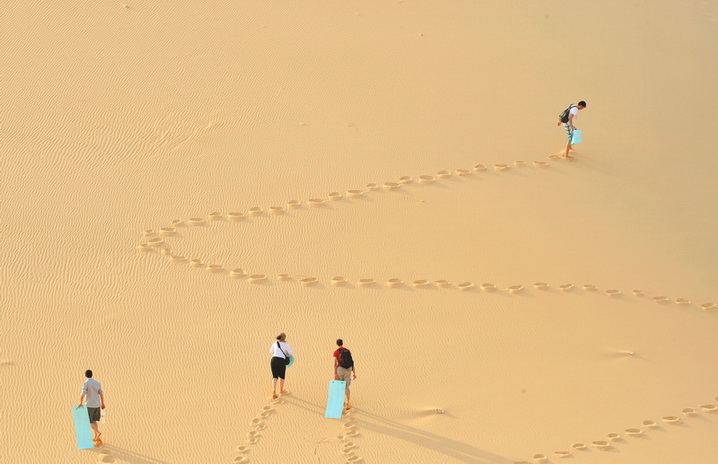
Visitors walking across Mui Ne sand dunes, an outing to plan around heat, wind and travel time. Source: Collected.
The sand dunes give Mui Ne a useful alternative to a holiday entirely centred on water. Plan the outing around heat, wind and your interest in photography, while recognising that light and visibility remain variable.
An early departure can reduce exposure to midday heat. However, sunrise is not a guarantee of clear skies, and a timetable should include travel from the actual hotel. The White Sand Dunes at Bau Trang and the Red Sand Dunes are separate stops, not interchangeable names.
Ask what a vehicle excursion includes. Transport to a site, permitted vehicle access and optional activities can be different services. Strong wind and blowing sand may also affect how long you want to stay.
For cultural or neighbourhood visits, choose places you genuinely want to understand. A fishing area is a working place, and the activity visible on arrival varies. Ask before taking close photographs and avoid obstructing work.
If considering Fairy Stream, check access and current conditions, particularly after substantial rain. It should not be treated as an automatic alternative during heavy weather simply because the visit involves water.
Example stay
Practical approach
Three-night resort break
Keep one main sightseeing outing, leave several flexible coastal periods and allow time at the accommodation
Holiday centred on learning kiteboarding
Discuss likely sessions with the school, then fit independent sightseeing around them
Summer stay with fixed dates
Choose a comfortable base, keep weather-sensitive bookings adaptable and include activities beyond swimming
The four-day Mui Ne and Phan Thiet itinerary offers a starting framework combining resort time and sightseeing. Confirm the final programme for your dates; kite lessons require separate confirmation unless explicitly included.
Choose Your Dates and Check the Details
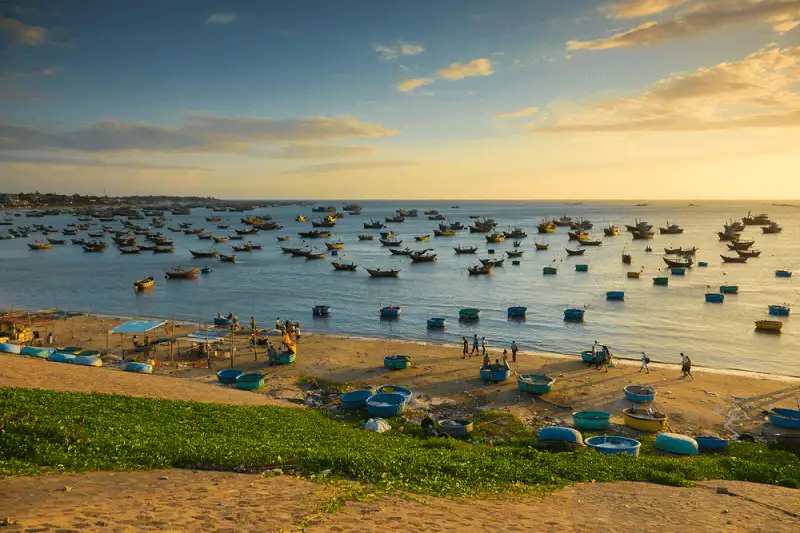
Fishing boats along the Mui Ne shoreline provide a reminder to check the exact coastal setting for your planned stay. Source: Collected.
First, name the experience you would most regret missing. If it is kiteboarding, investigate the main wind season and consult a school. If it is swimming, evaluate the actual beach and local arrangements alongside the weather. For a mixed holiday, leave enough flexibility that one unavailable activity does not determine the whole trip.
Check before booking
Why it matters
Main purpose of the stay
Different activities lead to different timing decisions
Exact hotel location
Beach access and surroundings vary
Current shoreline information
Promotional photographs may be outdated
School and lesson arrangements
Availability does not guarantee suitable conditions
Changes and cancellation terms
Weather-sensitive activities need clear agreements
Holiday dates
Demand and service arrangements can change
Forecasts and local advice
Seasonal guidance must be followed by current checks
Do not assume the wetter months are always inexpensive or quiet. Compare actual dates and conditions, including weekends and holidays. Similarly, high-season demand does not mean every room or course is unavailable; check before making decisions.
Frequently asked questions
What is the best month to visit Mui Ne for a beach holiday?
November to April is a useful starting window for generally drier weather, but wind can affect swimming and lounging. Choose a month together with a suitable property and realistic activities, rather than expecting one date to guarantee calm water.
When is the rainy season in Mui Ne?
The wetter part of the year broadly falls around May to October, with variable transitions. It does not mean every day is lost, or that rain always takes the form of one short shower. Check conditions near your departure.
When is the main kitesurfing season?
Approximately November to April, with the core winter months often offering stronger seasonal prospects. Individual sessions still depend on conditions and ability. Consult a school for your dates rather than relying on the calendar as a guarantee.
Can beginners learn during the windy season?
Yes, when a qualified instructor judges the conditions suitable for the learner. Stronger wind is not automatically better. Ask about supervision, the teaching location, equipment and what happens when conditions require a lesson to be postponed.
Is Mui Ne worth visiting in July or August?
It can suit a flexible holiday combining accommodation, food and selected outings. Expectations matter: daily swimming and kite sessions cannot be assured. Choose a place you will enjoy spending time and keep outdoor plans adjustable.
Can you swim in Mui Ne during the kite season?
Swimming may be possible where conditions and local rules permit, but kite season is not a swimming recommendation. Use designated areas, follow local advice and stay clear of watersports operations. Assess the beach again each day.
Tell us your travel month, available nights and whether swimming, sightseeing or kitesurfing matters most. We can help plan a tailor-made Vietnam trip with a Mui Ne stay shaped around your priorities and realistic seasonal expectations.
Kitesurfing Mui Ne: Wind — complementary local wind-season guidance; promotional wind statistics are not reproduced as independent climate measurements.
Research checked on 24 November 2026. Monthly descriptions are qualitative seasonal guidance, not a forecast or numerical climate dataset. Beach access, swimming conditions, lesson availability and operating arrangements must be checked for your dates.
When choosing a Vietnam tour package, match the Mui Ne stop to your preferred activities, travel month and the pace of the wider journey.