Mui Ne Travel Guide: Plan Your First Visit to Vietnam’s Coastal Sand Dunes
November 18, 202616 min read
Mui Ne offers several versions of a coastal holiday. You can watch the light move across sand dunes, eat seafood near working fishing boats, learn a wind sport or spend most of your stay beside a resort pool. The challenge is choosing a base and a pace that bring those experiences together without spending too much of the trip on the road.
This Mui Ne travel guide helps you plan a first visit around the decisions that matter: where to stay, when to come, how to get here and how much to fit into two to four days. Start with the kind of beach break you want, then choose the location and activities to match.
1. Understand Mui Ne Before You Book
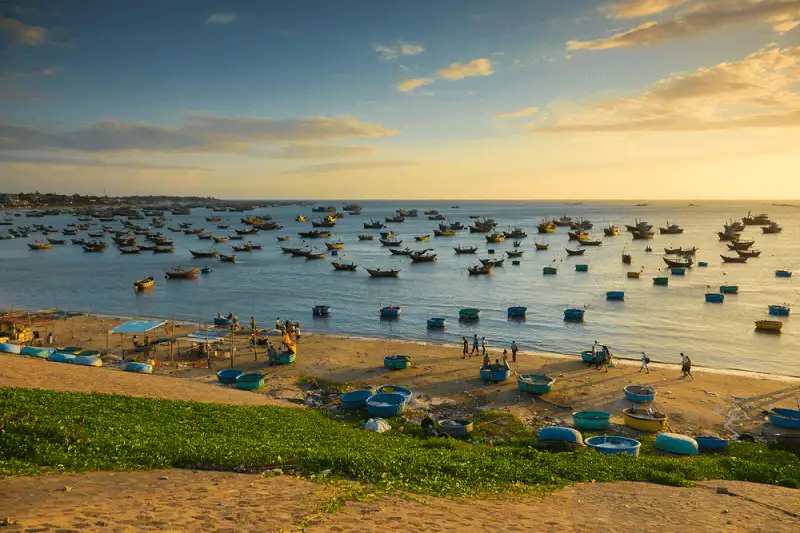
Fishing boats and round basket boats fill Mui Ne’s sheltered bay, with working life continuing along the shore. (Source: Collected)
Mui Ne, Ham Tien and Phan Thiet
Travel listings use “Mui Ne” for a wider coastal holiday area than the fishing settlement itself. Many hotels marketed under that name are along the Ham Tien resort corridor, while other properties sit farther away within the broader Phan Thiet area. A familiar destination name on a booking page does not tell you how conveniently located a hotel will be.
Use a precise map pin when comparing accommodation. Check the road to restaurants, the distance to planned excursions and the actual route to the beach. Two hotels with similar photographs can produce quite different stays if one lets you walk out for dinner and the other requires a vehicle.
You may also see older addresses mentioning Binh Thuan. Current addresses can identify Lam Dong following administrative changes. For everyday travel, the property’s confirmed location and transfer instructions are more useful than the province name alone. Keep these details handy when arranging pickups.
What kind of traveler does Mui Ne suit?
Mui Ne works well for travelers who enjoy combining a coastal stay with a few distinct outings. The dunes provide a change from beach scenery, while fishing life and Cham heritage add context beyond the resort. Wind sports create another reason to spend longer here, provided you arrange instruction appropriate to your experience.
Choose carefully if your only priority is calm, effortless sea swimming. Conditions vary by location and day, and wind can be a defining feature of the coast. A hotel with a suitable pool and comfortable outdoor space can be valuable even when you intend to spend time on the beach.
Your priority
A useful approach
Time to consider
A short first visit
One dunes outing, local meals and downtime
Two nights if travel times work
A balanced coastal break
Dunes, a cultural or local outing and beach time
Three nights
Family relaxation
Convenient accommodation and short excursions
Three or four nights
Learning a wind sport
Instruction-led plans with flexible days
Four nights or longer
A resort escape
Choose the property as carefully as the destination
Three nights or longer
These are planning suggestions. Count usable time after confirming transport, rather than assuming every booked day will be available for sightseeing.
2. Choose Your Season and Length of Stay
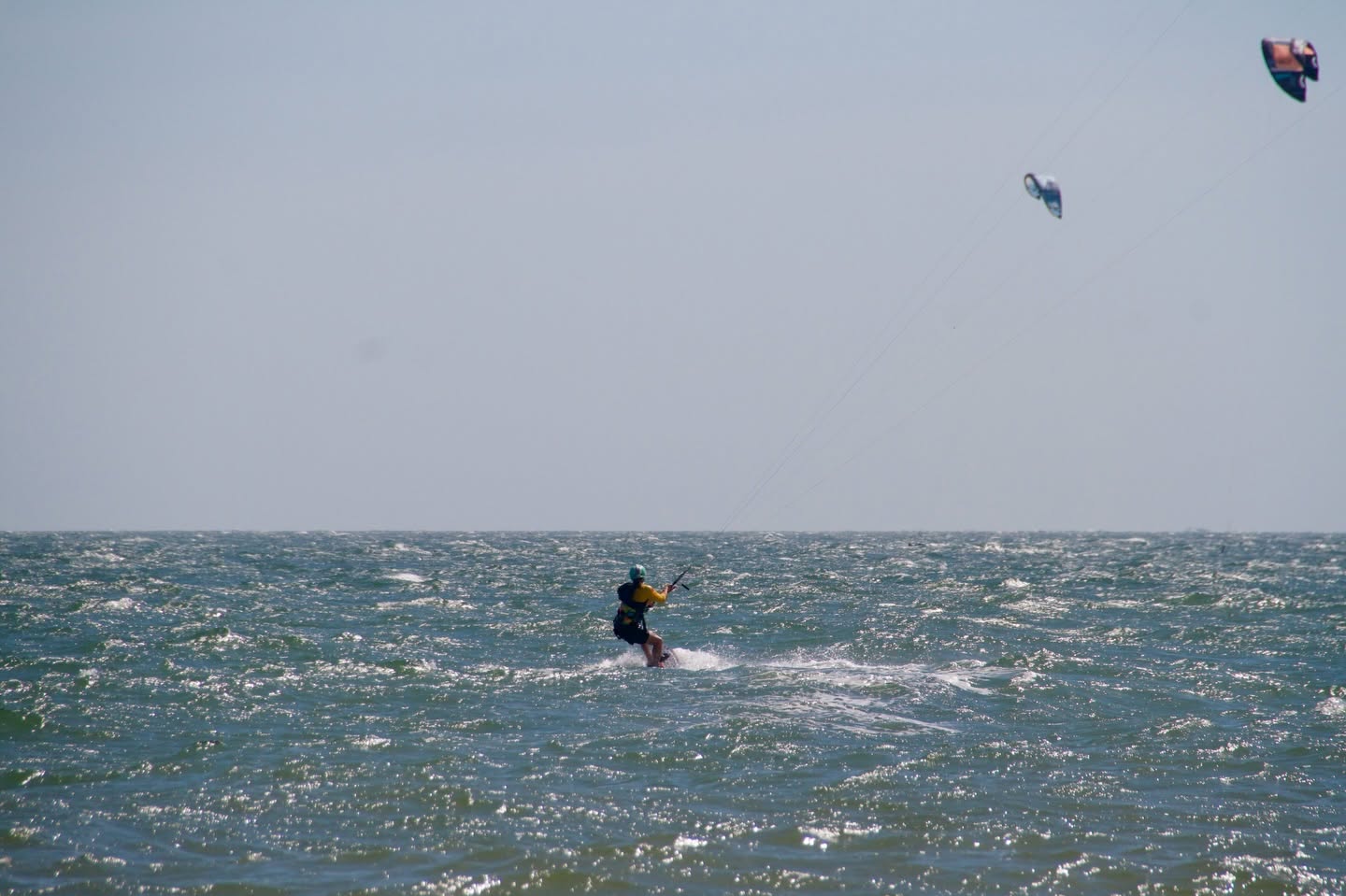
A kiteboarder rides off Mui Ne’s coast, where wind and sea conditions shape water-sport plans. (Source: Collected)
Think about rain, wind and swimming separately
Broadly, November to April is the drier part of the year, while May to October is rainier. This is a useful starting point for planning outdoor activities, but it does not predict conditions for a particular beach, afternoon or lesson. Check the forecast and local advice close to your visit.
The wind that appeals to kiteboarders can make a different impression on someone hoping to float in quiet water. Decide whether your priority is swimming, walking, photography or a sport before using a general “best time to visit” recommendation. Each activity responds differently to wind and sea conditions.
In rainier months, keep the order of outings flexible. Avoid scheduling every outdoor experience into one tightly packed day. A comfortable accommodation choice also gives you something worthwhile to return to when conditions change, rather than making the entire holiday depend on uninterrupted sunshine.
Plan around heat and light
The dunes are exposed, so early or late outings generally make more sense than long walks in the midday heat. Sunrise requires an early departure from your hotel; sunset lets you keep a slower morning. Consider the preference of your whole group before reserving a predawn pickup.
Photographers should leave room for changing light rather than expecting an exact scene from a promotional image. Families should weigh early starts against sleep and meal routines. If you are learning a wind sport, let the school advise on suitable lesson timing instead of treating it as a fixed sightseeing appointment.
Main purpose
What to prioritize
What to check
General sightseeing
Comfortable outdoor hours and flexible sequencing
Forecast, heat and attraction access
Beach relaxation
Property location, facilities and current sea conditions
Swimming advice and beach access
Dunes photography
Light, walking conditions and enough time
Departure time and weather
Kitesurfing lessons
Appropriate instruction and suitable conditions
School availability and experience requirements
How many days in Mui Ne?
Two nights can cover a first introduction: an arrival afternoon, a full day with a dunes excursion and some time before departure. Three nights provide more balance, particularly if you want a cultural outing without sacrificing the pool or beach. Four nights allow a gentler pace or additional activity time.
A two-day, one-night visit is possible, but transport occupies a substantial part of it. Reserve that format for a focused visit rather than expecting a full resort holiday. If rest is your reason for coming, protect at least one morning or afternoon with nothing booked.
3. Get to Mui Ne and Move Around
A jeep is parked beside Mui Ne’s coastal road, a setting for local sightseeing excursions. (Source: Collected)
Traveling from Ho Chi Minh City
Ho Chi Minh City is a practical starting point for a Mui Ne stay. Road options include scheduled coaches, services marketed as limousine vans and private transfers. Compare the actual pickup and drop-off arrangements, not just the advertised duration or the appearance of the vehicle.
Traffic, stops and your hotel’s location affect the overall journey. A service arriving in Phan Thiet may still leave you with another transfer. Before paying, ask whether the ticket includes delivery to your property, a designated office or a meeting point from which you must arrange onward transport.
A private transfer can simplify travel for families, groups with luggage or visitors arriving at an airport. Confirm the vehicle capacity, luggage space, child-seat availability if required, rest stops and total price. For an airport pickup, provide the flight number and establish how delays will be handled.
Taking the train
Rail can be an option when the schedule fits, but it does not deliver you to a beach resort. Check whether your chosen service arrives at Phan Thiet station or another station serving the wider area. The distinction matters when calculating the final transfer and total travel time.
Look up the exact date through the railway booking system. Do not assume a train runs daily because an older hotel page lists a departure time. Arrange station pickup using the station printed on your ticket, and leave enough margin for the return journey.
Transport choice
Useful for
What to verify
Coach or van
Travelers prioritizing a shared road service
Pickup, drop-off, seat type and luggage
Private transfer
Families, groups and direct hotel access
Full price, vehicle and stops
Train plus road transfer
Travelers whose dates match the timetable
Operating day, arrival station and onward pickup
Do not plan around an unfinished airport
As of November 2026, the civilian facilities at Phan Thiet Airport remain under construction. A construction milestone or a projected opening is not a bookable passenger service. Build your current itinerary around transport that is actually operating, and verify any future flight announcement with the airline before changing plans.
If you are returning for an international flight, allow for the full road journey, check-in and possible delays. An overnight in Ho Chi Minh City can make sense when your departure is early or the consequences of a missed connection would be substantial.
Getting around the coast
Walking is convenient for some meals and nearby stops, but the holiday area is spread out. For farther outings, arrange a car, taxi or an appropriate organized excursion. Ask about waiting time and the return journey, especially when visiting somewhere away from your hotel.
Do not interpret a short map distance as a pleasant walk: heat, road edges and traffic matter. Consider cycling only where the route suits your confidence. Choose motorbike rental only after confirming your legal eligibility, insurance and ability to handle the local conditions.
4. Choose Where to Stay and What to Eat
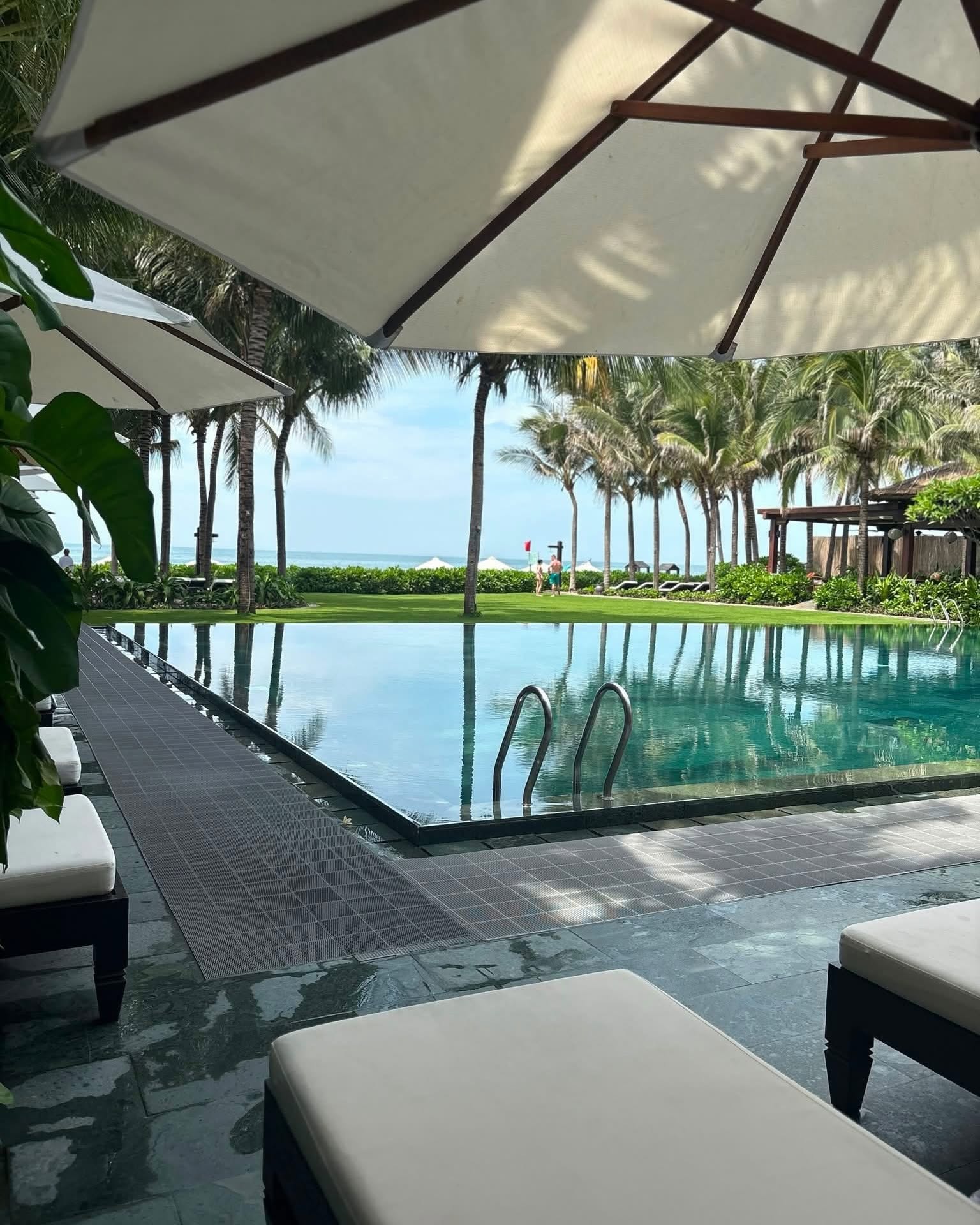
A shaded pool and palm-lined garden at The Anam Mui Ne provide space to relax near Ham Tien Beach. (Source: Collected)
Ham Tien for a convenient holiday base
Ham Tien is a useful area to investigate if you want a resort or small hotel with access to dining and visitor services. However, convenience varies along the corridor. Examine the immediate surroundings rather than assuming every address offers the same evening routine.
Ask what the beach is like directly outside the property, including access at different tides. Request recent photographs if swimming and sand space are central to your holiday. “Beachfront” describes a position; it does not answer every question about the beach experience.
Mui Ne village and the wider Phan Thiet coast
The village area may appeal to travelers interested in fishing life and a different setting from the resort corridor. Compare accommodation facilities and meal options carefully. Staying closer to an excursion does not necessarily make every other part of the holiday more convenient.
Tien Thanh belongs in a comparison of the wider Phan Thiet coast, but should not be treated as another section of the same resort strip. A property there can suit a stay centered on its facilities. Check the distance to the dunes and other planned visits before deciding that it is the right base.
Central Phan Thiet is worth considering when city services or a broader local-food focus matter more than a conventional resort break. In every area, compare how you would spend an ordinary day: breakfast, swimming, an outing, dinner and the journey back.
Base
Consider it when you want
Main question before booking
Ham Tien corridor
Accommodation with access to holiday services
What is within comfortable walking distance?
Mui Ne village area
Fishing-life context and local surroundings
Do the facilities match your expectations?
Tien Thanh
A property-led stay on the wider coast
How much travel will your outings require?
Central Phan Thiet
City access and local exploration
Is the setting right for your beach plans?
Meals and local flavors
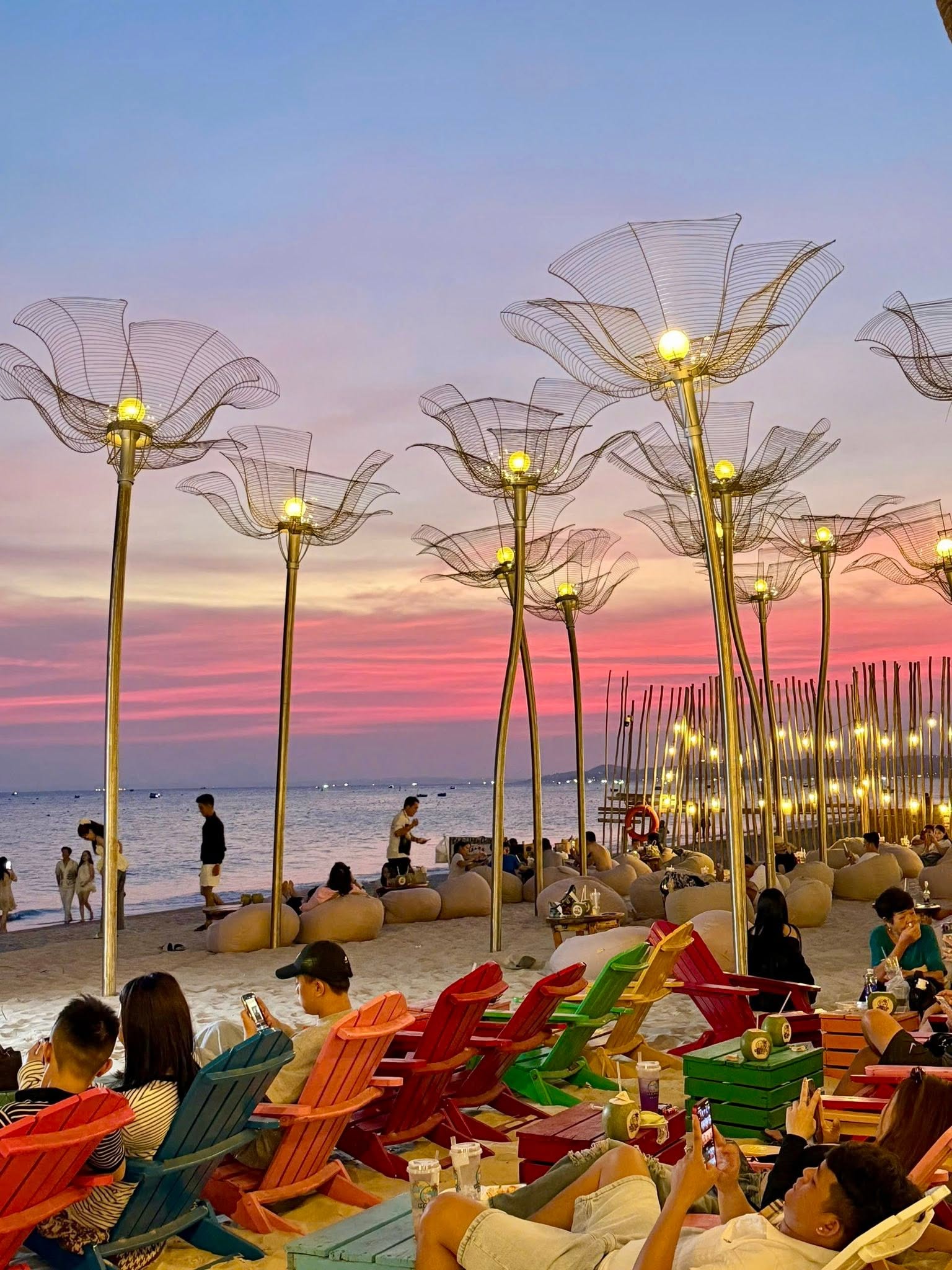
Beachfront seating and illuminated sculptures at Hanna Beach in Ham Tien create a setting for a relaxed evening by the sea. (Source: Collected)
Seafood is a natural part of a coastal stay, but ordering clearly is more useful than choosing the longest menu. Confirm whether an item is priced by weight or portion and agree on preparation before it is cooked. Ask for the total when prices or units are unclear.
Try local noodle dishes and simple meals alongside restaurant dinners. Phan Thiet’s fish-sauce tradition is another part of the area’s food identity. Travelers avoiding fish should explain that restriction explicitly, since fish sauce may be used even when the main ingredient is vegetables.
Families can make evenings easier by checking dining access before booking a remote property. If you have a strict allergy or dietary requirement, contact the hotel ahead of time. For a predawn excursion, arrange breakfast or a snack rather than assuming a restaurant will be open when you leave.
5. Explore the Dunes, Coast and Local Heritage
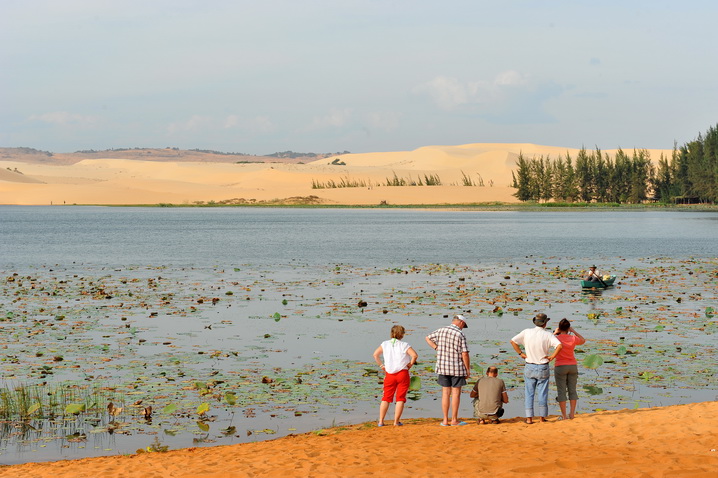
Bau Trang’s lake and pale dunes bring contrasting water, greenery and sand into the same landscape. (Source: Collected)
Choose between the red and white dunes
The red dunes and the white dunes at Bau Trang are separate excursions, with different travel requirements from your hotel. Bau Trang generally needs a longer journey from the principal resort area. Choose according to your time, interest in the landscape and tolerance for an early start.
The red dunes can fit a shorter outing, while Bau Trang is worth giving more space in your schedule. Neither needs to be declared universally better. Travelers who enjoy landscapes may want both; those chiefly seeking rest can choose one and leave the rest of the day free.
For any “jeep tour,” clarify the complete arrangement. The vehicle used for hotel transport is not automatically the same service as riding over the dunes. Ask which fees, stops, guides and optional activities are included, and what you will pay separately at the destination.
Walking on soft sand takes effort. Carry water and sun protection, and ask how far your group will need to walk. Motorized activities on the sand are optional: confirm applicable rules, supervision and suitability rather than assuming they are appropriate for every passenger.
Fairy Stream and fishing life
Fairy Stream winds below orange and cream sand formations, with green vegetation along its banks. (Source: Collected)
Fairy Stream, or Suoi Tien, offers a different landscape, with a shallow watercourse beside colored sand formations. Check current access and conditions before visiting. After rain, avoid assuming that the water level or footing will match an older photograph.
Ask about the route and whether walking through water is required, particularly if anyone has mobility concerns. Keep the visit adaptable rather than committing every member of the group to the same distance. Take care of personal belongings and avoid damaging the formations.
The fishing village adds working-life context to the coast. Visit respectfully, keep clear of unloading and equipment, and ask before taking close photographs of people. The level of activity depends on the day; it should not be promised as a staged scene of boats and workers.
Cham heritage and wider outings
The brick towers of Po Sah Inu introduce Cham heritage near Phan Thiet. (Source: Collected)
The Po Sah Inu towers offer an introduction to Cham heritage near Phan Thiet. Approach the visit as a cultural stop, with appropriate dress and behavior. A guide can help explain the site’s significance, especially if you have not encountered Cham history elsewhere in Vietnam.
Ta Cu Mountain is another possible excursion in the wider region, but it needs its own transport and time allocation. Include it because it matches your interests, rather than adding it automatically to a short beach break. Trying to combine every regional attraction can leave little time in Mui Ne itself.
Wind sports and beach time
If you want to try kitesurfing, contact a reputable school before arrival. Explain your experience, ask about instruction and safety arrangements, and let the school assess suitable conditions. Progress varies, so one lesson should not be presented as a promise of independent riding.
Swimmers should pay attention to activity areas, local advice and the sea on the day. Give launching and landing kites a wide berth. Choose supervised or clearly suitable swimming arrangements where available, and use the pool when conditions do not fit your group’s ability.
Experience
Time to protect in your plan
What can affect it
Dunes excursion
A dedicated outing with travel time
Heat, light, access and optional activities
Fairy Stream
A manageable visit with flexible walking
Water and ground conditions
Village or heritage visit
Enough time to observe and understand
Local activity and opening arrangements
Wind-sport lesson
The school’s confirmed session
Wind, ability and instructor assessment
6. Build Your Itinerary, Budget and Practical Plan
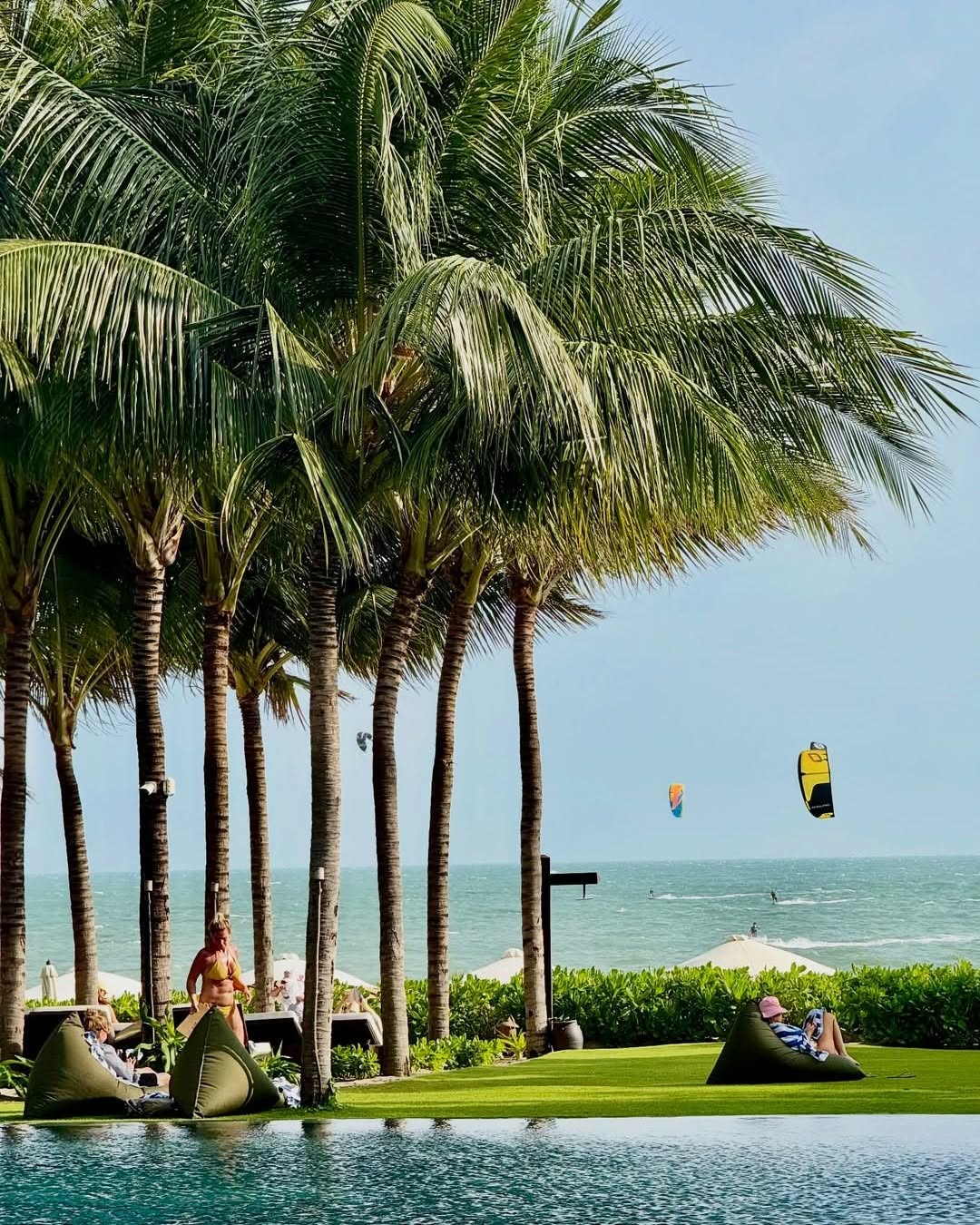
Palm trees, poolside seating and views of offshore kites at The Anam Mui Ne combine resort downtime with coastal scenery. (Source: Collected)
A flexible two-to-four-day framework
Build the schedule from your actual arrival and departure. If the first day is mostly travel, keep it light. Place a longer dunes outing on a day when you can enjoy it without rushing straight into another transfer.
Day
Suggested focus
Adjustment
Day 1
Arrival, settle in and a nearby meal
Keep sightseeing optional
Day 2
Dunes outing and relaxed hotel time
Choose sunrise or sunset around your group
Day 3
A cultural or local visit, then beach or pool
Swap the outing if conditions change
Day 4
Slow morning, a suitable activity or departure
Leave enough time for onward transport
For two nights, select one substantial outing. For three nights, add local or cultural discovery without giving up all your downtime. Four nights can accommodate more relaxation or instruction, but still do not require a full excursion every day.
Families may prefer a sunset visit to a very early departure. Photographers may accept the early start but want fewer stops. Resort-focused travelers can skip an outing altogether. A good itinerary reflects those choices rather than measuring success by the number of places visited.
For an organised coastal break, compare our Mui Ne and Phan Thiet four-day tour with your preferred balance of dunes, sightseeing and hotel time.
Budget for location as well as room category
Begin with accommodation and return transport, then add meals, excursions and daily local journeys. A cheaper room can lead to higher transfer costs if it is far from everything you want to do. A resort package may include useful services, but compare the actual inclusions.
Spending approach
Main priorities
Costs to check
Value-focused
Simple accommodation and selected outings
Transfers and optional excursion extras
Comfortable discovery
Convenient hotel and a few guided visits
Private transport and inclusions
Resort-led
Facilities, room comfort and downtime
Meals, room category and off-site trips
Request a total for your group and dates rather than relying on an undated “from” price. For excursions, distinguish transport, entry charges and optional activities. For accommodation, check breakfast, cancellation conditions and any extra-person charges before comparing offers.
Make the final decisions practical
Bring sun protection, drinking water and footwear appropriate to your outings. Keep transport details available offline and confirm pickup locations in writing. Share accessibility needs with providers before paying, since sand, steps and water-based routes can change what is feasible.
The most useful first-visit plan has a suitable base, a workable arrival and one or two experiences you particularly want. Leave the rest of the stay open enough for local conditions and a slower coastal rhythm.
For help combining Mui Ne with other destinations, a custom Vietnam tour can bring accommodation, transport and selected outings into one itinerary. Share your dates, group size and preferred pace, or contact Vietnam Travels to discuss a coastal stay that fits your wider journey.