Con Dao Travel Guide: Plan Your First Visit to Vietnam’s Island Sanctuary
November 18, 202615 min read
Con Dao rewards a little more planning than a straightforward beach break. You can spend a morning learning about Vietnam’s prison history, an afternoon beside a forested bay and another day exploring the marine environment. Getting those experiences to fit together means thinking about transport, weather and where you stay before filling your itinerary.
This Con Dao travel guide helps you make those decisions for a first visit. Start with the experience you want most, allow enough time to enjoy it, and keep some flexibility for conditions offshore. A good trip leaves room for both discovery and rest.
1. Understand Con Dao and Decide Whether It Suits Your Trip
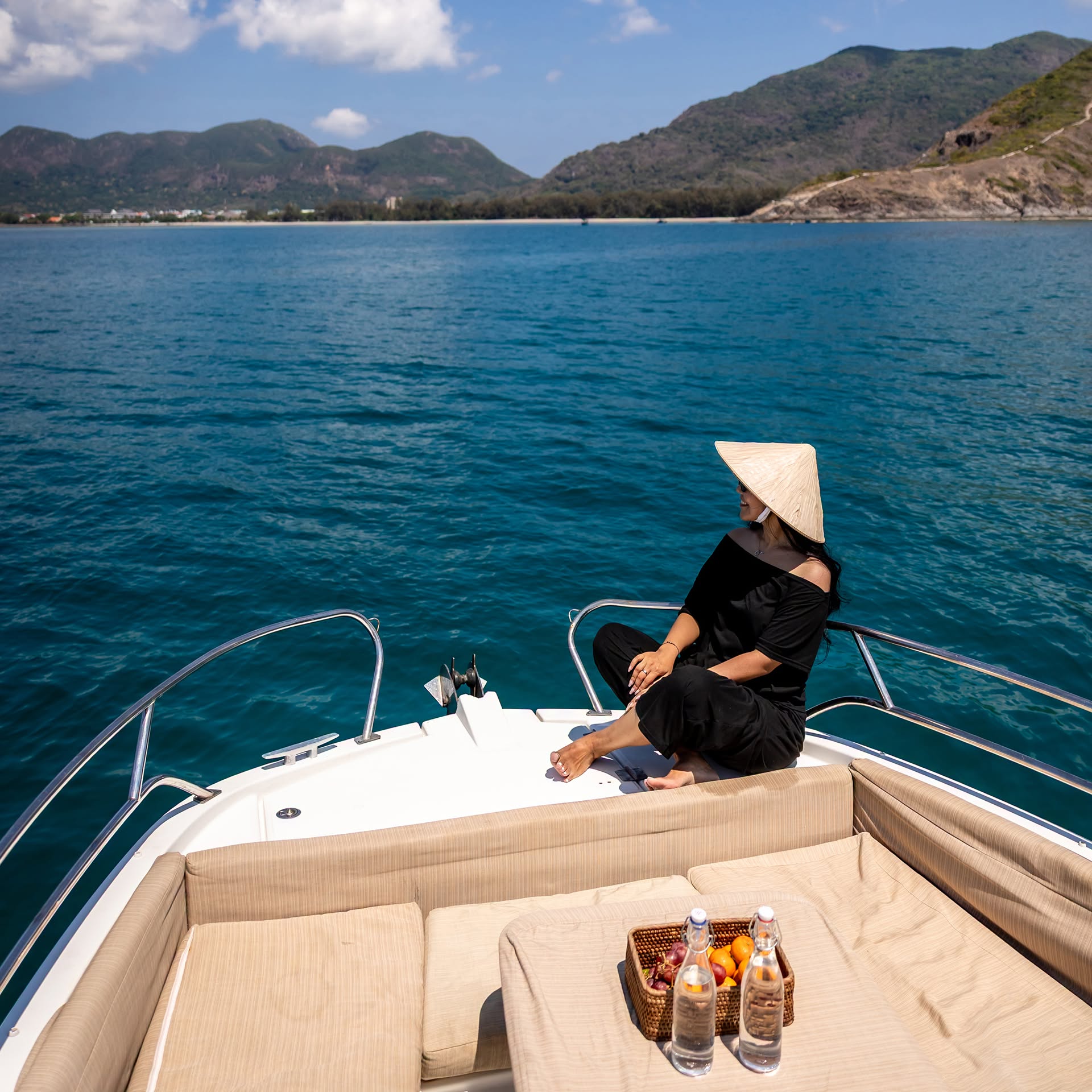
Con Son’s waterfront settlement sits between a broad bay and forested mountains. (Source: Collected)
Con Dao and Con Son: understand the names
Con Dao is an archipelago off southern Vietnam. Con Son is its main inhabited island, where most visitors sleep and find the airport, accommodation, restaurants and principal historical sites. When a hotel advertises a Con Dao stay, it usually means a stay on Con Son.
Smaller islands require separate boat arrangements. Booking several nights on the main island does not automatically include visits to those places or access to protected natural areas. Think of your holiday as a main-island stay with optional excursions, rather than an island-hopping route you can improvise at every beach.
You may encounter older addresses mentioning Ba Ria–Vung Tau. Current official information identifies Con Dao as a special zone of Ho Chi Minh City. For practical planning, use the property’s precise location and confirmed arrival point rather than relying on an administrative label.
Who will enjoy visiting Con Dao?
The destination suits travelers who want time outdoors, a considered introduction to local history and a relatively unhurried stay. Couples can build a quiet resort break; independent travelers can stay near town and arrange selected excursions; families can combine short outings with generous downtime.
Your expectations matter. A secluded hotel can feel restrictive if you want to walk to several restaurants every evening. A brief stay can feel rushed if a boat excursion is your main reason for coming. Choose the experience first, then build the accommodation and transport around it.
Your priority
Suggested approach
Time to consider
A first introduction
Town base, historical visit and beach time
Three nights if connections work
Nature and marine activities
Flexible excursion day plus an alternative day
Four or five nights
A restful resort stay
Fewer outings and more time at the property
Four nights or longer
Family discovery
Short activities, easy meals and a pool or suitable beach
Four nights at a relaxed pace
History and remembrance
Guided context, selected sites and time for reflection
Two full sightseeing days within a longer stay
These are planning suggestions, not minimum requirements. Count usable days after checking arrival and departure times.
2. Choose Your Season and Length of Stay
Waves break along a rocky Con Dao shoreline, a reminder that sea conditions differ from the weather on land. (Source: Collected)
Dry weather and calm seas are different questions
Con Dao has a tropical monsoon climate. Broadly, December to April is the drier period, while May to November receives more rain. However, northeast monsoon winds can affect the sea during the drier months. A pleasant morning on land does not establish that an offshore crossing or snorkeling trip will be comfortable.
For marine activities, March to September is commonly considered a useful planning window, with the actual experience depending on wind, swell and the site selected. Rainy-season travel can still include worthwhile beach time, but you should expect changes and avoid treating every day as a guaranteed boat day.
Beach exposure matters too. A sheltered stretch and an exposed bay can feel very different on the same afternoon. Ask about current conditions at the place you intend to visit rather than using the weather in town as your only guide.
Match the month to the experience
Main interest
Seasonal approach
What to confirm
Walking, historical sites and coastal outings
Drier months can simplify outdoor plans
Heat, wind and local access
Snorkeling or diving
Consider the broader March–September marine window
Conditions, visibility and operator availability
Turtle-related experiences
Plan around the seasonal conservation program
Activity offered, availability and park arrangements
Resort relaxation
Choose the property and facilities as carefully as the month
Beach conditions and rainy-day alternatives
Turtle nesting is seasonal, with summer a significant period, but nesting observation and hatchling releases are different activities. Neither should be promised for a particular night. Confirm what is being organized for your dates before making it the centerpiece of your holiday.
How many days in Con Dao?
Three nights can provide a satisfying introduction if flights leave you two useful days. Four nights create more breathing space for a historical visit, a nature outing and beach time. Five nights suit travelers who want slower mornings or an opportunity to move an excursion when conditions change.
Remember that a four-day booking may provide only two full days between travel days. If your main goal requires an offshore trip, prioritize usable time over the number printed in a package title. Longer stays improve scheduling flexibility, although they cannot guarantee any wildlife or weather outcome.
3. Get to Con Dao and Plan Your Local Transport
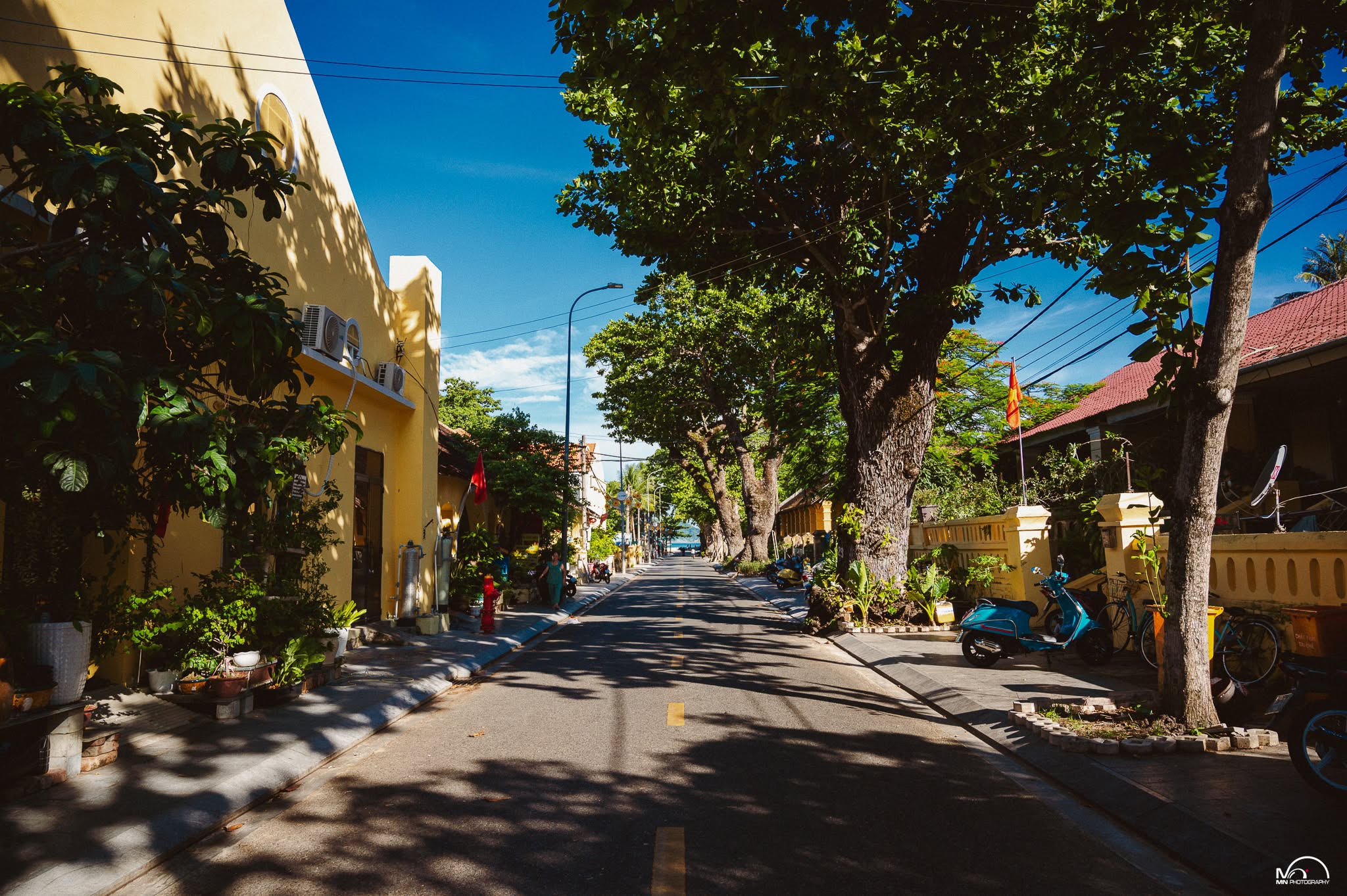
Mature trees shade a street on Con Son, where walking can suit selected central outings. (Source: Collected)
Flying to Con Dao
Ho Chi Minh City is an established gateway to Con Dao Airport, airport code VCS. Our Ho Chi Minh City travel guide helps you plan a city stay before or after the island. Vietnam Airlines sells the route, with services operated by its group carrier VASCO; the published flight time is approximately one hour and fifteen minutes. Check the operating carrier, baggage allowance and actual schedule when booking.
Travel from other Vietnamese cities may require a connection. Search your exact dates rather than assuming that a previously announced direct route is still operating. If tickets are separate, examine what happens when the first journey changes and whether baggage must be collected and checked again.
Arrange the airport transfer with your accommodation, particularly if you are staying outside town. Ask for the total charge, the meeting point and whether it is shared or private. A short flight still involves check-in, baggage collection and ground travel, so keep your arrival afternoon light.
Reaching the island by ferry
The Tran De route, commonly marketed as Soc Trang–Con Dao, provides a sea option from the Mekong Delta side. Superdong publishes services on this corridor, but schedules can change with weather and tides. Verify the exact mainland port, island arrival pier and sailing for your travel date.
A ferry can make sense as part of a wider southern itinerary. Our Mekong Delta travel guide helps you consider the mainland portion. From Ho Chi Minh City, however, include the road journey to the departure port, waiting time and transfers after arrival. Comparing only the crossing fare with an airfare gives an incomplete picture of the cost and effort involved.
Do not assume that every route mentioned in an older travel article is running. Other departure options need separate verification. If you are prone to seasickness, consider how an open-sea crossing fits your comfort level before choosing it mainly for the price.
Option
Practical advantage
Main consideration
Flight from Ho Chi Minh City
Short airborne journey and straightforward city pairing
Availability, baggage and onward connections
Ferry via Tran De
Can fit a Mekong Delta route
Mainland transfer, sea conditions and sailing changes
Another advertised connection
May suit a particular starting point
Verify that it is operating and bookable for your dates
Protect your onward journey
Avoid building a valuable international departure around a tightly timed island return. A mainland overnight is a sensible option when the consequences of disruption would be expensive. The appropriate buffer depends on your tickets, flexibility and the season, rather than one universal rule.
On Con Son, walking works for selected central outings. More distant beaches and trailheads need additional transport. Ask your hotel about taxis or prearranged cars, especially for the return from quieter locations. Cycling requires consideration of heat, hills and road conditions. Choose motorbike rental only after checking your legal eligibility, insurance and riding ability.
4. Choose Where to Stay and How to Handle Meals
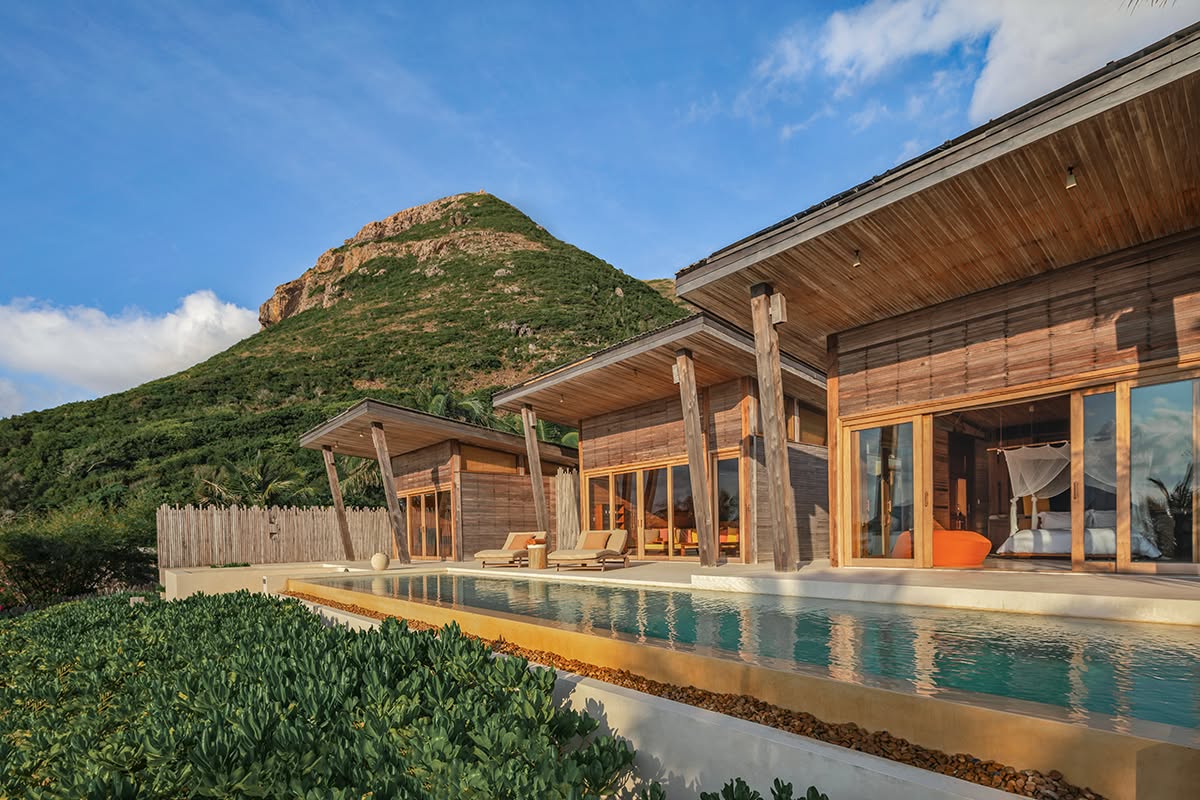
Wooden villas and a private pool at Six Senses Con Dao illustrate a stay centred on the resort itself. (Source: Collected)
Stay near town for everyday flexibility
A central base is useful when you want access to restaurants, cafes and historical visits without arranging a vehicle for every outing. It can also work well for a short first stay, when simple logistics matter more than spending most of the holiday inside a resort.
Check the exact street and room setting. A property described as central may still require a walk along an uncomfortable road, while a sea-view room does not necessarily provide convenient swimming access. Look at the route you will use each day, not just the distance on a map.
Choose a resort for the stay itself
A secluded resort makes most sense when its atmosphere, facilities and food are part of your reason for visiting. Before booking, ask about airport transfers, dining choices, excursion arrangements and access to town. Include those costs when comparing it with a less expensive room near restaurants.
For families, confirm room configuration and pool arrangements. Travelers with limited mobility should ask specific questions about steps, gradients, bathroom access and the route to meals. A general description such as “beachfront” says little about how easy the property will be to use.
Accommodation style
Best suited to
Check before booking
Town hotel or guesthouse
Independent meals and sightseeing
Walking routes, noise and room facilities
Beach-oriented hotel
A balance of outings and downtime
Actual beach access and transport needs
Secluded resort
Couples and travelers prioritizing the property
Meal costs, transfers and excursion logistics
Eating on the island
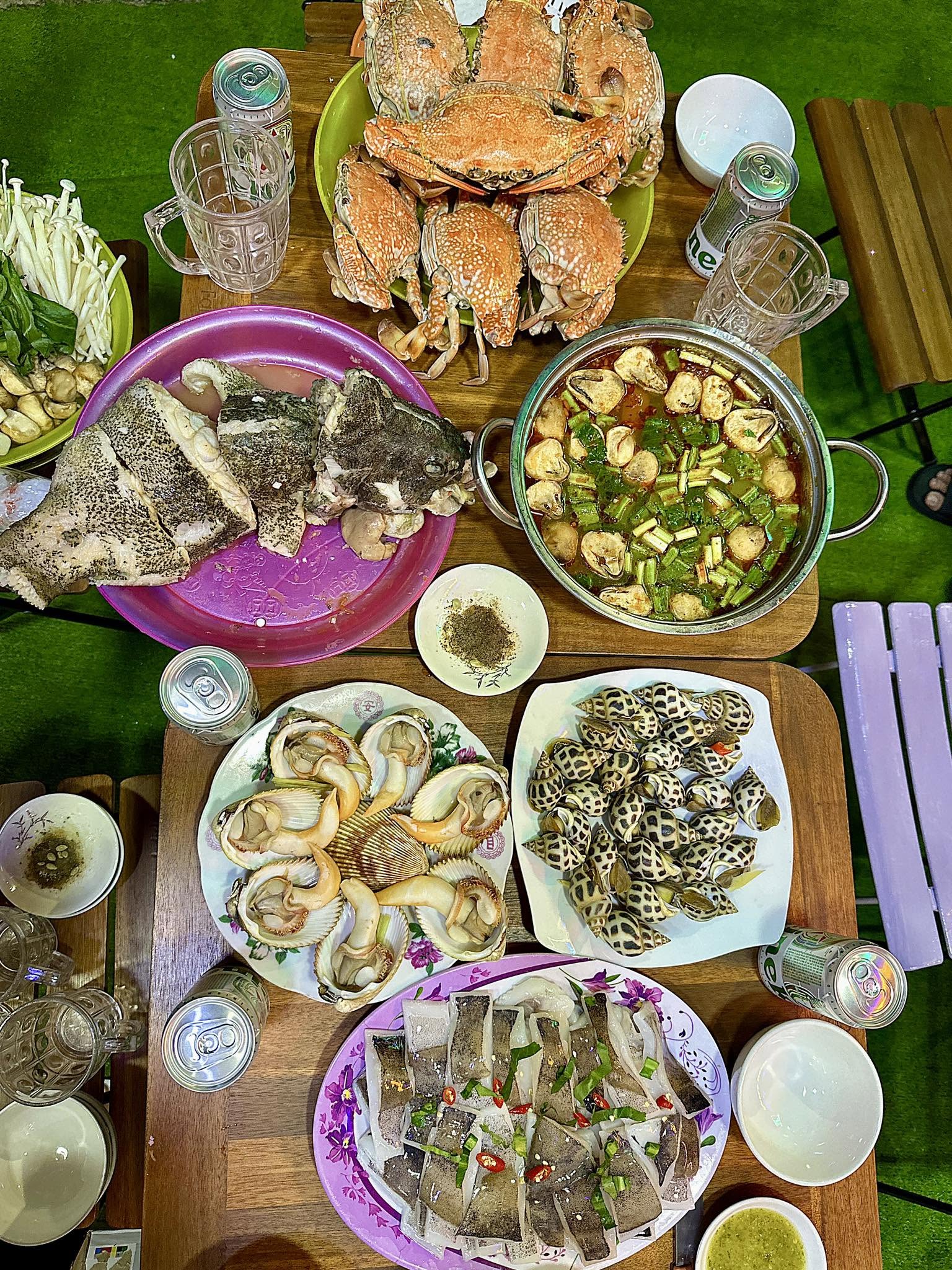
Crab, shellfish and fish dishes make up a shared seafood meal on Con Dao. (Source: Collected)
Leave time for a few uncomplicated meals rather than treating every dinner as an excursion. Town dining gives you flexibility; a remote stay benefits from checking menus and meal arrangements in advance. Ask what is available on the day, particularly when choosing seafood.
Confirm whether seafood is priced by portion or weight, and agree on preparation before ordering. Local bang-tree seed products make a distinctive food souvenir, but check ingredients if you have allergies. For dietary restrictions, send a clear written request before arrival and reconfirm it at the restaurant.
If you have a late return from an activity, arrange dinner beforehand. Carry drinking water on outings and plan meal breaks around the needs of children or older companions. These small decisions often make more difference to a relaxed stay than adding another attraction.
5. Balance Beaches, Nature and Historical Experiences
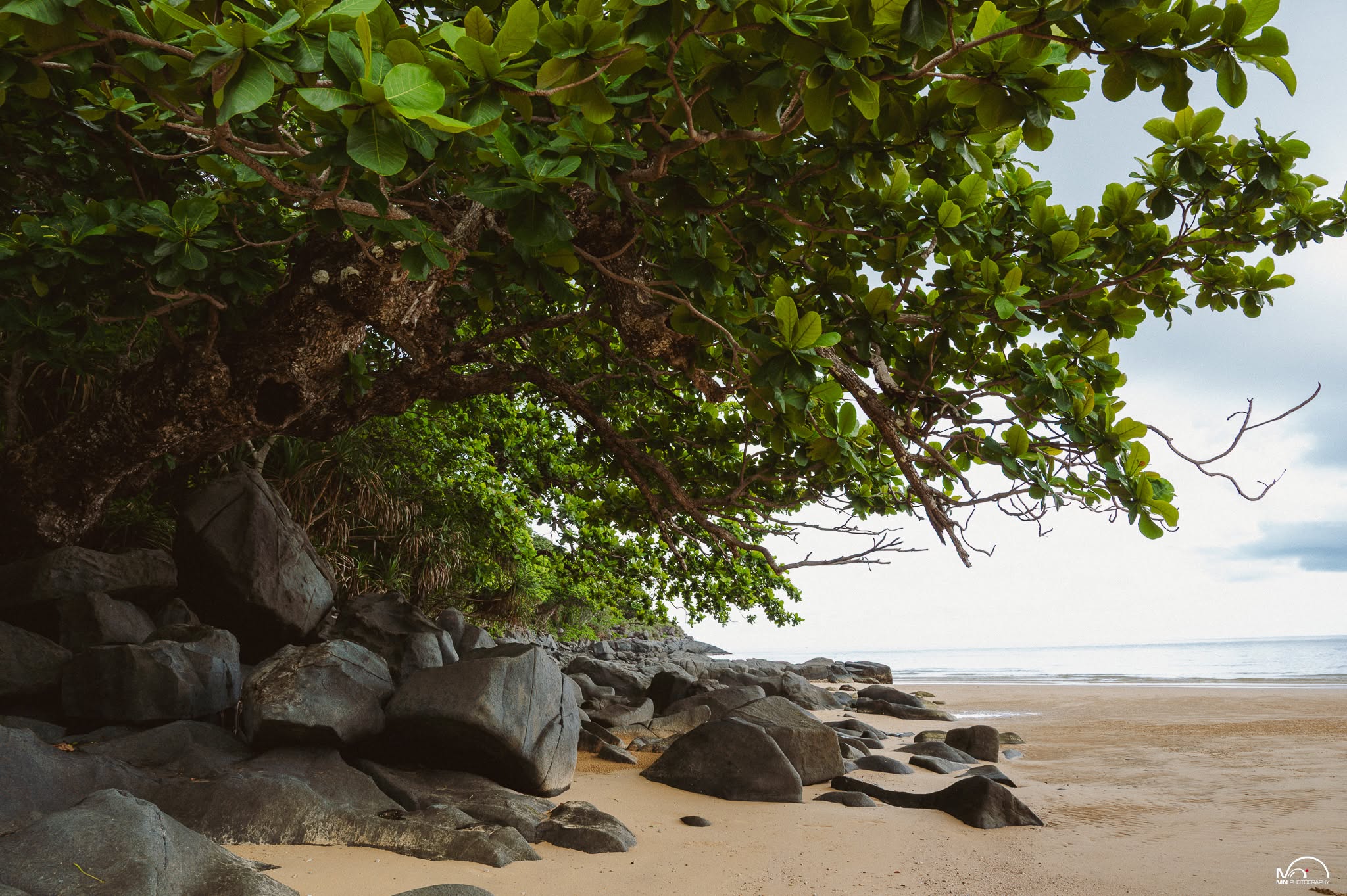
Coastal trees shade a Con Dao beach edged with boulders and sand. (Source: Collected)
Choose beaches for the conditions and your purpose
Dam Trau is a recognizable beach excursion near the airport side of Con Son. Dat Doc is associated with resort stays, while other coastal stops offer scenery or a pause during a drive. Access and facilities differ, so establish whether you want to swim, sit in the shade or simply enjoy the view.
Ong Dung combines a forest approach with a rocky coastal setting. It should not be treated as interchangeable with a broad sandy bathing beach. Ask about the approach, current access and suitability for your group before setting out.
At any beach, assess the water when you arrive. Avoid entering rough water or assuming that a photogenic bay has supervised swimming. Bring what you need for the outing, arrange your return journey and leave enough daylight for it. The most useful beach choice is the one that suits that day’s conditions.
Snorkeling, diving and forest walks
A narrow forest path runs beneath dense tropical vegetation on Con Dao. (Source: Collected)
The national park offers opportunities to explore forest and marine environments. Select an outing by its demands as well as its scenery. A short, shaded walk and a longer trek to a remote bay require different preparation; request current route details and guidance requirements.
For snorkeling, describe your swimming confidence honestly and ask about flotation, supervision and the way you enter the water. For scuba diving, confirm the program, required experience and arrangements with a qualified operator. Discuss any medical questions with an appropriate professional and tell the operator about your onward flight before reserving a dive.
Allow a half day or a day according to the confirmed excursion, not an optimistic estimate of time in the water. Boat travel, briefings and changing conditions all affect the outing. Avoid combining a demanding hike and a substantial marine excursion simply because both appear nearby on a map.
Turtle watching is a managed conservation experience
Bay Canh is among the locations associated with turtle programs. Visits must fit the national park’s arrangements, with registration, visitor limits and staff guidance. Ask whether your booking concerns nighttime nesting observation, a morning hatchling release, or another conservation activity.
An overnight outing needs separate consideration: sleeping arrangements, boat transfers and your tolerance for waiting. Follow staff directions, including instructions about lighting and photography. Avoid interfering with animals or setting expectations around handling them. Wildlife determines the event, so leave room for a meaningful experience even without a particular sighting.
Give history enough time
Interpretive figures inside a former prison cell depict confinement in Con Dao’s tiger cages. (Source: Collected)
Begin with Con Dao Museum for context before visiting selected former prison sites. Places such as Phu Hai and the areas known as the tiger cages carry difficult histories of imprisonment and suffering. An informed guide can help connect individual buildings with the wider story.
Hang Duong Cemetery is a place of remembrance and pilgrimage. Dress and behave respectfully, observe posted instructions and avoid photographing mourners without permission. You do not need to copy an elaborate ritual to visit thoughtfully.
Give these visits their own space in the day. Some displays and accounts may be distressing, particularly for children. Discuss the visit with your companions, select an appropriate amount of material and allow time afterward rather than rushing directly from site to site.
6. Build Your Itinerary, Budget and Practical Plan
Evening light colours a quiet Con Dao bay, leaving space for rest between planned outings. (Source: Collected)
A flexible framework for three, four or five days
Use this framework as a set of interchangeable days. Put a weather-dependent excursion early enough to allow another opportunity, subject to availability, while keeping indoor or town-based activities available as alternatives.
Day
Main plan
Adjustment if needed
Day 1
Arrival, settle in and an easy local outing
Rest if the journey takes longer
Day 2
Confirmed marine or national park excursion
Move to museum and selected historical visits
Day 3
History, a suitable beach and time to relax
Use for a rearranged excursion if available
Day 4
Forest walk, another coastal area or resort time
Keep the day deliberately light
Day 5
A slow morning and departure
Reserve enough time for the confirmed transfer
For a three-day visit, choose one substantial experience alongside history and beach time. Four days allow better balance; five days create space to enjoy the accommodation and avoid feeling that every hour must be productive. If your final transport leaves early, treat that day as a travel day.
Families can shorten historical visits and favor manageable walks. Couples seeking rest can replace an excursion with a full resort day. Travelers interested chiefly in nature should reserve suitable activities first, then organize the remaining days around the confirmed arrangements.
Start with return transport and accommodation, then add transfers, meals and selected experiences. Island excursions can change the overall budget considerably. Request an itemized quotation showing boat arrangements, guides, equipment, park charges, meals and any overnight accommodation.
Spending style
Main priorities
Cost items to watch
Value-focused
Simple town room and selected activities
Return transport and transfers
Comfortable discovery
Convenient hotel and a few guided outings
Excursion inclusions and private vehicles
Resort-led
Property facilities, privacy and relaxed days
Meals, room category and additional experiences
Compare the total cost for your group, especially when sharing a vehicle or private outing. A lower room rate can be offset by repeated transport, while a package may include useful services. Ask about cancellation terms for weather-dependent activities before paying.
Final practical decisions
Carry your passport for transport and accommodation procedures. Save booking details offline, bring essential medication and check that your insurance covers the activities you plan. Tell providers about accessibility or dietary requirements before confirming services.
For a first trip, three priorities keep the planning clear: establish a workable way to reach the island, choose accommodation that fits your daily routine, and reserve the experience that matters most. Leave the remaining time flexible enough to enjoy being there.
If you would like help combining Con Dao with the rest of Vietnam, a custom Vietnam tour can bring accommodation, transfers and selected experiences into one practical itinerary. Share your dates, group size and interests, or contact Vietnam Travels to discuss a suitable island stay.