Ninh Binh Travel Guide: Plan Your First Visit to Vietnam’s Limestone Countryside
November 12, 202616 min read
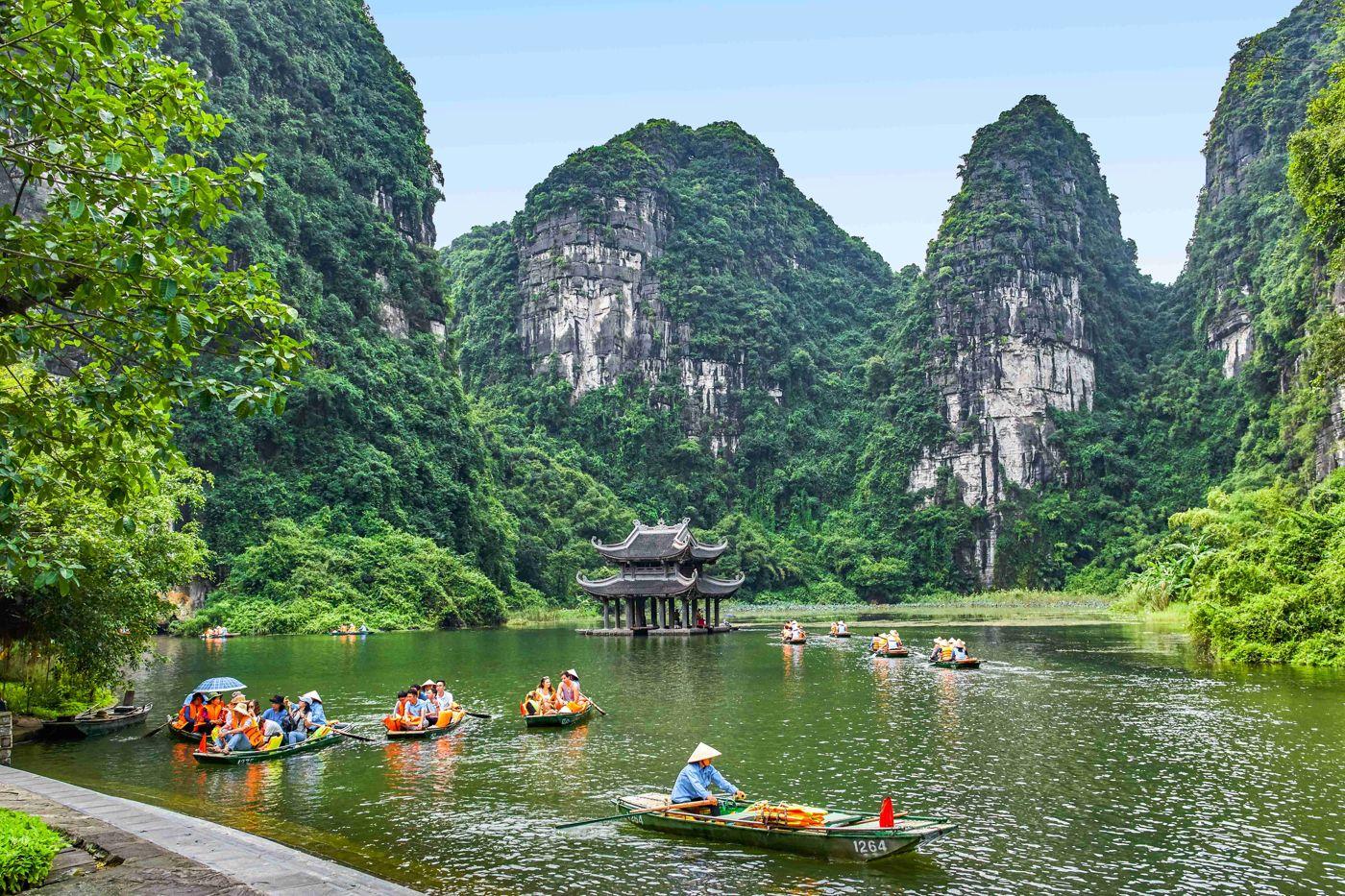
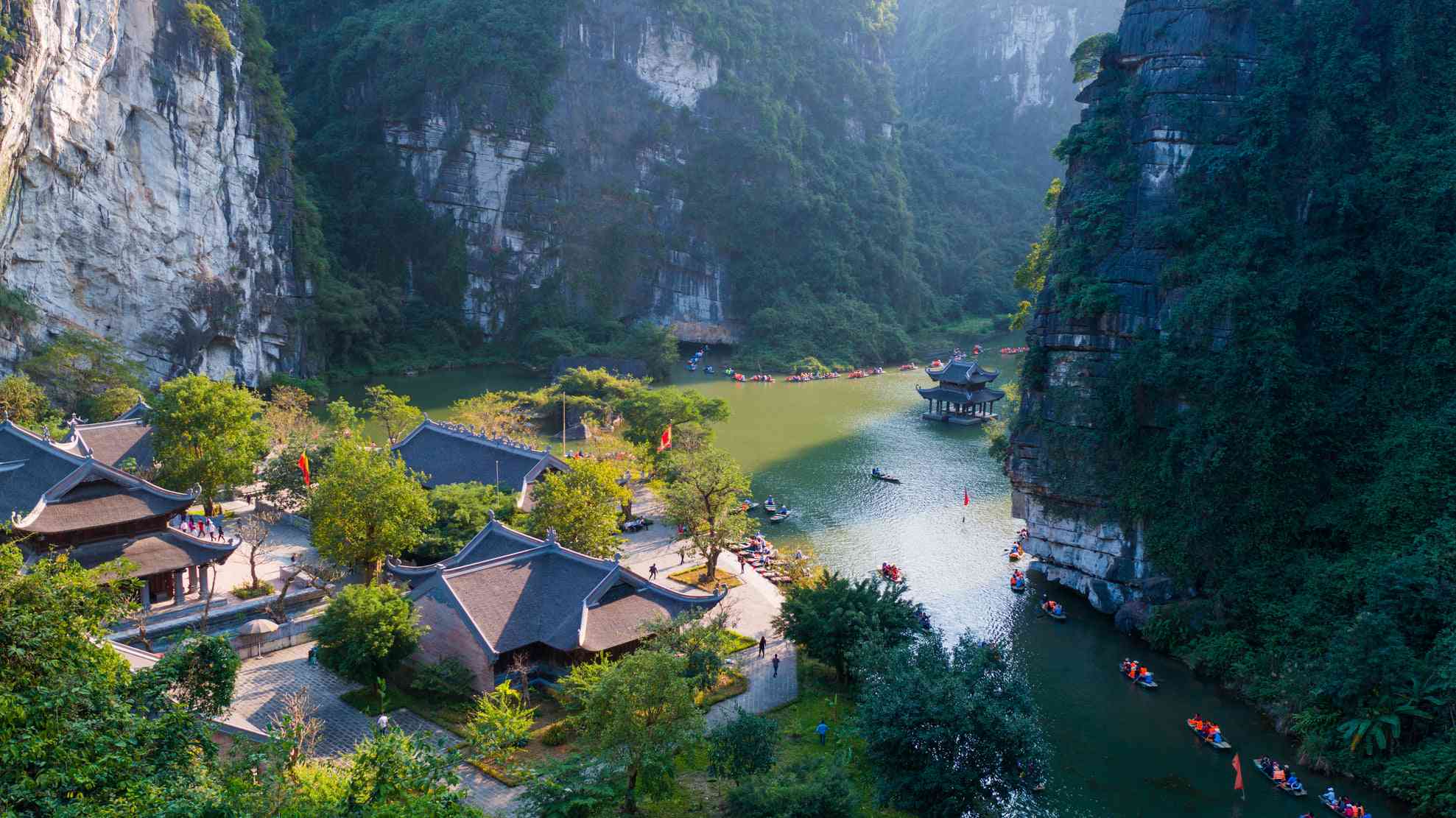
Featured image: Ninh Binh limestone scenery and rowing boats. (Source: Collected)
Choosing between a day trip from Hanoi and a longer countryside stay is the first step in planning Ninh Binh. You then need to decide which boat trip to take, where to sleep and how much walking or cycling suits your group. This Ninh Binh travel guide brings those choices together, with practical advice on Trang An, Tam Coc, Hang Mua and itineraries of one to three days.
For a balanced introduction, consider two days and one night. If you are building a longer journey, our 2 week Vietnam tour itinerary shows how to place a countryside stay between other destinations. Choose one main boat experience, add a cultural visit and leave time for the landscape between attractions. An extra night gives you more flexibility for weather, relaxed cycling or a separate nature excursion.
Understanding Ninh Binh and Choosing Your Trip Length
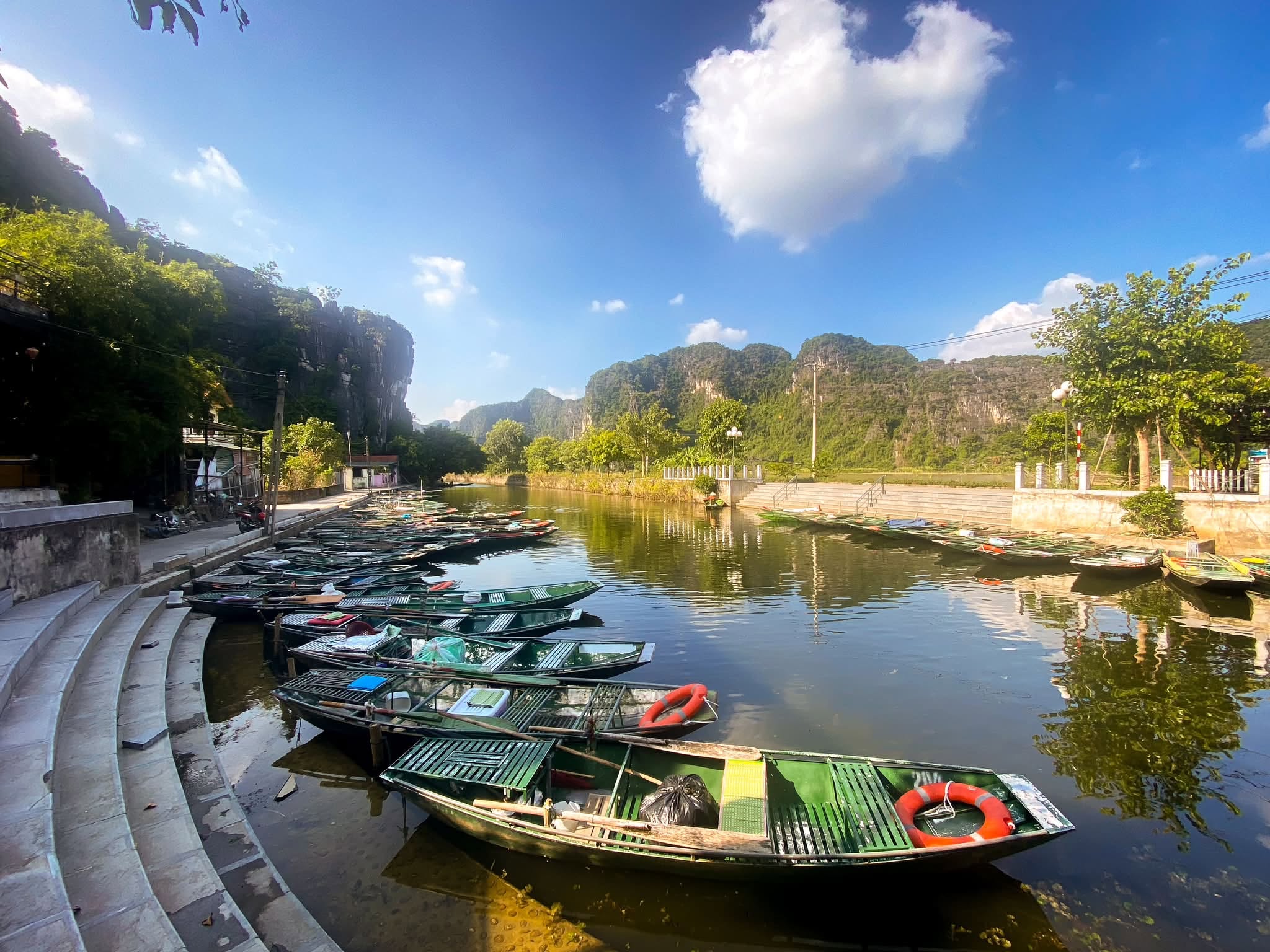
Boats at Tam Coc illustrate one starting point for exploring Ninh Binh’s waterways. (Source: Collected)
A countryside destination with a wider story
Ninh Binh is known for limestone formations rising above waterways and farmland. Visitors often encounter the description “Halong Bay on land”, but the comparison only explains part of its appeal. Here, temples, agricultural activity and village roads sit within a landscape you can explore by boat, bicycle and on foot.
The UNESCO-listed Trang An Landscape Complex combines natural and cultural significance. Its heritage encompasses more than the departure point for a popular boat ride: it includes limestone scenery, archaeological evidence and places connected with the ancient capital of Hoa Lu. Understanding that distinction makes a guided cultural visit more rewarding.
What does “Ninh Binh” mean when booking?
In travel planning, Ninh Binh often refers to the countryside around Tam Coc, Trang An and nearby sights. A hotel in the urban centre can offer a different stay from a bungalow among fields, even when both use the same destination name.
The province’s boundaries expanded through the 2025 administrative merger. Our guide to Vietnam’s new administrative map explains the wider changes. For this trip, use exact map locations: the enlarged province is much broader than the familiar Tam Coc–Trang An sightseeing area.
Who will enjoy a visit?
Ninh Binh suits travellers interested in scenery, history and a slower break between major cities. Couples can combine boat trips with countryside accommodation; families can choose manageable outings; photographers can plan around light and agricultural seasons. You can enjoy the destination without climbing every viewpoint.
Consider individual activities carefully if you find steps difficult, dislike prolonged sun exposure or feel uncomfortable in small boats. Tell your organiser about mobility needs before committing to an itinerary. An alternative cultural visit or quiet afternoon can be more enjoyable than completing an unsuitable climb.
A day trip or an overnight stay?
Time available
What it allows
Main limitation
One day from Hanoi
A boat trip and one carefully selected additional visit
Transfers take a substantial share of the day
Two days, one night
Main highlights with a countryside evening and less pressure
Still requires choosing between several worthwhile outings
Three days, two nights
A slower programme or a separate nature-focused excursion
Needs purposeful planning rather than adding similar experiences
Count usable hours rather than the number of dates on a booking. A late arrival followed by an early departure does not create two full sightseeing days. Sleeping locally is particularly useful when you want to begin an activity before returning day-trip groups arrive.
Best Time to Visit and What the Seasons Change
Rice fields beside the river illustrate Tam Coc’s seasonal scenery; crop conditions vary. (Source: Collected)
Choose dates around the experience you want
Spring and autumn are useful starting points for travellers combining sightseeing and outdoor activity. Summer requires more attention to heat, rain and shade, while winter can bring cooler, damp conditions. Comfort on a bicycle or an exposed staircase matters as much as the appearance of the landscape.
Period
What to consider
Practical approach
January–March
Cooler spells, damp weather and busy holiday periods
Bring layers and check domestic holiday dates
April–June
Increasing heat and seasonal rice scenery around Tam Coc
Start exposed activities early and allow breaks
July–September
Heat, showers and possible weather disruption
Keep outdoor plans flexible and follow local advice
October–December
Often a useful period for outdoor exploring, with cooler weather later
Pack for changing temperatures and shorter daylight
These are broad patterns rather than forecasts. Before travelling, check conditions for the actual outing, particularly boating or forest activities. Heavy rain can affect access even when a general destination forecast looks acceptable.
Rice fields are seasonal
The national tourism website’s Ninh Binh destination guide highlights golden rice around Tam Coc in late May. Treat that as a period to investigate, not a guarantee for every field or year. Planting, weather and harvesting determine what you see on a particular day.
If rice photography is the main objective, ask for recent information from the precise area before booking inflexible travel. A photograph taken elsewhere in northern Vietnam may show a different agricultural calendar. Likewise, the scenery beside a Trang An route is not interchangeable with Tam Coc’s riverside fields.
Plan for comfort and crowds
For summer sightseeing, reserve the hottest part of the day for lunch, rest or a suitable sheltered visit. Carry water, a hat and sun protection. Do not assume a breeze on the boat will prevent sunburn, or that a nearby café is available during every part of an excursion.
Check public holidays, weekends and local festival dates when reserving rooms and transport. If your dates are fixed, choose a manageable programme rather than expecting every attraction to be quiet. Flexible cancellation terms can be useful when the trip depends heavily on outdoor conditions.
Getting to Ninh Binh and Moving Between Attractions
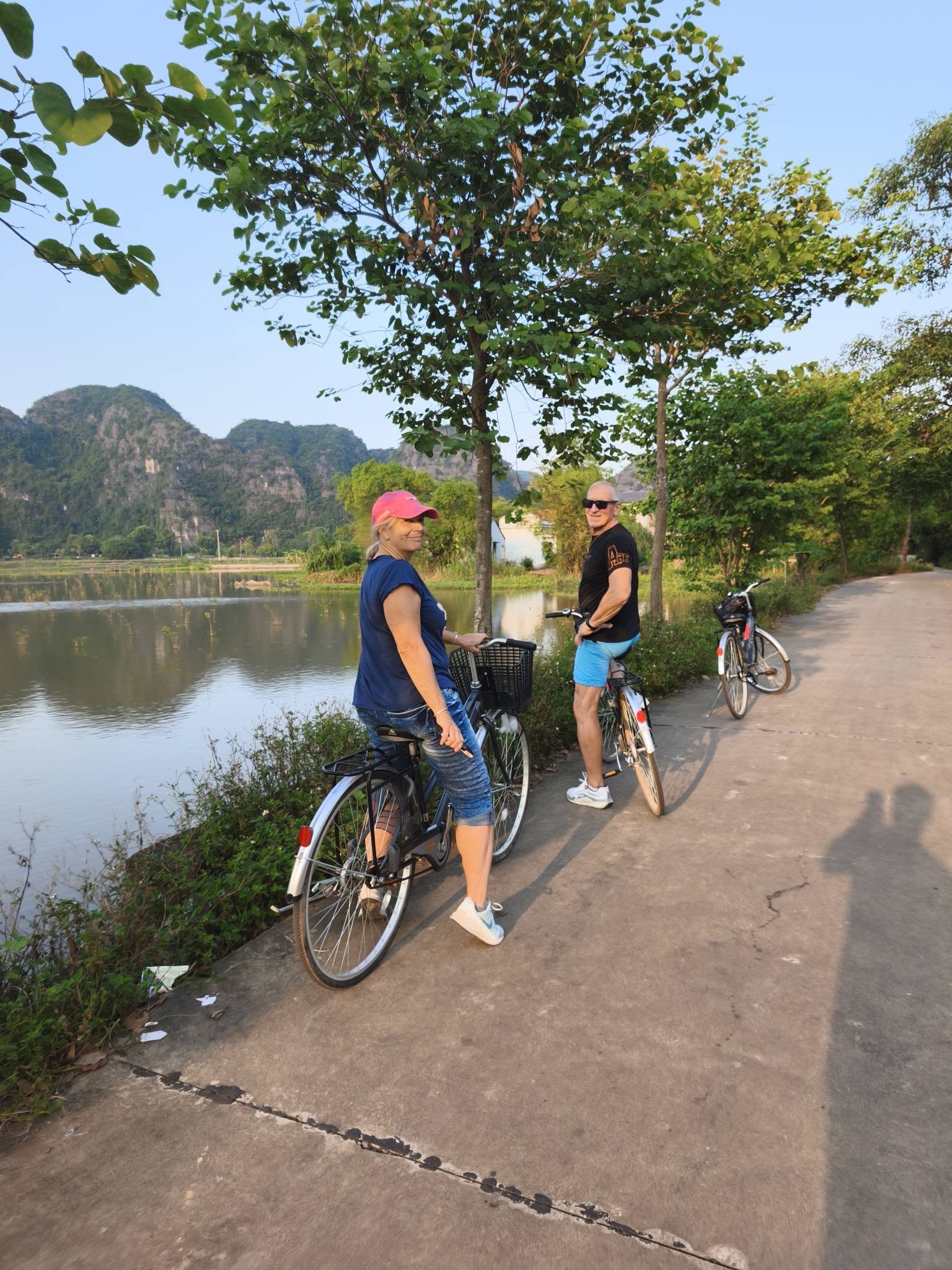
Cycling beside the water is one option for exploring suitable local roads. (Source: Collected)
From Hanoi by road
Private cars, shared vehicles and organised tours provide different levels of flexibility. Allow roughly two to three hours as an initial road-planning estimate from Hanoi, with variation for the pickup point, traffic, stops and final destination. A vehicle serving Tam Coc directly may suit you better than a cheaper service terminating elsewhere.
Before paying, confirm the exact pickup and drop-off, luggage allowance and whether a hotel transfer is included. Advertised vehicle categories can vary between operators. For families, ask about seat belts and child seats rather than assuming they are part of the booking.
A day tour is convenient if you want transport and a selected programme arranged together. Read the itinerary carefully: determine which boat trip is included, whether cycling is optional and how much time is allowed at each stop. A private car gives more control over timing but does not automatically include a guide or attraction tickets.
Travelling by train
Rail can suit visitors who prefer a scheduled service and are happy to arrange the final transfer. Check current departures, journey times and ticket availability through Vietnam Railways. Build the station-to-hotel journey into the comparison with road services.
Arriving at Ninh Binh station does not mean arriving at a countryside property near Tam Coc or Trang An. Send your accommodation the train details and agree the pickup point and price. Keep your arrival day realistic if the service reaches the area after the most convenient sightseeing hours.
Local transport and cycling
Attractions are spread out, so choose transport according to distance, conditions and ability. A bicycle can work well for selected rural roads near your accommodation, while a car suits longer outings or travellers who prefer to avoid traffic and midday heat.
Inspect brakes, tyres and lights before accepting a bicycle. Ask for a route using suitable roads and avoid cycling unfamiliar lanes after dark. A short distance on a map may involve busy junctions or uncomfortable surfaces; guests with children should assess the route before committing.
For a car outing, clarify waiting time and the return arrangement. Our Halong Bay transfer and port guide explains the boarding details to check. If continuing to a Halong or Lan Ha cruise, confirm the exact port and required check-in time with the cruise operator. Leave a buffer rather than assuming every bay departure uses the same harbour or schedule.
Where to Stay and What to Eat
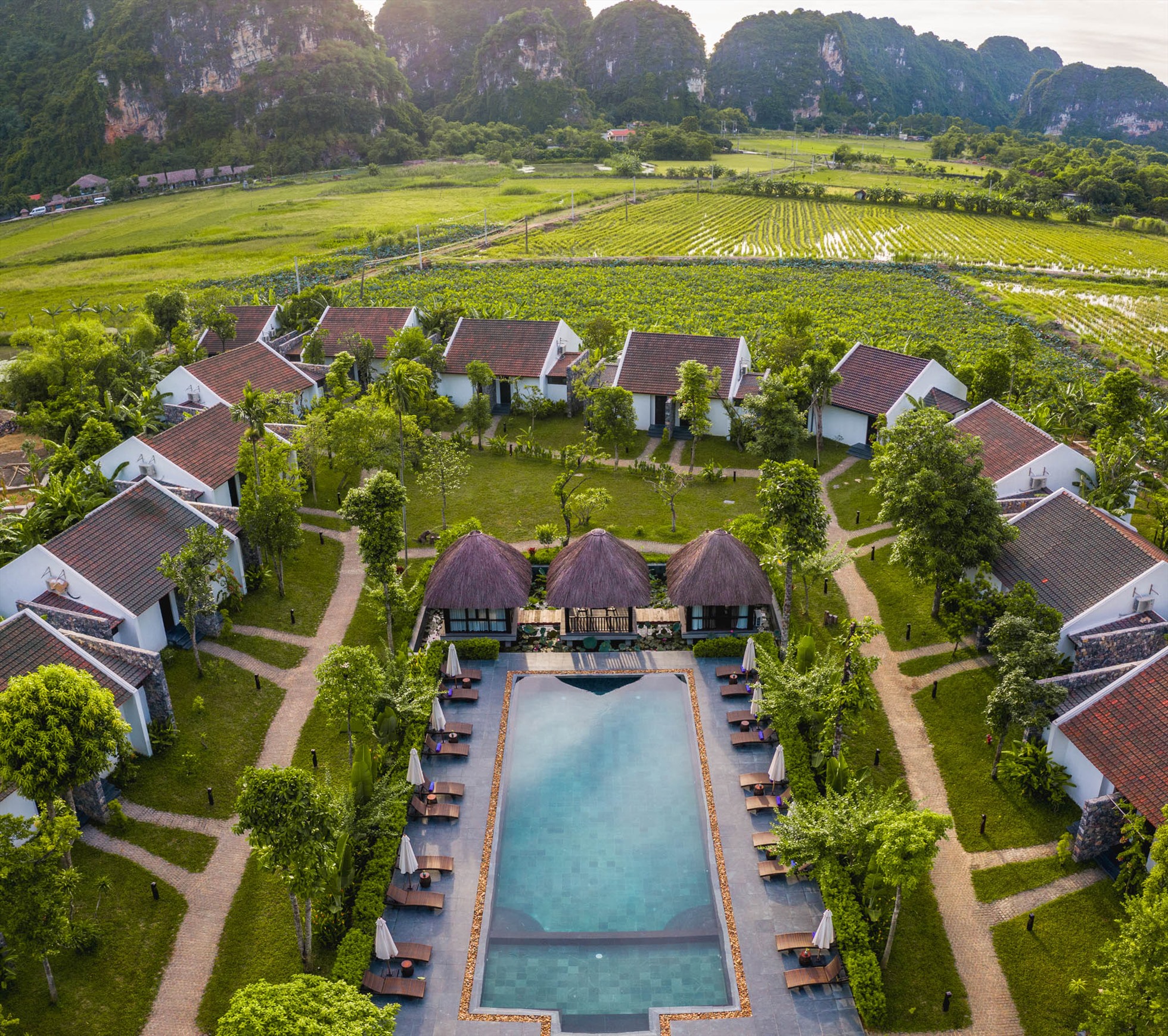
Aravinda Resort illustrates a countryside accommodation setting in Ninh Binh. (Source: Collected)
Choose your base before choosing a room
Tam Coc can suit visitors who want restaurants, accommodation choices and a recognisable village centre within reach. Properties in the surrounding lanes vary considerably: one may be convenient for dinner on foot, while another requires transport despite using a similar destination description.
The Trang An countryside and areas around Hang Mua can appeal if landscape and time at the property matter most. Check the actual setting, road access and evening food options. A peaceful-looking photograph does not establish whether the neighbouring plot has construction or whether events create noise nearby.
Urban accommodation can work for travellers prioritising transport connections and city services. It is less convenient if your plan involves returning repeatedly to a countryside hotel between activities. Compare the complete daily routine, not simply the room rate.
Base
Best reason to choose it
Check first
Tam Coc centre and nearby lanes
Dining options and a convenient visitor base
Noise, walking route and exact location
Trang An countryside
Landscape and quieter time at the accommodation
Outside meals, transport and vehicle access
Hang Mua surroundings
A countryside setting near a major viewpoint
Distance to services and surrounding development
Urban centre
City amenities or transport practicality
Travel to your selected attractions
Homestay, bungalow or resort?
“Homestay” can mean a hosted household, a guesthouse or accommodation operating much like a small hotel. Ask whether you will share spaces with a family, whether bathrooms are private and what meals are available. Choose on the basis of the actual experience rather than the label.
Check air conditioning, hot water, room ventilation and bedding appropriate to the season. Families should confirm sleeping arrangements and pool safety. If access matters, ask about steps and the entire route from the vehicle to the room; a ground-floor bedroom alone does not guarantee easy access.
Make room for local meals
Goat dishes and com chay, crispy rice, are among Ninh Binh’s recognised specialities. Ask your host or guide to explain preparation and portion sizes, particularly when ordering several dishes for a group. There is no need to turn every meal into a large set menu.
Vegetarian travellers and guests with allergies should confirm ingredients, broths and sauces clearly. If staying away from restaurant areas, arrange dinner before heading out for the day. A simple meal at your accommodation can be a useful part of a relaxed countryside evening.
Things to Do: Boats, Viewpoints and Cultural Visits
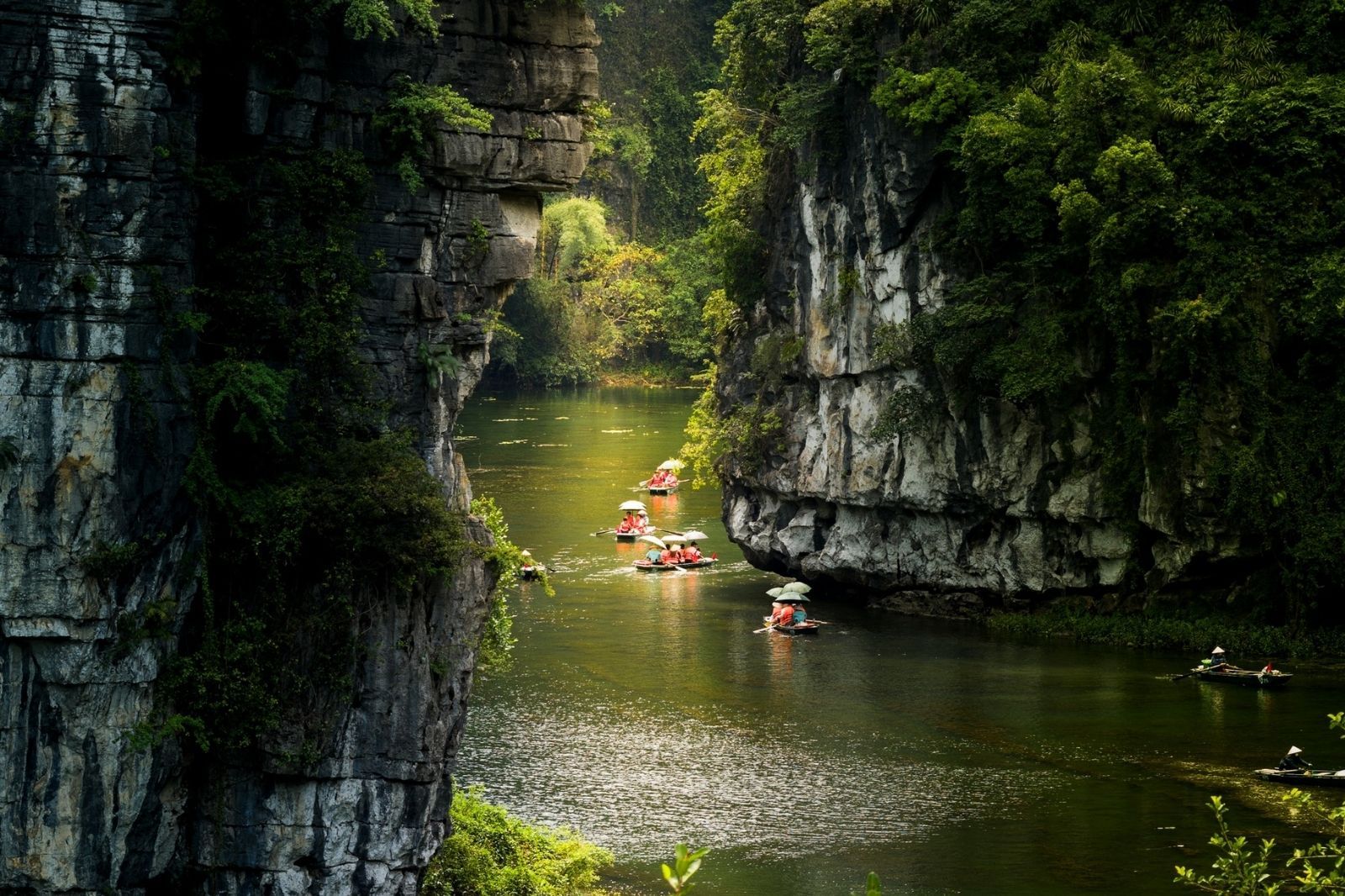
A rowing boat passes between limestone cliffs on a Trang An outing. (Source: Collected)
Choose Trang An or Tam Coc as your main boat outing
Both offer close encounters with limestone scenery from a small rowing boat, but they are distinct experiences. Trang An is associated with routes linking waterways, caves and cultural stops; Tam Coc follows a river landscape where the surrounding fields contribute to the seasonal appearance.
The national tourism website’s guide to Ninh Binh boat tours provides an introduction to the differences. Check the current route choices, operating status, ticket conditions and expected duration before purchasing. Do not assume an itinerary or price quoted in an older article remains valid.
For a short first visit, one boat trip usually leaves a better balance of activities than booking both automatically. Choose according to the landscape and route you want, then use the remaining time for history, cycling or rest. If doing both, identify what additional experience you expect from the second outing.
Prepare for an extended period sitting in a small boat. Use the required life jacket, follow staff instructions and protect belongings from rain or splashes. Ask about boarding assistance if needed. Carry sun protection and avoid treating an umbrella as a substitute for following weather-related operating advice.
Hang Mua for an elevated view
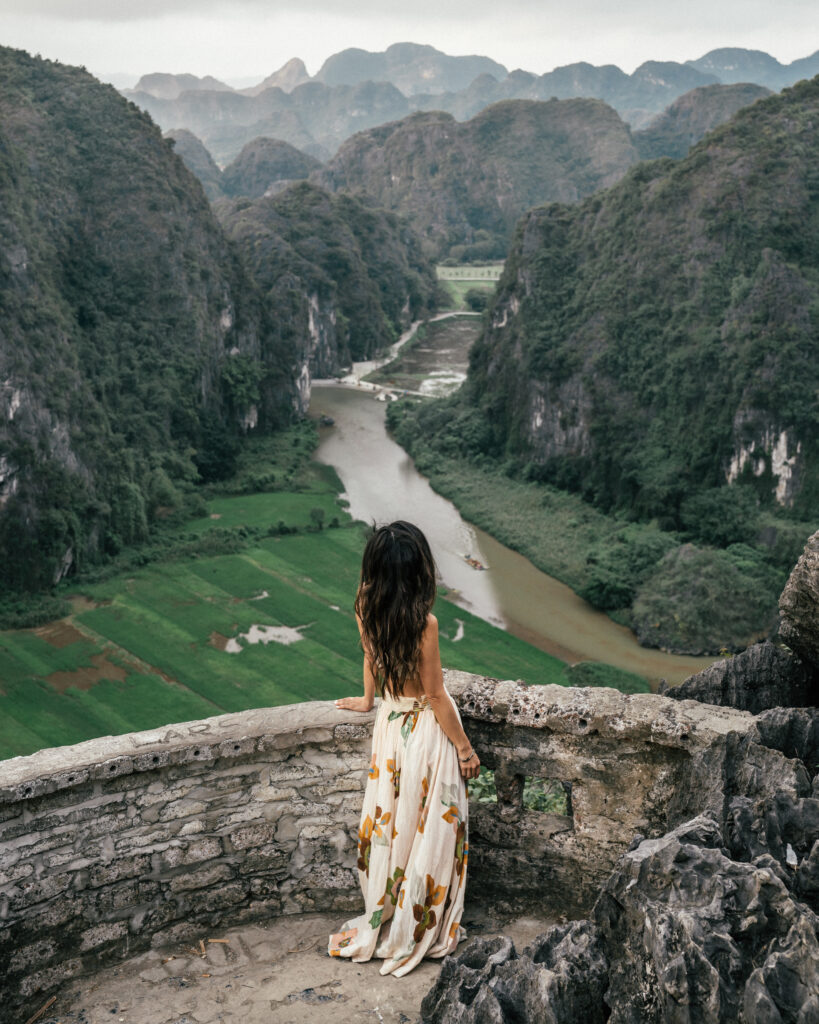
An elevated view from Hang Mua rewards visitors able to manage the climb. (Source: Collected)
Hang Mua is a viewpoint excursion involving a substantial staircase. Wear shoes with grip, take water and assess your comfort with steep steps and exposed sections before starting. Allow time to descend without rushing and avoid blocking narrow areas for photographs.
Choose a cooler part of the day when possible, but do not assume sunset means a quiet visit. If steps are unsuitable, enjoy another part of the landscape rather than treating the summit as compulsory. Stop if surfaces or weather make the climb uncomfortable.
Hoa Lu and Bich Dong for cultural context
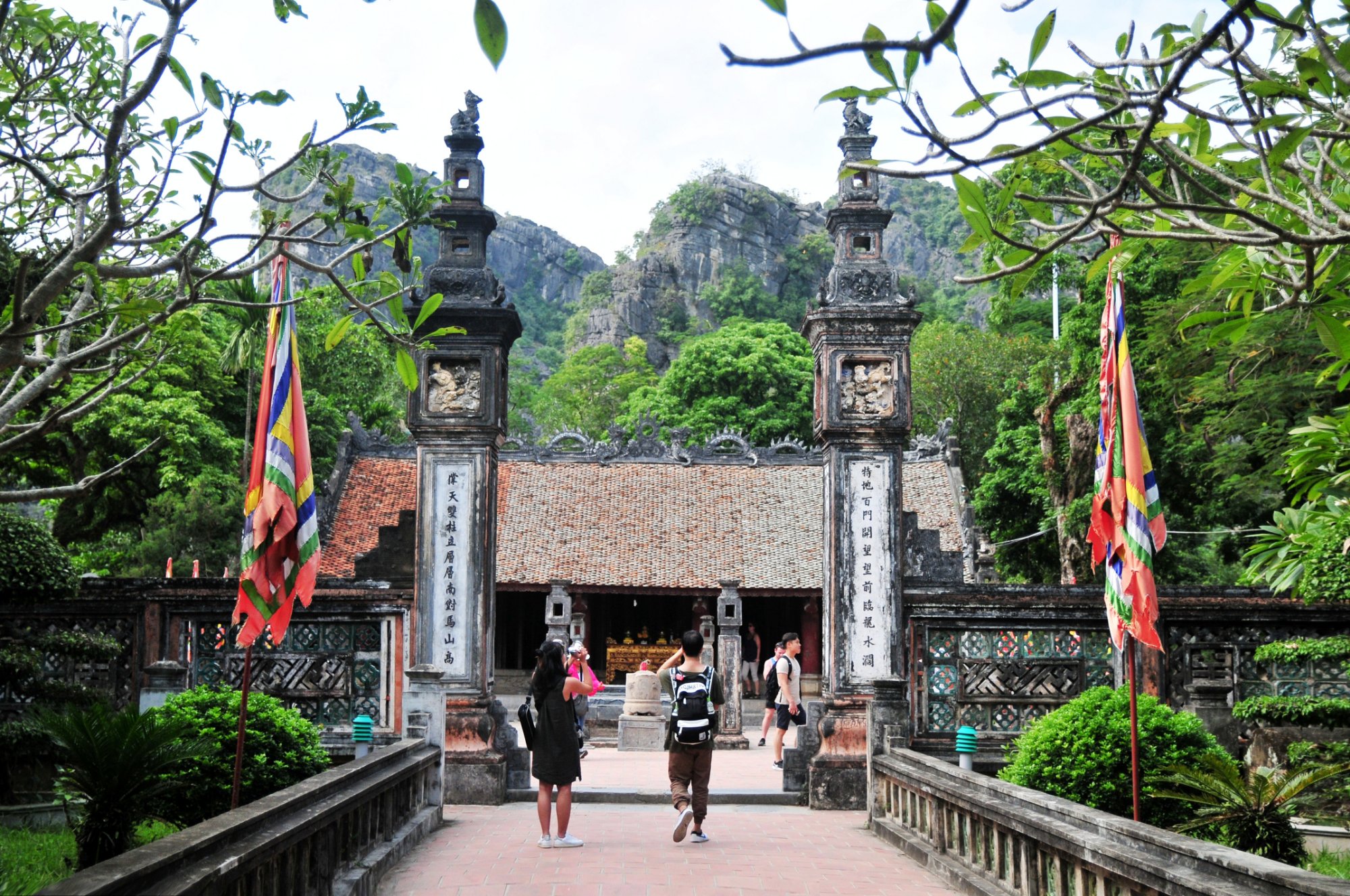
A temple entrance at Hoa Lu introduces the region’s historical and religious heritage. (Source: Collected)
Hoa Lu introduces the region’s importance as an early capital, while Bich Dong offers a religious setting within the limestone landscape. A knowledgeable guide can explain the distinction between historical sites, reconstructed features and modern visitor areas.
Dress respectfully at religious places and follow instructions about photography and access. Bich Dong and other hillside sites may involve steps or uneven surfaces. Check the route in advance if you need a gentler visit, and leave time to understand the site rather than arriving only for a quick picture.
Add nature excursions selectively
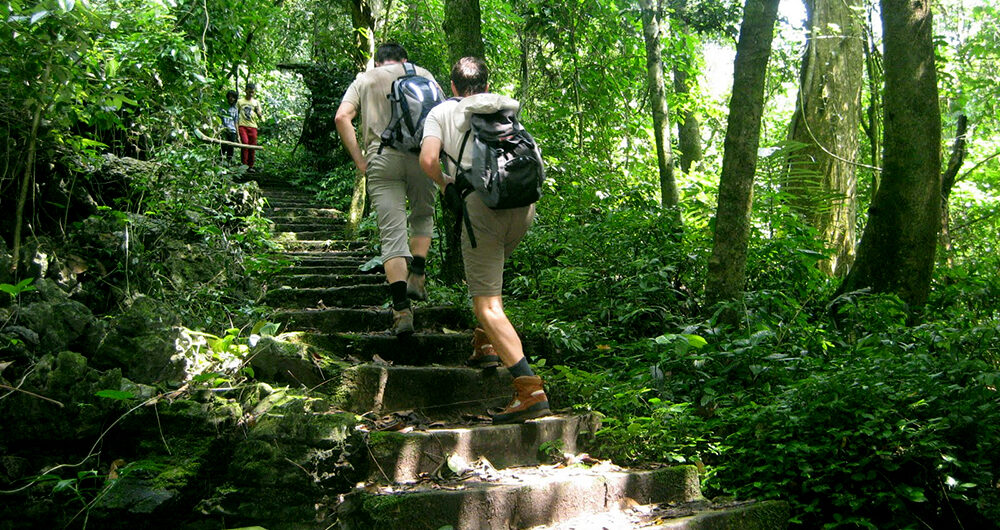
A forest walk in Cuc Phuong requires time, suitable footwear and current trail information. (Source: Collected)
Van Long and Cuc Phuong are options for travellers with a particular interest in nature. They should be planned as distinct outings, with transport and activity time included. A national park visit deserves more consideration than filling a spare hour between central sightseeing stops.
For wildlife or forest experiences, confirm current visitor arrangements, guide availability and trail conditions with the relevant operator or site. Wildlife sightings are never guaranteed. Choose responsible observation, avoid feeding animals and do not assume every rescue facility is open for walk-in visits.
Leave part of the programme for the countryside itself. A manageable cycle ride, a conversation with your host or a quiet breakfast can provide a different perspective from visiting another ticketed attraction. Keep to permitted paths and ask before photographing people or entering private land.
Itineraries, Budget and Essential Travel Questions
Waterways and limestone slopes form part of the Trang An landscape. (Source: Collected)
One day from Hanoi
Depart with a clear priority: one boat trip and one additional experience. A cultural visit can create a varied day; an exposed climb adds a different physical demand. Allow for lunch, queues and the return journey, rather than relying on the shortest possible driving time.
Avoid adding several optional stops simply because they appear nearby on a map. For families or guests who prefer a slower pace, fewer visits can make the day more enjoyable. Confirm the expected return time if you have plans in Hanoi that evening.
Two days and one night
Day
Morning
Afternoon
Evening
1
Travel from Hanoi and settle into the area
One main boat trip, adjusted to arrival and conditions
Dinner near your accommodation
2
Hoa Lu or Bich Dong, selected according to interests
Hang Mua if suitable, or a gentle cycle ride, then departure
Continue your journey or return to Hanoi
Swap the order when needed. If you arrive late, move the boat trip to the following morning and remove another activity. Confirm luggage storage and changing facilities if you plan an active outing after checkout.
Three days and two nights
Keep the first two days comfortable, then choose a purposeful extension: additional countryside time, Van Long or a properly planned Cuc Phuong visit. Do not automatically combine all three. Your departure point and next destination should determine what fits on the final day.
For a wider route, compare our Northern Vietnam tours and check the actual transfer sequence. Ninh Binh can fit between Hanoi and a bay cruise, but direct connections still need careful planning around departure times and ports.
What should you budget?
The following figures are editorial planning allowances, not live quotations. They assume two adults sharing a room and splitting its cost. Totals exclude travel to and from Ninh Binh, boat and attraction tickets, private guides, substantial excursions, visas and insurance.
Travel style
Allowance per person per day
Main assumptions
Budget-conscious
VND 650,000–1,100,000
Simple shared accommodation, local meals and limited paid transport
Comfortable mid-range
VND 1,200,000–2,200,000
Comfortable shared room, varied dining and some local vehicle use
Upscale
VND 2,800,000–5,000,000 or more
Higher-category accommodation and greater dining and transport comfort
Add major activities separately before relying on a daily average. Ask whether a boat price is per passenger or per boat and what it includes. For car services, clarify waiting, parking and additional stops. Group size, holidays and room category can materially change the final cost.
What should you prepare?
Bring shoes with grip, a rain layer, sun protection and clothing appropriate for temples. Carry some cash for small purchases and keep the hotel location accessible offline. Check bicycle condition and confirm pickup arrangements before leaving a property in an isolated setting.
Travel with a plan that can change. In heavy rain or unsuitable conditions, follow closures and local instructions instead of persisting with a prepaid activity. Leave room for meal breaks and enough time to reach the next booked service without rushing.
Is Ninh Binh worth an overnight stay?
Yes, when you want a countryside evening, a less compressed programme and more choice over activity times. A day trip remains a reasonable introduction if your overall Vietnam itinerary is short.
Do you need to take both boat trips?
No. Start with the route that interests you most. Doing both makes more sense when you have sufficient time and want to compare their landscapes, rather than simply complete a list.
Can you visit without climbing Hang Mua?
Yes. Boat trips, cultural visits and selected countryside outings can form a worthwhile programme without a demanding staircase. Choose activities according to your interests and ability.
Do you need a guide?
A guide can add historical context, help manage a multi-stop day and adapt the programme. Independent travel can also work when you arrange suitable transport and verify practical details. Be clear about what any booked service includes.
For a personalised plan, send your dates, group size, preferred accommodation and comfortable activity level through our custom Vietnam tour enquiry. Mention whether you prefer a day trip or overnight stay and where you will travel next, so the route can be built around your available time.
Research checked on 12 November 2026. Journey durations and budgets are planning estimates; confirm schedules, routes, access and prices for your dates.