Vietnam's New Administrative Map 2025–2026: What International Travelers Need to Know
Vietnam has undergone one of the most significant administrative reorganizations in its modern history. In 2025, the country reduced its number of provincial-level administrative units from 63 to just 34, creating a new administrative map that international travelers should understand when planning their journeys in 2026 and beyond.
For visitors familiar with destinations such as Ha Giang, Hoi An, Da Lat, Phu Quoc, Nha Trang, and the Mekong Delta, these changes may initially seem confusing. Some provinces have disappeared from the official administrative map, while their famous tourist attractions remain exactly where they have always been.
The restructuring is more than a geographical adjustment. It forms part of Vietnam's broader efforts to streamline administration, strengthen regional economic development, and improve coordination between neighboring areas.
For international travelers, the most important question is simple: What has changed, and how will it affect your trip to Vietnam?
This guide explains the new provincial structure, compares former and current province names, highlights major tourist destinations affected by the changes, and provides practical advice for navigating Vietnam's updated administrative landscape.
1. Understanding Vietnam's Administrative Restructuring in 2025
When did Vietnam change its provincial boundaries?
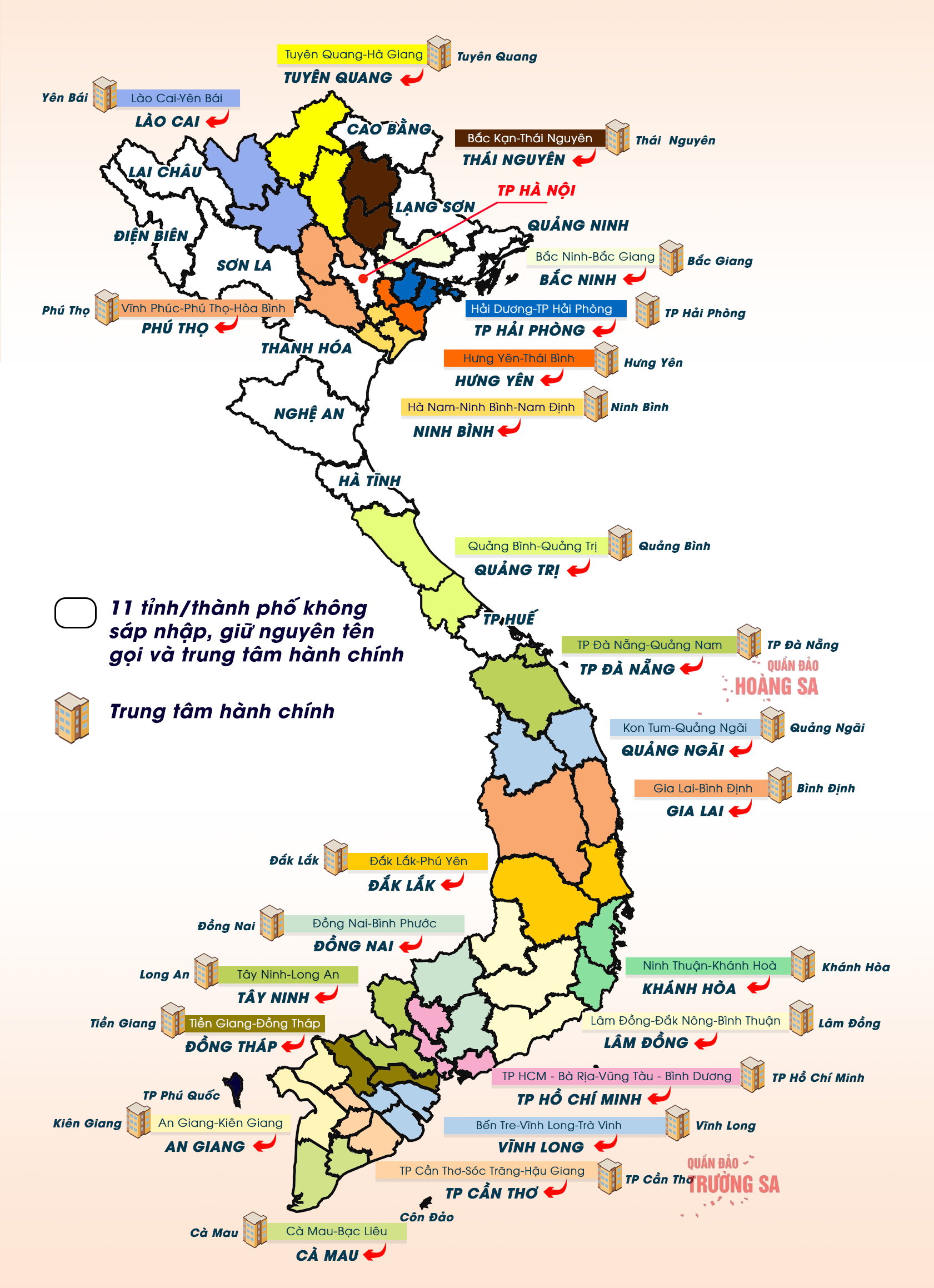
On June 12, 2025, Vietnam's National Assembly adopted Resolution No. 202/2025/QH15, approving a nationwide restructuring of provincial-level administrative units.
The resolution took effect on the date of adoption, while the reorganized local administrations began operating on July 1, 2025.
| Administrative structure | Before June 2025 | After restructuring |
|---|---|---|
| Provinces | 57 | 28 |
| Centrally governed cities | 6 | 6 |
| Total provincial-level units | 63 | 34 |
Under the reform, 52 former provincial-level units were consolidated into 23 newly organized provinces and cities. Another 11 retained their existing provincial boundaries.
The six centrally governed cities are Hanoi, Hai Phong, Hue, Da Nang, Ho Chi Minh City, and Can Tho.
The reform also accompanied the introduction of a two-tier local government system, replacing the former three-tier administrative structure.
Why did Vietnam reorganize its provinces?
The restructuring was designed to improve administrative efficiency, reduce overlapping government functions, and support more coordinated regional development.
Larger administrative areas may also facilitate integrated infrastructure planning, investment promotion, environmental management, and tourism development.
For example, newly expanded provinces can now encompass coastal destinations, mountainous landscapes, historical towns, and major urban centers within the same provincial administration.
However, travelers should remember that administrative integration does not automatically mean shorter distances or improved transport connections. Those benefits depend on actual infrastructure and service developments.
2. Vietnam's New Provincial Map: Old and New Names
The following comparison covers all 23 newly organized provincial-level units, including the well-known tourist destinations associated with their former administrative areas.
Northern Vietnam
| New province/city | Former provinces/cities | Famous travel destinations |
|---|---|---|
| Tuyen Quang | Ha Giang + Tuyen Quang | Ha Giang Loop, Dong Van Karst Plateau, Ma Pi Leng Pass, Ban Ba Waterfall |
| Lao Cai | Lao Cai + Yen Bai | Sapa, Fansipan, Mu Cang Chai, Nghia Lo |
| Thai Nguyen | Thai Nguyen + Bac Kan | Ba Be Lake, ATK Dinh Hoa, Nui Coc Lake |
| Phu Tho | Phu Tho + Vinh Phuc + Hoa Binh | Hung Kings Temple, Tam Dao, Mai Chau, Hoa Binh Lake |
| Bac Ninh | Bac Ninh + Bac Giang | Quan Ho folk singing villages, But Thap Pagoda, Tay Yen Tu |
| Hung Yen | Hung Yen + Thai Binh | Pho Hien, Keo Pagoda, Con Den Ecotourism Area |
| Hai Phong City | Hai Phong + Hai Duong | Cat Ba Island, Lan Ha Bay, Do Son, Con Son–Kiep Bac |
| Ninh Binh | Ninh Binh + Ha Nam + Nam Dinh | Trang An, Tam Coc, Bai Dinh, Phat Diem Cathedral, Tran Temple |
One of the most notable changes concerns Ha Giang, internationally famous for its dramatic mountain loop. Although Ha Giang is no longer a separate province, the destination remains an important tourism identity within the newly expanded Tuyen Quang Province.
Similarly, Mu Cang Chai, formerly in Yen Bai Province, is now part of Lao Cai Province, alongside the famous mountain resort destination of Sapa.
Central Vietnam and the Central Highlands
| New province/city | Former provinces/cities | Famous travel destinations |
|---|---|---|
| Quang Tri | Quang Binh + Quang Tri | Phong Nha–Ke Bang, Son Doong Cave, Vinh Moc Tunnels, Hien Luong Bridge |
| Da Nang City | Da Nang + Quang Nam | Hoi An Ancient Town, My Son Sanctuary, Ba Na Hills, Marble Mountains, Cham Islands |
| Quang Ngai | Quang Ngai + Kon Tum | Ly Son Island, Mang Den, Kon Tum cultural sites, Sa Huynh |
| Gia Lai | Gia Lai + Binh Dinh | Quy Nhon, Ky Co Beach, Eo Gio, Pleiku, Bien Ho Lake |
| Khanh Hoa | Khanh Hoa + Ninh Thuan | Nha Trang, Cam Ranh, Vinh Hy Bay, Nui Chua National Park |
| Lam Dong | Lam Dong + Dak Nong + Binh Thuan | Da Lat, Mui Ne, Phan Thiet, Ta Dung Lake |
| Dak Lak | Dak Lak + Phu Yen | Buon Ma Thuot, Lak Lake, Tuy Hoa, Ganh Da Dia |
Central Vietnam offers some of the clearest examples of how the administrative map has changed.
Hoi An Ancient Town and My Son Sanctuary, previously associated with Quang Nam Province, are now administered within the expanded Da Nang City.
Phong Nha–Ke Bang National Park, formerly in Quang Binh Province, is now part of Quang Tri Province.
The new Lam Dong Province is particularly diverse, combining the cool highland climate of Da Lat with the coastal landscapes of Mui Ne and Phan Thiet, and the volcanic scenery and lakes of the former Dak Nong Province.
Southern Vietnam and the Mekong Delta
| New province/city | Former provinces/cities | Famous travel destinations |
|---|---|---|
| Ho Chi Minh City | Ho Chi Minh City + Binh Duong + Ba Ria–Vung Tau | Central Saigon, Cu Chi Tunnels, Vung Tau, Ho Tram, Con Dao |
| Dong Nai | Dong Nai + Binh Phuoc | Cat Tien National Park, Tri An Lake, Bu Gia Map National Park |
| Tay Ninh | Tay Ninh + Long An | Ba Den Mountain, Cao Dai Holy See, Tan Lap Floating Village |
| Can Tho City | Can Tho + Hau Giang + Soc Trang | Cai Rang Floating Market, Ninh Kieu Wharf, Nga Bay, Khmer pagodas |
| Vinh Long | Vinh Long + Ben Tre + Tra Vinh | Ben Tre coconut villages, Vinh Long orchards, Tra Vinh Khmer temples |
| Dong Thap | Dong Thap + Tien Giang | Sa Dec Flower Village, Tram Chim National Park, My Tho, Thoi Son Island |
| Ca Mau | Ca Mau + Bac Lieu | Ca Mau Cape, U Minh Ha National Park, Bac Lieu cultural sites |
| An Giang | An Giang + Kien Giang | Phu Quoc Island, Ha Tien, Rach Gia, Chau Doc, Tra Su Forest |
Perhaps the most surprising change for international travelers is the expansion of Ho Chi Minh City, which now includes the former provinces of Binh Duong and Ba Ria–Vung Tau.
This means that popular coastal destinations such as Vung Tau and Ho Tram, as well as Con Dao, now fall under Ho Chi Minh City's provincial-level administration.
Another important change concerns Phu Quoc Island. Previously part of Kien Giang Province, this internationally recognized beach destination is now within the expanded An Giang Province.
The Mekong Delta has also experienced extensive restructuring, with new administrative areas combining river islands, fruit-growing regions, floating markets, coastal communities, and Khmer cultural heritage.
Which provinces and cities remained unchanged?
Eleven provincial-level units retained their existing boundaries:
Hanoi, Hue, Quang Ninh, Cao Bang, Dien Bien, Lai Chau, Son La, Lang Son, Thanh Hoa, Nghe An, and Ha Tinh.
Popular destinations such as Hanoi, Halong Bay, Hue, Pu Luong, and Ban Gioc Waterfall therefore remain within their previously established provincial-level jurisdictions.
3. How the New Administrative Map Affects International Travelers
Familiar destinations still exist
The most important thing to understand is that Vietnam's famous tourist destinations have not disappeared or physically moved.
Ha Giang remains Ha Giang as a travel destination. Hoi An is still Hoi An, and Phu Quoc remains one of Vietnam's best-known islands.
What has changed is the provincial administration responsible for these locations.
Travelers may encounter different province names on updated government websites, accommodation addresses, tourism documents, or digital maps.
Travel routes do not automatically change
The administrative restructuring does not, by itself, change road distances, airport locations, train routes, or ferry connections.
For example, visitors traveling between Da Nang and Hoi An still follow the same geographical route, even though both destinations now belong to the same centrally governed city.
Similarly, travelers visiting Phu Quoc should continue planning their journeys around the island's airport and ferry connections rather than its new provincial designation.
Tourism planning may become more integrated
The expanded provinces create opportunities for tourism authorities to develop broader regional itineraries.
Potential examples include combining Sapa with Mu Cang Chai in Lao Cai, Da Lat with Mui Ne in Lam Dong, or Quy Nhon with Pleiku in Gia Lai.
Such combinations existed before the reform, but coordinated provincial planning may help improve destination promotion and tourism services over time.
4. New Opportunities to Explore Vietnam in 2026 and Beyond
Vietnam's administrative changes are taking place alongside continuing investment in transport infrastructure, tourism facilities, and regional economic development.
Expressway expansion, airport development, improved regional roads, and new hospitality investments can make previously overlooked destinations more accessible.
However, travelers should distinguish between completed infrastructure, projects under construction, and long-term development plans.
Three travel trends are particularly worth watching.
Multi-region journeys: Larger administrative areas may encourage itineraries combining beaches, mountains, cultural heritage, and rural experiences.
Emerging destinations: Places such as Mang Den, Ta Dung, and lesser-known coastal communities may benefit from stronger regional tourism promotion.
Independent travel: Improved transport information, digital mapping, and practical destination guides can help visitors explore beyond Vietnam's traditional Hanoi–Halong–Hoi An–Ho Chi Minh City route.
For returning visitors, these developments provide an opportunity to rediscover familiar regions from a different perspective.
5. Practical Travel Tips for Vietnam's New Administrative System
When planning a trip to Vietnam in 2026, consider the following recommendations:
-
Search using both old and new names. Older travel guides and booking websites may still use former province names.
-
Prioritize the destination itself. Search for Hoi An, Sapa, Phu Quoc, or Da Lat rather than relying exclusively on provincial names.
-
Check transport details carefully. Confirm the actual airport, railway station, bus terminal, or ferry port before booking.
-
Verify accommodation addresses. Hotels may use updated administrative addresses while older booking confirmations retain historical names.
-
Use current official information. Consult government tourism portals and transport operators for regulations, schedules, and service changes.
-
Allow realistic travel times. Destinations within the same new province can still be hundreds of kilometers apart.
-
Keep familiar names in your itinerary. Traditional geographical and cultural names remain useful for communicating with guides, drivers, hotels, and local residents.
Frequently Asked Questions
Does Vietnam now have 34 provinces?
Vietnam has 34 provincial-level administrative units, consisting of 28 provinces and six centrally governed cities.
When did the new administrative map take effect?
The National Assembly's resolution took effect on June 12, 2025. The reorganized local administrations began operating on July 1, 2025.
Is Ha Giang still a tourist destination?
Yes. Ha Giang remains a well-known mountainous destination, although its former provincial territory is now part of Tuyen Quang Province.
Is Hoi An now part of Da Nang?
Yes. Following the merger of Quang Nam Province and Da Nang City, Hoi An falls within the expanded Da Nang administrative area.
Which province is Phu Quoc in now?
Phu Quoc is now part of An Giang Province following the merger of Kien Giang and An Giang.
Do international travelers need to change their itineraries?
Not necessarily. Administrative changes alone do not require travelers to alter their routes. However, checking updated addresses, transport information, and local regulations is recommended.
Conclusion: Discovering Vietnam Beyond the New Boundaries
Vietnam's administrative restructuring represents an important milestone in the country's development, but its greatest attractions remain its landscapes, cultures, communities, and extraordinary regional diversity.
The new provincial map may change how destinations are officially organized and promoted, yet it does not diminish the identities that make places such as Ha Giang, Hoi An, Da Lat, Phu Quoc, and the Mekong Delta so memorable.
For international visitors, understanding the changes is useful, but exploring the country remains as rewarding as ever.
At Vietnamtravels.com, we help travelers stay informed about Vietnam's changing destinations, infrastructure, transportation, and tourism experiences, making it easier to discover both familiar highlights and exciting new possibilities.