Pu Luong Travel Guide: Plan Your First Visit to Vietnam’s Rural Highlands
November 13, 202616 min read
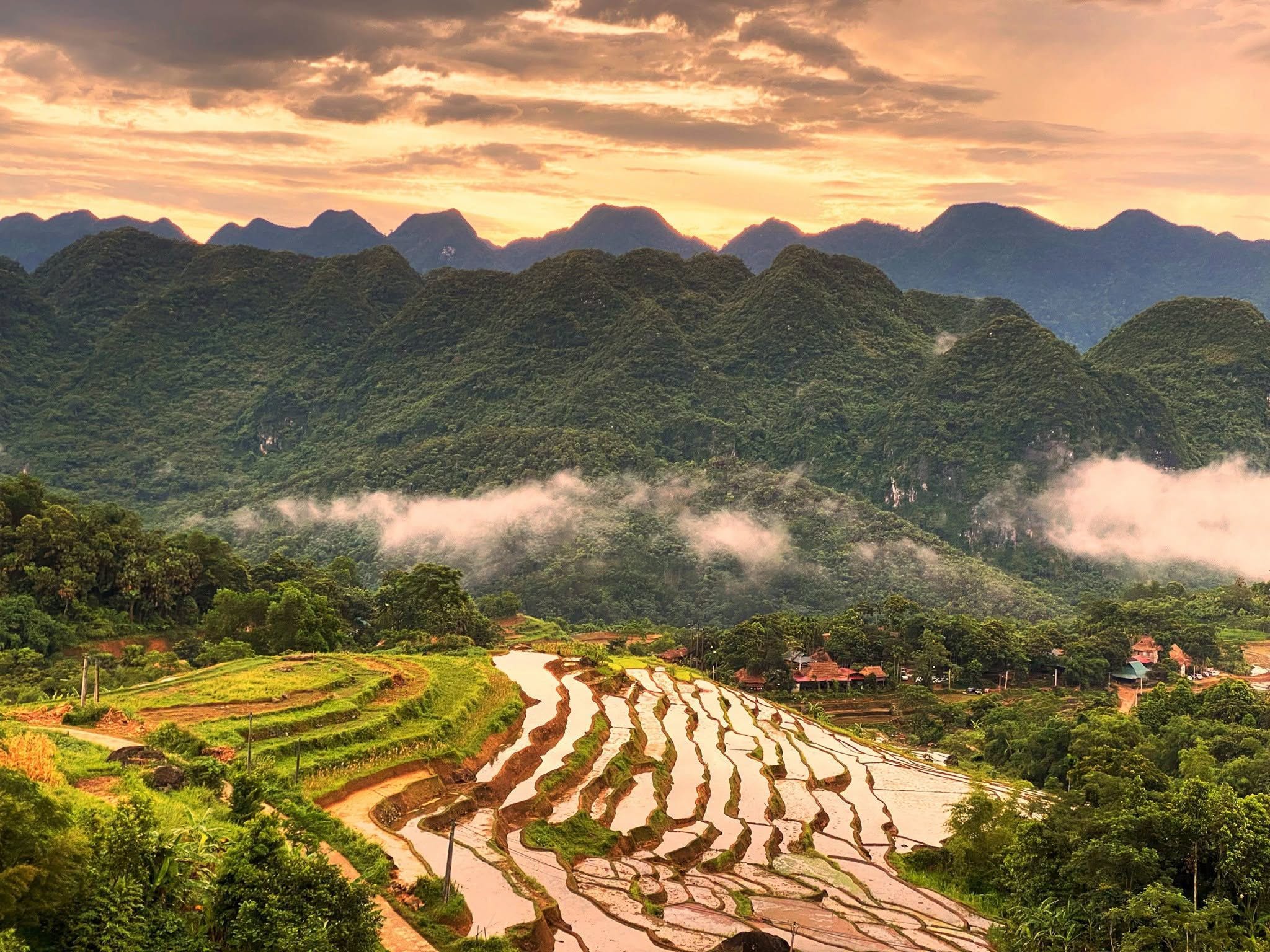
Featured image: Rice terraces and mountain scenery in Pu Luong. (Source: Collected)
Planning Pu Luong starts with choosing how you want to spend your days: walking between villages, resting at a hillside lodge or combining both. The right accommodation and transport matter because this is a spread-out rural destination, not a compact town. This Pu Luong travel guide helps you choose a season, walking level and base, with practical itineraries of two to four days.
For a first visit from Hanoi, three days and two nights is a useful starting point. It allows a full day in the countryside between the arrival and departure journeys. Choose a shorter trip if time is limited, or extend your stay for guided trekking, another village overnight or a thoughtfully paced combination with Mai Chau.
Understanding Pu Luong and Choosing Your Travel Style
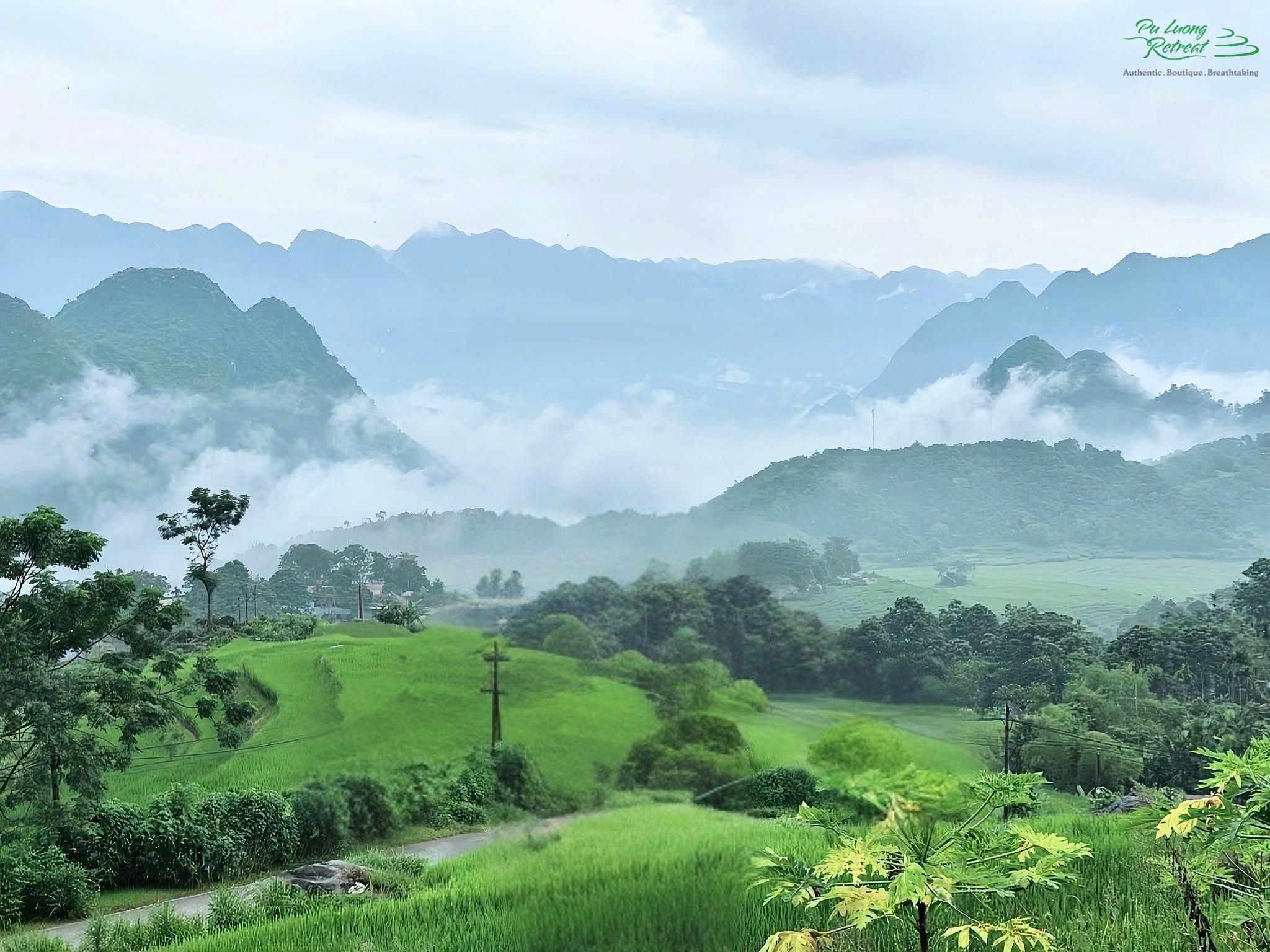
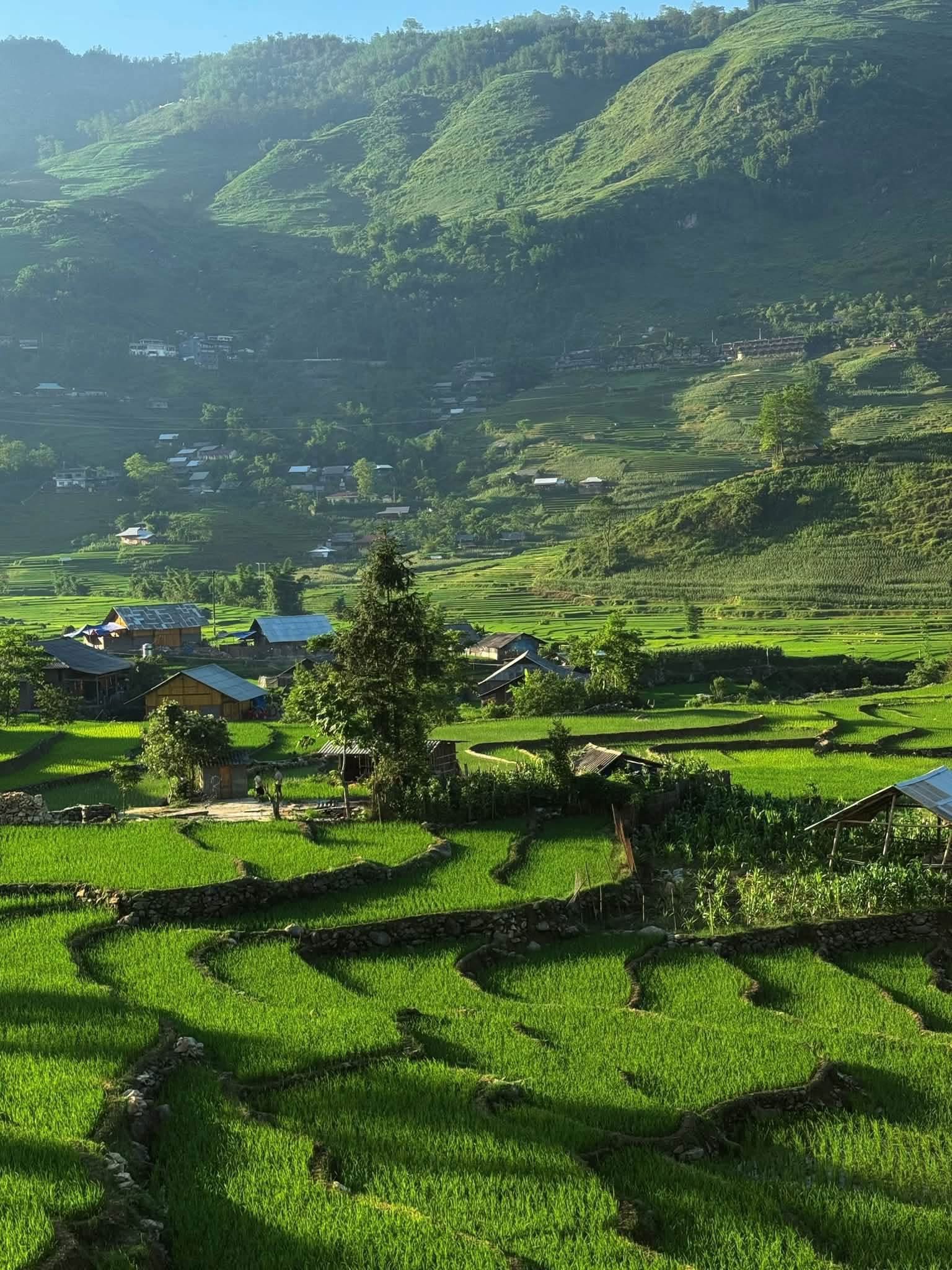
Green rice fields and layered mountains illustrate Pu Luong’s rural setting. (Source: Collected)
What kind of destination is Pu Luong?
Pu Luong, or Pù Luông, is a rural mountain destination in Thanh Hoa Province. Forested slopes, agricultural valleys and settlements form the setting for the visit. Part of the appeal is the contrast between time on village paths and time at your accommodation, watching the landscape change with weather and farm work.
Thai and Muong communities are part of the region’s cultural life. A good visit leaves room to understand the places you pass through, rather than treating houses and fields as a backdrop. Ask a guide or host about the activities taking place and which visits are welcome.
Pu Luong Nature Reserve and the wider visitor area are not interchangeable with a single village centre. Accommodation is scattered, and being described as “in Pu Luong” does not establish proximity to a particular waterfall, walking route or restaurant. Use exact map pins when comparing properties and transfers.
Who will enjoy a visit?
Consider Pu Luong if you like countryside walks, agricultural landscapes and quieter evenings. Couples can combine a comfortable retreat with guided outings; active travellers can arrange longer walks; families can focus on short, manageable experiences and downtime.
The destination requires more planning if you need numerous restaurants within walking distance or straightforward access without steps. A property with a panoramic view may sit on a steep hillside. Tell your organiser about mobility needs and the kind of paths you can manage before choosing a room or itinerary.
Choose one main approach
Travel style
What the trip might include
Main planning priority
Rest with light activity
One base, short walks and unhurried meals
Comfortable access, facilities and a setting you will enjoy
Village and countryside discovery
Guided half-day or full-day walks, cultural interpretation and host meals
Suitable routes and a knowledgeable guide
Active trekking
Longer walking days and possibly different overnight stops
Confirmed terrain, logistics and accommodation expectations
Avoid assuming that a more demanding programme is a more rewarding one. A shorter walk with useful interpretation can offer more than a long route completed too quickly. Our Mai Chau and Pu Luong trekking adventure illustrates how a longer walking holiday can differ from a brief retreat stay.
Best Time to Visit and Understand the Rice Seasons
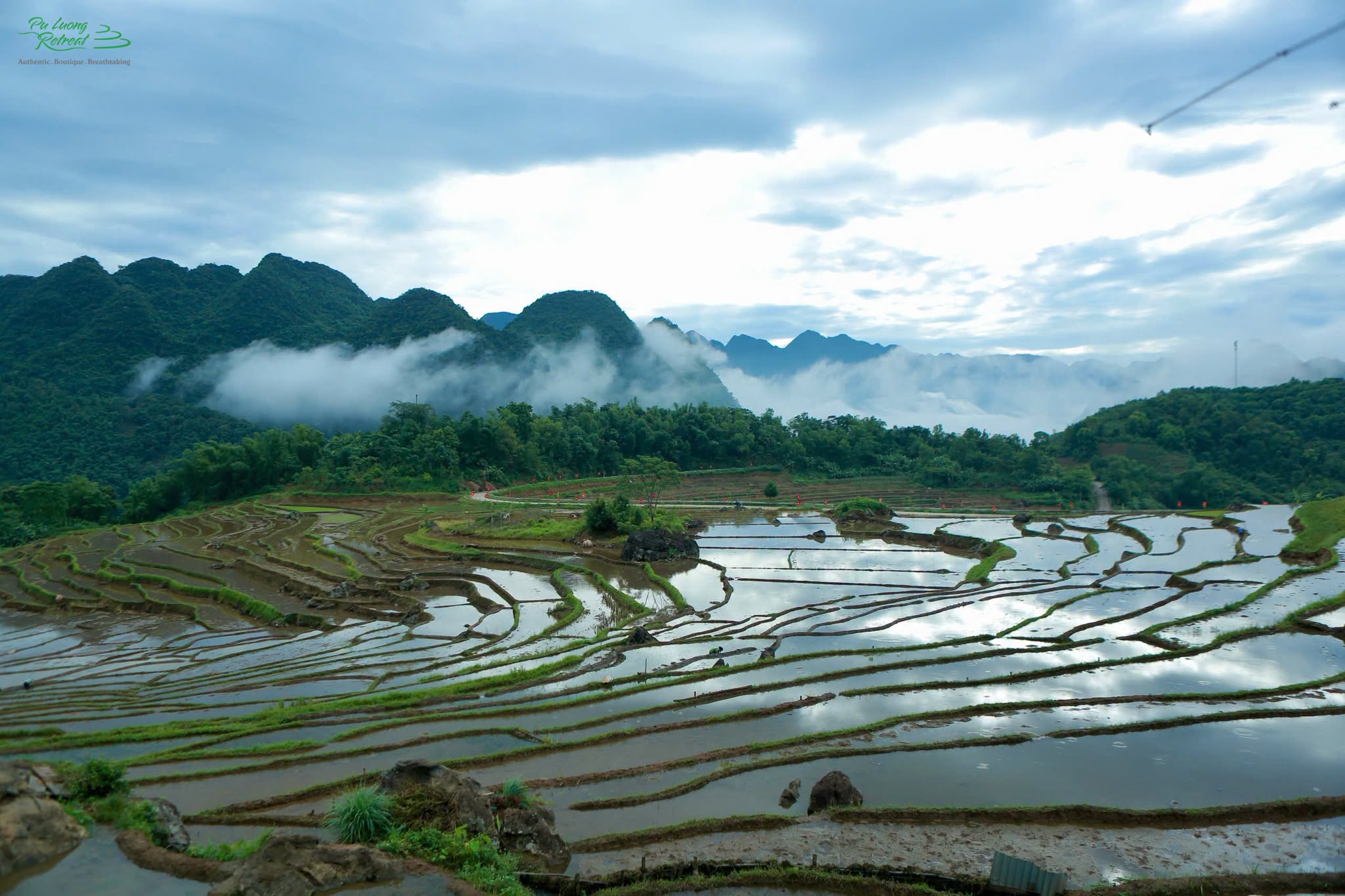
Flooded rice terraces show one stage of Pu Luong’s changing agricultural landscape. (Source: Collected)
Start with your preferred activity
Choose dates according to your priority: walking comfort, rice-field scenery or time at a lodge. These do not always align. A landscape can be attractive when paths are wet, and pleasant walking weather does not guarantee ripening rice outside your room.
The national tourism website’s Pu Luong overview highlights spring-to-summer rice scenery and autumn harvesting periods. Use these as broad leads for planning, then ask for recent information from the exact village or valley you will visit.
Period
Planning considerations
Useful approach
December–February
Cooler spells, damp conditions and variable visibility
Check room warmth and keep outdoor plans adaptable
March–April
A period to consider for walking and countryside visits
Bring layers and verify the stage of local field activity
May–June
Seasonal rice interest alongside stronger heat and possible rain
Walk early, allow breaks and ask about local crop timing
July–August
Heat, humidity and wet-weather disruption can affect outings
Select flexible routes and follow current advice
September–November
Autumn scenery and possible harvest interest earlier in the period
Confirm local harvesting and prepare for changing temperatures
These are general planning considerations, not a forecast. Elevation, shade and exposure affect comfort within the same day. Do not assume the region will feel cool throughout summer simply because it is mountainous.
Check the fields you actually want to see
Cultivation follows local conditions and farming decisions. Different fields can be at different stages, and harvesting changes the scene quickly. Ask your host or guide for current photographs and information if rice scenery is central to the trip.
The national tourism website’s guide to Vietnam’s rice terraces provides broader context, but a calendar for Sapa or Mu Cang Chai should not be applied to Pu Luong. Nor should a photograph of one Pu Luong valley be treated as a promise for every accommodation location.
Keep interest in village life, food and walking within the programme. That makes the trip worthwhile when fields have recently been cut or mist obscures the expected view. Stay on permitted paths and avoid stepping into crops for a photograph.
Leave flexibility for rain
Heavy rain can change trail conditions and the practicality of road transfers. Discuss shorter routes, alternative activities and cancellation arrangements before booking. A craft demonstration or host meal may work as an alternative if available, but it should be arranged rather than assumed.
Getting to Pu Luong and Organising Local Transport
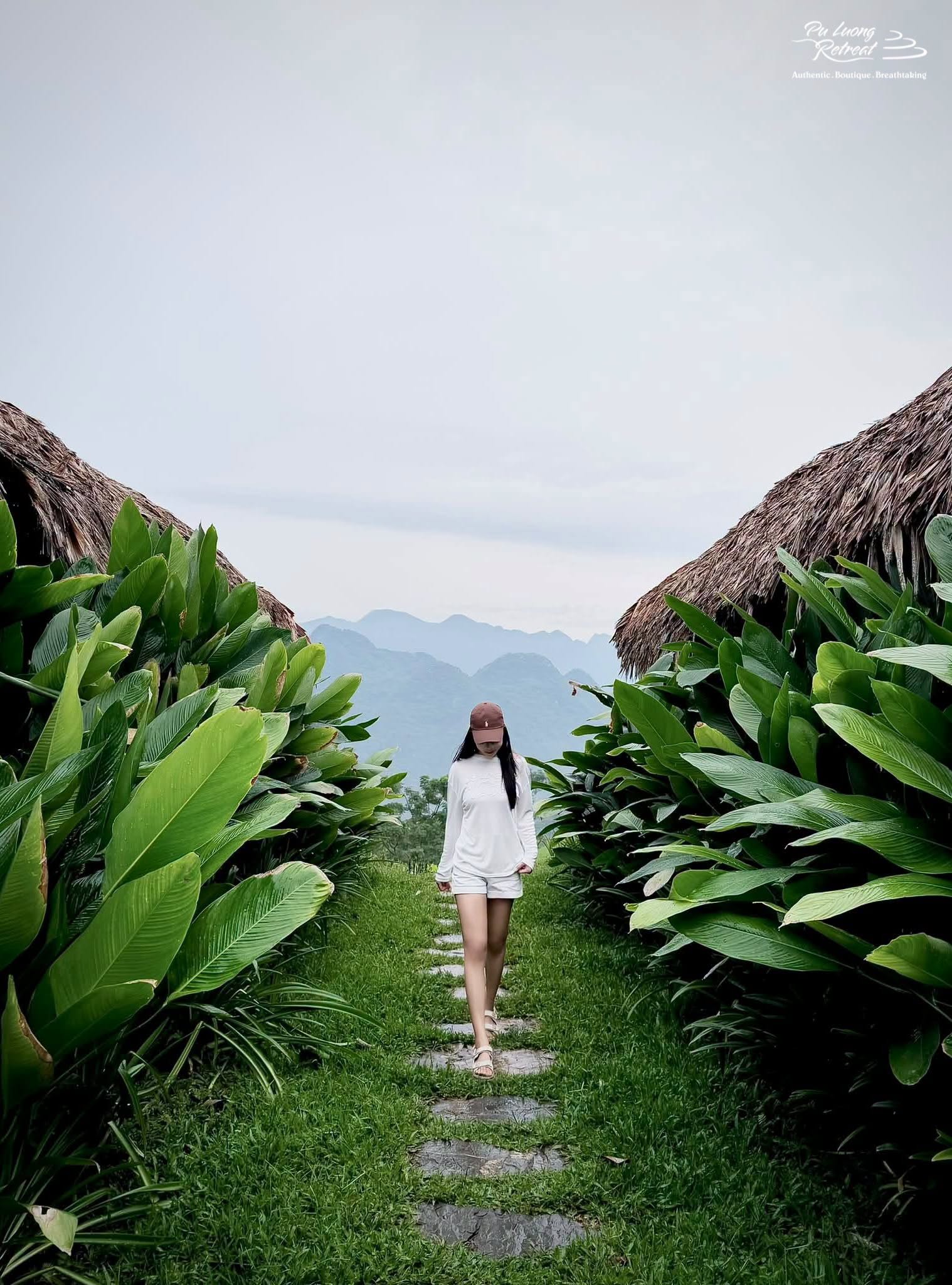
A peaceful stone pathway at Pu Luong Retreat winds between lush tropical greenery and thatched-roof bungalows, opening towards misty mountains and the tranquil valley beyond. (Source: Collected)
From Hanoi
Private cars and prearranged shared transfers are options to investigate. As an initial allowance, plan roughly four to five hours from Hanoi to many visitor areas, with longer journeys possible depending on the route, pickup point, stops and property access. Confirm the estimate for your specific booking.
Check current shared services with the operator or accommodation rather than assuming a published timetable remains valid. Clarify departure days, luggage allowance, seat allocation and the exact drop-off. A transfer advertised to Pu Luong may not reach every lodge door.
A private vehicle can suit families or groups who want control over timing and stops. Ask about seat belts, child seats if required and luggage capacity. Specify whether the price includes waiting, sightseeing and the final approach to your accommodation.
The last part of the journey matters
Some properties may involve narrow access roads, a change of vehicle or a walk with luggage. Send your driver the confirmed location and ask the property how arrivals are normally handled. Request details about surfaces, slopes and steps if anyone has difficulty carrying bags or walking uneven ground.
Travellers arriving after dark should confirm reception arrangements and dinner in advance. Avoid assuming that a vehicle arrival point is the same as the room entrance. For a village overnight on a walking trip, consider carrying a smaller bag while storing main luggage securely through an agreed arrangement.
Combining Mai Chau or Ninh Binh
Mai Chau can add another valley setting and cultural stop, but the detour deserves time. If you stop for lunch and a visit on the way, reduce expectations for walking after arrival in Pu Luong. A route through several destinations should offer distinct experiences rather than repeated brief photo stops.
For a wider sequence, our Hanoi, Mai Chau, Pu Luong, Ninh Binh and Lan Ha Bay tour provides one example to compare. Review how much time is spent at each place and request changes if you prefer slower walking or fewer transfers.
Moving around locally
Arrange transport for outings beyond comfortable walking distance and agree a return pickup. Vehicle access is not available along every trail, so assistance needs to be planned around real road connections. Tell your guide before setting off if you may want a shorter day.
Do not rely on navigation apps alone for rural paths. Ask about current conditions, permitted access and whether a route crosses working land. Cycling may be suitable on selected roads for experienced riders, but it should not be assumed to be an easy substitute for walking in hilly terrain.
Where to Stay and Plan Your Meals
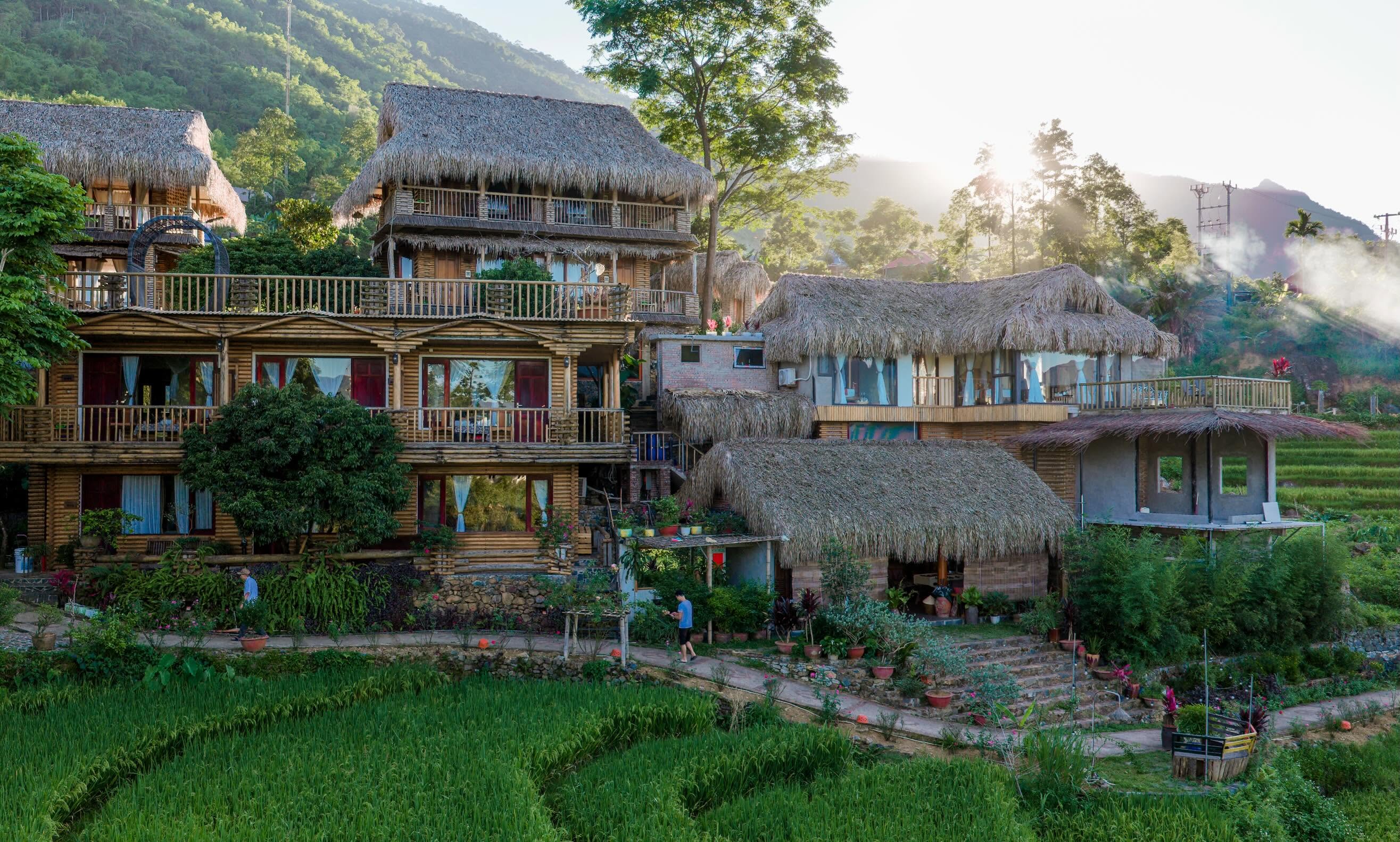
Pu Luong Jungle Lodge accommodation overlooking cultivated fields. (Source: Collected)
Choose the setting before the room category
Areas around Don village are among the places to investigate for a first stay, while other village and valley settings can suit particular walking routes. Compare the property’s surroundings and access rather than choosing only by a photographed view.
Decide whether you want one base with outings or different overnight stops. Staying in one place simplifies luggage and allows more rest. Moving between villages can enrich a trekking programme when the walking route and host arrangements justify it.
Accommodation style
Potential appeal
Questions to ask
Hosted stilt-house stay
Household interaction and shared spaces
Who hosts, sleeping arrangements, bathroom and evening routine
Small guesthouse or bungalow
A private room in a village setting
Room facilities, meals and access from the road
Lodge or retreat
More facilities and time at the property
Room location, steps, meal prices and activity arrangements
Multi-stop village accommodation
A longer walking journey
Facilities at every overnight stop and luggage logistics
Understand what “homestay” includes
A homestay label does not guarantee that you share daily life with a resident family. It can also describe a guesthouse or bungalow business. Ask about ownership, hosts and the actual opportunities for interaction, especially if community experience is a reason for travelling.
Similarly, words such as “eco” do not establish environmental performance on their own. Ask practical questions about water, waste, local employment and how excursions are organised. Choose providers that can describe what they do clearly.
Check comfort and accessibility
Confirm private or shared bathrooms, hot water, ventilation, air conditioning where required and bedding appropriate to your dates. Ask about mosquito screens or nets and the walking route between rooms and common areas. Photographs rarely show every staircase.
For families, confirm bed configuration, charges for children and pool supervision. For remote work, ask about internet and mobile reception rather than assuming they are consistent. If a quiet stay is essential, raise the possibility of construction, group events and sound travelling between rooms.
Arrange meals before you need them
Outside selected accommodation clusters, you may have fewer spontaneous dining choices than in a town. Confirm breakfast, dinner and any packed lunch before leaving for the day. Ask about ordering deadlines and what is included in a room or package rate.
Let your host explain available local dishes and seasonal ingredients. Agree portions and prices, and state dietary requirements clearly, including ingredients in sauces and broths. A meal can provide context for agricultural life without needing an elaborate cooking demonstration.
Things to Do: Village Walks, Local Life and Nature
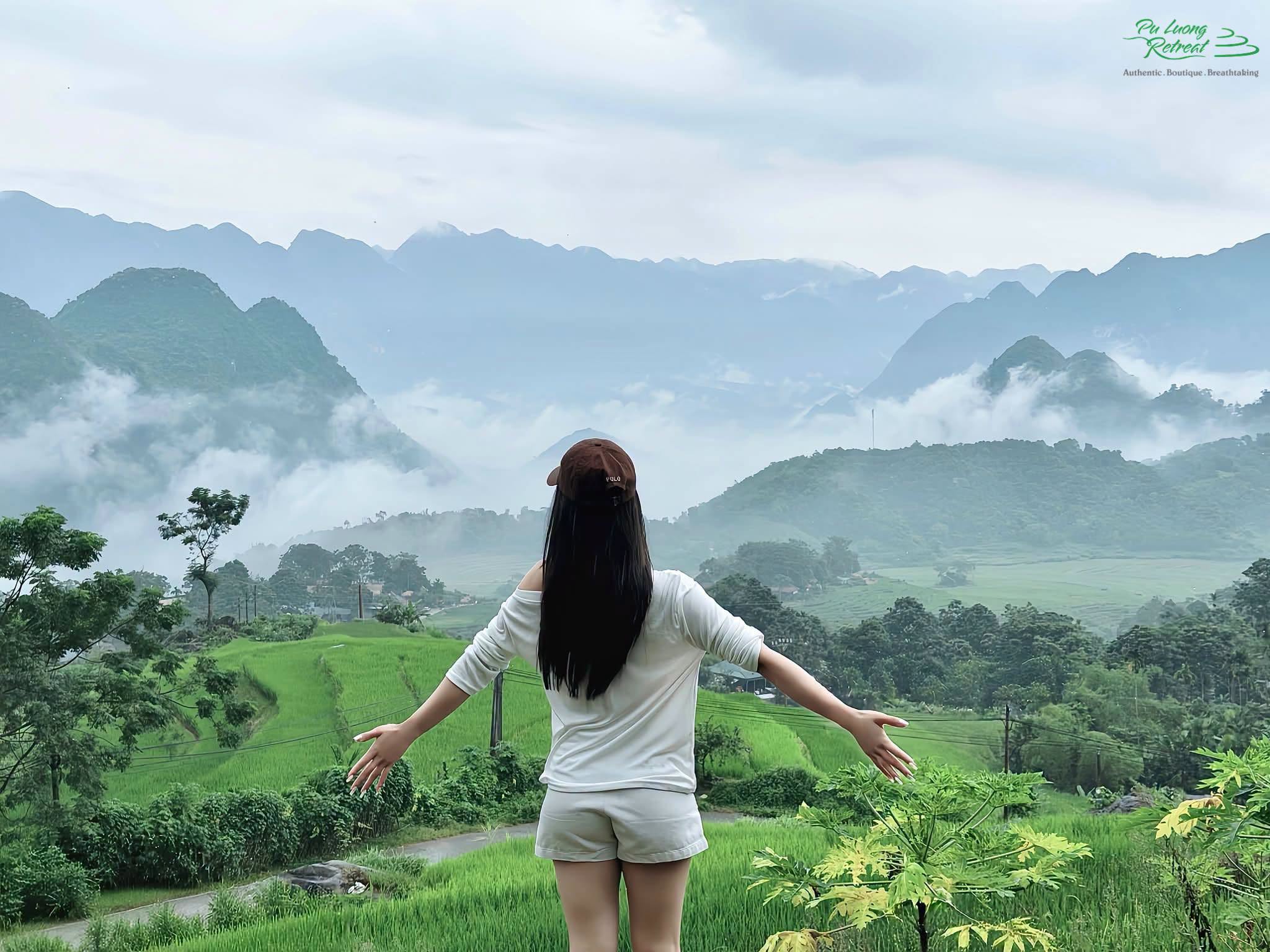
A visitor pauses above the green valley and mountain scenery of Pu Luong. (Source: Collected)
Select a suitable village walk
Walking is a useful way to appreciate the relationship between settlements, fields and slopes. Routes may combine village lanes, steps, farm paths and uneven ground. Start by telling your guide how long you comfortably walk and how you cope with descents, mud and heat.
Ask for expected walking time, terrain and elevation changes, not only distance. A short wet path can be more demanding than a longer surfaced lane. Clarify where the route ends and whether a vehicle can meet you if the plan changes.
The national tourism website’s Pu Luong advice for nature lovers notes the limitations of marked trails and mapping. A knowledgeable local guide can help with route selection and interpretation, particularly away from straightforward village roads.
Separate light walking from trekking
Activity level
What to clarify
Planning priority
Short village outing
Surface, steps, shade and rest points
A route that comfortably suits every participant
Half-day or full-day walk
Climbs, duration, weather exposure and return transport
Realistic pacing and suitable equipment
Multi-day trek
Daily terrain, accommodation and luggage arrangements
Confirmed logistics and expectations at each stop
Summit or remote forest trek
Access requirements, specialist guiding and contingency arrangements
A separate, properly assessed programme
Do not treat a Pu Luong summit trek as simply a longer village walk. Remote trails and caves require their own checks. A guide should explain what is permitted and practical rather than promise every feature from a generic destination list.
Explore selected villages thoughtfully
Don, Kho Muong and Hieu are names you may encounter while researching outings. They should be selected according to your base, interests and current access. Visiting every named settlement is unnecessary, particularly during a two-night stay.
Ask permission before entering a home, photographing people at close range or observing household activities. A host meal or craft visit can be valuable when arranged with a willing provider and a clear payment. Avoid giving sweets or money to children for photographs.
Waterfalls, waterwheels and market visits
Hieu Waterfall is one possible outing, subject to current access and conditions. Check the walking approach and surfaces with your guide. Do not assume swimming is appropriate because an older article or photograph shows people in the water; flow, weather and local instructions should determine the plan.
Waterwheels can introduce local irrigation and the relationship between farming and water. Choose an accessible site with your guide rather than assuming every wheel is working or available to visit. Any rafting or stream activity needs a separate check of the operator, equipment and conditions.
Pho Doan market may fit when your dates coincide with a confirmed market session. Verify the current schedule locally and respect trading activity. Markets serve residents first, so keep passages clear and ask before taking portraits or handling goods.
Leave room for ordinary moments
Leave time for breakfast, conversation and the surroundings. Avoid encouraging performances or encounters that people have not agreed to provide.
Stay on allowed paths, take litter back with you and avoid disturbing wildlife. If an outing is unsuitable, accept a shorter route or an afternoon at the property. Good judgement is part of enjoying a nature destination.
Pu Luong Itineraries, Budget and Practical Questions
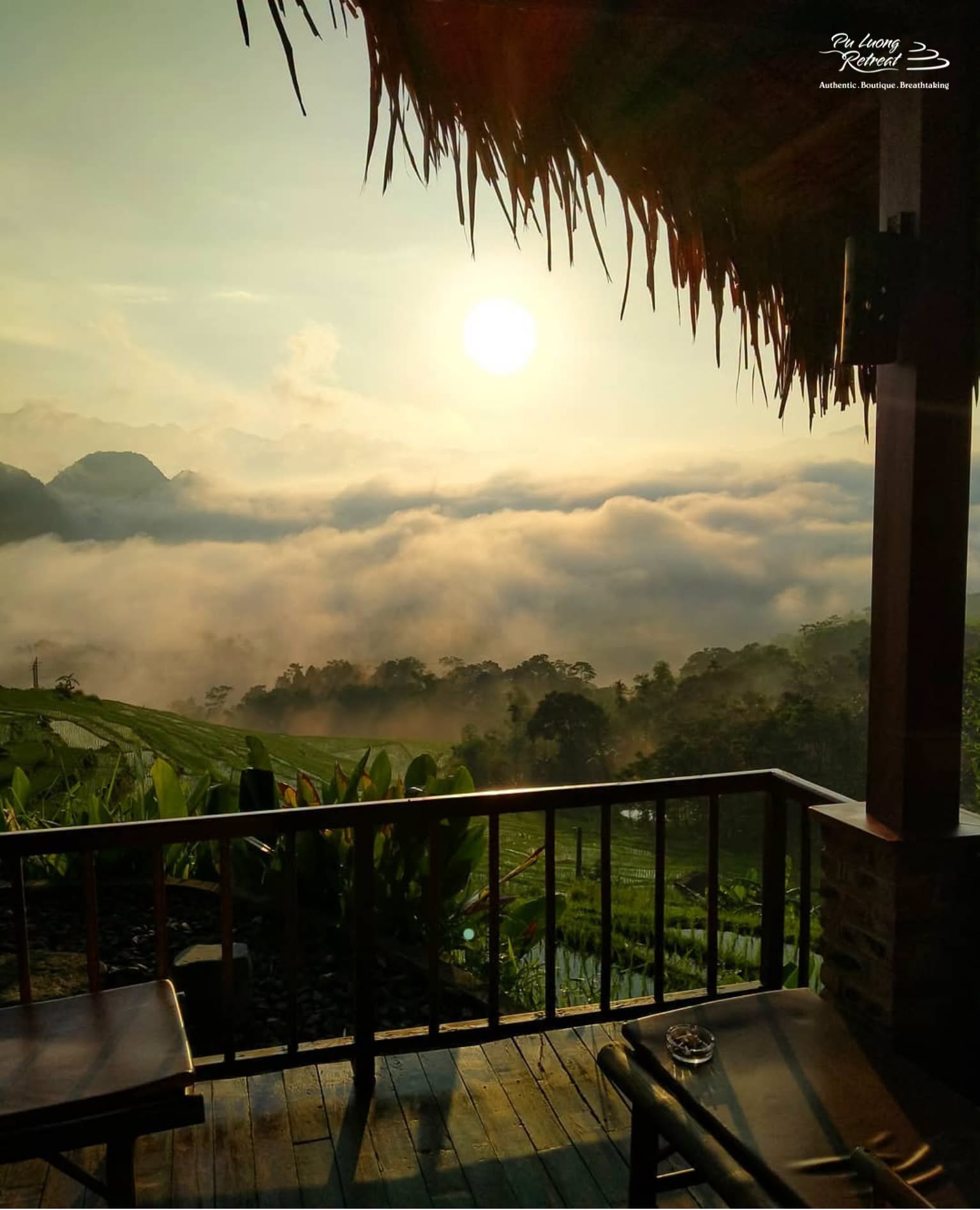
A sheltered terrace offers time to rest and enjoy Pu Luong’s mountain views. (Source: Collected)
Two days and one night
This works as a short introduction from Hanoi, but both days include travel. Plan one modest outing after arrival if time allows, then a suitable morning activity before departure. Avoid promising a full trekking programme alongside two substantial road journeys.
Choose accommodation where you will enjoy dinner and the evening setting. Confirm checkout and luggage storage if your final walk takes place before the return drive. Leave flexibility if the arrival journey runs late.
Three days and two nights
Day
Morning
Afternoon
Evening
1
Depart Hanoi with planned breaks
Arrive, settle in and take a short orientation walk if practical
Dinner at the accommodation
2
Guided countryside walk matched to ability
Continue with lunch and walking, or return for rest
Relaxed meal and time with hosts where arranged
3
Short local experience or a quiet morning
Depart for Hanoi or the next destination
Arrival time depends on the confirmed transfer
This is a useful balance for a first trip because the middle day is free from a long arrival or departure drive. Reserve optional outings according to the location of your base. Do not add a distant waterfall simply because the day appears to have spare time.
Four days and three nights
Extend the three-day outline with a distinct second walking experience, another village overnight or more retreat time. A different overnight stop makes sense when it supports the route, not just to increase the number of properties visited.
If combining Mai Chau, decide whether the extra day belongs there or in Pu Luong. Compare the driving and walking involved before confirming. Travellers seeking a more active journey may need longer than four days to combine both at a comfortable pace.
What should you budget?
The following figures are editorial planning allowances, not live prices or quotations. They assume two adults sharing accommodation and splitting the room cost. They exclude Hanoi transfers, private guiding, major outings, visas and insurance.
Travel style
Allowance per person per day
Main assumptions
Simple village stay
VND 700,000–1,200,000
Basic shared-cost accommodation, local meals and limited paid transport
Comfortable lodge stay
VND 1,300,000–2,400,000
More comfortable shared room, meals and incidental local expenses
Upscale retreat stay
VND 2,800,000–5,000,000 or more
Higher room category, more expensive dining and extra comfort
Request separate costs for guiding, route transfers and activity fees. Private transport can account for a substantial share of a short trip, particularly for solo travellers. Holiday dates, availability and room inclusions can materially change the total.
What should you pack?
Bring shoes with grip, a lightweight waterproof layer, sun protection and clothes you can adjust to the temperature. A small daypack, water and a dry change of clothes are useful for walking days. Ask whether poles or other equipment are available if you normally use them.
Carry some cash and save booking details offline. Confirm the return pickup before the final day. Where accommodation or walking routes involve limited vehicle access, pack so you can manage the final approach without struggling with a large suitcase.
Is Pu Luong suitable without trekking?
Yes. A comfortable base, short outings and time in the surroundings can make a satisfying visit. Check that access to the room and facilities matches your ability, even if you do not book a trek.
Is a guide necessary?
Not for every short outing, but a local guide is particularly useful for unfamiliar trails, interpretation and adapting routes. Ask your host which walks are straightforward independently and which require organised support.
Should you stay in one place?
For two nights, one suitable base is often convenient. Longer walking trips may benefit from village-to-village accommodation if you are comfortable with the facilities and the luggage arrangements are clear.
Can you guarantee rice views or waterfall swimming?
No. Crop stages, weather and water conditions vary. Choose flexible arrangements and a trip with several sources of interest rather than relying on one photograph or activity.
For a tailored plan, send your dates, number of travellers, preferred accommodation and comfortable walking level through our custom Vietnam tour enquiry. Mention any interest in Mai Chau or Ninh Binh and whether your priority is relaxation, cultural discovery or a more active walking journey.
Research checked on 13 November 2026. Budgets and journey durations are planning estimates; confirm transport, accommodation, access, activities and conditions for your dates.