Where to Stay in Mai Chau: Village Homestays, Valley Lodges and Resorts
November 24, 202612 min read
A wooden stilt house, a bungalow overlooking fields and a resort beside a lake can all appear in the same Mai Chau accommodation search. Their photographs may be equally appealing, but they offer different holidays. One places you inside a village; another makes the accommodation itself the main destination.
Deciding where to stay in Mai Chau starts with the setting, followed by the room and everyday arrangements. Think about where you want to walk, how you want to eat and how much privacy you need. Our Mai Chau Travel Guide explains the wider destination, transport and activity choices.
Mai Chau Accommodation at a Glance
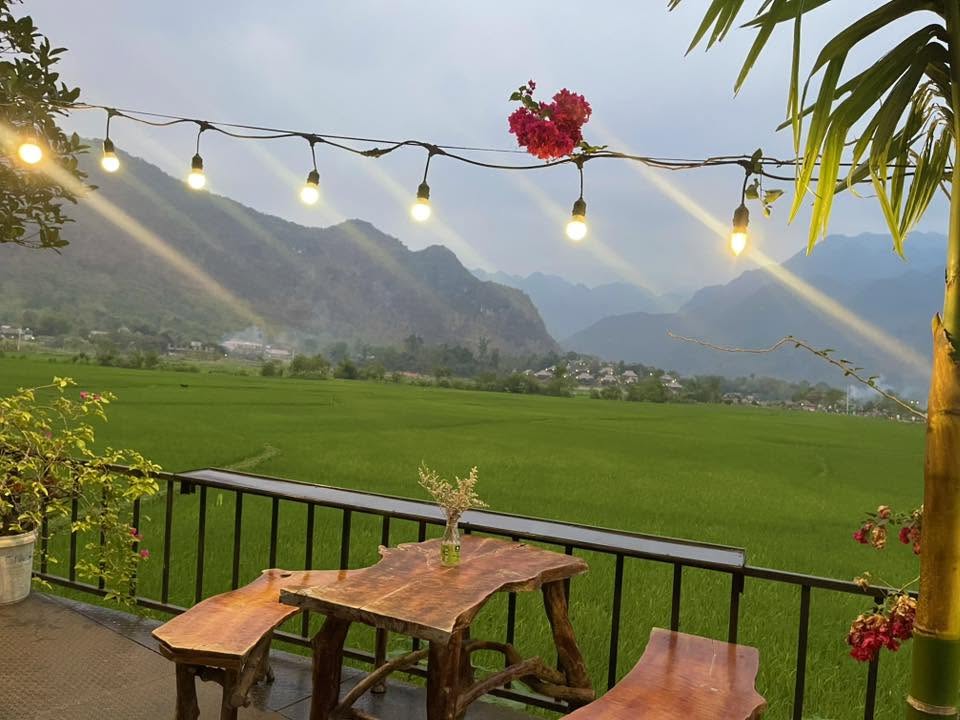
A homestay terrace looks across Mai Chau’s rice fields towards the surrounding mountains. (Source: Collected)
For a first visit centred on village walks and cycling, begin with accommodation that provides convenient access to the valley routes you want. If rest at the property is the priority, compare the grounds, room and dining arrangements as carefully as the surrounding scenery.
The labels are not a formal comfort scale. A homestay may offer private rooms, while a lodge or resort may involve steps and considerable walking. “Ecolodge” also needs supporting detail: the name alone does not verify environmental certification or particular practices.
Stay type
Main appeal
Privacy and facilities to confirm
Location considerations
Best suited to
Shared stilt-house homestay
A communal sleeping arrangement and opportunities for host interaction
Sleeping layout, partitions, bathroom sharing and bedding
Stairs, village lane and vehicle access
Travellers comfortable sharing space
Private-room village homestay
Village surroundings with more personal space
Bathroom location, sound separation and room equipment
Position within the village and nearby activity
Visitors wanting village access and a private room
Valley lodge or small hotel
A practical base combining outings with time to rest
Room category, meals and included services
Actual access to walking and cycling routes
Couples, families and active travellers
Hillside or lakeside resort
Time at the property and a particular landscape setting
Steps, dining, transfers and leisure facilities
Distance from the villages you want to visit
Accommodation-led breaks and selected excursions
Use these categories to compare bookings, not to rank cultural value. A comfortable private room can support a meaningful village visit, just as a shared house can suit a traveller who enjoys communal arrangements.
Village Homestays: Understand the Experience Before Booking
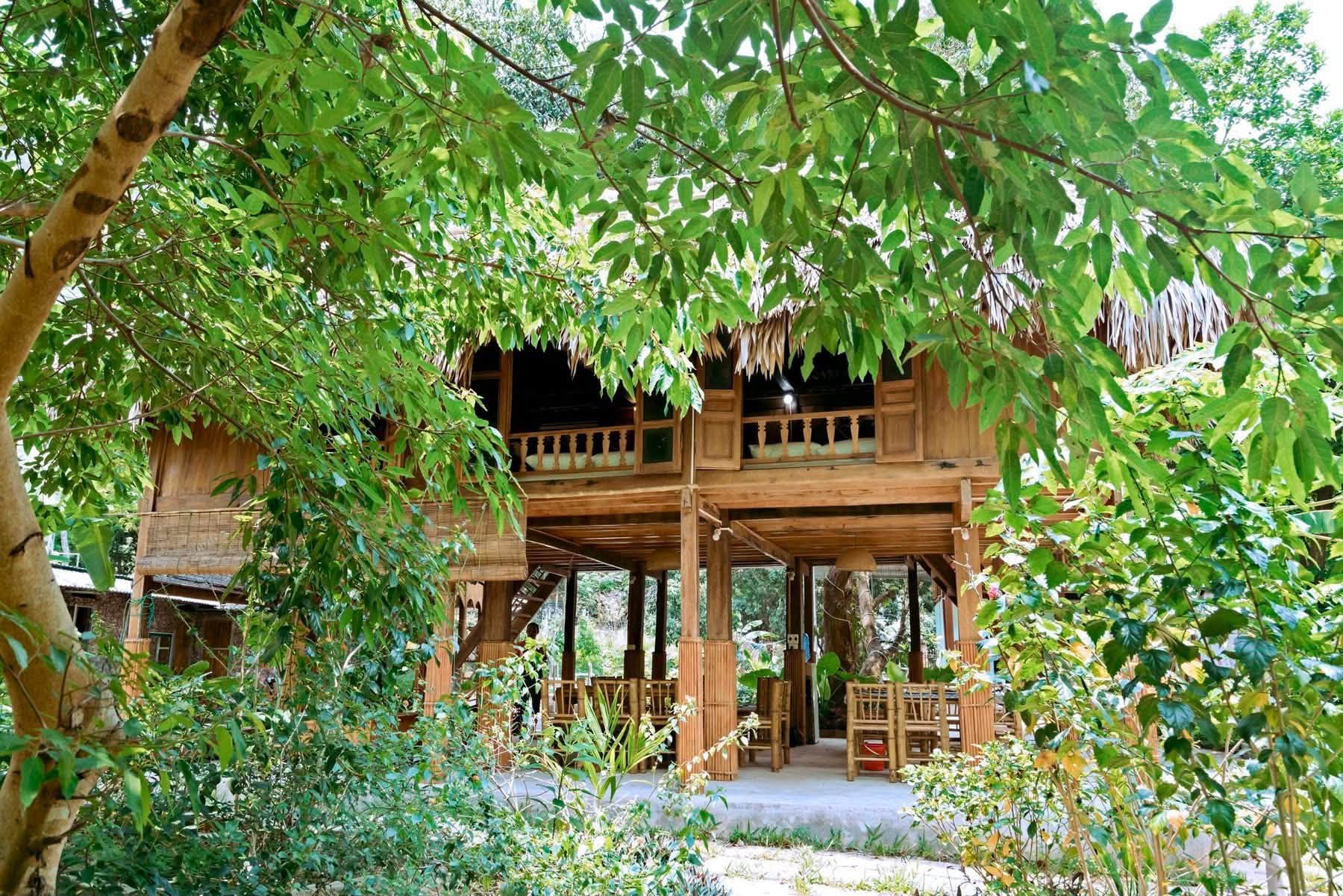
A wooden stilt house stands among trees in Mai Chau. Confirm the sleeping arrangement and access for your own booking. (Source: Collected)
Shared sleeping or a private room?
A traditional stilt-house stay may involve mattresses in an open sleeping area, with mosquito nets and shared bathrooms. Other properties offer separate rooms or a mixture of arrangements. Ask what your specific booking provides.
A curtain or light partition creates a different level of privacy from a room with a door. Neither establishes sound insulation. If you are a light sleeper, consider footsteps, conversations and the movement of other guests as well as outdoor noise.
Clarify whether the bathroom is inside the room, exclusively yours but elsewhere, or shared. Check hot water, towels and the route from the sleeping area, especially if you expect to get up at night.
Stilt houses require particular attention to access. Ask about the stairs, handrails and help with luggage. Confirm air-conditioning or a fan, bedding for cooler nights and available power sockets rather than inferring them from the word homestay.
What does staying with a host include?
Some travellers hope to share a meal and conversation with a resident family. That can be part of a stay, but it needs confirmation. A business called a homestay does not necessarily involve the owners living alongside every guest.
Ask whether dinner is shared or served separately, who will receive you and what language support is available. Tell the host about dietary needs before arrival. A kitchen preparing one planned meal may need advance notice to accommodate changes.
Workshops, performances and guided walks are separate experiences unless included in the booking. Do not expect spontaneous access to family routines. Hosts and neighbours should be able to choose when they participate and whether photographs are welcome.
Lac and Pom Coong as starting points
Lac and Pom Coong are established places to investigate for village accommodation, including stilt-house stays associated with White Thai households. Choose the actual house and room rather than assuming a whole village has one atmosphere.
Ask about groups, organised entertainment and events during your dates. Village accommodation can include active tourism businesses alongside ordinary household life. Neither “rural” nor “inside the village” guarantees silence.
A homestay is a good choice when its social arrangements appeal to you and its practical conditions meet your needs. It should be a positive preference, rather than something booked because discomfort is considered necessary for a cultural experience.
Valley Lodges: Balance Village Access and Everyday Comfort
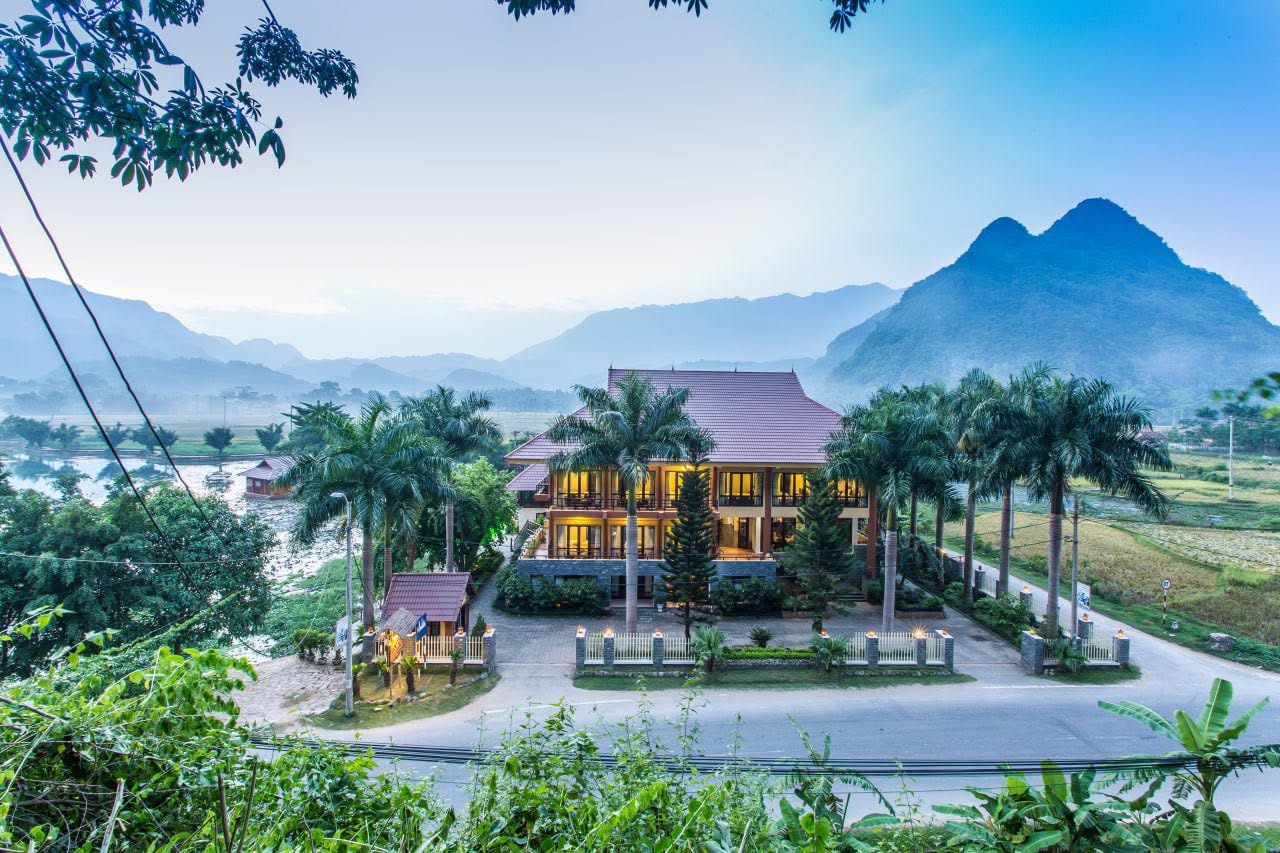
Mai Chau Lodge provides one example of a valley base for outings and time at the property. (Source: Collected)
A valley lodge or small hotel can provide a convenient rhythm: breakfast, a morning outing, a return to your room and another activity later. This suits travellers who want to explore without carrying everything for the whole day.
Check the actual location before assuming that rhythm is possible. A property described as being in Mai Chau may sit beside fields, within a settlement or above the valley. A short map distance can conceal a steep path or an indirect road.
Imagine three ordinary journeys: from your room to breakfast, from reception to the start of a village walk, and from the dinner table back to your room. Those routes tell you more about everyday convenience than an aerial photograph.
Room descriptions matter too. A paddy-view category should be distinguished from other rooms at the same property. Confirm what your room faces and whether the balcony is private or part of a shared circulation area.
Rice fields are working agricultural land. Their appearance changes with cultivation and weather; a view category does not promise green plants or golden rice on your dates. Choose a room for the wider setting rather than one seasonal photograph.
Finally, ask how independent your stay can be. Are there meals within a comfortable walk, or will you use the property's restaurant? Are bicycles available, and are they included? A lodge that offers tours may still require advance booking and separate payment for each activity.
Resorts: Choose Between Valley, Hillside and Lakeside Settings
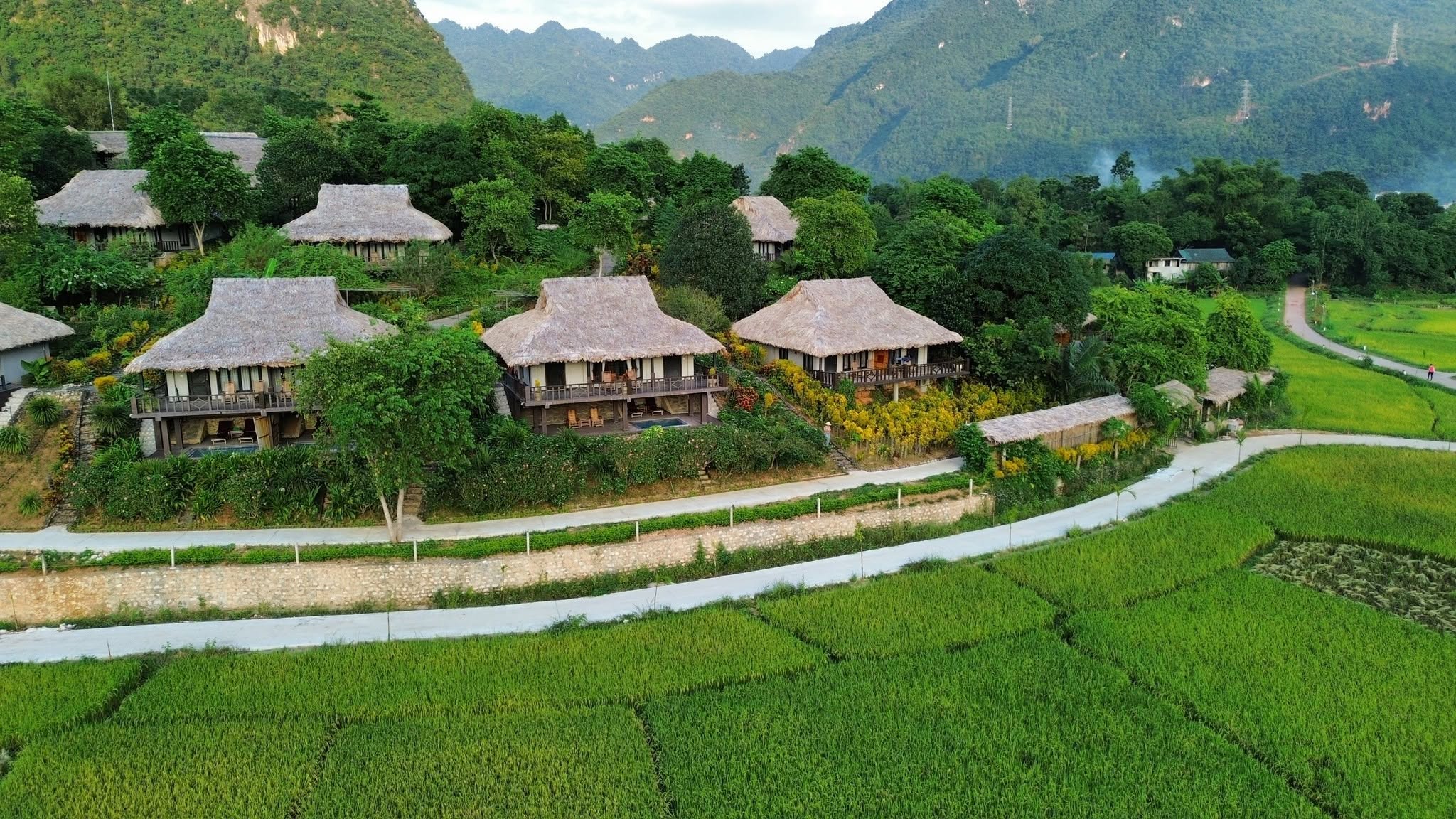
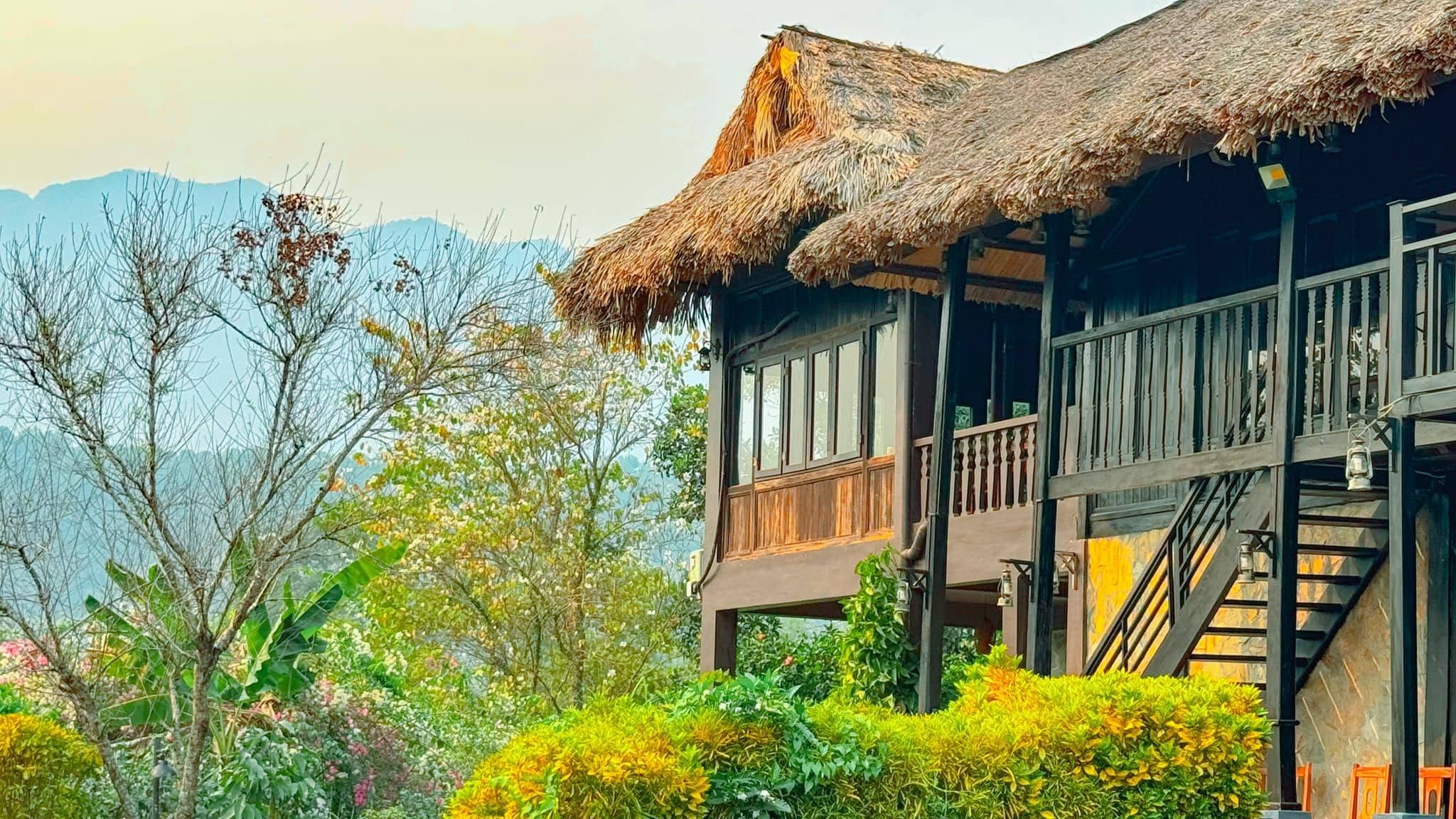
Thatched accommodation at Mai Chau Ecolodge sits above landscaped grounds, with an external staircase visible. (Source: Collected)
Valley and hillside stays
A resort can be a suitable choice when you want to spend substantial time at the accommodation. Evaluate the room, places to sit, food and practical layout together. A striking view offers less benefit if reaching the restaurant is uncomfortable for someone in your group.
Mai Chau Ecolodge, for example, places its rooms on a hill in Na Phon village. That illustrates why the setting and access need checking even when a property is closely associated with the valley. Ask about the route to your assigned room rather than assuming an elevated view comes with step-free access.
Confirm whether assistance or internal transport is available if required. Do not assume there is a lift or buggy. For a pool stay, check operation, temperature expectations and children's arrangements; an outdoor pool photograph does not establish year-round comfort or heating.
Lakeside stays are a different holiday setting
A lake resort can offer an appealing alternative when your aim is to enjoy the water landscape and time at the property. Mai Chau Hideaway, for example, is on a peninsula beside Hoa Binh Lake. It should be assessed as that setting, rather than as interchangeable with accommodation among the valley villages.
If you also want to visit Lac or Pom Coong, establish the road journey and transport arrangements. Being marketed under Mai Chau does not mean the village walks begin outside your room.
Ask about dining options, the return after an excursion and how activities are arranged. If boating or kayaking interests you, confirm current availability, inclusions and participation conditions directly. A lakeside location alone does not include a water activity.
These properties illustrate location choices, not a ranking. The better option is the one whose setting supports the holiday you want, with practical arrangements you understand before paying.
Match Your Stay to Your Trip Length and Travel Style
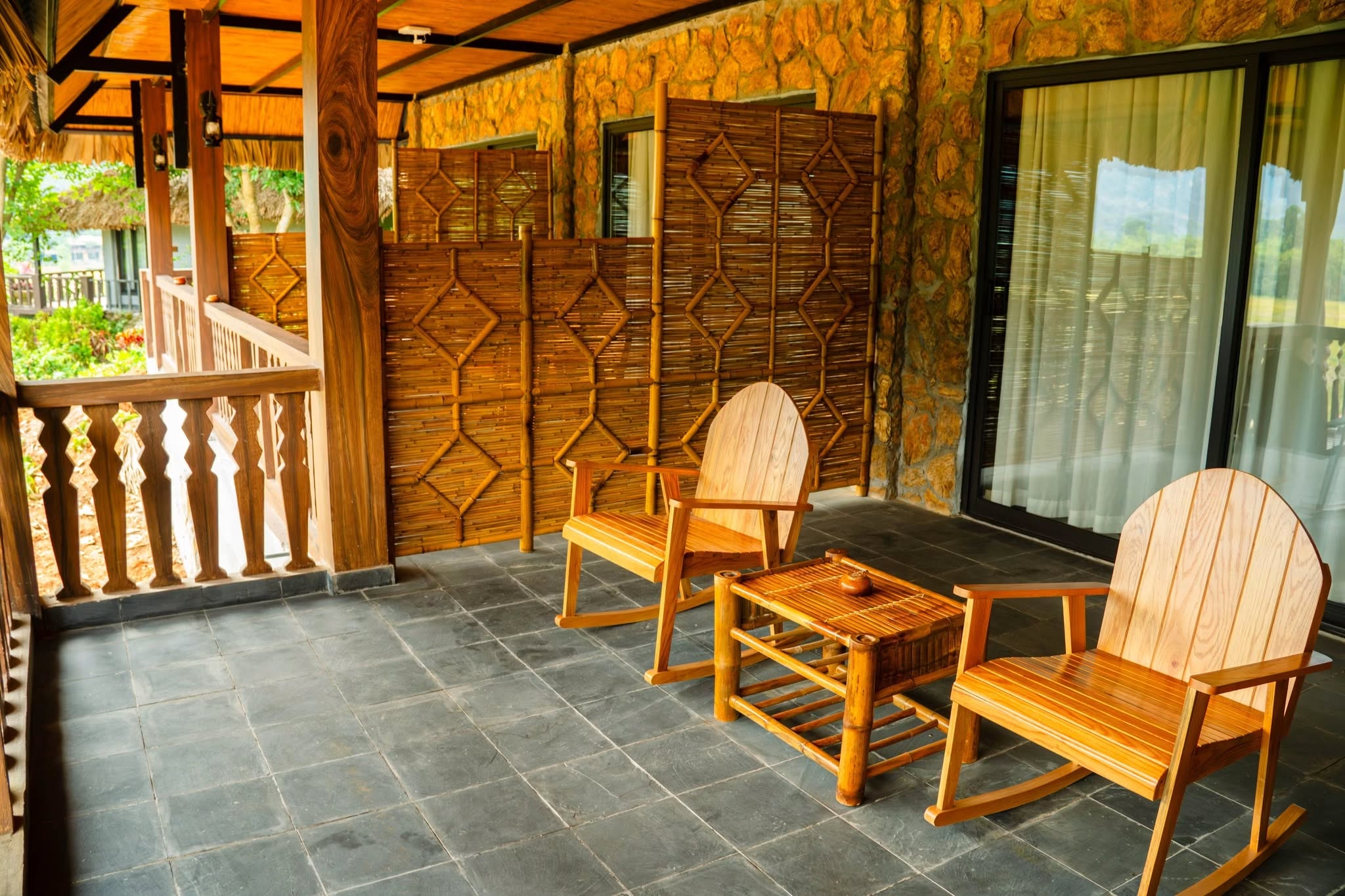
A shaded balcony at Mai Chau Ecolodge offers a place to pause between outings. (Source: Collected)
With one night from Hanoi, accommodation location has a strong influence on what fits. Avoid arriving at a remote property expecting a full afternoon in the villages unless the schedule and transport support it.
A village stay might centre on a short afternoon walk, a prearranged dinner and another outing before departure. A lodge can support a similar visit with a different room arrangement. A resort stay may place greater emphasis on enjoying the grounds and facilities.
Two nights provide a full day between the arrival and departure journeys. That can make a longer walk or cycling outing easier to organise without changing accommodation. It also leaves time to rest if the weather or your energy calls for it.
Your trip
Prioritise
Confirm
One night from Hanoi
Convenient access to your main experience
Arrival time, dinner and next-day departure
Two nights in the valley
A base supporting outings and breaks
Routes from the property and meal options
Family stay
Beds, bathroom and manageable access
Stairs, balconies, pool arrangements and transfers
Couple's retreat
Privacy and the setting you want to enjoy
Room position, shared spaces and group events
Walking or cycling trip
Route access and practical support
Equipment, guidance and alternatives in poor weather
Mai Chau and Pu Luong
Accommodation aligned with the onward route
Pickup point, luggage and checkout timing
For families, a private bathroom and straightforward route to breakfast may matter more than a particular accommodation label. Couples should assess privacy at the room level; a detached-looking bungalow may still face a busy shared path.
For active holidays, confirm the walking or cycling level separately from the accommodation. A property surrounded by fields does not establish that every nearby route is suitable, public or manageable without guidance.
If combining destinations, our Pu Luong Travel Guide explains a different rural setting. The Mai Chau and Pu Luong walking itinerary provides a route to discuss; confirm the accommodation category and daily walking requirements in your own proposal.
What to Confirm Before You Book
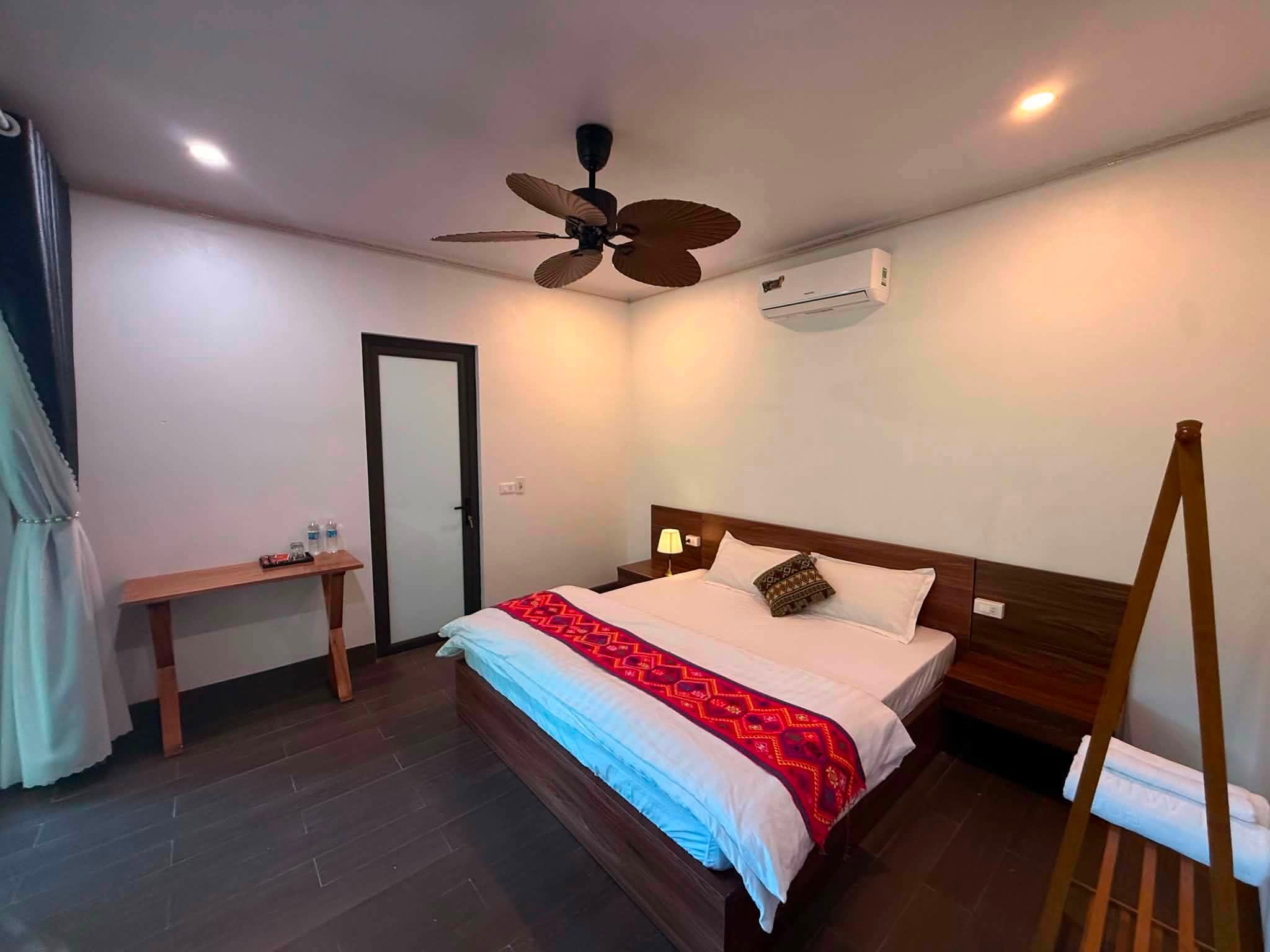
A private bungalow room in Mai Chau illustrates an alternative to communal sleeping arrangements. (Source: Collected)
Compare the exact room, location and services as one package. A lower room rate may exclude dinner, activities or a transfer needed to reach the experiences you want.
Check
Question to ask
Location
What is the map pin, and where does the vehicle stop?
Sleeping arrangement
Is this a shared area, private room or separate bungalow?
Bathroom
Is it inside the room, exclusively outside or shared?
Access
What steps and slopes connect the room, restaurant and road?
Room comfort
What cooling, warm bedding and hot water are provided?
Meals
Which meals are included, and how early must dinner be ordered?
Noise
Are groups, performances or events expected during the stay?
Facilities
What are the conditions for bicycles, pool access, Wi-Fi and laundry?
Price
Is the quotation per person or room, and does it include taxes?
Changes
What are the cancellation and amendment terms?
Recent reviews are useful prompts for questions, but they cannot predict your dates. Ask directly about a concern that would materially affect your stay, especially accessibility, food requirements or room configuration.
If environmental practice matters to you, look for specific information about waste, water, energy and local employment. Natural materials and a rural location are not proof of certification. Respectful behaviour also matters: ask before entering private spaces, photographing people or walking through working fields.
Frequently asked questions
Is a homestay or lodge better for a first Mai Chau visit?
Choose according to the experience and room conditions you want. A homestay may suit shared meals and village surroundings; a lodge may offer a different balance of privacy and services. Check the individual booking rather than relying on either label.
Do Mai Chau homestays have private bathrooms?
Some do, while others use shared facilities. A private bedroom does not necessarily have an ensuite bathroom. Confirm the bathroom's location and whether it is exclusively yours before booking, particularly when comparing different room categories.
Should I stay in Lac Village or Pom Coong?
Both are starting points for exploring village accommodation. Compare the house, room and walking access with your plans. Ask about groups and activities on your dates rather than choosing on the assumption that one village is always quieter.
Are Mai Chau resorts within walking distance of the villages?
Some offer convenient access to selected valley routes; others occupy hillside or lakeside settings requiring transport. Check the actual route and walking conditions. A location described simply as Mai Chau does not establish proximity to Lac or Pom Coong.
Is one night enough, or should I stay for two?
One night can provide a focused introduction when transfers and activities fit well. Two nights give you a full day without a long arrival or departure journey. Choose using your main experience and realistic available hours.
Share your preferred room arrangements, available nights and activity level with a Vietnam travel agency when coordinating a longer journey. We can help plan a tailor-made Vietnam trip with a Mai Chau stay that matches your interest in village life, outdoor activity or time to rest.
Research checked on 24 November 2026. Property examples illustrate settings, not a ranking or a firsthand inspection. Room configurations, services, access, rates and activity availability should be confirmed for your dates.