Traditional Craft Villages Near Hanoi: Where to Go and What to Experience
November 20, 202614 min read
A pottery wheel, a silk loom or the careful stitching of a conical hat can reveal a side of Hanoi that city sightseeing leaves unexplored. The traditional craft villages near Hanoi offer opportunities to understand how materials become objects used in homes, ceremonies and everyday life. The important decision is choosing the craft and the kind of visit you want.
Browsing shops, watching production and joining a workshop are three different experiences. You might enjoy all three in Bat Trang, while a visit elsewhere may depend on an appointment with a particular household. This guide compares five villages and explains how to build a rewarding half-day or full-day outing without expecting every door to be open.
Featured image: The sculptural exterior of Bat Trang Pottery Museum reflects the village’s connection with ceramic forms. (Source: Collected)
1. Which Craft Village Near Hanoi Should You Visit?
Painted vases and glazed vessels in Bat Trang show the variety of ceramics available to browse and compare. (Source: Collected)
Start with your interest rather than a list of famous names. Bat Trang is a useful first choice for pottery and a participatory activity. Van Phuc suits visitors interested in textiles and shopping. Quang Phu Cau appeals to photographers, while Ha Thai and Chuong reward a closer interest in techniques and materials.
These places are spread across different sides of Hanoi, with separate workshops and visitor venues. Choose an exact meeting point before arranging transport. Use our Hanoi sightseeing guide to balance a village outing with city visits.
Village
Main craft
Experiences to seek
Suggested time at the destination
Best suited to
Confirm before going
Bat Trang
Ceramics
Pottery activity, ceramics shopping, village walk
2–4 hours
First-time visitors and families
Workshop format and how finished pieces are received
Van Phuc
Silk weaving
Textile shopping and an arranged weaving visit
1.5–3 hours
Textile enthusiasts and shoppers
Whether weaving can be seen at the chosen venue
Quang Phu Cau
Incense-related production
Craft explanation and photography
1–2 hours
Photographers and visually curious travelers
Weather, yard access and photography fees
Ha Thai
Lacquerware
Studio visit and an arranged introductory activity
2–3 hours
Art and design enthusiasts
Appointment, materials and workshop content
Chuong
Conical hats
Meeting a maker and learning about construction
1.5–2.5 hours
Visitors interested in household craft traditions
Host availability and any planned market visit
These allowances exclude the journey from your hotel. A workshop, lunch or detailed conversation may justify staying longer. For a first outing, one village explored thoughtfully is often enough.
2. Five Traditional Craft Villages to Consider
The curved interior of Bat Trang Pottery Museum adds an architectural stop to a pottery-focused outing. (Source: Collected)
Bat Trang: pottery, contemporary design and a practical first visit
Browsing cups and tableware in Bat Trang is a different experience from forming clay in a pottery session. (Source: Collected)
Bat Trang, beside the Red River on the eastern side of Hanoi, brings together pottery businesses, shopping and visitor activities. Look beyond the first row of stalls: compare everyday tableware with decorative ceramics, then spend time walking through the village. A museum visit can add context if its exhibitions match your interests.
A pottery session gives the visit a clear focus. Working with clay helps explain why a balanced bowl or even rim takes practice. Choose between creating a form and decorating a prepared object; these are different activities, even when both are described as a pottery workshop.
The key question is what happens afterward. Newly formed clay needs further processing before it becomes a durable ceramic object. Ask whether drying, firing and glazing are included, how long they take, and whether collection or delivery is possible. A same-day souvenir may involve decorating an already fired piece rather than completing the entire production process.
Allow additional time if you want to shop carefully. For tableware, ask about intended use and care rather than assuming every attractive glaze is suitable for food, a microwave or a dishwasher. Bat Trang works particularly well for families when the chosen activity suits the children's ages and attention spans.
Van Phuc: silk shopping with a closer look at weaving
Colourful garments and fabrics in Van Phuc illustrate its textile-shopping scene; a weaving demonstration needs separate confirmation. (Source: Collected)
Van Phuc, in the Ha Dong area southwest of central Hanoi, is associated with silk weaving. Its visitor appeal combines textiles, shops and the possibility of seeing a loom in use. It suits travelers who enjoy color, pattern and the relationship between a fabric and its construction.
Walk through the shopping area first if you want an overview, but arrange a specific weaving visit if that is the main reason for coming. A shop displaying silk scarves does not necessarily weave fabric on the premises. Likewise, a village's textile heritage does not establish where every item on sale was produced.
Ask about fiber content, place of manufacture, weave and washing instructions. Silk blends can be useful purchases when accurately described; the issue is understanding what you are buying. Texture and sheen alone are not reliable proof of composition.
Van Phuc makes a manageable single-focus outing for shoppers. Visitors hoping for an extensive technical explanation will benefit from a prearranged host and someone who can translate their questions. Leave time to compare a few pieces instead of turning the visit into a quick purchase stop.
Quang Phu Cau: incense work and photography with context
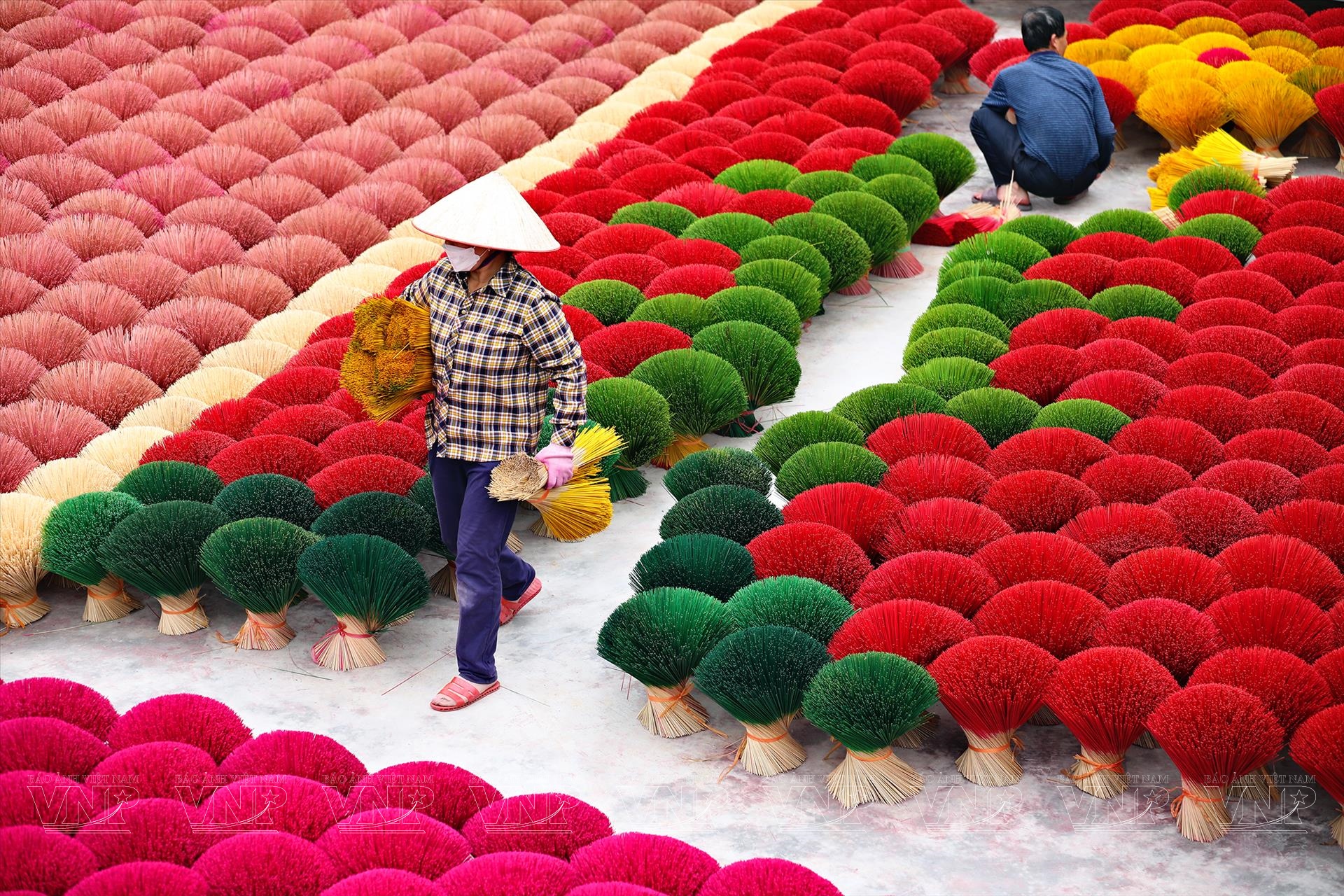
Dyed incense-stick bundles are arranged in colourful patterns at Quang Phu Cau; outdoor displays depend on local conditions. (Source: Collected)
Quang Phu Cau, south of central Hanoi, is known for colorful bundles of incense sticks arranged outdoors. The craft involves several stages, and businesses may specialize in particular parts of production. A visit is more informative when it explains what you are seeing rather than treating every colored bundle as a finished incense product.
Some households create elaborate arrangements for visitors and photography. These spaces can produce striking images, but they serve a different purpose from observing an ordinary working yard. Both can belong in a visit when the distinction is clear.
Outdoor drying and displays depend on conditions. Rain may change the arrangements, and a sunny forecast cannot guarantee that a particular yard will look like a photograph you have saved. Confirm access and any photography charge with the venue, especially if your schedule depends on specific images.
Allow time to learn about the materials and handle products only when invited. Ask permission for portraits and stay clear of production routes. Quang Phu Cau suits travelers who enjoy photography most when the images come with an understanding of the work behind them.
Ha Thai: understanding lacquer through a studio visit
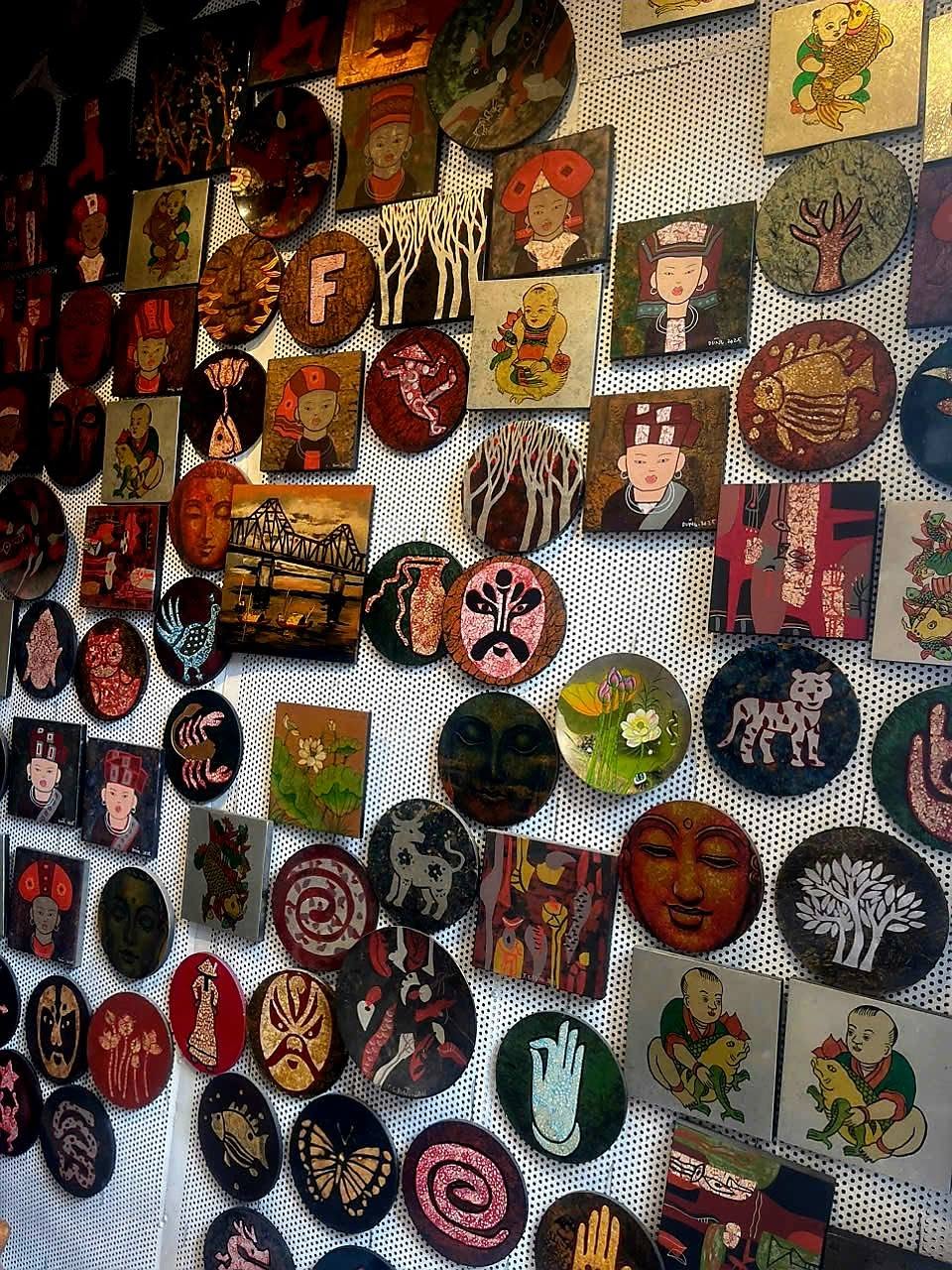
Decorated lacquer pieces reveal the variety of surfaces and designs that a studio visit can help explain. (Source: Collected)
Ha Thai, south of Hanoi, is associated with lacquerware. Its appeal lies in discovering how a finished surface is built through successive stages, rather than simply admiring the shine of the completed object. A guided studio visit helps make those stages understandable.
An introductory activity may involve working on a prepared surface or trying a selected decorative technique. It cannot reproduce the full sequence of preparing, layering, drying and finishing a professional piece within a short visit. Ask which part you will do and what materials are involved.
This is a good choice for travelers interested in design, decoration and the time invested in handmade objects. It benefits from an appointment: a producer may be busy with orders, and access to production areas should be agreed rather than assumed.
For a purchase, discuss materials, care and packing. For a workshop, establish what will be ready to take away and what requires later completion. Children should join only an activity designed for their age, with appropriate supervision and materials.
Chuong: the skill behind a familiar Vietnamese hat
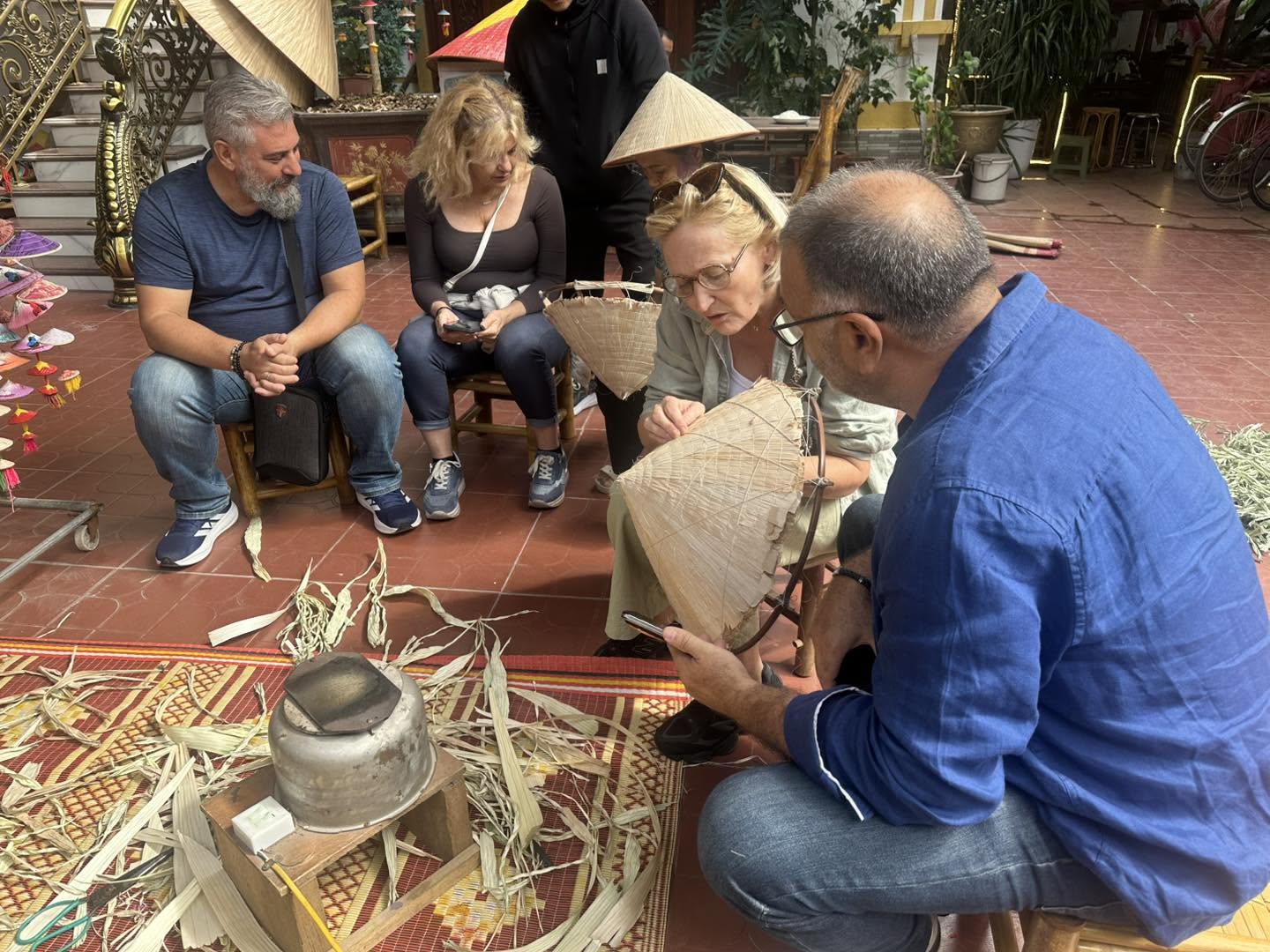
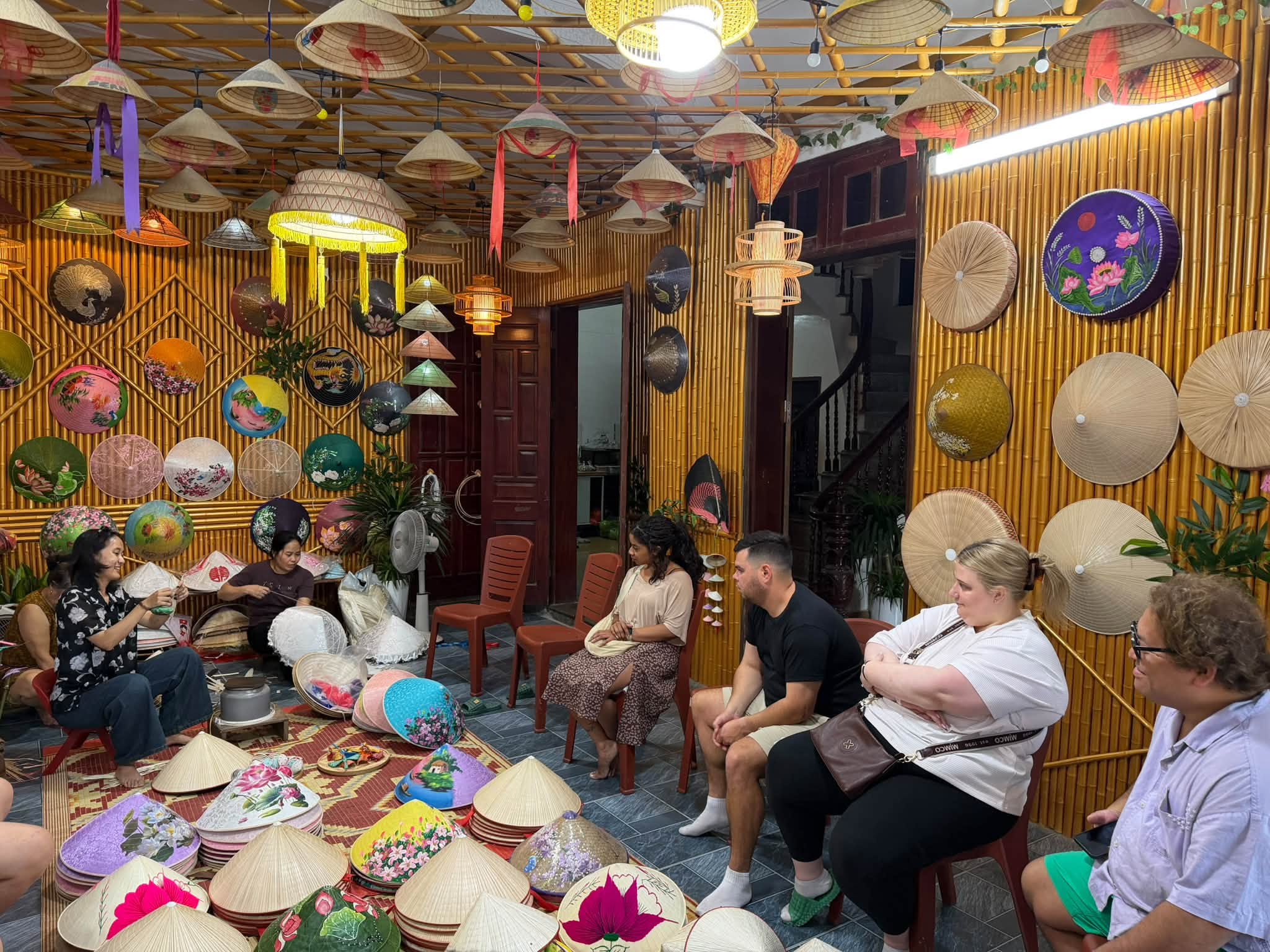
A close look at conical-hat stitching in Chuong reveals the precision behind the familiar shape. (Source: Collected)
Chuong, southwest of central Hanoi, offers a closer look at the conical hat. The familiar shape can hide the precision involved in arranging materials and stitching them together. A visit with a maker brings attention to details you might miss when buying a hat as a souvenir.
Look at the evenness of the stitching, the structure and the finishing. A demonstration becomes particularly interesting when you can ask why a material is chosen or how a maker keeps the shape consistent. Translation can turn a brief encounter into a much richer exchange.
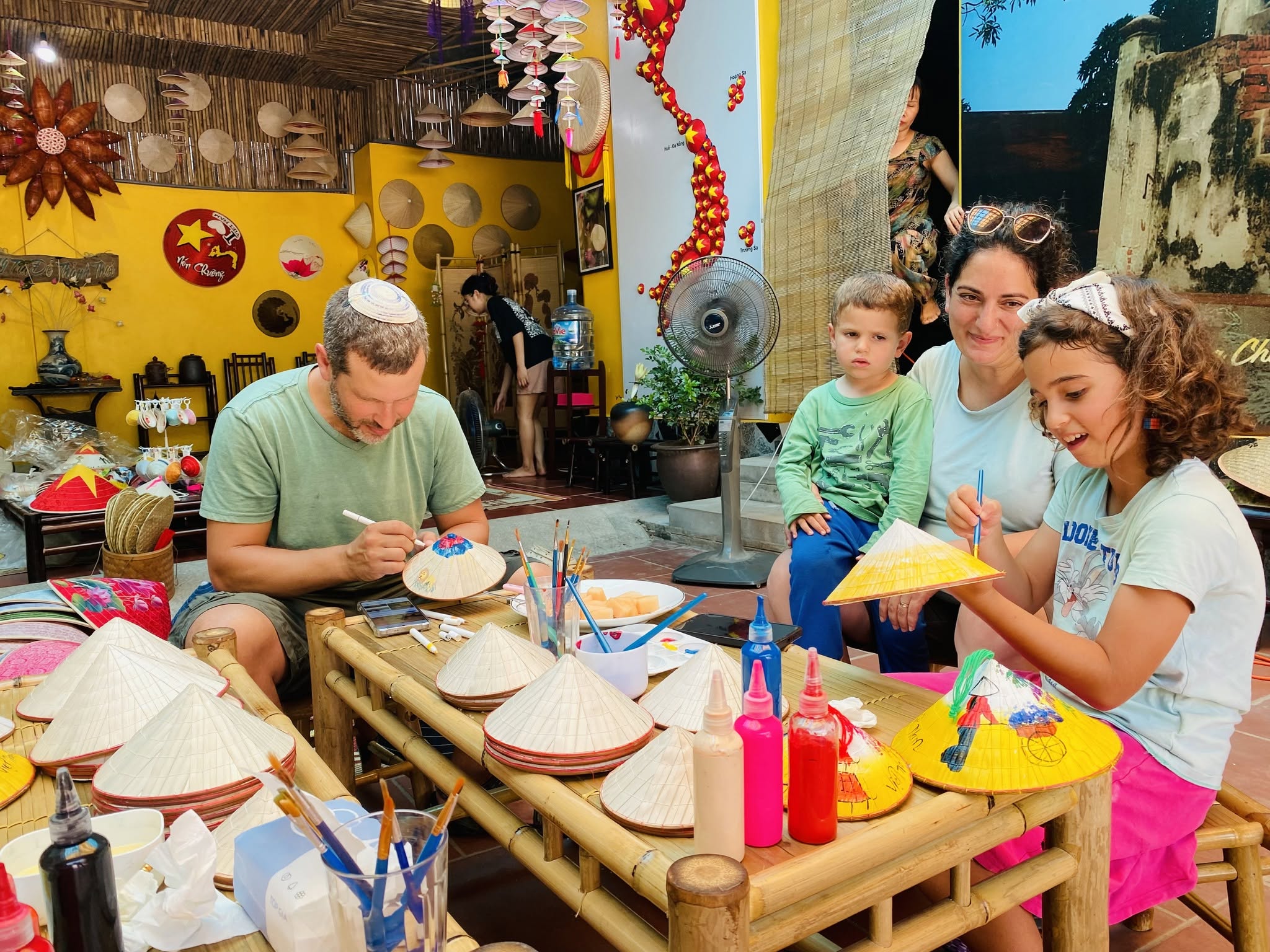
Arrange a household visit rather than assuming you can walk into any home. If a hands-on element is offered, find out whether it involves stitching, decorating or another task. Painting a completed hat is enjoyable, but teaches something different from learning how the hat is constructed.
Chuong also has a traditional hat market associated with particular lunar-calendar dates. Confirm the current date and trading period locally before building your morning around it. The village remains relevant for a planned maker visit even when your trip does not coincide with a market session.
3. Workshops, Working Studios and Shopping: Know the Difference
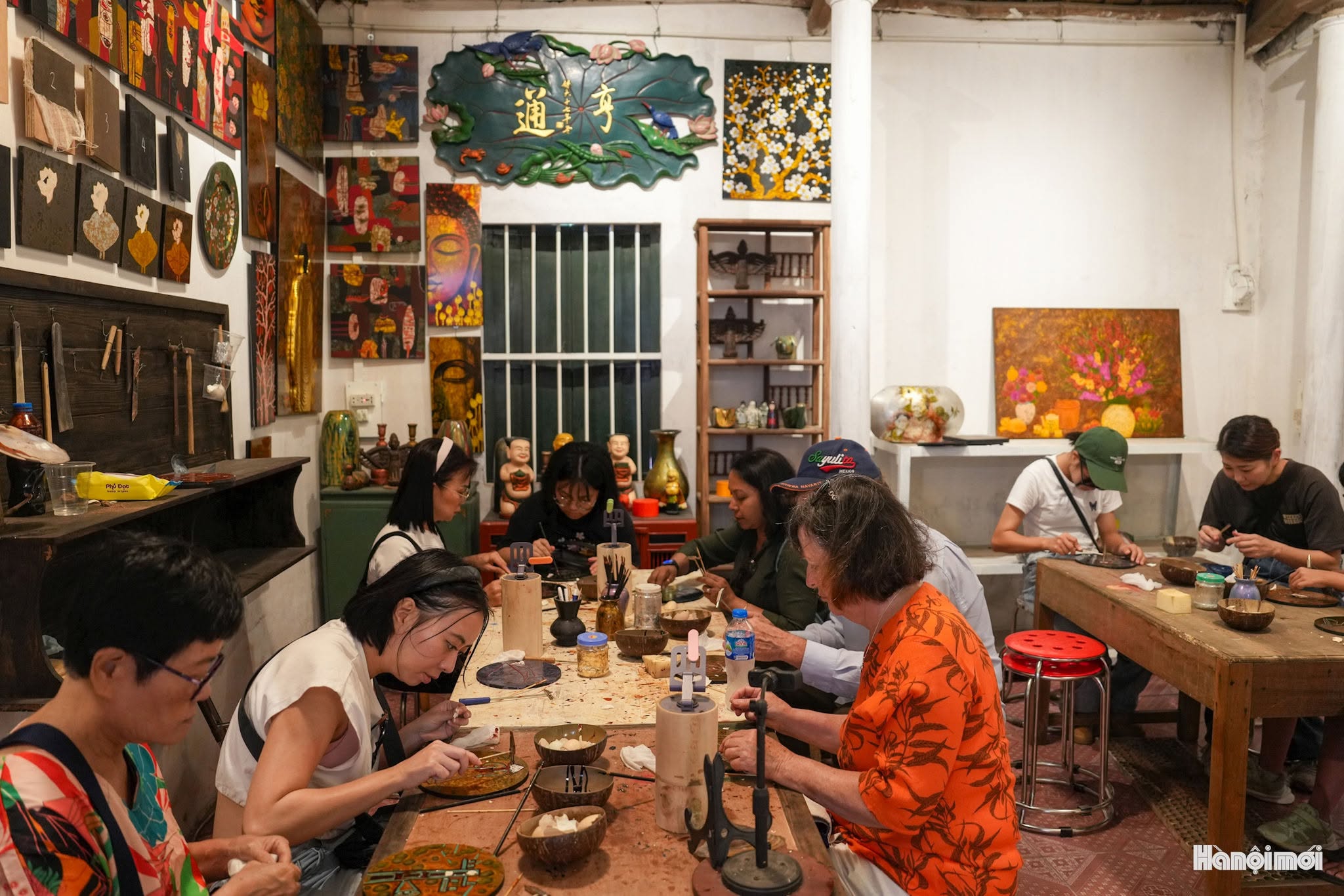
Participants decorate prepared surfaces in an introductory lacquer workshop, one selected stage rather than the full production process. (Source: Collected)
A working studio follows production needs. A demonstration is organized so a visitor can understand a process. A workshop lets you participate, while a showroom focuses on completed products. Each has value, but the labels should tell you what your time and payment cover.
Before booking, ask what you will actually do, how much instruction is included and whether other visitors share the session. “Meet an artisan” might mean a brief introduction or a substantial conversation. If learning is your priority, request an explanation of the process and time for questions.
Check language arrangements too. A driver may not be able to interpret technical discussions; a specialist visit benefits from preparation.
Price comparisons should separate admission, photography, tuition, materials and the finished object. A low workshop price may exclude firing or shipping; a more expensive session may include private instruction. Compare inclusions before deciding which offers better value.
There is no requirement to buy at every stop. Paying fairly for a guided activity already supports the people providing it. Choose a format that leaves hosts time to explain their work and gives you freedom to make purchases thoughtfully.
4. How to Plan a Half-Day or Full-Day Visit
An arranged visit in Chuong gives travelers time to watch conical-hat work and ask questions. (Source: Collected)
Most visitors begin from Hoan Kiem or the Old Quarter, but journey times vary with the hotel, traffic, river crossings and the exact venue. As a broad scheduling allowance, budget around an hour each way for nearer outings and allow more for the southern villages. These are planning buffers, not verified driving times for a particular booking. Check the actual route before committing to an appointment.
Bat Trang lies on a different side of the city from the southwestern and southern villages. Combining it with a distant incense or hat visit can consume time that would be better spent at a workshop. Do not choose a combination solely because both places appear on a popular list.
Time available
Suggested approach
What the day could include
Main consideration
Half a day
Bat Trang OR Van Phuc
One main activity, browsing and a short walk
Include the return journey in your available hours
A full day with depth
One village and a substantial arranged session
Workshop, lunch and additional village exploration
Best for visitors who want to learn rather than collect stops
A full day with variety
Chuong and Quang Phu Cau, if appointments and routing fit
A maker visit and an incense-focused outing
Photography conditions and host availability shape the order
A specialist full day
Ha Thai with a second short stop only if practical
Studio conversation and selected hands-on work
Protect enough time for the main appointment
For a pottery-focused morning, travel to Bat Trang, begin with the booked session, then browse before returning to Hanoi. A full-day version can add a leisurely lunch and further exploration rather than another distant village.
For Chuong and Quang Phu Cau, have the organizer check the two exact venues and road route together. The sequence may change with a household appointment, weather or a confirmed market visit. Adding Ha Thai creates a busier three-stop day and is less suitable for an in-depth workshop.
A private car is convenient for appointments outside the center. Establish return arrangements for taxis or ride-hailing and check current public transport routes. Our Hanoi travel planning guide helps with accommodation and transfer decisions.
5. Practical Tips for Visiting and Buying Handicrafts
Tea sets and decorative ceramics in Bat Trang illustrate why intended use, care and packing are useful questions before a purchase. (Source: Collected)
Spring and autumn often offer comfortable conditions for walking, although rain remains possible. Summer heat makes shade and breaks important; damp or cool days can make outdoor visits less pleasant. Weather matters especially for photography involving outdoor drying yards.
Confirm appointments around Tet and other holidays. Increased demand for products does not automatically mean a workshop will welcome visitors, and families may close or change their routines. Avoid booking an essential craft activity immediately before an airport transfer.
Wear comfortable shoes for village lanes and clothing you can work in. Workshops may involve clay, dust or pigments. Follow instructions around equipment and materials, and ask permission before photographing people, entering homes or moving items for a picture.
For fragile purchases, request protective packing and consider airline baggage limits. If shipping is offered, get the delivery address, cost, expected dispatch date and damage arrangements in writing. Keep the seller's contact details and photograph the item before it is packed.
Ask for practical care instructions: washing and storage for textiles, handling for lacquer and intended use for ceramics. The conversation also helps you understand differences in price. A cheap object and a labor-intensive handmade piece may serve different purposes; buy with a clear description rather than an assumed village-wide standard.
6. Choose the Right Craft Village for Your Trip
A family paints prepared conical hats in Chuong, an activity distinct from constructing a hat from its materials. (Source: Collected)
For a first visit with children, Bat Trang is a useful starting point if you book a suitable pottery activity. For textile shopping, choose Van Phuc and add a confirmed loom visit if observing weaving matters. For photography, prioritize Quang Phu Cau while keeping expectations flexible around weather and displays.
Choose Ha Thai for a planned discussion of lacquer techniques and Chuong for a household craft encounter. Neither needs to be measured against the number of shops or photographic stops elsewhere. The right visit is the one that gives you access to the craft you want to understand.
Can I visit without a tour?
Yes, particularly for browsing and a prebooked visitor activity. A guide becomes more useful when you want household introductions, detailed explanations or several coordinated appointments.
Are workshops available every day?
Availability belongs to the individual provider. Confirm the date, instructor, language and activity instead of assuming a village name guarantees a daily public workshop.
Can I take my handmade item home immediately?
Sometimes, depending on the activity. Pottery and lacquer can require further processing. Agree on collection or delivery before starting, especially near the end of your Vietnam trip.
Is one village enough for a day?
Yes, with a substantial workshop and time to explore. A meaningful session, a meal and a conversation can make a fuller day than several short shopping stops.
Choose your preferred craft first, then decide whether you want observation, participation or shopping. Share those priorities and your available hours through the custom Vietnam tour planner to arrange a village outing that fits your Hanoi stay.