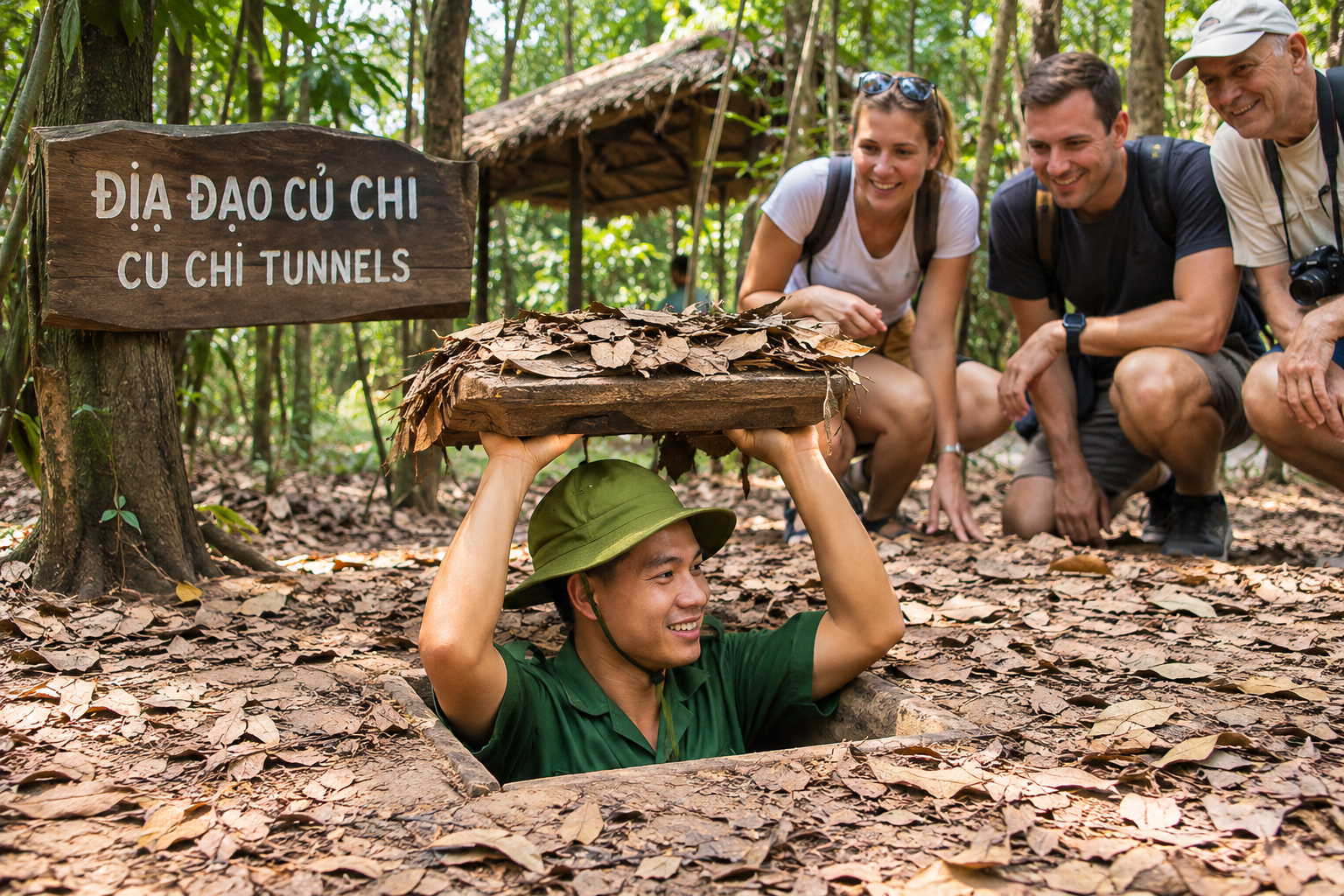
Cu Chi Tunnels Tour: History, Underground Experiences and Visitor Guide 2026
Just outside the bustling streets of Ho Chi Minh City lies one of Vietnam's most remarkable historical attractions: the Cu Chi Tunnels. This extraordinary underground network tells a powerful story of survival, ingenuity, and the human experiences of the Vietnam War.
A Cu Chi Tunnels tour offers much more than an opportunity to crawl through narrow passages. It allows visitors to explore a significant chapter of Vietnamese history, understand the challenges of underground living, and discover how local communities adapted to extraordinary wartime circumstances.
For first-time travelers, the tunnels provide an important contrast to the modern skyscrapers, lively markets, and energetic streets of Ho Chi Minh City.
Whether you are interested in military history, cultural discovery, or unusual travel experiences, visiting the tunnel Cu Chi historical site is a memorable addition to a Southern Vietnam itinerary.
1. History of the Cu Chi Tunnels: An Underground World
From simple shelters to an extensive tunnel network
The history of the Cu Chi Tunnels began during the First Indochina War against French colonial forces in the 1940s.
Local residents and resistance fighters initially excavated small underground shelters to hide from military operations and protect their communities.
During the Vietnam War, particularly from the early 1960s, these passages expanded into an extensive interconnected network.
The tunnels eventually formed a system stretching across the Cu Chi region, with commonly cited historical estimates reaching approximately 250 kilometers.
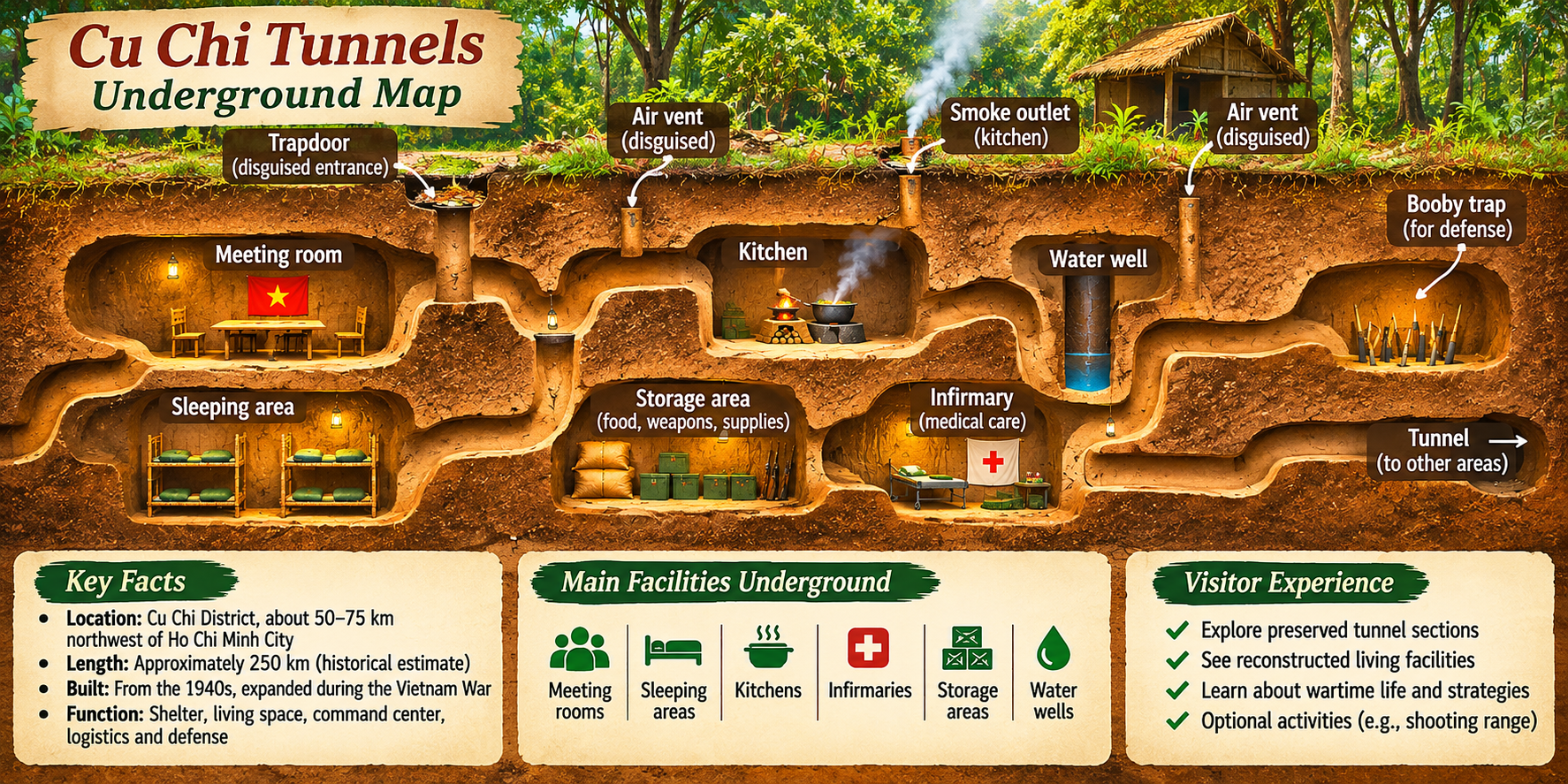
Underground facilities included meeting rooms, kitchens, storage areas, medical stations, and communication passages.
The network enabled Vietnamese communist guerrilla forces to move discreetly, store supplies, organize military operations, and survive prolonged periods of conflict.
How did people live underground?
Life inside the tunnels was extremely difficult.
Passages were narrow, ventilation was limited, and the tropical climate created hot, humid conditions.
Residents and fighters faced shortages of food and medicine, disease, flooding, and constant danger from military operations.
Underground kitchens were designed to disperse smoke, while concealed entrances and ventilation openings helped protect the network from detection.
Today, reconstructed facilities and historical displays help visitors understand the extraordinary challenges of daily life beneath the ground.
The tunnels after the war
Following the end of the Vietnam War in 1975, selected tunnel sections were preserved and restored as historical attractions.
The Cu Chi Tunnels are now recognized as a Special National Historical Site of Vietnam.
In July 2026, Vietnam submitted the Cu Chi Tunnels to UNESCO's World Heritage Tentative List. This represents an important step toward possible future recognition, although the tunnels are not yet a UNESCO World Heritage Site.
2. Where Are the Cu Chi Tunnels Located?
The Cu Chi Tunnels are situated northwest of central Ho Chi Minh City, in the historic Cu Chi area.
There are two principal visitor sites:
| Tunnel site |
Approximate distance from central HCMC |
Best suited for |
| Ben Dinh |
50–60 km |
First-time visitors and shorter excursions |
| Ben Duoc |
65–75 km |
History enthusiasts and more extensive visits |
Ben Dinh Tunnels
Ben Dinh is a popular choice for international visitors because of its relatively convenient location and established visitor facilities.
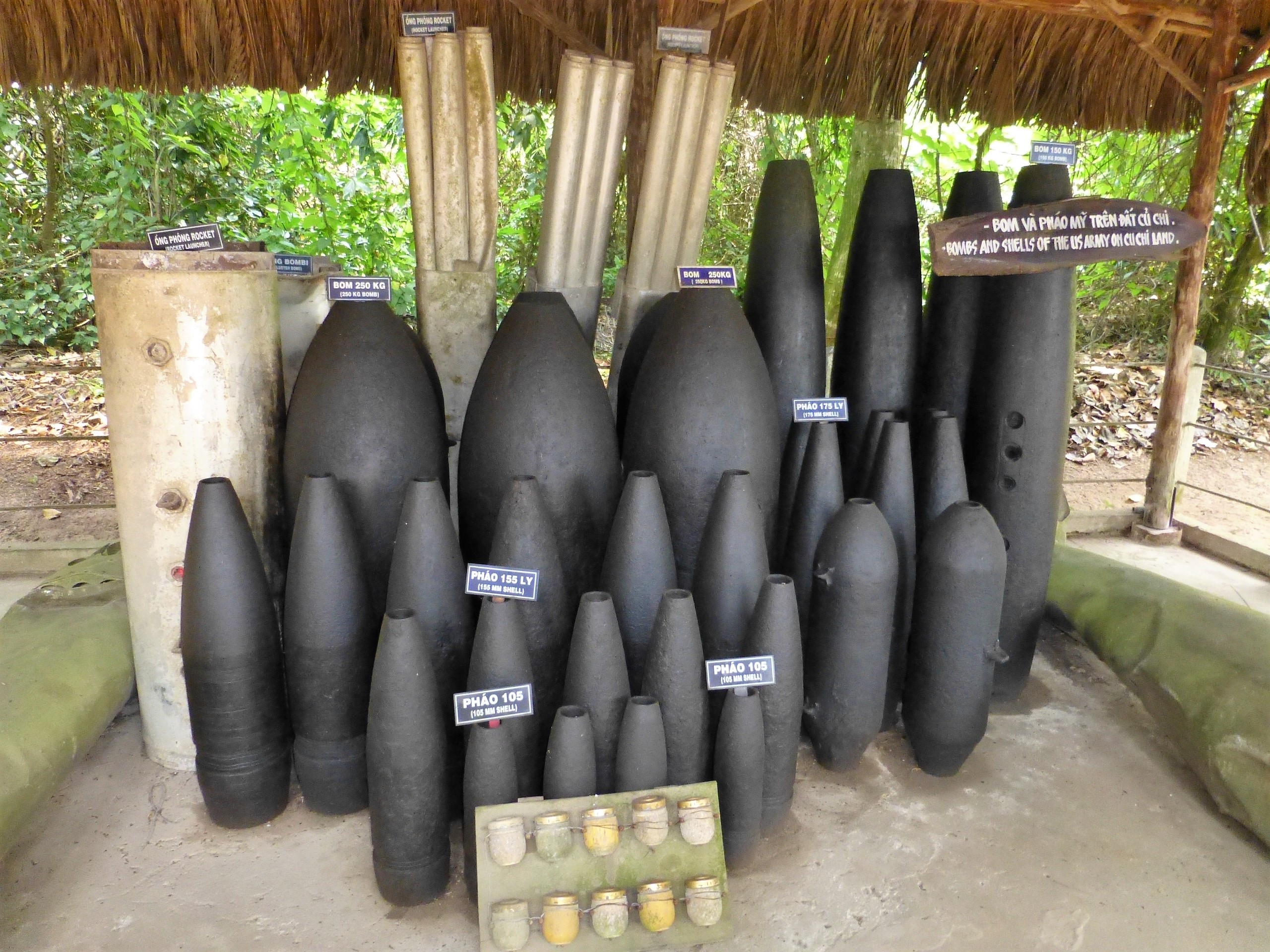
The site features preserved and adapted tunnel sections, historical exhibits, demonstrations, and guided underground experiences.
It is particularly suitable for travelers joining a half-day tour from Ho Chi Minh City.
Ben Duoc Tunnels
Ben Duoc offers a more extensive historical setting, including preserved tunnel areas and the nearby Ben Duoc Memorial Temple.
The site provides opportunities for a deeper exploration of the region's wartime history and remembrance traditions.
Visitors interested in military history and heritage preservation may prefer spending additional time here.
3. Why Should You Visit the Cu Chi Tunnels?
Understand an important chapter of Vietnamese history
The tunnels offer a tangible introduction to the Vietnam War and the experiences of communities living in the Cu Chi region.
Guided explanations help travelers understand how the underground network functioned and why the area became strategically important.
Experience an extraordinary underground environment
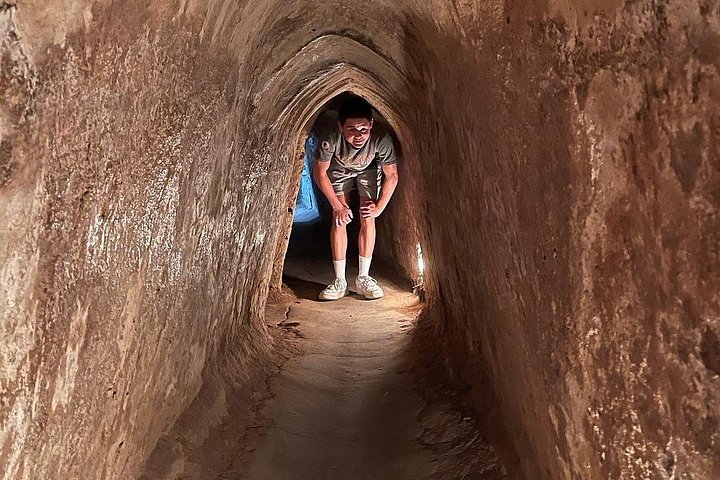
Entering a tunnel allows visitors to appreciate the confined conditions in which people once lived and worked.
Even a short underground experience can reveal the physical challenges of navigating narrow passages in tropical heat.
Discover Vietnamese ingenuity
The construction of the tunnels demonstrates remarkable engineering using relatively simple tools and locally available materials.
Visitors can learn about concealed entrances, ventilation systems, underground kitchens, and methods of protecting the network.
Explore beyond central Ho Chi Minh City
A visit also introduces travelers to the countryside northwest of the city, with agricultural landscapes and local communities offering a different perspective on Southern Vietnam.
4. What Can You Do During a Cu Chi Tunnels Tour?
Explore the underground tunnels
The most famous activity is entering a preserved or adapted section of the underground network.
Visitors may crouch, crawl, or walk through narrow passages, depending on the section and their physical abilities.
Participation is optional, and travelers uncomfortable with confined spaces can remain above ground.
Watch historical presentations
Many guided visits begin with an introductory film or presentation explaining the tunnels' development and wartime significance.
Historical exhibits provide additional context through photographs, artifacts, and reconstructed scenes.
Discover concealed entrances and underground facilities
Guides demonstrate how small tunnel entrances were hidden beneath vegetation and how underground facilities supported daily life.
Visitors can also observe examples of ventilation openings, field kitchens, and defensive structures.
Learn about wartime food
Some tours include an opportunity to taste boiled cassava, a simple food associated with wartime survival.
This experience introduces visitors to the challenges of obtaining and preparing food during the conflict.
Visit the shooting range

Certain visitor areas operate supervised shooting ranges where adults may choose to participate, subject to local rules.
This activity is optional, usually costs extra, and is not necessary for appreciating the historical significance of the tunnels.
Travelers interested primarily in cultural education can enjoy a complete visit without participating.
5. Suggested Cu Chi Tunnels Tour Itineraries
Option 1: Half-Day Cu Chi Tunnels Tour
Recommended duration: Approximately 5–6 hours, including transfers.
| Time |
Suggested activity |
| 7:30 AM |
Depart Ho Chi Minh City by private vehicle |
| 9:00 AM |
Arrive at Ben Dinh, historical introduction |
| 9:30 AM |
Explore tunnel entrances and underground facilities |
| 10:30 AM |
Optional tunnel crawling experience |
| 11:15 AM |
Visit exhibitions and learn about wartime food |
| 12:00 PM |
Depart for Ho Chi Minh City |
| 1:30 PM |
Arrive back at your hotel |
Times are illustrative and depend on traffic and site arrangements.
This excursion is ideal for first-time visitors with limited time.
Option 2: Full-Day Cu Chi Tunnels and Cao Dai Temple Tour
Combine the Cu Chi Tunnels with a visit to the Cao Dai Holy See in Tay Ninh.
Begin with a guided exploration of the tunnels before continuing to the colorful Cao Dai religious complex.
Learn about Caodaism, a Vietnamese religion founded in the twentieth century that incorporates elements of several spiritual traditions.
Depending on the day's route and ceremony schedule, visitors may have an opportunity to respectfully observe a religious service.
Enjoy lunch at a local restaurant before returning to Ho Chi Minh City.
Recommended duration: Approximately 9–11 hours.
This option combines wartime history with religious and cultural discovery.
Option 3: Cu Chi Tunnels by Speedboat
For a different experience, selected tour operators offer speedboat excursions along the Saigon River.
Travelers can observe riverside communities and changing landscapes while avoiding some of the city's road traffic.
The journey combines river scenery with a guided visit to the tunnels.
Availability, departure points, and schedules depend on the operator.
6. Practical Tips for Visiting the Cu Chi Tunnels
Best time to visit
The tunnels are open to visitors throughout much of the year, subject to operating arrangements.
Southern Vietnam's dry season, generally from December to April, often offers comfortable conditions for outdoor sightseeing.
Morning excursions are recommended to avoid some of the afternoon heat.
What should you wear?
Choose lightweight, breathable clothing and comfortable closed-toe shoes.
Long trousers can be useful when entering tunnels, while insect repellent, drinking water, and sun protection are recommended.
Avoid carrying large bags into underground sections.
Are the tunnels suitable for everyone?
The visitor areas are established historical attractions, but underground passages can be narrow, warm, and physically demanding.
Travelers with claustrophobia, limited mobility, respiratory difficulties, or certain medical conditions should consider remaining above ground.
Families with young children can enjoy the historical displays without entering the tunnels.
Should you book a guided tour?
A knowledgeable guide greatly enhances the experience by explaining the historical background, engineering techniques, and cultural significance of the site.
Private tours provide additional flexibility, while small-group excursions are generally more economical.
7. How Much Does a Cu Chi Tunnels Tour Cost?
Tour prices depend on transportation, group size, entrance fees, guide services, and optional activities.
As general planning estimates:
| Tour type |
Indicative price per person |
| Half-day shared-group tour |
USD 20–40 |
| Half-day private tour for two travelers |
USD 55–100 |
| Full-day Cu Chi and Cao Dai tour |
USD 45–110 |
| Speedboat tour |
USD 80–150 |
These are approximate budgeting ranges, not verified current offers. Private tour prices may decrease per person for larger groups.
Before booking, confirm whether entrance fees, hotel pickup, meals, and additional activities are included.
8. Frequently Asked Questions About Cu Chi Tunnels
How far are the Cu Chi Tunnels from Ho Chi Minh City?
The main visitor sites are approximately 50–75 kilometers northwest of the city center, depending on the location selected. Road journeys commonly take around 1.5–2.5 hours each way.
How long should I spend at the tunnels?
Allow approximately two to three hours for the historical site itself, excluding transportation.
Can I visit without crawling underground?
Yes. Entering the tunnels is optional. Visitors can still explore above-ground displays, historical exhibits, and reconstructed facilities.
Is a Cu Chi Tunnels tour suitable for children?
Families can visit the site, although some historical presentations may be disturbing for younger children. Underground access should be assessed according to each child's comfort and physical ability.
Are “Chu Chi Tunnels” and “Cu Chi Tunnels” the same place?
Yes. Travelers sometimes search for a chu chi tunnels tour, but the correct name is Cu Chi Tunnels, located near Ho Chi Minh City.
Conclusion: A Meaningful Journey into Vietnam's History
A Cu Chi Tunnels tour is one of the most educational excursions available from Ho Chi Minh City.
Beyond the unusual experience of exploring underground passages, the site encourages visitors to reflect on wartime history, human resilience, and the importance of peace.
Whether you choose a half-day visit, a full-day cultural excursion, or a river journey by speedboat, the tunnels offer valuable insight into Southern Vietnam's past.
For travelers seeking learning and discovery, the Cu Chi Tunnels are an essential addition to a Southern Vietnam itinerary.
Explore more historical attractions, cultural experiences, and Southern Vietnam tours at Vietnamtravels.com.
Sources and References
-
UNESCO World Heritage Centre – Cu Chi Tunnels, Tentative List submission, July 2026.
https://whc.unesco.org/en/tentativelists/7038/
-
Ho Chi Minh City Tourism – Cu Chi historical sites and visitor information.
https://visithcmc.net/
-
Vietnam Tourism – Southern Vietnam destinations and travel guidance.
https://vietnam.travel/
Last updated: November 2026. Entrance fees, opening hours, tour schedules, and optional activities may change.