Halong Bay Cruise: A First-Time Guide to Routes, Boats and Planning
November 08, 20266 min read
A Halong Bay cruise can be a memorable introduction to northern Vietnam, but choosing one takes more thought than comparing cabin photographs. The sailing area, time on the water, transfer arrangements and included excursions all shape your experience. This guide helps first-time visitors make a practical choice while leaving space to learn about the landscape and coastal life.
Understand the bay before choosing a boat
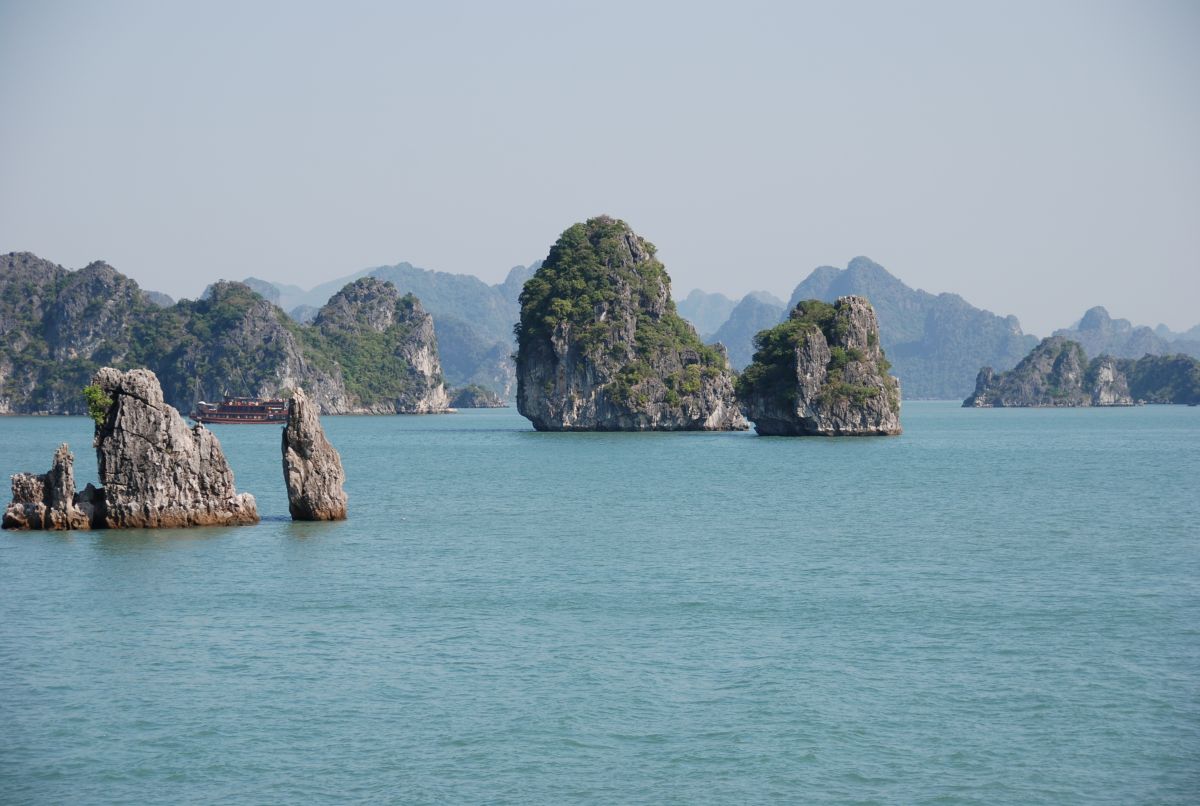
The limestone islands are more than a beautiful backdrop. UNESCO recognizes Ha Long Bay–Cat Ba Archipelago for its remarkable seascape and geological value. Watching the changing shapes of cliffs, narrow waterways and rock formations becomes more rewarding when a guide explains how this landscape developed.
Start by asking where the boat actually sails. A trip marketed under the familiar Halong name may describe an itinerary in Ha Long Bay, neighboring Lan Ha Bay or Bai Tu Long Bay. Read the detailed route rather than assuming every advertised cruise visits the same places. Departure port, named stops and overnight anchorage matter more than the headline.
Choose according to your interests: caves, paddling, coastal scenery or simply time on deck. Avoid assuming that an alternative bay guarantees solitude. Ask about the expected activities and how they are shared with other boats. For a wider route combining cultural visits and the coast, explore our six-day northern Vietnam tour.
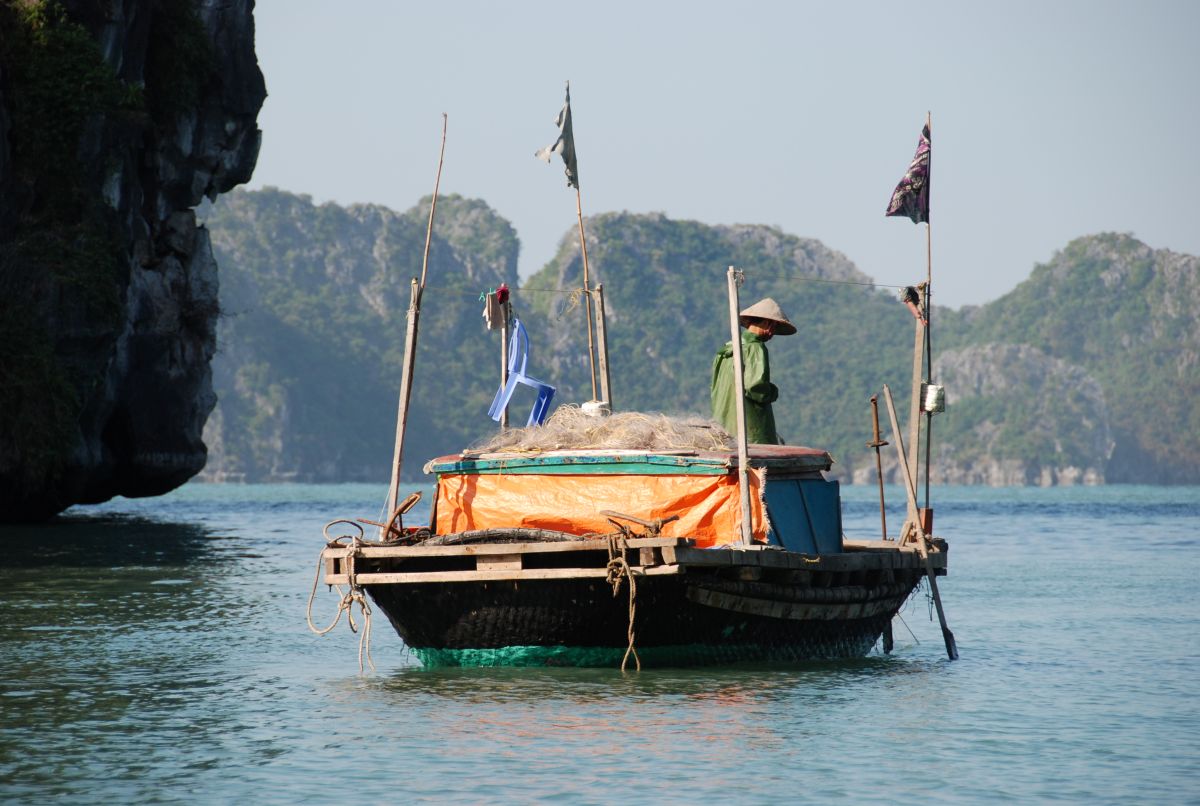
A slower cruise gives you time to notice smaller boats and details of the surrounding landscape.
Choose a day trip, one night or two nights
A day cruise works when your itinerary is short or you prefer sleeping ashore. Compare actual sailing time, not just the full excursion duration. A package beginning and ending in Hanoi also includes road transfers, waiting and boarding. Ask which activities are realistically included and whether lunch leaves enough time for the visits you value.
One night aboard allows an evening and morning on the water without committing several days. It is a sensible starting point for many first-time travelers, but “two days” does not mean forty-eight hours of cruising. Check boarding, cabin checkout and disembarkation times, plus how much of the second morning remains for activities.
Two nights may suit travelers who enjoy a slower pace and want a fuller excursion day between arrival and departure. Check whether that day uses a smaller excursion vessel, whether you keep the same cabin and how meals are arranged. A longer package is worthwhile when its additional experiences match your interests, rather than merely repeating the first day's activities.
Families should compare bed arrangements and supervision requirements. Travelers with limited mobility should ask about tender transfers, stairways and bathroom access. A spacious cabin photograph cannot tell you whether getting aboard or joining an excursion will be comfortable.
Look beyond the cabin and compare the full package
Request a written quotation showing the vessel name, cabin category, travel dates and occupancy. Confirm whether the price includes Hanoi transfers, entrance fees, meals, kayaking and other planned excursions. Ask separately about drinks, optional activities, holiday supplements and any charges payable aboard. Compare like-for-like inclusions before deciding that one offer is cheaper.
Cabin location can matter as much as decoration. Ask about noise near engines or public areas, window arrangements and access to outdoor space. For dietary needs, explain the requirement before booking and ask what the kitchen can realistically provide. Do not assume that a buffet automatically accommodates allergies or strict dietary restrictions.
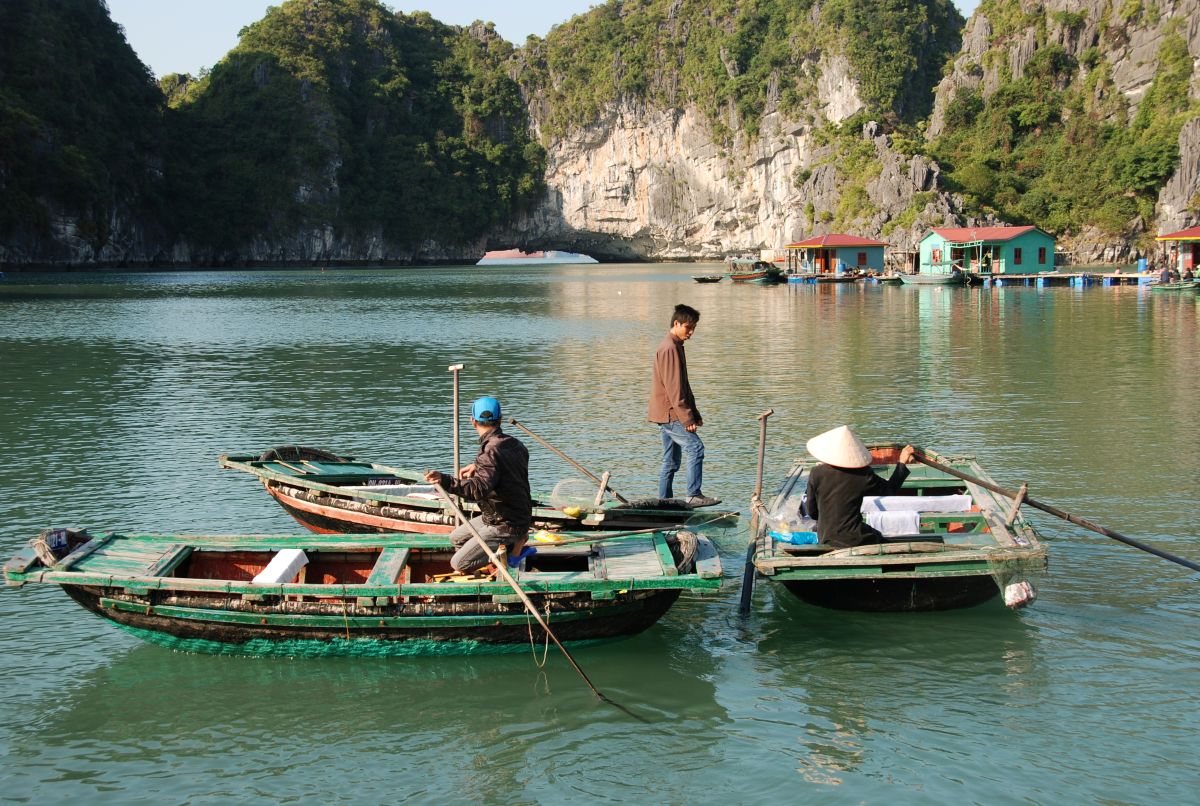
Small-boat excursions depend on the confirmed route and operating conditions; this scene is illustrative.
A knowledgeable guide adds context to cave visits and village-related excursions. Ask what interpretation is included: geology, local livelihoods or conservation. If the program includes community visits, check what guests actually do and whether photography or purchases are optional. Respect people's working spaces and ask permission before taking close-up portraits.
Before paying, read the cancellation conditions for both your own change of plans and operator cancellations. Keep written confirmations and the contact details for the company responsible for your departure, especially when booking through a third-party seller.
Prepare for weather, water activities and responsible travel
Weather can alter a cruise even after you have reached the coast. Port authorities may restrict sailing or suspend departures when conditions are unsafe. An operator's published weather policy illustrates why cancellation and shortened-trip terms need attention; it does not establish the refund policy of every other company. Ask your own provider what happens before boarding and after a trip has begun.
Pack a light waterproof layer, sun protection, secure footwear and a small day bag. Carry essential medication with you and protect electronics during small-boat transfers. Listen to the safety briefing, locate your life jacket and follow crew instructions when moving between vessels.
Kayaking and swimming should be treated as optional activities, subject to the operator's rules and conditions. Tell staff about your ability and comfort level. Do not enter the water independently or paddle away from the designated group. Travelers who prefer staying aboard should ask whether that is possible during each excursion.
Observe coastal life respectfully and follow your guide's advice during small-boat visits.
Carry reusable items where practical, keep litter aboard for proper disposal and avoid touching cave formations. Learning about the bay includes understanding the pressure tourism places on its waters. Choose operators willing to explain their waste practices rather than relying only on a sustainability label.
Fit the cruise into a balanced northern Vietnam itinerary
Keep the day before departure simple. Confirm your pickup location, the exact port and an emergency contact. Check whether your hotel lies within the transfer area, and ask how much luggage can travel with you. Avoid assuming that two boats with similar names use the same terminal.
On return day, allow a generous margin before flights or other fixed connections. Disembarkation, traffic and weather can change your arrival time. A night in Hanoi afterward is often a more relaxed planning choice than a tight airport connection. Our two-week Vietnam itinerary offers ideas for balancing the bay with cultural stops elsewhere.
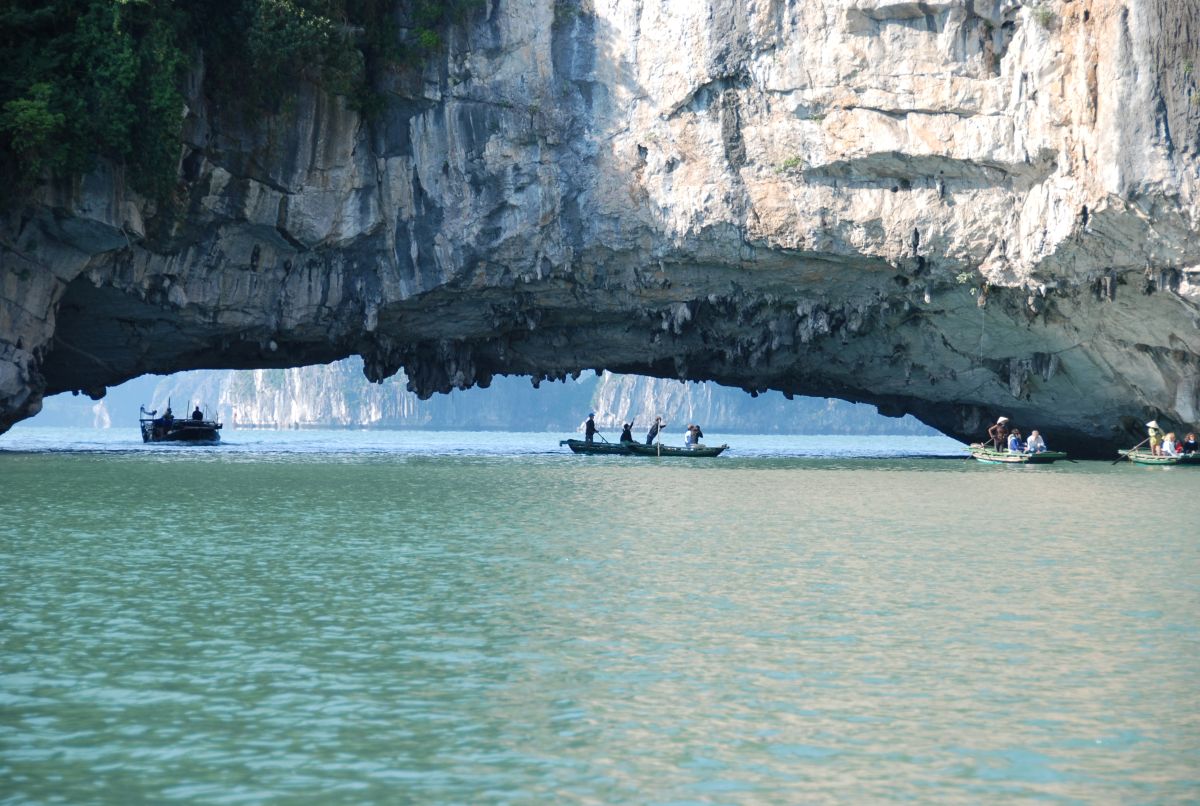
For a learning-focused trip, prepare a few questions for your guide: why do some cliffs have openings near the water, how do local boats navigate the channels, and what changes are being made to protect the environment? Simple questions can make the scenery easier to understand without adding more stops.
The right Halong Bay cruise is the one whose route, pace and service fit your needs. Choose a clear itinerary, confirm the practical details and leave room to watch, listen and ask questions. That approach turns a scenic boat trip into a deeper discovery of northern Vietnam.