Hoi An Travel Guide: Plan Your First Visit to Vietnam’s Historic Riverside Town
November 17, 202616 min read
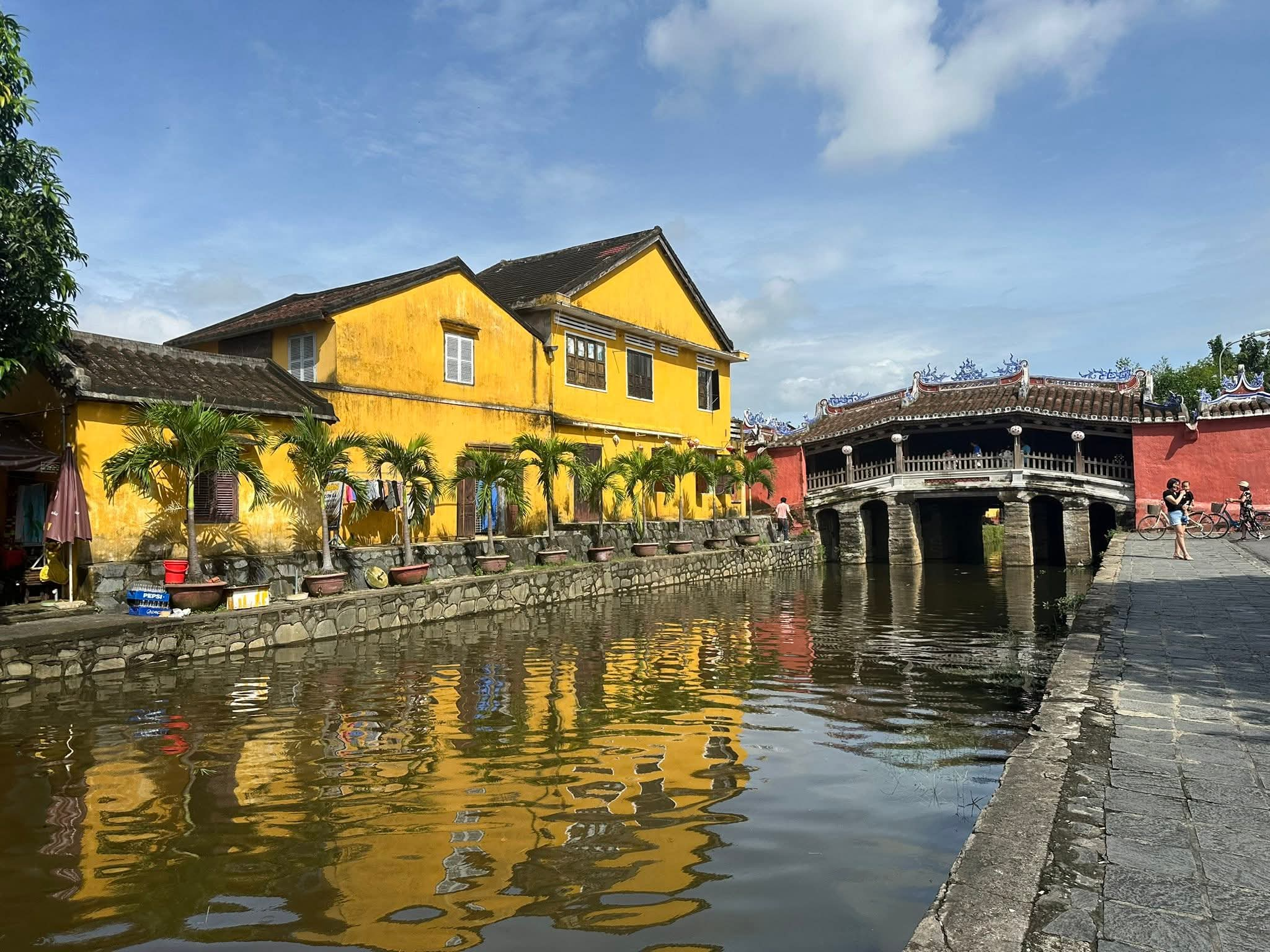
Featured image: Hoi An’s historic riverside buildings and Japanese Covered Bridge form a recognizable scene in the Ancient Town. (Source: Collected)
Hoi An can be an afternoon among historic streets or a longer stay combining heritage, food, beaches and countryside. The difference comes from how you organise your time and where you sleep. This Hoi An travel guide helps you choose a base, decide how many days to allow and build a first visit around the experiences that matter to you.
Three nights are a useful starting point if you want two full days between arrival and departure. That gives you space for the Ancient Town and another main experience without squeezing everything into a single outing. Stay longer for beach time, a slower pace or a carefully chosen excursion; a day trip can still provide a focused introduction.
1. Understand Hoi An and Choose Your Travel Style
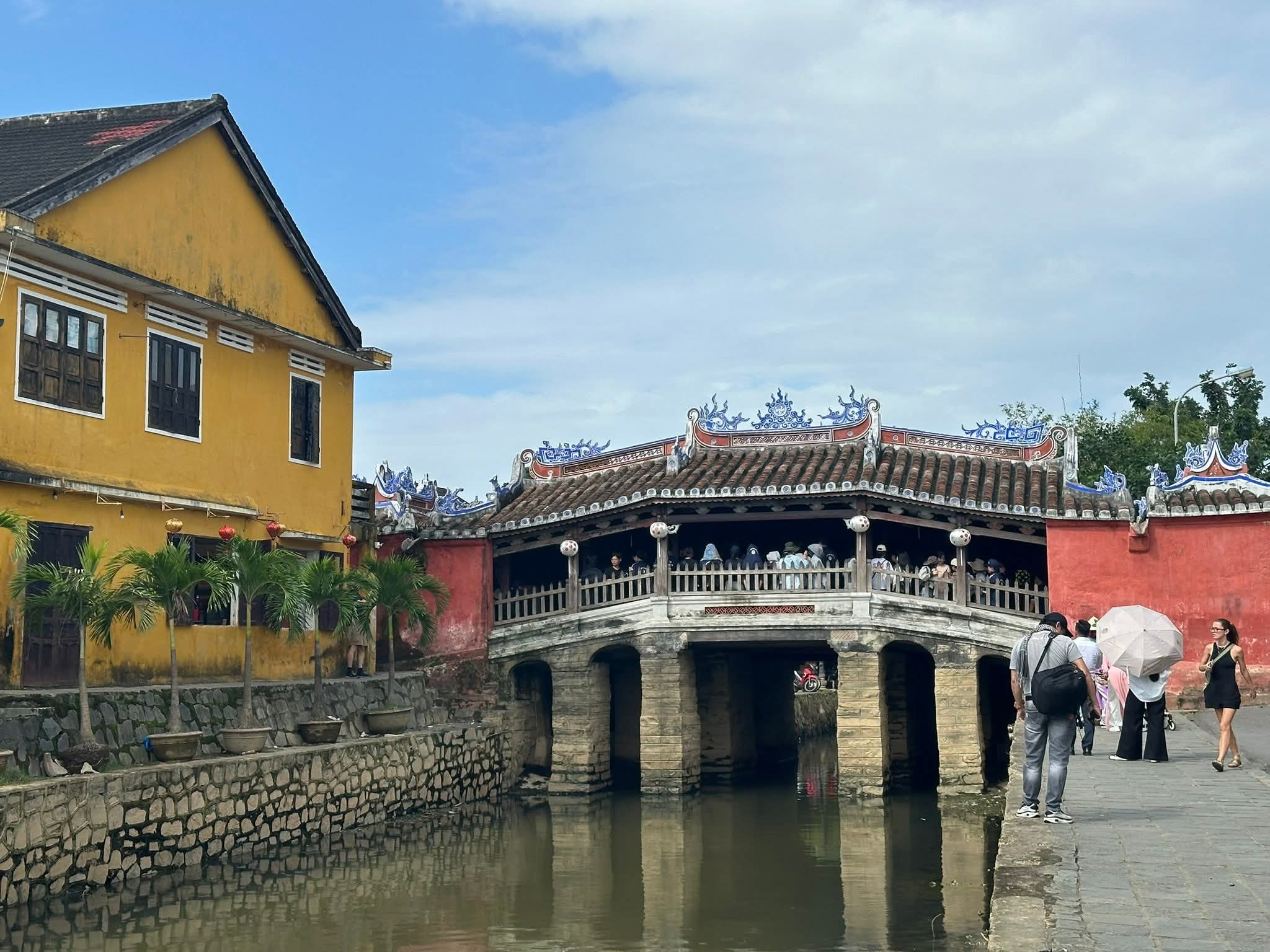
Hoi An’s Japanese Covered Bridge and surrounding historic buildings introduce the town’s trading-port heritage. (Source: Collected)
A historic town within a wider destination
Hoi An Ancient Town is a UNESCO World Heritage Site, recognised in 1999 for its preserved trading-port heritage. Its buildings and street layout reflect exchanges between local communities and overseas merchants. A visit becomes more interesting when you look beyond the façades to the houses, assembly halls, places of worship and commercial spaces that explain how the town worked.
The protected historic centre is only part of the visitor destination. Beaches, agricultural areas, villages and accommodation spread beyond it. A hotel advertised as being “in Hoi An” may require a vehicle to reach the streets you have seen in photographs.
Older descriptions place Hoi An in Quang Nam Province. Following the 2025 administrative reorganisation, the area is within the expanded Da Nang municipality. Hoi An remains a distinct destination for travel planning: an address ending in Da Nang does not establish that a property is near central Da Nang or its airport. Use the exact map pin.
Choose the kind of stay you want
Travel style
Main focus
Useful base to investigate
Heritage and food
Guided walks, historic interiors and local meals
Near the Ancient Town, with convenient evening access
Town and beach
Sightseeing mixed with time by the sea
A beach base or accommodation with workable connections
Countryside discovery
Village outings, cycling and hosted experiences
A suitable rural location or a town base with organised excursions
Gentle holiday
One main outing daily, comfortable meals and rest
A property with easy access and facilities you will use
Families should consider the daily journey as well as the hotel. Couples may value a quiet room more than immediate proximity to evening venues. Active travellers should choose routes and support around ability rather than assuming every rural outing is easy.
Hoi An also remains a place where people work and worship. Ask before photographing people closely, keep access to shops and homes clear and follow instructions inside religious buildings. Our article on Hoi An’s living heritage explores that wider context without turning your first visit into a conservation lecture.
2. Choose Your Season and Length of Stay
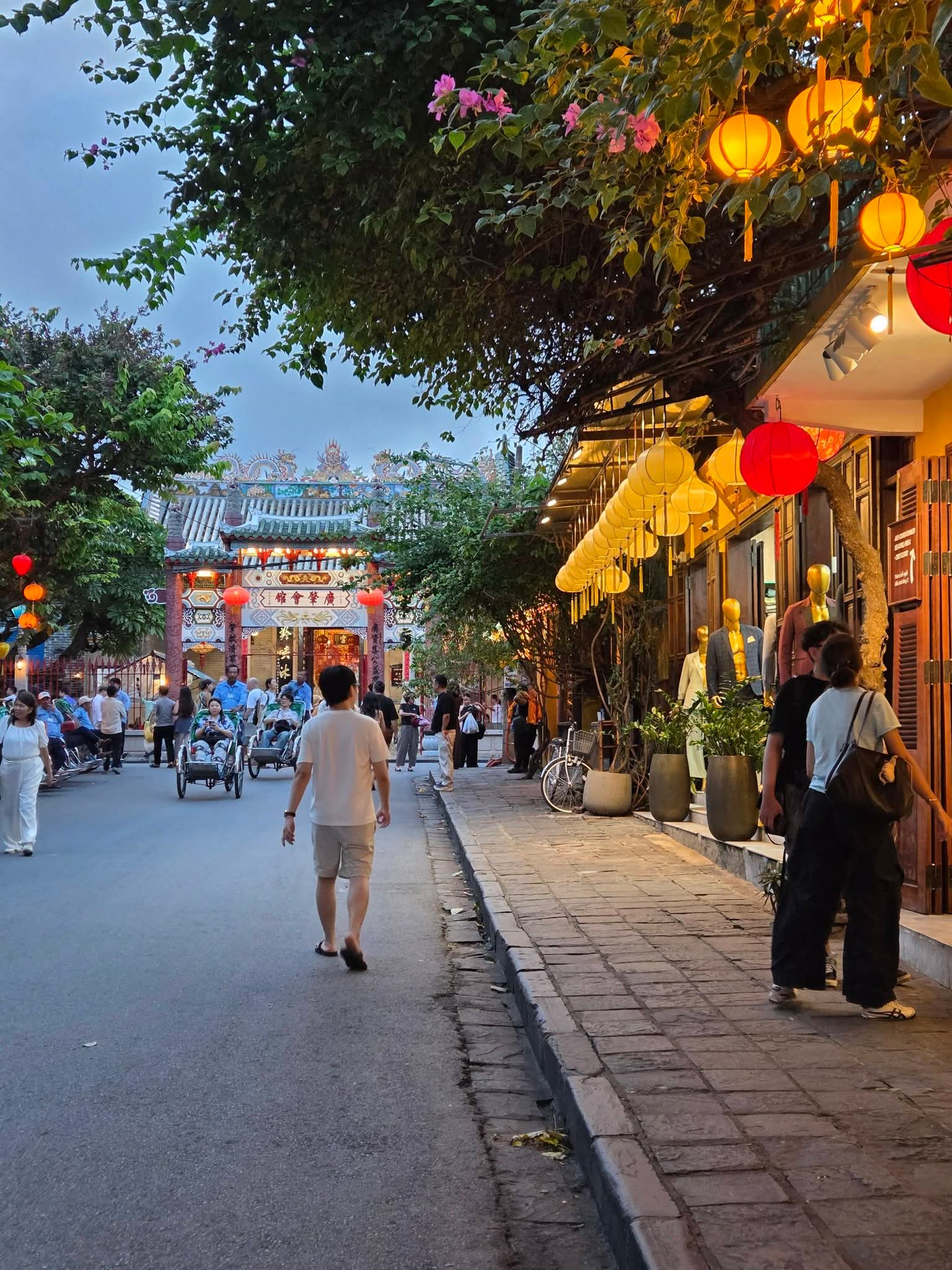
A daytime walk through Hoi An’s historic streets offers a different pace from the busy evening period. (Source: Collected)
Plan around activities, not one ideal month
The weather that suits a heritage walk is not necessarily the weather you want for a beach holiday. Lower temperatures can make walking comfortable while sea conditions remain unsuitable for swimming. Conversely, a hot sunny day may suit time beside a pool more than an extended exposed bicycle ride.
As a broad pattern, spring offers a useful balance for sightseeing, summer can bring strong heat, and the latter part of the year has greater exposure to heavy rain and storms. Treat these as planning tendencies rather than promises for your dates.
Period
Main considerations
Planning approach
January–February
Cooler spells, cloud and rain remain possible
Bring layers and keep beach expectations flexible
March–April
A useful period to consider for mixed sightseeing
Schedule walks with breaks and check daily conditions
May–August
Heat and sun can make prolonged activity tiring
Start outdoor outings early and allow afternoon rest
September–December
Greater rain exposure and possible disruption
Keep transport and activities adaptable
Ask your accommodation or organiser about current access if severe weather is forecast. Ordinary rain and flooding require different responses. A cooking class may be indoors, but that does not mean the route to it is accessible during a serious weather event.
For beach outings, follow local flags and instructions. Do not judge swimming conditions from sunshine alone. Likewise, confirm river excursions separately rather than assuming a booked service must operate regardless of conditions.
A day trip or a longer stay?
Time available
What it can offer
Main trade-off
Day trip
A selected heritage walk, meal and perhaps an evening visit
Transfers reduce time and flexibility
Two days
A focused town introduction plus a short additional experience
Arrival and departure may occupy much of the stay
Three days
More room for town, food and one countryside or beach outing
Still requires choosing priorities
Four days
Slower mornings, more beach time or a separate excursion
Additional hotel nights and itinerary space
An overnight adds more than an evening photograph. It lets you return after a break, eat without watching a transfer clock and explore at another time of day. However, two nights do not automatically provide two full sightseeing days.
Write down your actual arrival and departure times. A late flight followed by an early onward journey can leave only one usable day. Allocate the most important experience first, then add optional activities around it.
3. Get to Hoi An and Move Around
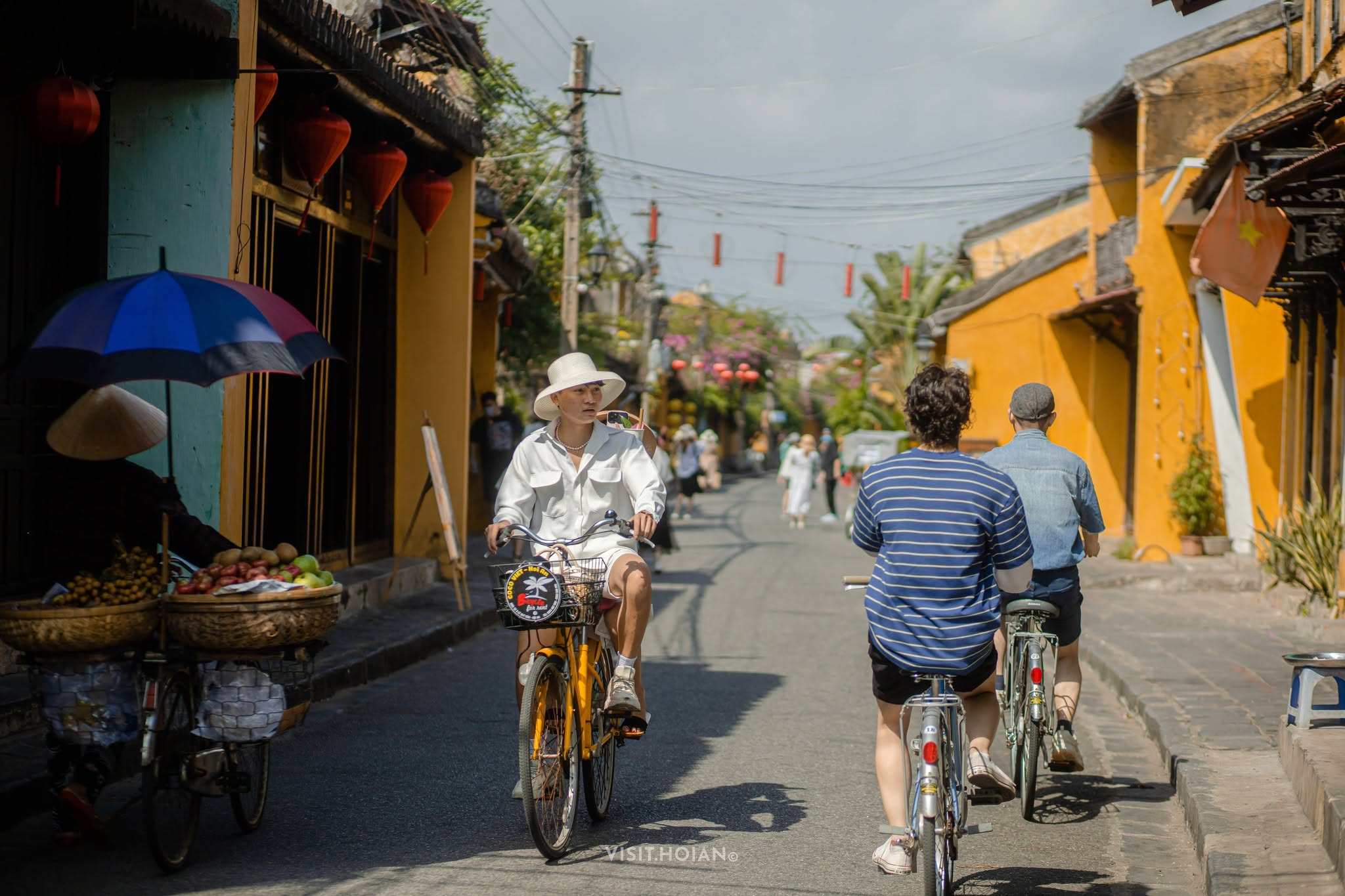
Cyclists move through a Hoi An street, where choosing a suitable route and transport matters. (Source: Collected)
Arrival through Da Nang
Da Nang is the principal airport and rail gateway for many Hoi An visits. After arrival, a road transfer completes the journey. As an initial allowance, many airport-to-Hoi An trips take around 45–60 minutes, with variation for traffic, weather and the property’s location. Confirm the timing for your booking.
Send the driver the hotel pin and establish the drop-off arrangements. Vehicle restrictions or narrow lanes may mean a short walk with luggage. Ask the property how arrivals are handled, especially with children, limited mobility or a late check-in.
If arriving by train, arrange the station-to-hotel journey separately. Check luggage capacity and any child-seat requirement before confirming a car. Keep the arrival afternoon light rather than attaching an expensive activity to a potentially delayed journey.
Combining Da Nang and Hue
Da Nang and Hoi An can be visited together, but the best division of nights depends on your interests. A beach stay in one location and repeated transfers to the other may be less convenient than the map initially suggests. Compare where you want to spend mornings and evenings before booking.
Hue needs its own allowance for road or rail travel and sightseeing. If including scenic stops during a transfer, treat the journey as an activity rather than assuming it takes the same time as a direct connection. Our Hue travel guide helps you decide how much time to give the imperial city.
Moving between your hotel, town and beach
Journey or activity
Useful approach
What to establish
Historic centre
A planned walking route
Entry point, current pedestrian arrangements and breaks
Hotel to beach or town
Taxi, hotel transfer or another confirmed service
Pickup, return arrangements and actual journey time
Countryside outing
Suitable bicycle, guided transport or a combination
Traffic, surfaces, heat and support
Evening return
A clear pickup outside restricted areas
Meeting point and contact details
Walking works best when the distance and conditions suit everyone. Pavements, crossings, heat and evening visibility can matter more than a short straight-line distance. Ask about the actual route rather than accepting “walking distance” without detail.
Cycling can be enjoyable on selected routes, but a bicycle provided by the hotel is not evidence that every road nearby is suitable. Check brakes, fit and tyres, request a helmet and confirm children’s equipment in advance. A guided outing can help with navigation and choosing an appropriate route.
4. Choose Where to Stay and Plan Your Meals
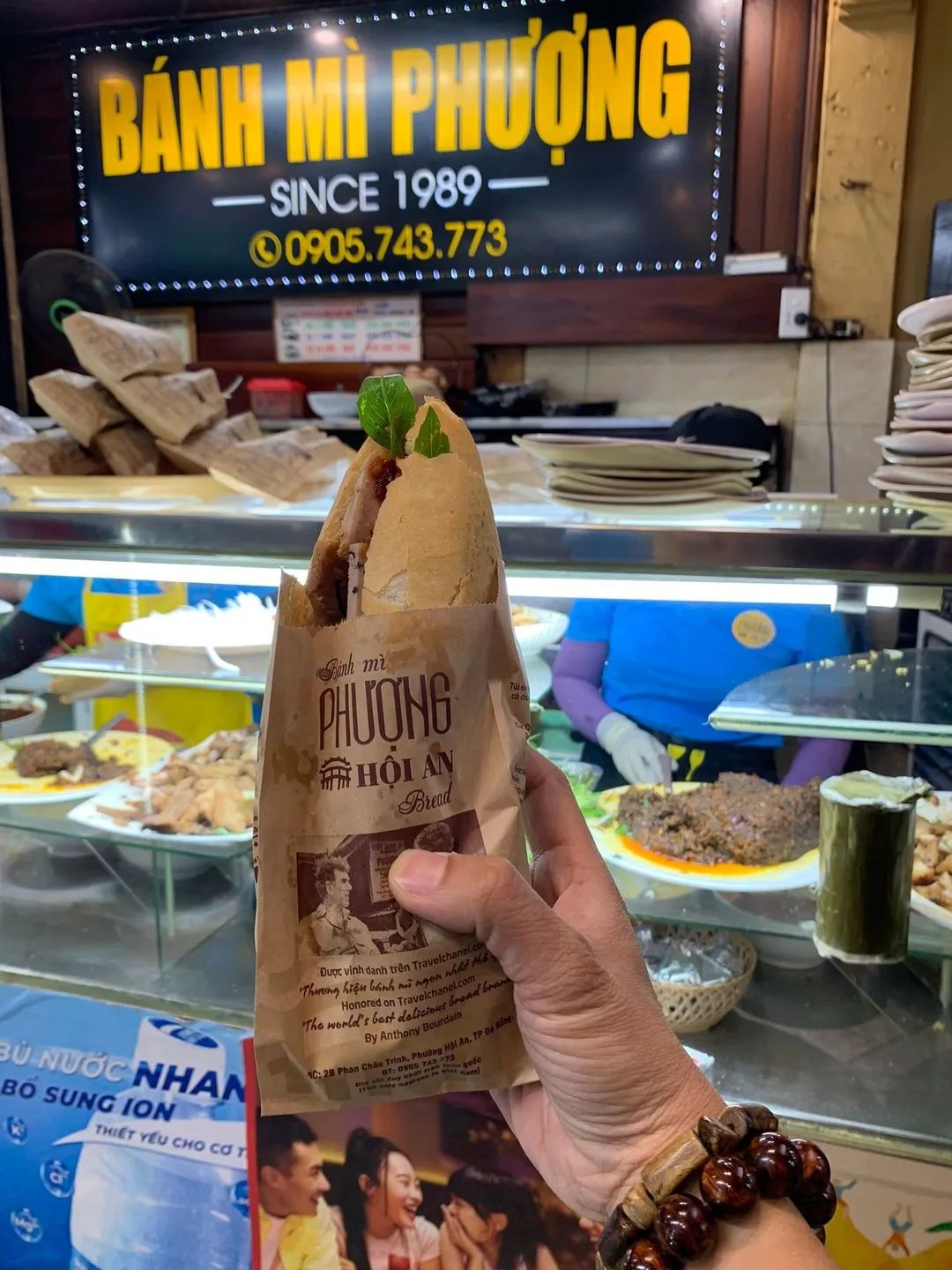
Banh mi at a Hoi An sandwich shop offers a meal option between sightseeing and other activities. (Source: Collected)
Near the Ancient Town
Staying near the historic centre can make meals and evening outings straightforward. Distinguish a room inside a busy visitor area from one on a quieter approach street. Proximity helps, but restaurants, music, deliveries and group activity can affect sleep.
Ask where the room faces and whether there are current works nearby. Check the walk back after dinner and the final approach with luggage. Heritage-style interiors may look appealing while involving stairs or a room layout that does not suit your needs.
Beach or countryside accommodation
An Bang is one of the beach areas to investigate if sea time matters. Check the property’s real access to the sand, room position and transport to town. Beachfront, beach-view and near-beach descriptions do not mean the same thing.
Countryside or riverside properties can offer a different setting, but investigate dining and transport rather than choosing solely from a pool photograph. A scenic location may involve a narrow approach or leave you dependent on the property for meals.
Base
Potential advantage
Main question
Near the Ancient Town
Easy heritage visits and evening dining
Does the room offer the quiet you need?
An Bang or another beach location
More convenient time by the sea
What access and seasonal conditions apply?
Countryside
Space around the property and village outings
How will you reach meals and other activities?
Riverside
An appealing outlook and time at the hotel
What is the precise location and access arrangement?
For a short stay, one base usually simplifies the trip. A split stay can work for a longer holiday if it meaningfully changes your experience. Include checkout, luggage and check-in time before deciding that moving hotels is worthwhile.
Comfort and food planning
Confirm air conditioning, bedding, bathrooms and access between rooms and common areas. Families should check bed configurations and pool supervision. Travellers with mobility needs should ask about the entire route from vehicle to bedroom, not only whether a lift exists.
Leave space for meals as experiences. Start by exploring cao lau, chicken rice and smaller dishes through our Vietnam food guide, then choose further tastes according to appetite. A market visit, guided food walk and cooking class serve different purposes; book the one that matches your interests.
Ask about ingredients when you have allergies or dietary restrictions. Sauces, toppings and stocks may contain ingredients that are not obvious in a menu translation. For a cooking class, confirm how much time is spent cooking rather than travelling, shopping or watching demonstrations.
Avoid scheduling a large lunch immediately before a tasting tour. Similarly, choose a convenient dinner after a long excursion rather than adding another cross-town transfer just to complete a food list.
5. Choose Things to Do: Heritage, Beaches and Countryside
A lantern-making activity in Hoi An gives visitors an opportunity to learn a local craft. (Source: Collected)
Explore the Ancient Town with context
Choose several contrasting interiors rather than entering every available building. A merchant house, an assembly hall and a museum can reveal different aspects of the town’s history. The Japanese Covered Bridge is a recognisable landmark, but a thoughtful walking route should explain more than its appearance.
A guide can connect architecture, trading history and present-day use. Independent visitors can also explore effectively by selecting a manageable group of sites and allowing time to read the interpretation. Leave room to stop rather than measuring success by the number of entrances used.
Ask an official ticket outlet about the current ticket structure, included monuments, validity and exemptions. Keep the ticket for the period it remains valid. Do not assume that older online descriptions of prices or nationality-based categories still describe the product being sold.
Confirm opening arrangements at individual sites and any performance you want to attend. A town walking area can remain lively after historic interiors close. Boat rides, major shows and other activities should be checked as separate purchases unless explicitly included.
Return at another time of day
Daylight helps you appreciate materials, façades and the layout of streets. An evening return offers a different atmosphere around lit shops and the river. Having both experiences is more useful than trying to compress everything into the busiest evening period.
Do not confuse ordinary lantern-lit evenings with a scheduled festival. Special dates and programmes need separate confirmation. If considering a boat outing, agree the boarding point, route, duration, total charge and lifejacket arrangements before paying.
Make beach time conditional on conditions
A beach afternoon can provide a welcome change of pace, especially during a longer stay. You can still enjoy a coastal meal or walk when swimming is unsuitable, but avoid buying a beach-focused holiday on the assumption of calm water every day.
Ask about current shoreline access and facilities at the specific location. Keep children supervised and follow local advice. The beach closest to your hotel is not automatically the best choice for every activity.
Pick a countryside experience you actually want
Basket boats move along waterways through Hoi An’s coconut forest, an activity to confirm separately for conditions and suitability. (Source: Collected)
Tra Que, Cam Thanh and other village areas appear frequently in excursion descriptions. The place name alone does not tell you what happens. A brief stop, guided walk, hosted farming activity and cooking programme involve different amounts of time and participation.
Ask who hosts the visit, what you will do and how long the activity lasts. For basket-boat or other water experiences, check equipment, boarding and the style of the programme. If you prefer a gentle outing, explain that before booking rather than assuming every product has the same pace.
Respect working fields and private spaces. Stay on permitted paths and ask before close portraits. An informative encounter with a willing host can add more to the day than a sequence of short staged photographs.
Allow time for tailoring or an excursion
If ordering clothes, discuss fabric, design, price, fittings and completion time before paying. Leave room for adjustments and final collection before departure. A short visit is not a reason to assume a complex garment can be made satisfactorily without fittings.
My Son can be considered as a separate heritage excursion when your itinerary allows it. Include the transfer, walking and weather exposure in the decision. Avoid automatically adding it to a day already filled with countryside activities and an evening programme.
6. Build Your Itinerary, Budget and Practical Plan
A countryside cycling group explores the greener surroundings of Hoi An as part of an arranged outing. (Source: Collected)
A balanced first-visit framework
Available time
Suggested focus
Keep flexible
Day trip
A selected heritage walk, meal and evening if transport allows
Extra activities and shopping
Two usable days
Ancient Town and food; one additional beach or countryside focus
Long excursions
Three usable days
Town, a main local experience and time to relax
Order of outdoor activities
Four usable days
The same framework with more rest or a separate excursion
Weather-dependent beach and river plans
On arrival, settle in, learn the route to dinner and avoid committing to several timed activities. Use the first full day for a heritage visit when you are comfortable walking, then return after a break if you want an evening outing.
On another day, choose one principal countryside or culinary experience. Add beach time only if conditions and energy suit. A longer stay allows a separate excursion or a genuinely free day, rather than requiring more booked activities.
Room, breakfast, taxes and child or extra-bed charges
Arrival and departure
Exact pickup, destination and luggage requirements
Local transport
Repeated town/beach trips and evening returns
Heritage and experiences
Tickets, guiding, equipment and any optional additions
Meals and shopping
Drinks, tastings, tailoring and personal purchases
Compare complete arrangements rather than room prices alone. A cheaper property farther from your main activities may involve more transfers. Conversely, a comfortable hotel can be good value when you plan to spend meaningful time there.
Request dated prices and written inclusions for organised experiences. Check cancellation terms and alternatives for weather-sensitive activities. Keep tailoring and shopping separate from your essential travel budget so that optional purchases do not distort comparisons.
Practical preparation
Pack comfortable walking shoes, sun protection, a light rain layer and clothing appropriate for religious spaces. Carry water and keep your hotel pin available offline. Some cash is useful for smaller transactions, while payment methods should be confirmed for larger purchases.
For families, plan breaks before children become exhausted. If walking or steps are difficult, ask about individual buildings and vehicle access rather than accepting a general accessibility label. Keep an alternative to cycling or a water activity if a group member prefers not to participate.
Frequently asked questions
Is Hoi An worth staying overnight? An overnight allows an evening and another part of the day without a return-transfer deadline. Several nights make it easier to combine town with other interests.
Can I stay in Da Nang and visit? Yes. Compare the travel time with the experiences you want, particularly if you expect several evenings in Hoi An.
Do I need to cycle? No. Use selected walks and suitable transport for other outings.
Should I stay near town or the beach? Choose according to where you want to spend most mornings and evenings, then calculate the journeys between them.
Will there be lanterns every evening? Lantern-lit streets and a particular festival programme are different expectations. Confirm special events for your dates.
Information checked on 17 November 2026. Itineraries and travel times are planning estimates. Confirm current tickets, activity arrangements, transport, access and weather notices for your dates.