Hue Travel Guide: Plan Your First Visit to Vietnam’s Imperial City
November 16, 202617 min read
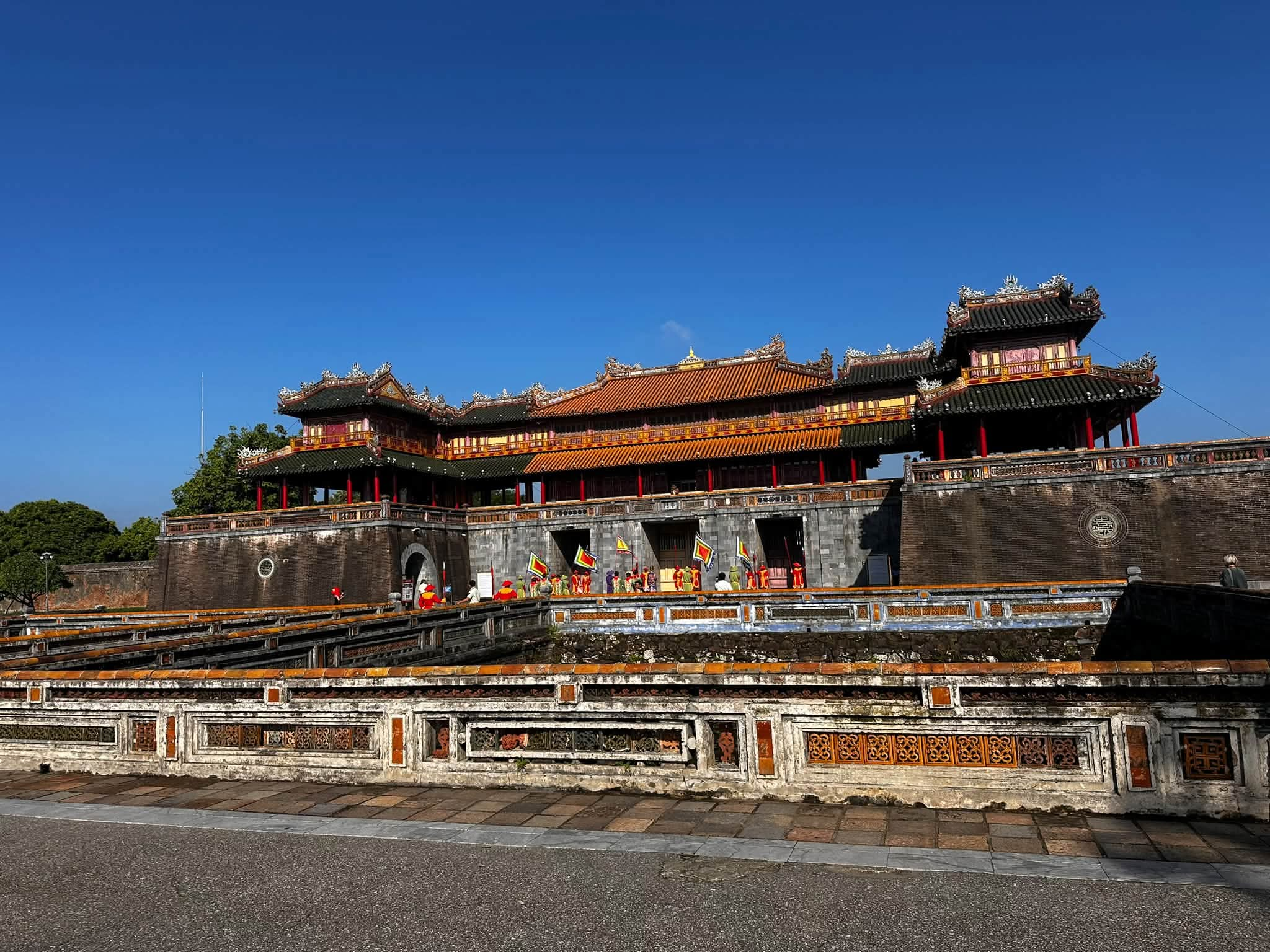
Featured image: The imperial gateway and courtyards of Hue provide a starting point for discovering Vietnam’s former capital. (Source: Collected)
Hue deserves a little space in your itinerary. The Imperial City and royal tombs give the visit its historical framework, but meals, riverfront walks and time in the surrounding neighbourhoods give it texture. This Hue travel guide helps you decide how long to stay, what to prioritise and how to organise a first visit without turning every day into a succession of monuments.
Two full days are a useful starting point. They allow time for the Imperial City, selected tombs and food experiences, with breaks between outings. One day can introduce the highlights; three days let you explore more slowly or add an excursion. Count your usable hours rather than simply the number of hotel nights.
1. Understand Hue and Choose Your Travel Style
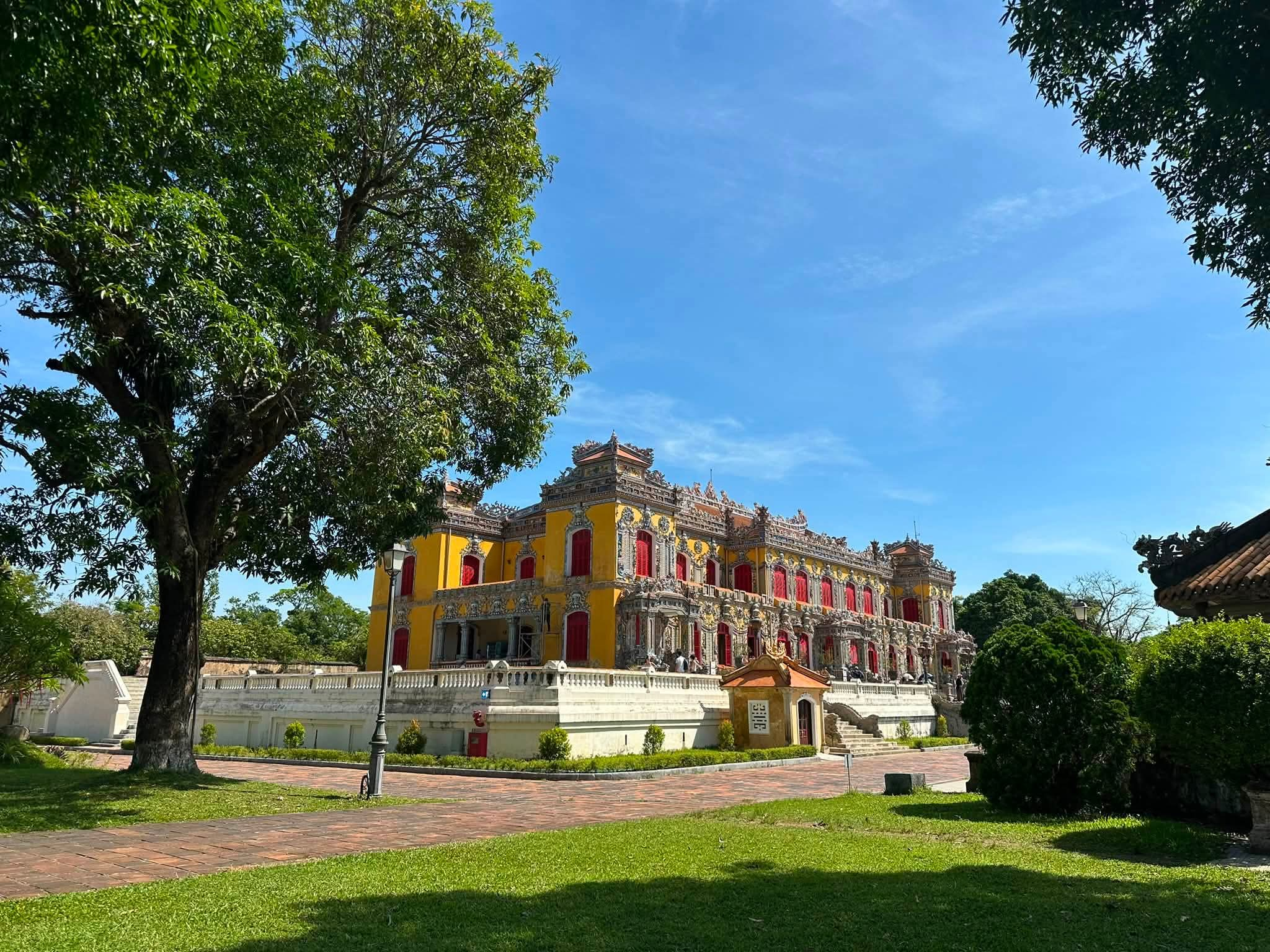
Historic imperial architecture and shaded grounds form part of Hue’s heritage landscape. (Source: Collected)
A former capital within a living city
Hue served as Vietnam’s capital under the Nguyen dynasty from 1802 to 1945. Its imperial heritage is recognised through the UNESCO-listed Complex of Hue Monuments, inscribed in 1993. The significance extends beyond individual buildings to their relationship with the river, surrounding landscape and former capital’s layout.
Some basic terminology helps. The Citadel is the larger fortified city. Within it lies the Imperial City, containing ceremonial and administrative spaces, with the Forbidden Purple City forming the innermost royal precinct. Visitor descriptions sometimes use these names loosely, so check what a ticket or guided visit actually includes.
The wider city continues around these historic spaces. Cafés, markets, schools and residential streets are part of the experience. Hue makes more sense when you leave time for them alongside the places that appear on a sightseeing checklist.
Understand the visitor geography
The Imperial City lies north of the Perfume River. Many visitor hotels, restaurants and evening venues are on the southern side, while the royal tombs are dispersed beyond the central sightseeing area. Staying near the river does not put every attraction within walking distance.
Treat your programme as several geographical groups: the Imperial City and nearby streets; the central riverfront and dining areas; the tombs and selected outlying sites; and longer excursions. Grouping nearby activities reduces repeated transfers and makes lunch breaks easier to arrange.
Choose what you want from the visit
Travel style
Main focus
Planning priority
History and architecture
Imperial City, contrasting tombs and interpretation
A useful guide and enough time at each site
Food and city life
Local dishes, markets, neighbourhoods and selected heritage
Meal timing and a convenient base
Gentle discovery
One major visit per outing, river time and relaxation
Comfortable transport and realistic walking
Wider central Vietnam journey
Hue combined with other destinations
Transfer days that preserve sightseeing time
Families can mix a manageable heritage visit with food and downtime. Travellers with a strong historical interest may prefer fewer sites with better explanation. If you enjoy architecture more than dates and dynastic detail, tell your guide so the visit follows that interest.
Adding another day does not have to mean adding another tomb. It can mean taking a longer lunch, avoiding the hottest hours or enjoying the hotel you have chosen.
2. Choose Your Season and Length of Stay
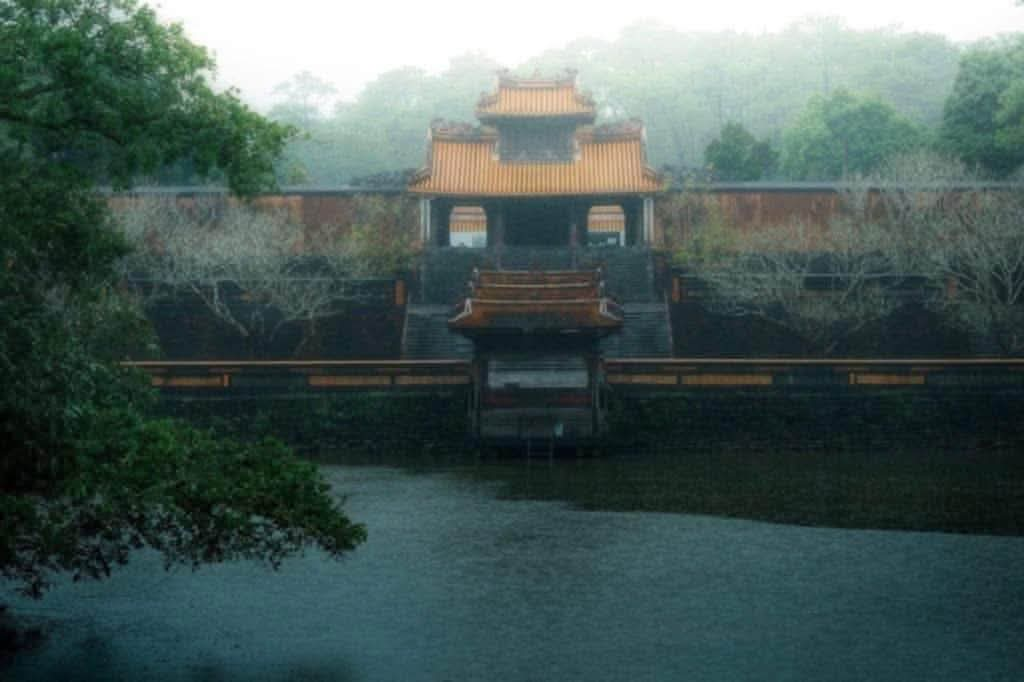
Rain falls from tiled roofs in Hue, where flexible sightseeing plans are useful in wetter weather. (Source: Collected)
Weather affects the shape of the day
February to April is a useful period to consider for sightseeing, generally offering a more comfortable balance than the hottest months. Conditions still vary, and rain is possible. Later spring and summer can bring strong heat, making exposed courtyards and extended walks more tiring.
The wetter period generally falls towards the latter part of the year, particularly September to December. Autumn can also bring storms and episodes of heavy rain. These are seasonal tendencies, not a forecast for your travel dates.
Period
Main considerations
How to plan
January–February
Cooler or damp spells remain possible
Bring a light layer and allow flexible sightseeing
March–April
A useful sightseeing window, with warming conditions
Balance outdoor visits with breaks
May–August
Heat and strong sun can shape activity levels
Start early and avoid overloading afternoons
September–December
Greater rain exposure and possible storm disruption
Keep transport and outdoor plans adaptable
Distinguish ordinary rain from disruption
A shower may require a slower visit and suitable clothing. Severe weather can affect roads, rail services, river activities and monument access. Those situations need different responses, so check current official notices rather than relying only on a weather-app symbol.
Do not assume that a covered activity is reachable during flooding. Follow local advice and accept itinerary changes when conditions require them. If travelling during a wetter period, ask about cancellation terms and alternative arrangements before booking.
Festivals and special evening programmes can add interest, but confirm dates and admission separately. An event advertised for a previous year does not establish what will happen during your visit.
How many days in Hue?
Usable time
A sensible scope
Main limitation
One full day
Imperial City, one selected tomb and a local meal
Limited room for delays or leisurely exploration
Two full days
Main heritage, another selected outing and food experiences
Requires choosing priorities rather than seeing everything
Three full days
A slower programme or an additional neighbourhood or countryside excursion
More hotel nights and overall itinerary time
A late arrival followed by an early departure creates little usable time, even with two hotel nights. Write down arrival, check-in and departure hours before deciding what fits. For families or travellers sensitive to heat, two unhurried days may deliver more than one intensely scheduled day.
3. Get to Hue and Move Around Efficiently
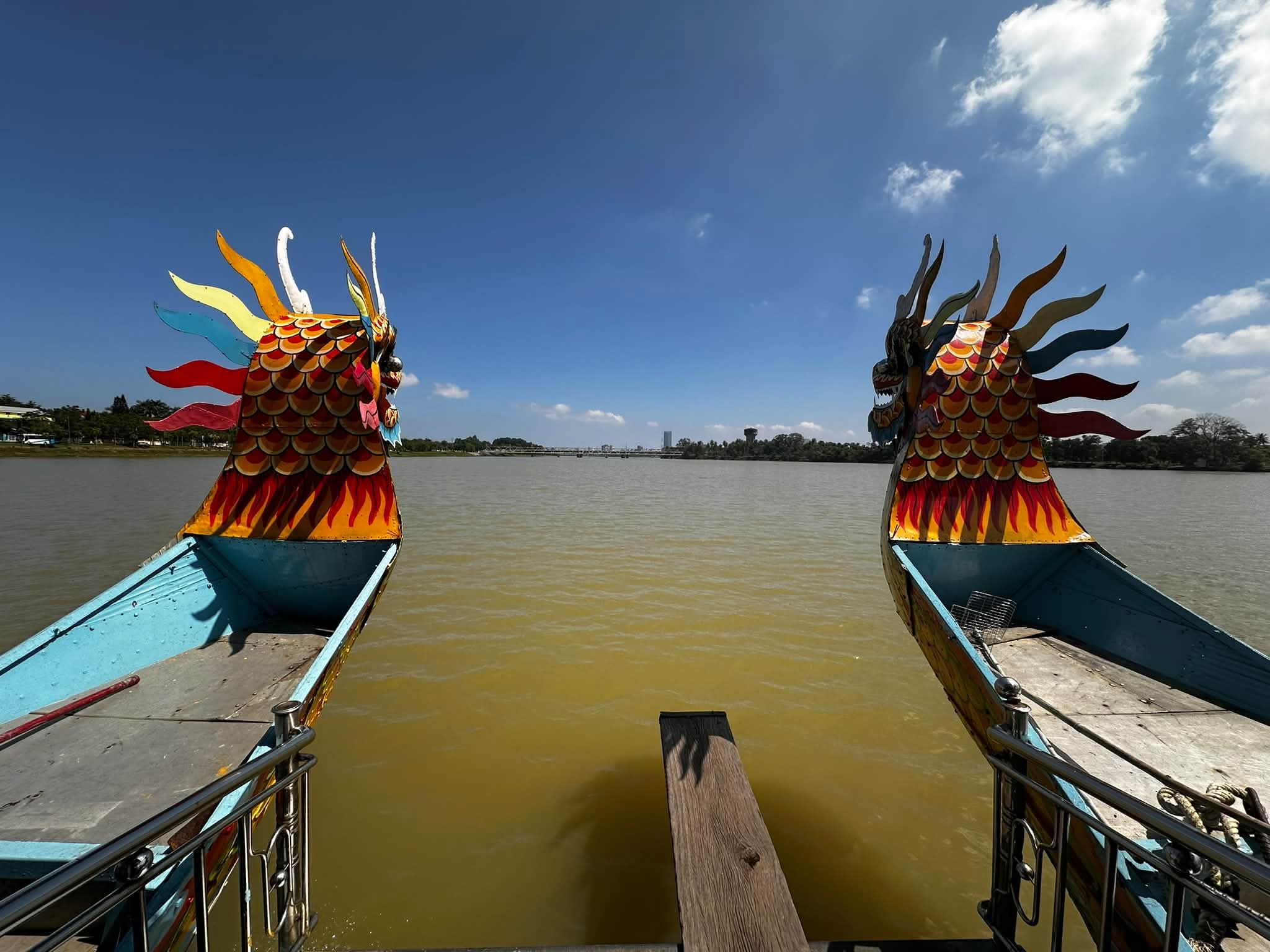
Dragon boats on the Perfume River illustrate another side of getting around and exploring Hue. (Source: Collected)
Flights and airport transfers
Phu Bai Airport, code HUI, is the main airport for Hue. Check available routes for your dates directly with airlines, then arrange the road transfer to your accommodation. The airport’s name does not establish that a particular international or domestic flight operates when you need it.
For an arrival day, include baggage collection, the transfer and hotel check-in before scheduling a guided visit. If the flight reaches Hue late, dinner near the hotel may be a better plan than a prepaid excursion with a fixed start.
Arriving by rail
Rail can form part of a journey through central Vietnam. For travel between Da Nang and Hue, compare available services and choose daylight if seeing the coastal landscape is a priority. Different trains offer different schedules and experiences; confirm the actual service rather than booking by a generic “heritage train” description.
Check station locations, baggage arrangements and the transfer at both ends. Travellers staying in Hoi An need an onward road connection from Da Nang, so the train journey alone does not describe the full travel day.
Road travel from Da Nang or Hoi An
A private transfer can be organised as a direct journey or a sightseeing day. Agree which you want before comparing prices. A route with scenic stops requires more time than a transfer designed around the quickest practical road connection.
If Hai Van Pass is part of the plan, discuss weather, visibility and the possibility of using an alternative route. Avoid promising a panoramic stop on every departure. From Hoi An, include the additional road journey beyond Da Nang when assessing the day.
Our Da Nang travel guide helps you plan the neighbouring destination as a separate stay. Give both places adequate time rather than assuming Hue can always be added without changing the wider programme.
Walking, cars and local outings
Area or activity
Useful transport approach
What to clarify
Imperial City
Vehicle to the entrance, then walking
Walking route, breaks and collection point
Central dining and riverfront
Selected walks with short vehicle trips when needed
Actual distance and comfortable crossings
Royal tombs
Prearranged car or guided vehicle outing
Stops, waiting time and admission inclusions
Countryside cycling
Suitable bicycle and route, with support if required
Traffic, surface, distance and return option
For a tomb outing, agree a route and total duration rather than negotiating each transfer separately. Confirm whether the driver waits and where you will meet after each visit. A vehicle reduces the distance between attractions, but it does not remove walking or steps within them.
4. Choose Where to Stay and Make Room for Food
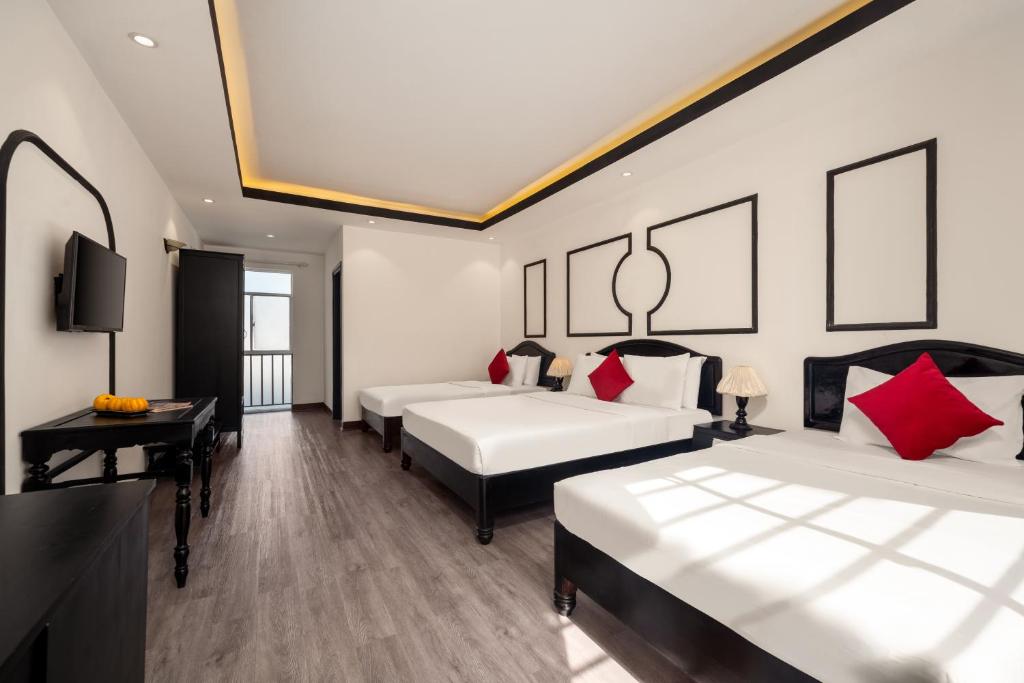
A guest room at Fusion Point Hotel in Hue illustrates the importance of matching accommodation to your needs. (Source: Collected)
Match the location to your evenings
Central accommodation south of the river can suit travellers who want a choice of restaurants and easy evening outings. Compare exact streets: a hotel near busy venues offers a different atmosphere from one set farther back. Ask about room position and current noise if quiet matters.
A riverside hotel may appeal for its setting, but “riverside” does not necessarily mean every room has a river view or every attraction is a short walk away. Check the room category and entrance location alongside the hotel’s headline description.
Staying near the Citadel can suit particular interests, while accommodation outside the centre may favour relaxation. In both cases, consider dinner arrangements and the cost of repeated transfers before deciding that a lower room rate saves money.
Location or stay type
Potential advantage
Main question
Central city hotel
Convenient meals and evening choices
Is the particular street suitable for your sleep needs?
Riverside property
Setting and time around the river
What view and walking access does your room offer?
Citadel-side accommodation
Proximity to selected heritage areas
How will you organise meals and other outings?
Outlying retreat
More time at the property
What transport and dining arrangements are needed?
Check comfort and access
Request details about lifts, entrance steps and the route from room to breakfast if anyone has mobility needs. Confirm bed arrangements for children and whether extra beds affect usable room space. In hotter periods, dependable air conditioning can matter more than decorative features.
If you intend to use a pool or spa, check opening arrangements and what is included. A short stay with full sightseeing days leaves less time for hotel facilities, so choose the room and location with your actual programme in mind.
Treat food as part of the visit
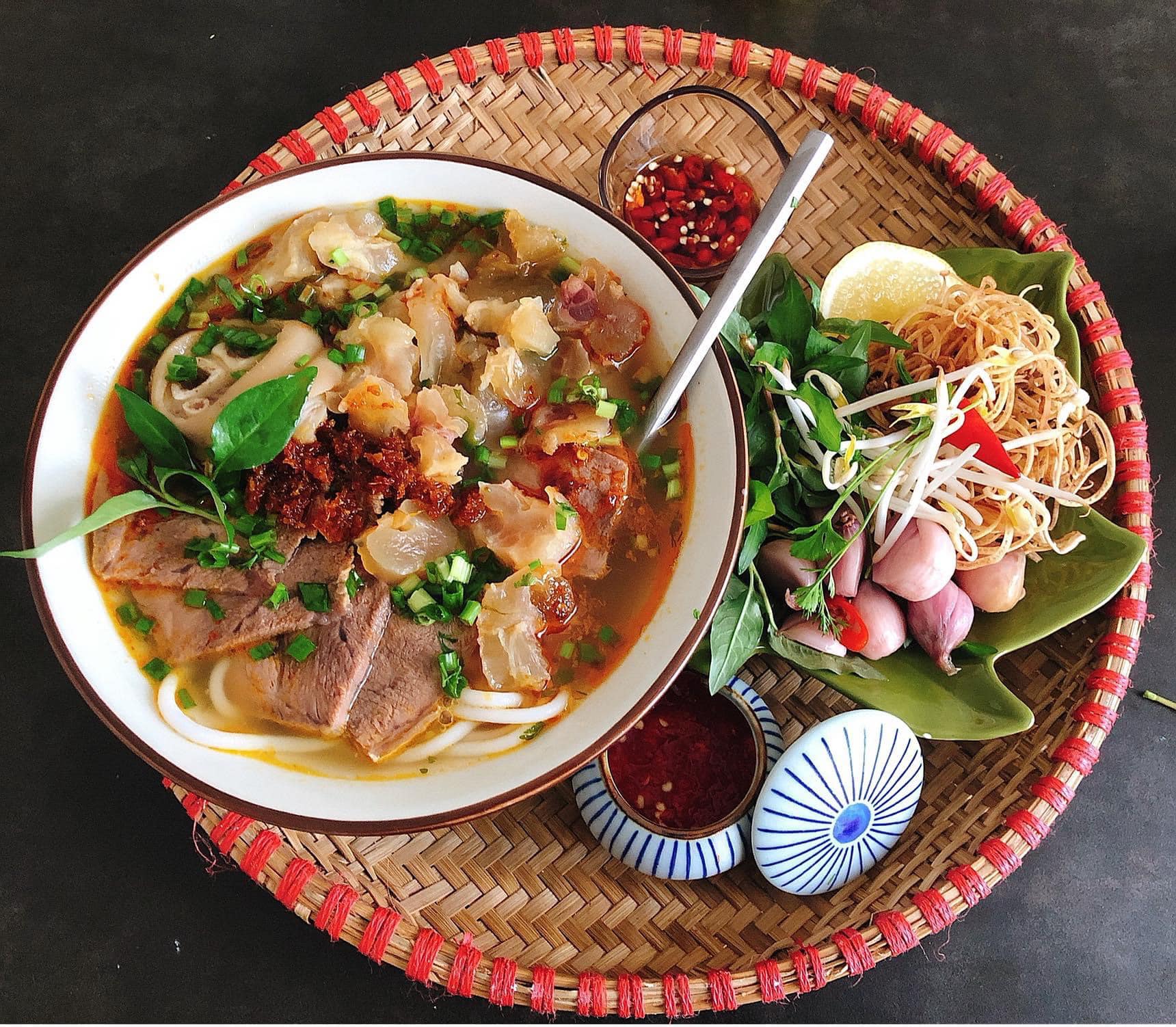
Bun bo Hue is served with fresh herbs and accompaniments, offering an introduction to Hue’s food culture. (Source: Collected)
Hue’s food deserves time beyond a hurried lunch between monuments. Start with bún bò Huế, then explore smaller dishes such as bánh bèo, bánh nậm and bánh lọc. Their different textures make a varied tasting session more interesting than repeatedly ordering similar plates.
Bánh khoái offers a crisp pancake-style contrast, while chè introduces sweet soups and desserts. Ingredients and serving styles vary between kitchens. Ask what is in a dish rather than judging it only by its English menu name.
For a food outing, decide whether you want a complete meal, several small tastings or a guided introduction. Keep some appetite for later stops and tell the organiser about allergies in advance. Shrimp, peanuts, fish sauce and other ingredients may be present in toppings, fillings or sauces.
Hue also offers vegetarian dining possibilities, but explain your requirements clearly. “No visible meat” is not enough to establish what is in a stock or condiment. Request milder preparation if needed rather than assuming that every dish must be served intensely spicy.
5. Select Your Heritage and Everyday Experiences
Royal tomb architecture set among greenery adds a different atmosphere to a Hue heritage visit. (Source: Collected)
Give the Imperial City enough attention
Plan the Imperial City as a substantial visit rather than a quick photo stop. Its scale, gateways and courtyards become more meaningful when you understand how the spaces functioned. A guide can connect what survives with the broader history and explain restoration without overwhelming the visit with dates.
As a planning allowance, reserve roughly half a day including the approach, walking and breaks, then adjust to your interests. The route should suit the group’s stamina and current access. Not every visitor needs to cover every open area.
Choose contrasting royal tombs
The royal tombs are separate complexes with different settings and architectural character. Minh Mang, Tu Duc and Khai Dinh are useful names to investigate for a first visit. Choosing two for their differences can be more rewarding than adding another simply to increase the total.
Minh Mang is associated with a composed sequence of structures and landscape; Tu Duc offers a setting closely linked to gardens and water; Khai Dinh presents a more compact, elaborate architectural experience with significant steps. Confirm the precise walking route before selecting for someone with limited mobility.
Ask your guide which combination best matches your interests and the day’s conditions. If you have only one full day, one tomb may be enough after the Imperial City. Leave time to absorb what you have seen.
Tickets, opening arrangements and restoration
Single-site and combination tickets need to be compared against the places you will actually visit. Check the current official price, included sites, validity period and eligibility conditions before buying. A combination ticket offers little value if it encourages visits that do not fit your schedule.
Confirm ticket-sales hours separately from final entry and closing time. Also check temporary restrictions, restoration areas and special programmes. This guide does not assume that every building or evening activity remains accessible on all dates.
Pagodas, the river and markets
Thien Mu Pagoda can provide a different setting from the palace and tombs. Treat it as a religious space: dress respectfully, follow signs and keep voices low around worshippers. Avoid letting a vehicle schedule turn the stop into a hurried climb and photograph.
A Perfume River outing can add time on the water when conditions and the programme suit. Confirm boarding, duration, lifejackets and whether the booking includes music, sightseeing stops or simply a boat ride. These are different products, even when photographs look similar.
Dong Ba Market can introduce shopping and food trading, but it is a working market. Keep passages clear and ask before close portraits. A guide may help with ingredients and context; an independent visit can work if you prefer to browse without expecting a structured tasting programme.
Neighbourhoods and countryside
For a longer stay, consider a garden-house visit, a suitable cycling route or another cultural outing. Access to individual properties or workshops should be arranged rather than assumed. Explain whether you want a brief introduction or meaningful time with a host.
Do not mistake all countryside cycling for easy riding. Ask about road traffic, heat, surfaces and the return journey. When choosing a longer excursion, compare the experience gained with the time taken away from Hue itself.
6. Build Your Itinerary, Budget and Practical Plan
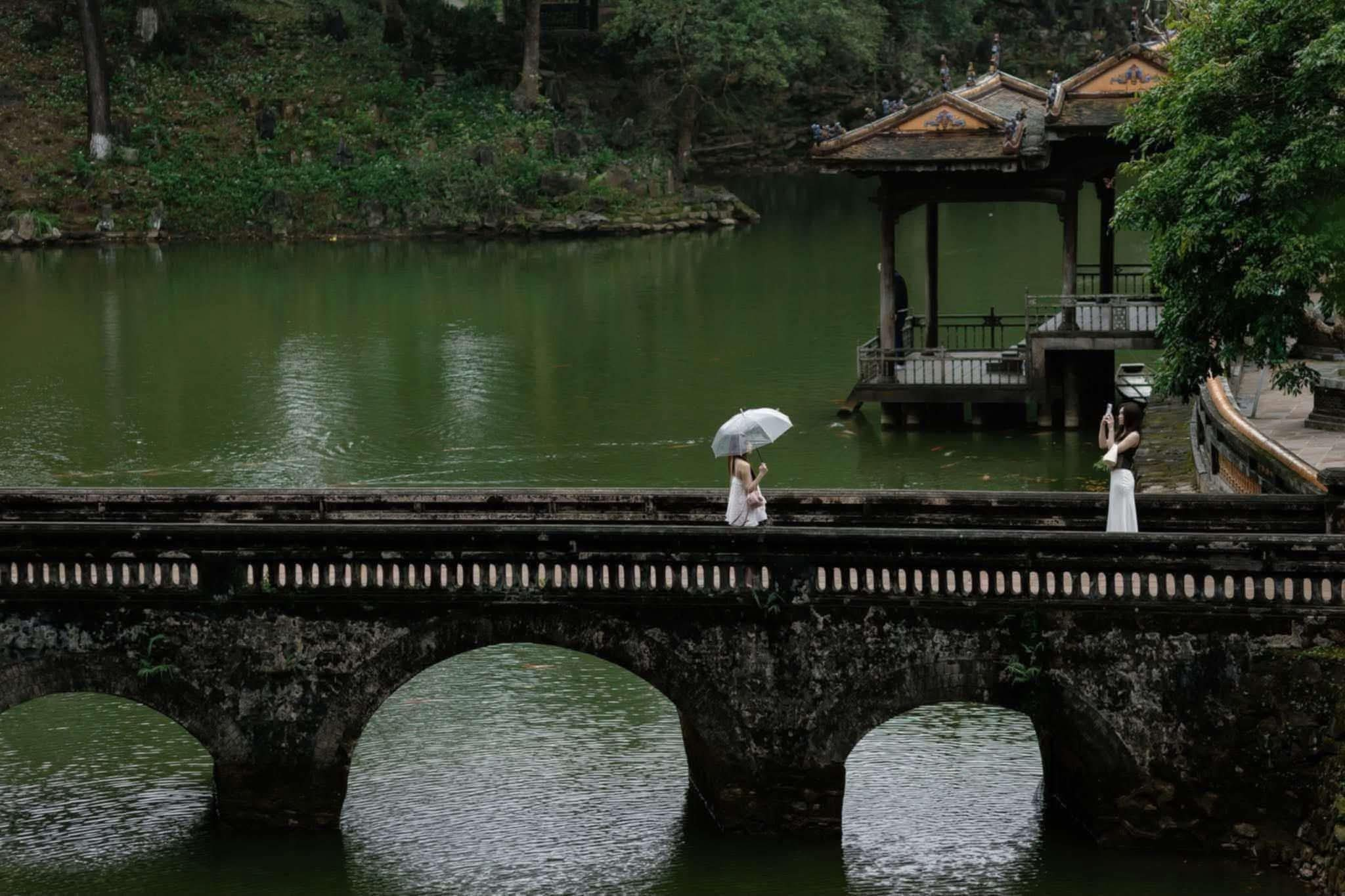
A waterside pavilion and tree-lined paths offer a quieter setting for exploring Hue at a gentler pace. (Source: Collected)
A realistic first-visit framework
Time available
Suggested structure
How to keep it balanced
One full day
Imperial City, lunch, one selected tomb and local dinner
Drop extra stops before cutting essential breaks
Two full days
One day around the Imperial City and central areas; another for selected tombs and a different experience
Reserve an evening for food
Three full days
The two-day framework plus neighbourhoods, countryside or more downtime
Choose one additional focus rather than filling every hour
Treat this as a framework, not an order that must be followed. Opening arrangements, weather and your accommodation may justify reversing the days. Keep the arrival afternoon lighter if a long journey precedes it.
For families, shorter visits with an explanation suited to children may work better than lengthy tours at every site. For keen history travellers, request more depth at fewer places. Both approaches can produce a satisfying first visit.
Continuing through central Vietnam
Hue, Da Nang and Hoi An offer different reasons to stay. Avoid allocating all the time to one and treating the others as rushed stops. Consider whether a transfer should include sightseeing or preserve an afternoon at the next destination.
The Hue, Da Nang, Hoi An, My Son and Tra Que six-day tour provides one regional framework to compare. Adjust the number of visits, hotel nights and travel days to your pace rather than treating the published structure as compulsory.
Build the budget from its parts
Cost category
What to include
Accommodation
Room type, breakfast, taxes and additional beds
Transport
Arrival, departure and local outings
Heritage visits
Current admissions and any guide service
Meals and activities
Drinks, tastings, boat trips or workshops
Flexibility
Changes caused by weather or transport disruption
Compare packages on the same basis. A quotation including a guide, admissions and waiting time cannot be assessed against a vehicle-only price without adding the missing costs. Ask how many people share the transport and whether meals are fixed or flexible.
For a short visit, spending on a well-planned route or knowledgeable guide may improve the experience more than adding another attraction. Request dated prices and written inclusions, and check cancellation conditions before confirming.
Clothing, walking and everyday preparation
Wear shoes suitable for extended walking and potentially wet surfaces. Bring sun protection, water and a light rain layer, with clothing appropriate for religious and heritage spaces. A small day bag is easier to manage than carrying everything needed for the entire trip.
Tell your organiser about difficulty with stairs, heat or prolonged standing. Ask for access information at individual sites rather than accepting a general promise that Hue is accessible. Build shade, seating and shorter alternatives into the route where needed.
Frequently asked questions
Is Hue worth an overnight stay? An overnight allows an evening meal and an earlier start. Two full days give a broader introduction without concentrating every major visit into one outing.
Can I visit Hue from Da Nang in one day? It is possible, but assess the full return journey and sightseeing hours. Choose fewer stops if travelling as a day trip.
Do I need a guide? Independent visits are possible. A guide is particularly useful when you want historical interpretation, help selecting monuments or a structured food experience.
Can I explore without riding a motorbike? Yes. Combine walking in selected areas with taxis, prearranged vehicles or guided outings.
Should I visit every major tomb? Choose according to interest and stamina. Contrasting visits with enough time usually make a stronger introduction than an exhaustive list.
To plan your first visit, share your arrival and departure details, number of nights, interests and comfortable walking level. Choose your main heritage visits first, then leave room for meals, the river and the parts of Hue that unfold between scheduled stops.