Hue Imperial City and Royal Tombs: What to Visit and How to Choose
November 27, 202612 min read
You have one day in Hue, and a suggested itinerary includes the Imperial City and three royal tombs. It sounds comprehensive, but will it leave enough time to understand what you are seeing? These sites offer different experiences, and visiting more does not necessarily make the day more rewarding.
The best way to explore Hue Imperial City and royal tombs is to choose a useful contrast: the court and a royal landscape, or two tombs whose architecture tells different stories. Start with your interests, available hours and walking comfort. Our Hue Travel Guide helps you fit these visits into a wider stay.
Understand Hue’s Imperial Sites Before Choosing
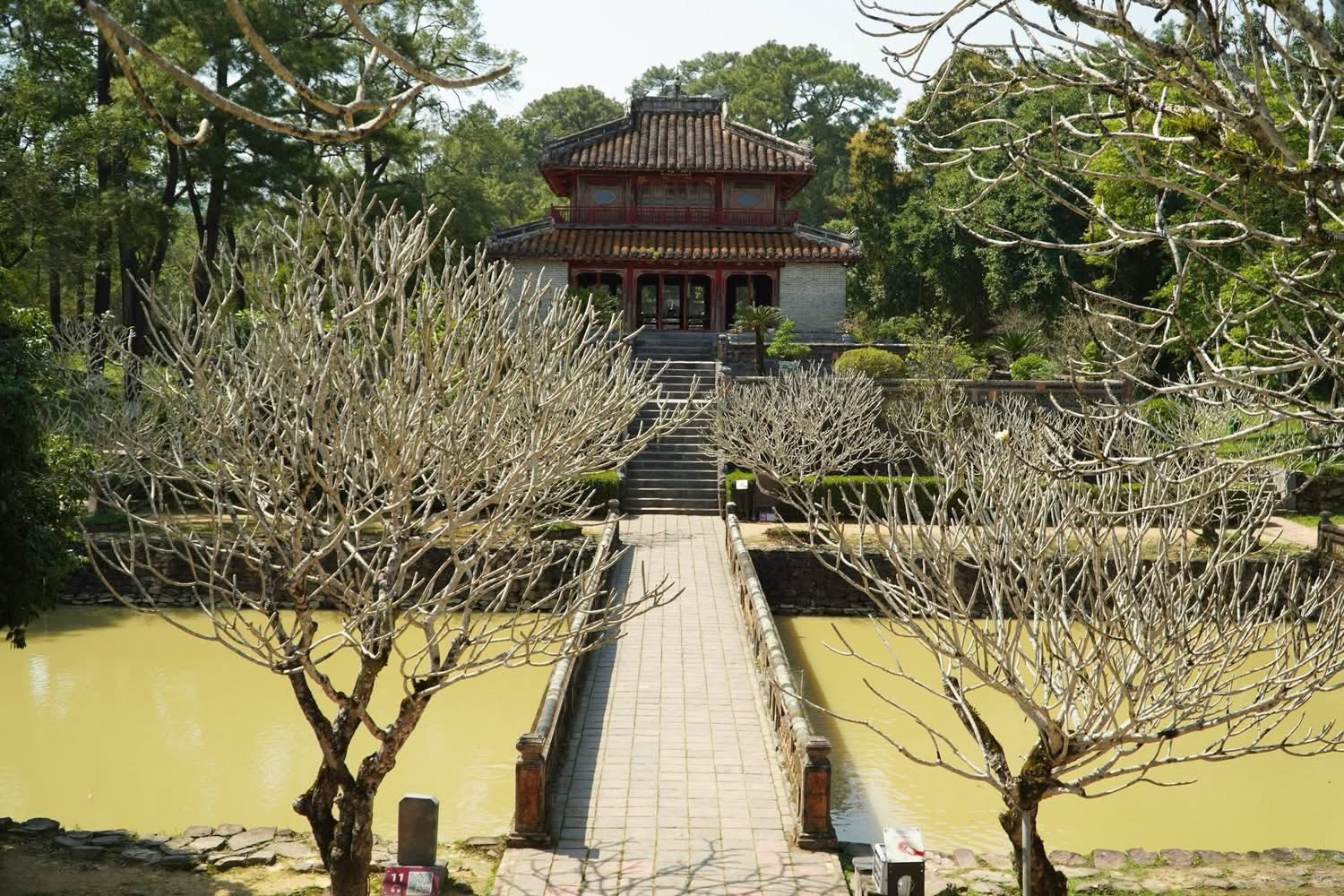
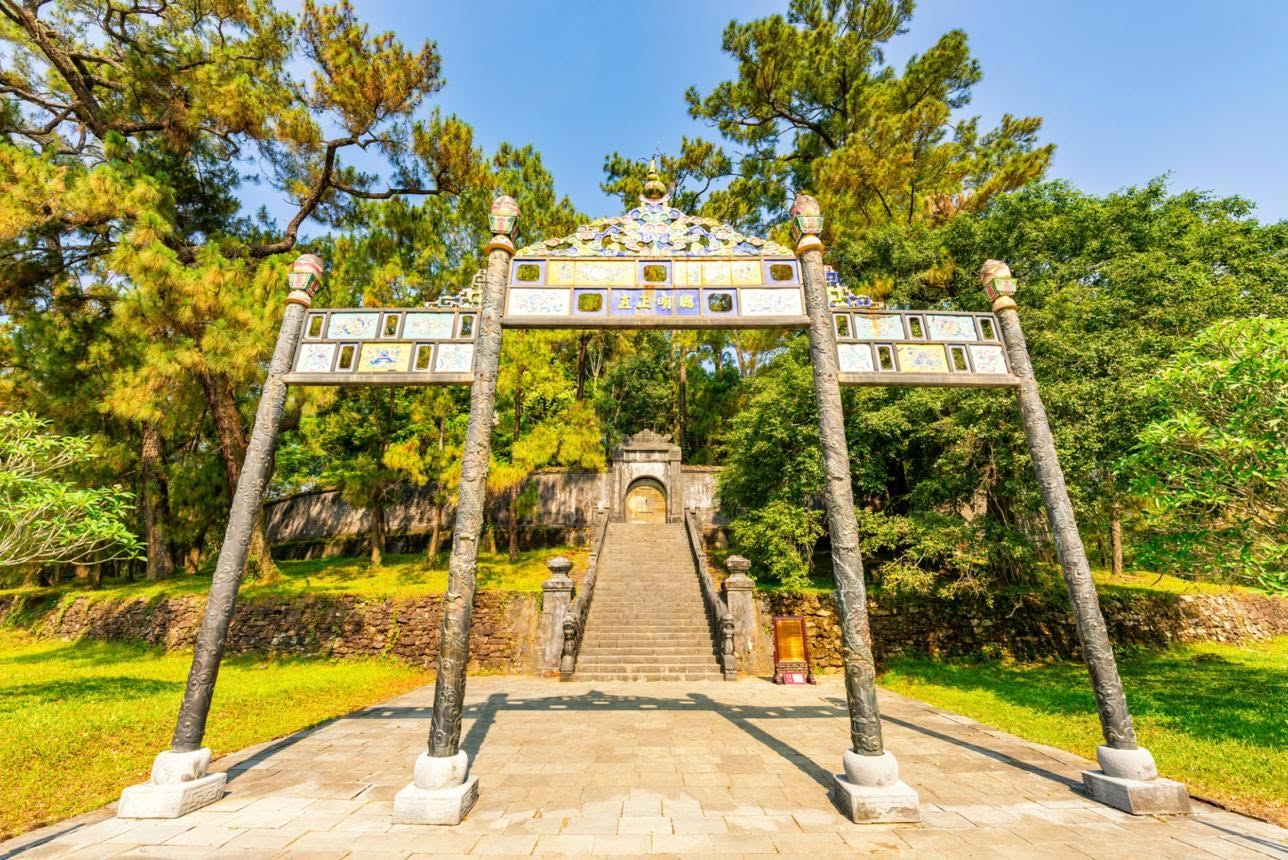
Aligned buildings, steps and water at Minh Mang Tomb illustrate the relationship between royal architecture and landscape. Source: Collected.
Hue was the Nguyen dynasty's capital from 1802 to 1945. Its heritage extends beyond one palace enclosure: the UNESCO-listed Complex of Hue Monuments includes a wider relationship between architecture, landscape and the former capital.
Three terms help clarify the central visit. The Citadel, or Kinh Thanh, is the larger fortified city. The Imperial City, or Hoang Thanh, lies within it. The Forbidden Purple City, or Tu Cam Thanh, forms the innermost royal precinct. Dai Noi is the familiar Vietnamese name you will encounter when planning the palace visit.
The tombs are separate destinations beyond this central enclosure. A palace ticket or a hotel near the river does not put all of them within walking distance.
Site
Main character
What to notice
Suggested time on site
Walking considerations
Best suited to
Imperial City
Court architecture and ceremonial spaces
Gates, courtyards, halls and the relationship between precincts
About 2–3 hours for a selected route
Extensive grounds and exposed sections
First-time visitors seeking the court's historical framework
Minh Mang Tomb
Ordered architecture within a landscape
Alignment, symmetry and transitions between built spaces and water
About 1–1.5 hours
Walking and steps along the chosen route
Visitors interested in layout and landscape
Tu Duc Tomb
A royal complex with a story beyond burial
Lake, pavilions and spaces associated with the emperor's lifetime
About 1–1.5 hours
Varied paths, surfaces and steps
Visitors who enjoy landscape and personal history
Khai Dinh Tomb
A rising sequence of terraces and decorative interiors
Stonework, stairways and interior detail
About 45–75 minutes
Stair climbing is a significant consideration
Visitors seeking a strong architectural contrast
These are planning estimates, not official visit durations. They exclude transport and can increase with interpretation, photography, rest stops or accessibility needs.
The Imperial City: Start with the Court, Not Just the Gate
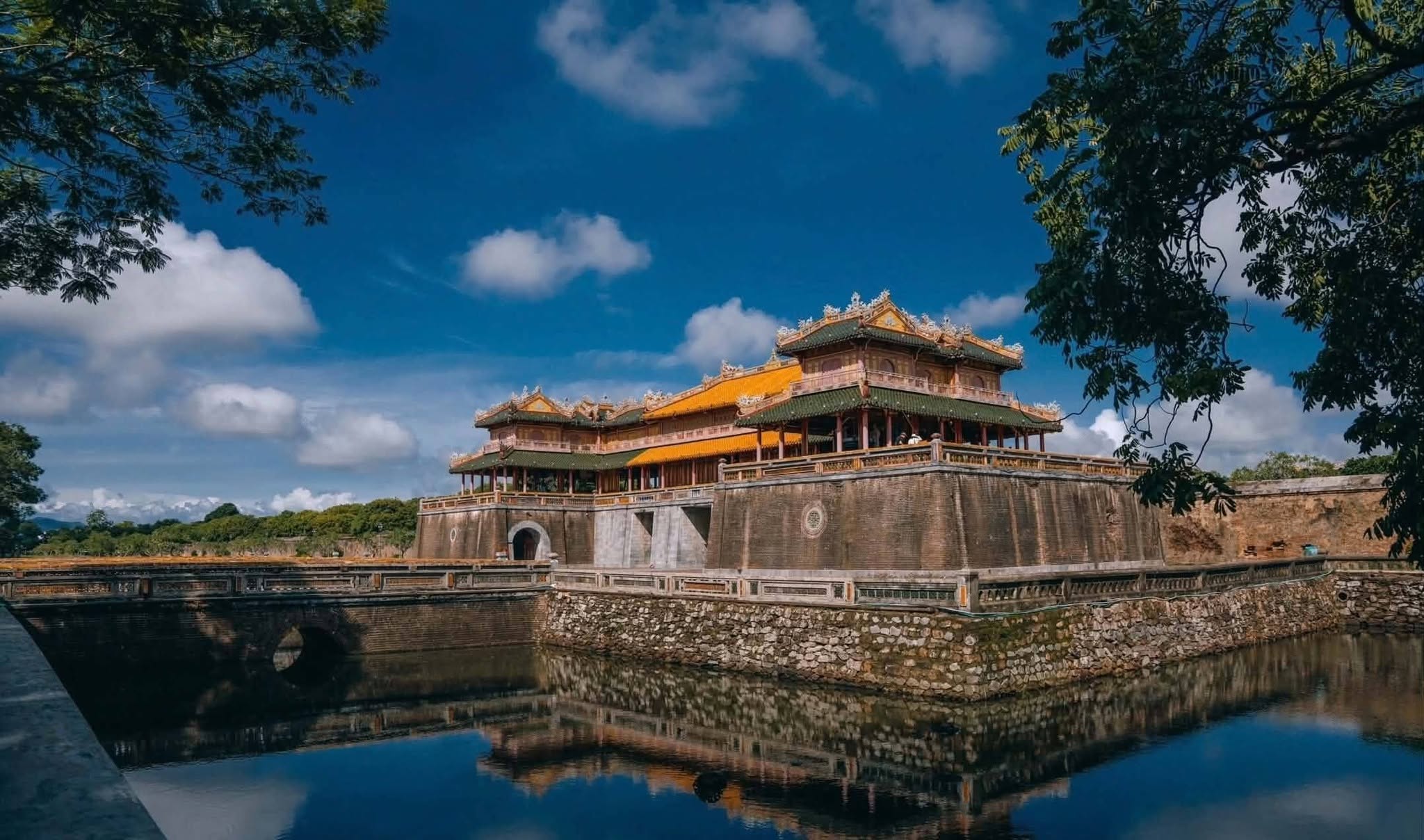
Ngo Mon Gate and the moat at the Imperial City in Hue. Source: Collected.
The Imperial City provides a useful starting point for understanding Hue. Instead of treating it as a collection of photogenic buildings, follow how space organised access, ceremony and royal life.
At Ngo Mon, pause to understand the gateway's role before moving through. In the courtyards and halls beyond, look at changes in scale, alignment and separation. Ask who used a particular space, what happened there and how it related to the areas around it.
That approach also helps when the visible heritage is incomplete. Surviving structures, restored buildings and spaces marked by loss form part of the visit. Do not expect every precinct to resemble a fully furnished palace. Interpretation can make an empty or reconstructed area meaningful rather than disappointing.
A guide can connect these layers, while independent visitors can use a current site map and available interpretation. Choose a route with a clear beginning and ending instead of wandering until fatigue determines the exit.
Plan the physical visit
Allow for a substantial amount of walking. Open courtyards can feel demanding in heat or rain, and a long visit benefits from pauses. Confirm which buildings are open, where you enter and where your driver should meet you afterwards.
If you need assistance, ask about the actual route. A vehicle service within part of the grounds, if operating, does not establish access to every building or remove thresholds and steps. The same applies to wheelchair and pushchair use.
For a first visit, give the Imperial City enough time to establish the story. You can leave parts for another occasion without turning the visit into a race through every accessible corner.
Minh Mang, Tu Duc or Khai Dinh: Which Tomb Fits Your Interests?
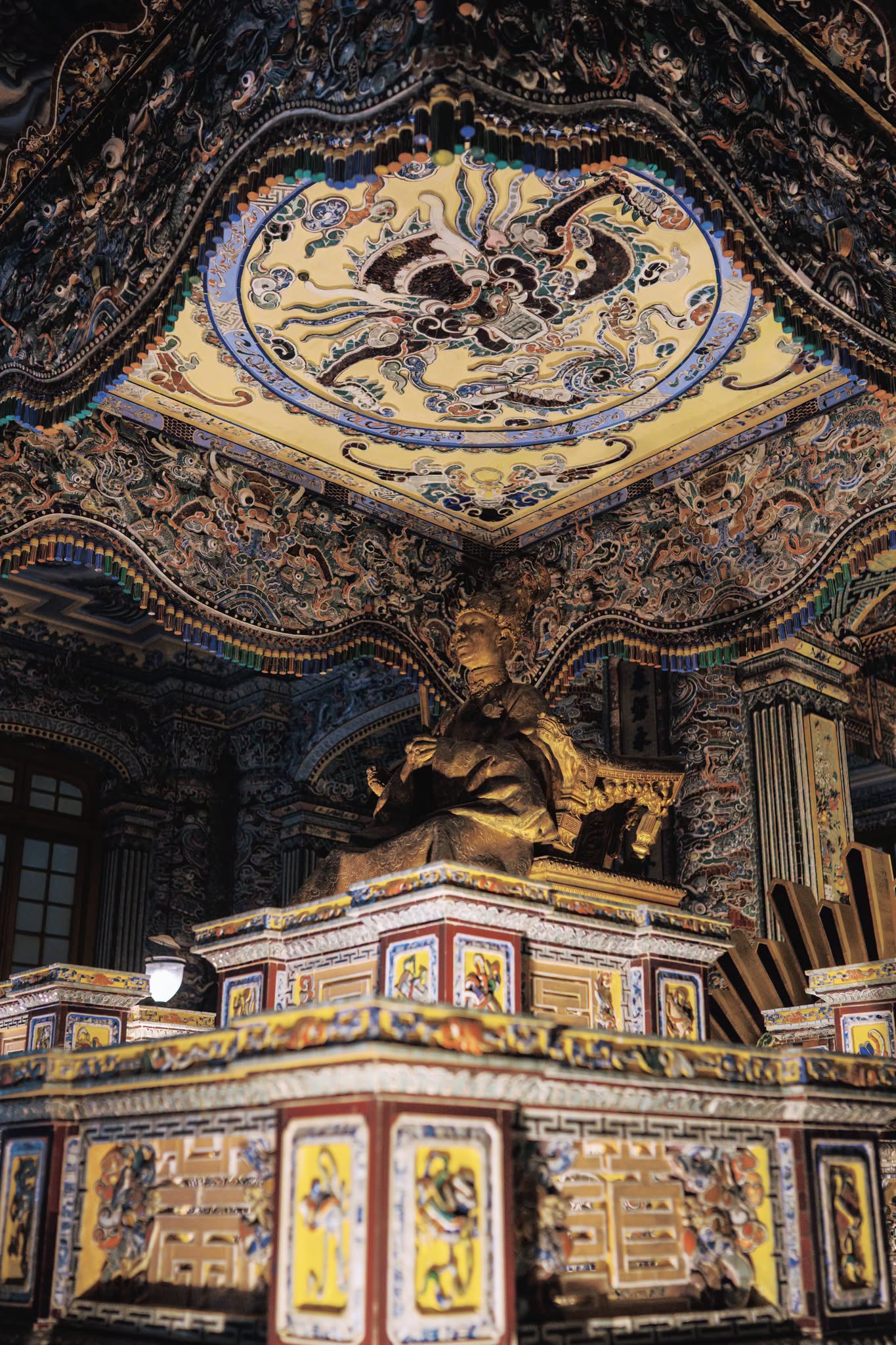
Decorative interior detail at Khai Dinh Tomb offers a contrast with landscaped royal complexes. Source: Collected.
The most useful comparison is how each complex directs your attention. You do not need to be an architecture specialist: looking for arrangement, landscape and decoration already makes the visits feel different.
Minh Mang Tomb for layout and landscape
Choose Minh Mang if you enjoy seeing how buildings belong to a larger composition. Its ordered arrangement makes it a good place to notice axes, symmetry and the relationship between structures and surrounding water.
Do not equate landscaped grounds with an effortless walk. Confirm steps, surfaces and the length of the route that suits your group. A shorter, carefully explained visit may work better than attempting every section.
Tu Duc Tomb for a layered royal story
Tu Duc offers a different way to think about a royal tomb. The complex was used by the emperor during his lifetime, so the visit can explore retreat and royal activity as well as commemoration.
Let that distinction guide your attention. Around the lake and pavilions, consider how spaces could be used and experienced, rather than reading the entire complex only as a burial site. The movement between water, buildings and paths gives the visit its rhythm.
This is a useful choice for travellers who like a landscape connected to an individual's story. A guide can help distinguish documented uses from later interpretations and popular legends.
Khai Dinh Tomb for decorative detail and contrast
Khai Dinh is a strong candidate when you want a visit that feels different from the more expansive landscaped complexes. Its terraces and ascent draw attention to height, while its interiors reward close observation of decorative workmanship.
Allow time for the details rather than treating the climb as the whole experience. Compare surfaces, materials and the relationship between exterior and interior. This creates a more interesting visit than simply describing the building as an unusual mixture of styles.
Its relatively compact footprint does not make it the easiest option physically. The stairs are central to the visitor experience. Discuss the route in advance if anyone has difficulty with steps, especially when considering it after a long palace visit.
Avoid reducing the architecture to a simple judgment about the emperor's personality. A useful explanation places it within its historical context while helping you understand what you can actually observe.
If your priority is…
Start by considering…
Spatial order and the wider setting
Minh Mang
A lake landscape and a story of royal use
Tu Duc
Decorative interiors and a contrasting architectural experience
Khai Dinh
Limiting steps or walking
An individually checked route, rather than a recommendation based on appearance
Choose a Combination That Adds Something Different
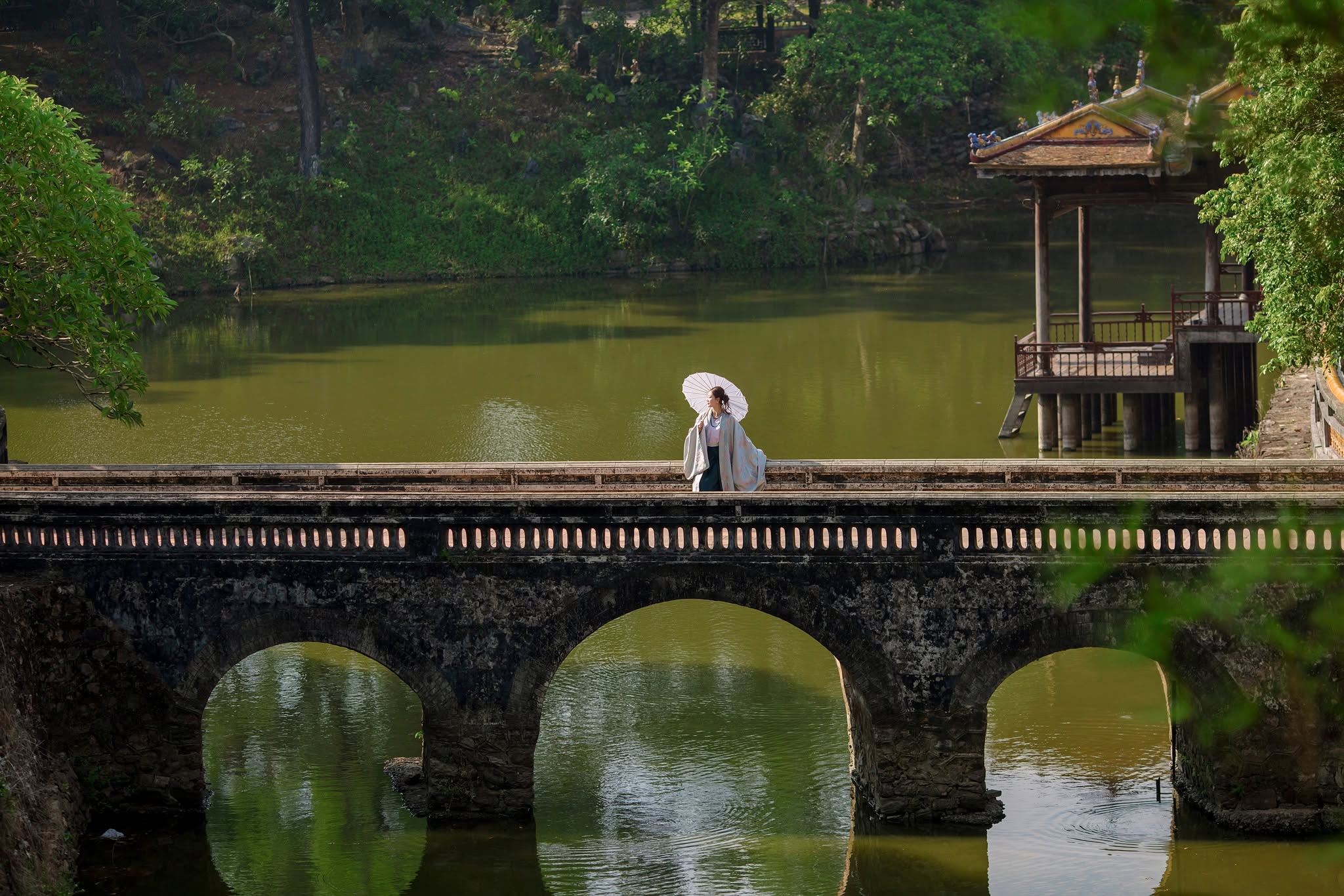
A bridge and waterside pavilion at Tu Duc Tomb add a landscape-focused royal experience. Source: Collected.
For many first-time visitors, the Imperial City and one tomb create a satisfying introduction. You encounter the court's central spaces, then see another expression of royal heritage beyond the city enclosure.
If adding a second tomb, ask what it contributes. Minh Mang and Khai Dinh offer a useful contrast between overall landscape composition and a more concentrated ascent with decorative interiors. Tu Duc and Khai Dinh also give distinct experiences of space.
Minh Mang and Tu Duc can be rewarding together when you want to compare landscaped complexes in more detail. They deserve attentive visits rather than being treated as interchangeable green settings.
Combination
Why consider it?
What to weigh up
Imperial City + one tomb
Court context followed by a contrasting royal site
Choose the tomb around your main interest
Minh Mang + Khai Dinh
Layout and landscape contrasted with ascent and ornament
Walking, stairs and transfer time
Tu Duc + Khai Dinh
Two different relationships between architecture and visitor experience
Pace and energy after the first visit
Imperial City + Minh Mang + Tu Duc
A more sustained interest in court and royal landscapes
Consider spreading the visits over two days
A different tomb on a return visit
Extend an existing interest rather than repeat a checklist
Current access, interpretation and transport
Gia Long, Dong Khanh and Thieu Tri are possible directions for a more specialised or repeat visit. Investigate them according to your interests and current arrangements; do not assume a less familiar name guarantees solitude.
These combinations describe complementary experiences, not fixed driving routes. Your accommodation, opening arrangements and road conditions should determine the final order.
Plan Half a Day, One Day or Two Days
A gateway and stepped approach at Minh Mang Tomb, where sightseeing plans should allow time for walking. Source: Collected.
Start with the hours you genuinely have. A half-day between checkout and a transfer to another city is different from an uninterrupted morning with a flexible finish.
Available time
Sensible starting plan
What to avoid
Half a day
The Imperial City, or a focused tomb outing
Assuming there is room for the palace and several tombs
One full day
Imperial City and one tomb, with a proper break
Adding stops simply because they appear on a package
Two full days
A palace session and a separate tomb session, leaving time for other experiences
Filling both days entirely with monuments
With one day, start from a selected programme rather than the maximum number of sites. A second tomb can be considered if everyone wants it and the timing remains comfortable. Keep meals and rest in the schedule instead of treating them as optional gaps.
With two days, allow the first substantial visit to stand on its own. A separate tomb outing gives you more freedom to compare sites without arriving already tired. Our Hue food guide offers ideas for the time between heritage visits.
Arrange transport around the whole outing
The time in the comparison table is time at the site. Add hotel collection, driving, parking, walking from the drop-off and the return journey.
A Perfume River boat experience can complement a stay, but do not assume it delivers you to each tomb entrance. Confirm any road connections separately. Likewise, hiring a driver does not automatically include a guide who interprets the monuments.
If Hue forms part of a longer route, compare our Central Vietnam itineraries before deciding how much heritage sightseeing to place on a transfer day.
Tickets, Walking Conditions and What to Confirm
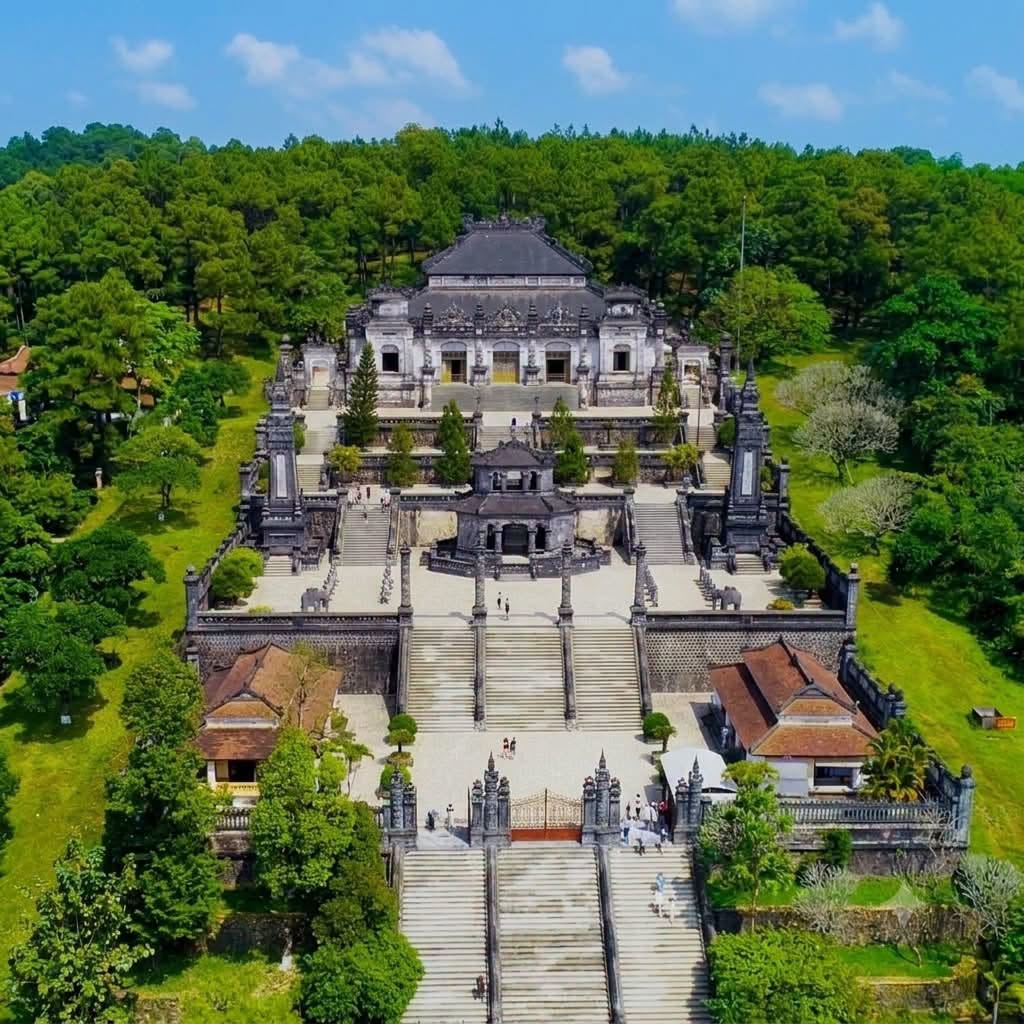
The terraced stairways at Khai Dinh Tomb show why walking conditions should be checked before a visit. Source: Collected.
Buy tickets for the visits you want
Check current individual and combined admission products through the Hue Monuments Conservation Centre's official ticketing service. Compare the listed sites, validity period, visitor categories and any conditions before payment.
A combined ticket is worthwhile only when it matches a realistic itinerary. Buying more admissions is not a reason to rush through sites you would otherwise leave out. Check whether your tour quotation already includes entrance fees before purchasing separately.
Admission, guide services, audio interpretation, electric-vehicle services and evening programmes are different items. Ask what is operating, which languages are available and what is included. A daytime ticket should not be assumed to cover a separate night experience.
Exact fares and opening times are omitted here because they need checking against the current product and visit date. Confirm last admission, accessible areas and any temporary closures before fixing the day's sequence.
Prepare for the route you will actually walk
Wear shoes with suitable grip and clothing appropriate for commemorative and worship spaces. Carry water and sun or rain protection according to conditions. Follow photography instructions inside buildings and around sacred areas.
For accessibility needs, ask specific questions: how many unavoidable steps are on the planned route, where the vehicle stops, whether resting places and suitable toilets are available, and what assistance can be arranged. Access to the entrance does not establish access throughout the complex.
Frequently asked questions
Is the Hue Imperial City the same as the Citadel?
The Imperial City is within the larger fortified Citadel. The Forbidden Purple City forms an inner royal precinct. Travel descriptions sometimes use these terms loosely, so check the actual area covered by a ticket or guided visit.
Which royal tomb should I visit if I only have time for one?
Consider Minh Mang for layout and landscape, Tu Duc for its setting and lifetime royal use, or Khai Dinh for decorative detail and architectural contrast. Choose according to interest and the physical demands that suit your group.
Can I visit the Imperial City and three tombs in one day?
Some tours offer that programme, but it creates a full day with considerable visiting and travel time. For a more attentive first experience, start with the Imperial City and one tomb, then assess whether another stop genuinely improves the day.
Are combined tickets worth buying?
They can be when the included sites and validity match your plans. Compare current products with individual admission and your tour inclusions. Avoid purchasing a larger package before deciding which places you actually want to visit.
Do I need a guide for Hue's imperial sites?
Independent visits are possible, while a good guide can connect spaces, rituals and historical context. Confirm the language, duration and scope. A guided palace visit and an independent tomb outing can also be combined.
Share your available hours, historical interests and walking needs with a Vietnam travel agency when coordinating your route. We can help plan a tailor-made Vietnam trip with a balanced selection of Hue's imperial sites and enough time to appreciate their differences.
Research checked on 22 November 2026. Visit durations are editorial planning estimates, excluding transfers. Admission products, services, opening arrangements and access may change; confirm details for your visit date.
When choosing a trip to Vietnam package, allow enough time in Hue for the imperial sites that match your interests and walking comfort.