Hue Food Guide: Local Dishes, Cakes and Vegetarian Tradition
November 18, 20267 min read
A morning bowl of bún bò, small steamed cakes in the afternoon and a vegetarian dinner can introduce you to different sides of Hue. Knowing a few names makes ordering easier, especially when unfamiliar dishes arrive wrapped in leaves or served in tiny bowls. This Hue food guide helps you choose what to try, understand the ingredients and fit meals into your visit without spending the day feeling full.
What Makes Hue’s Food Different?
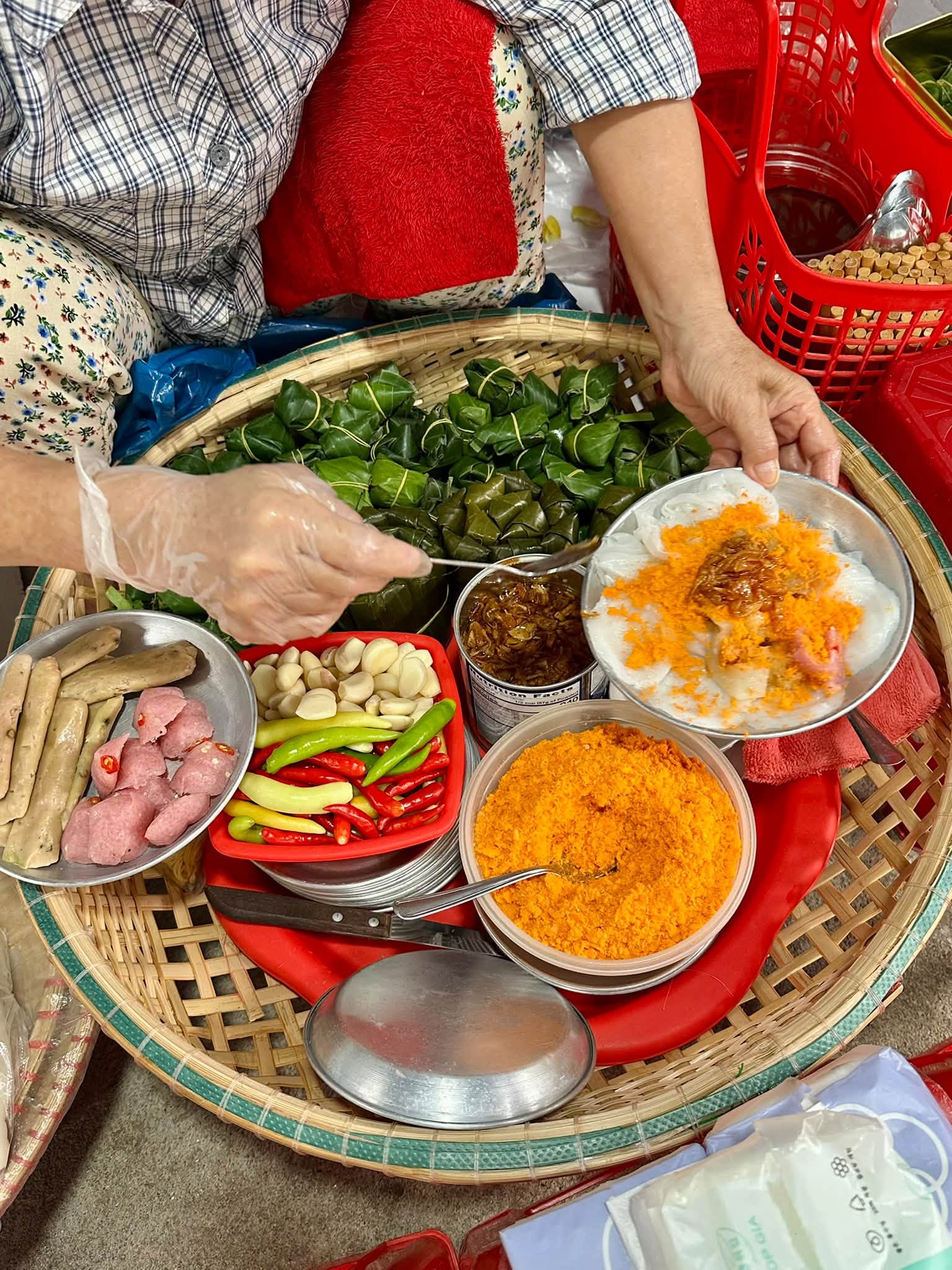
A Hue food vendor adds toppings to steamed cakes, with leaf-wrapped parcels ready alongside. (Source: Collected)
Hue’s cooking brings together everyday meals, imperial influences and a long vegetarian tradition connected with Buddhist life. A street-side noodle breakfast and a carefully arranged garden-house lunch can both belong in your visit. Neither tells the whole story on its own.
Pay attention to texture and accompaniments. A soft cake may come with crisp toppings, while a savoury pancake arrives with herbs and a dipping sauce. Some dishes are noticeably spicy, but flavours and chilli levels vary between kitchens.
Start with a few specialities rather than an exhaustive list. Leave space between meals to notice what makes each one different.
Local Dishes to Try Beyond Bun Bo Hue
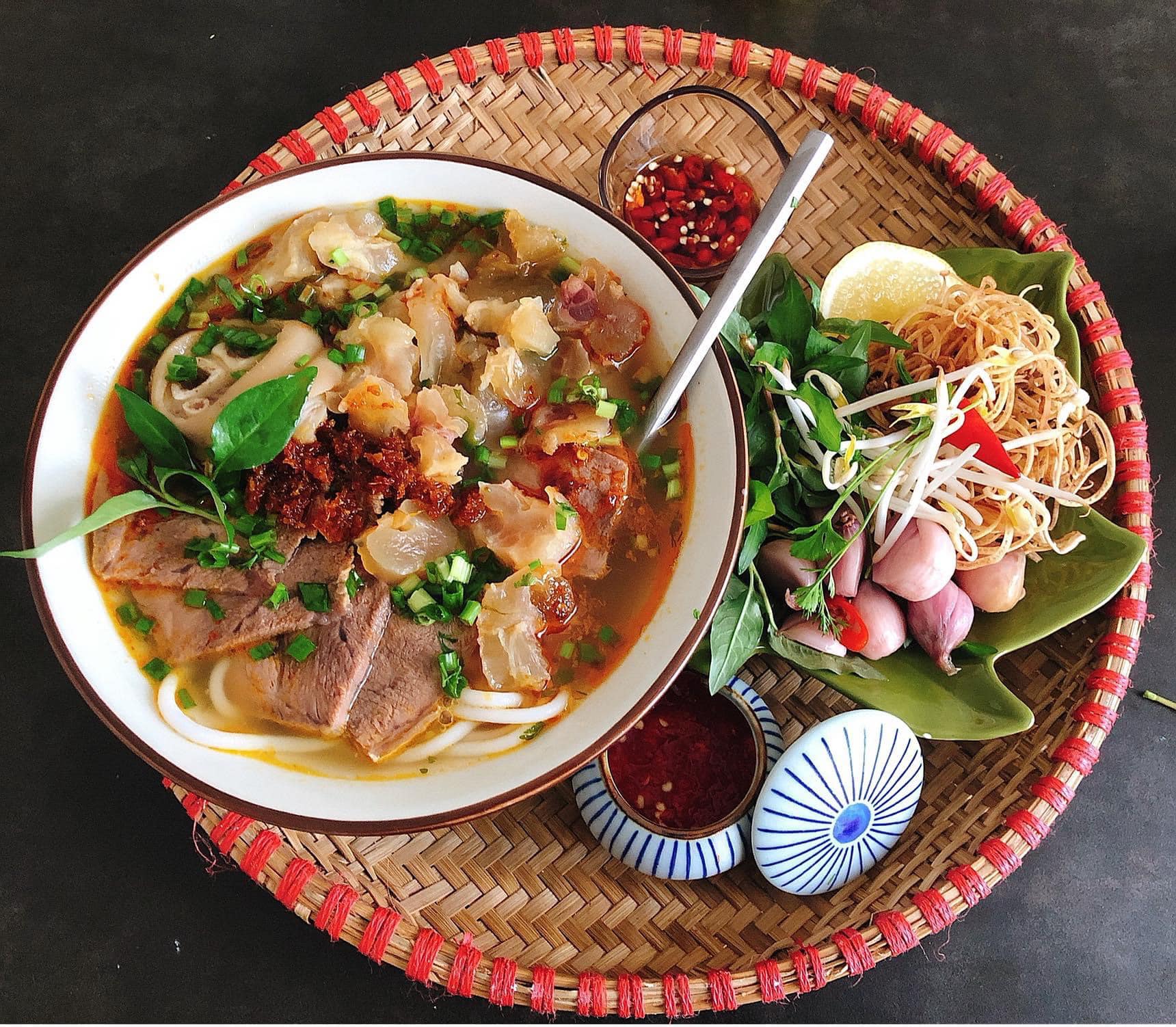
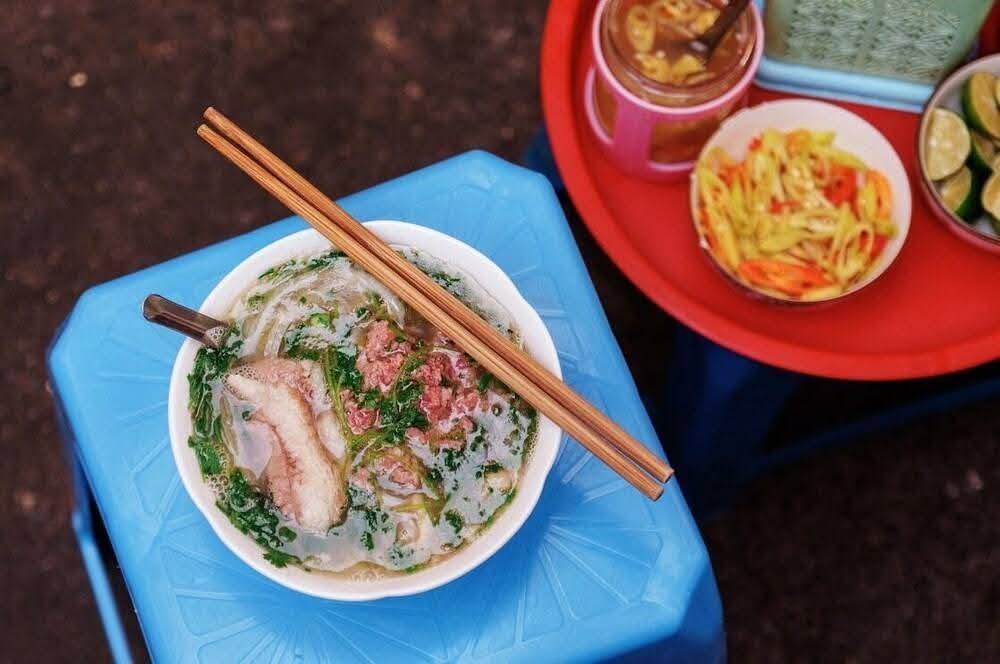
Bún bò Huế combines rice noodles, meat and fragrant broth, with herbs and chilli served alongside. (Source: Collected)
Bún bò Huế is a natural first breakfast: round rice noodles in a lemongrass-scented broth with meat and accompaniments. Despite the word bò, meaning beef, a bowl may also contain pork. Ask about the toppings if you have preferences, and taste before adding more chilli.
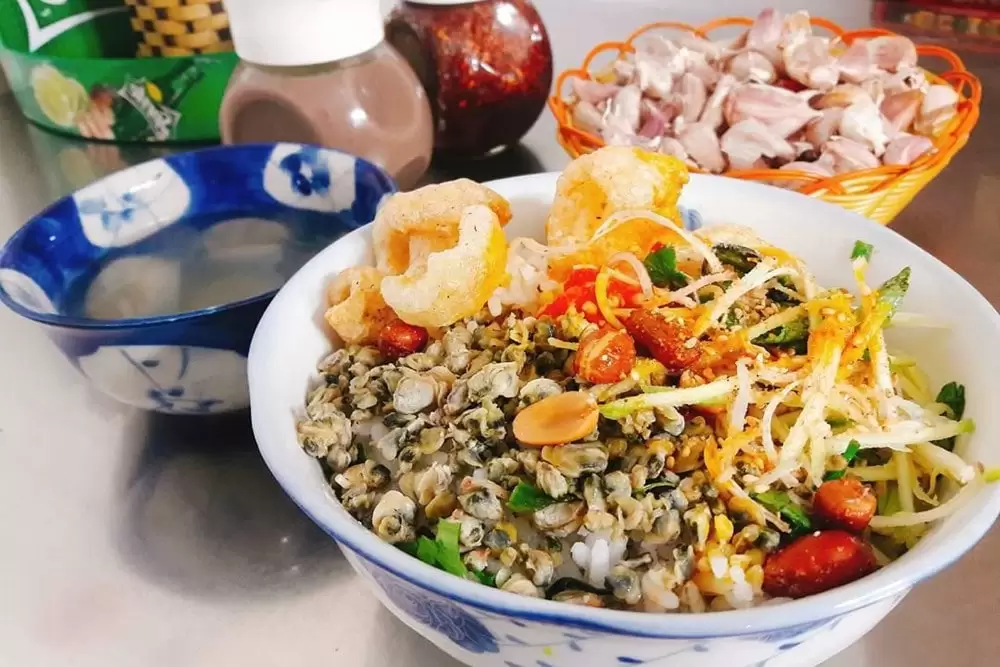
Cơm hến and bún hến pair small freshwater clams with rice or vermicelli. Herbs, crunchy additions and seasonings make each mouthful different. Peanuts, pork crackling and fermented shrimp paste may be included, so check the complete dish rather than just the main ingredient.
Cơm hến brings together rice, small clams, herbs, peanuts and crunchy toppings. (Source: Collected)
Bánh khoái offers a crisp contrast. This savoury pancake commonly contains shrimp, pork and beansprouts, with greens and a thick dipping sauce alongside. Break off a piece and try it with the accompaniments. Sauces may contain peanuts and liver; ask how yours is made.
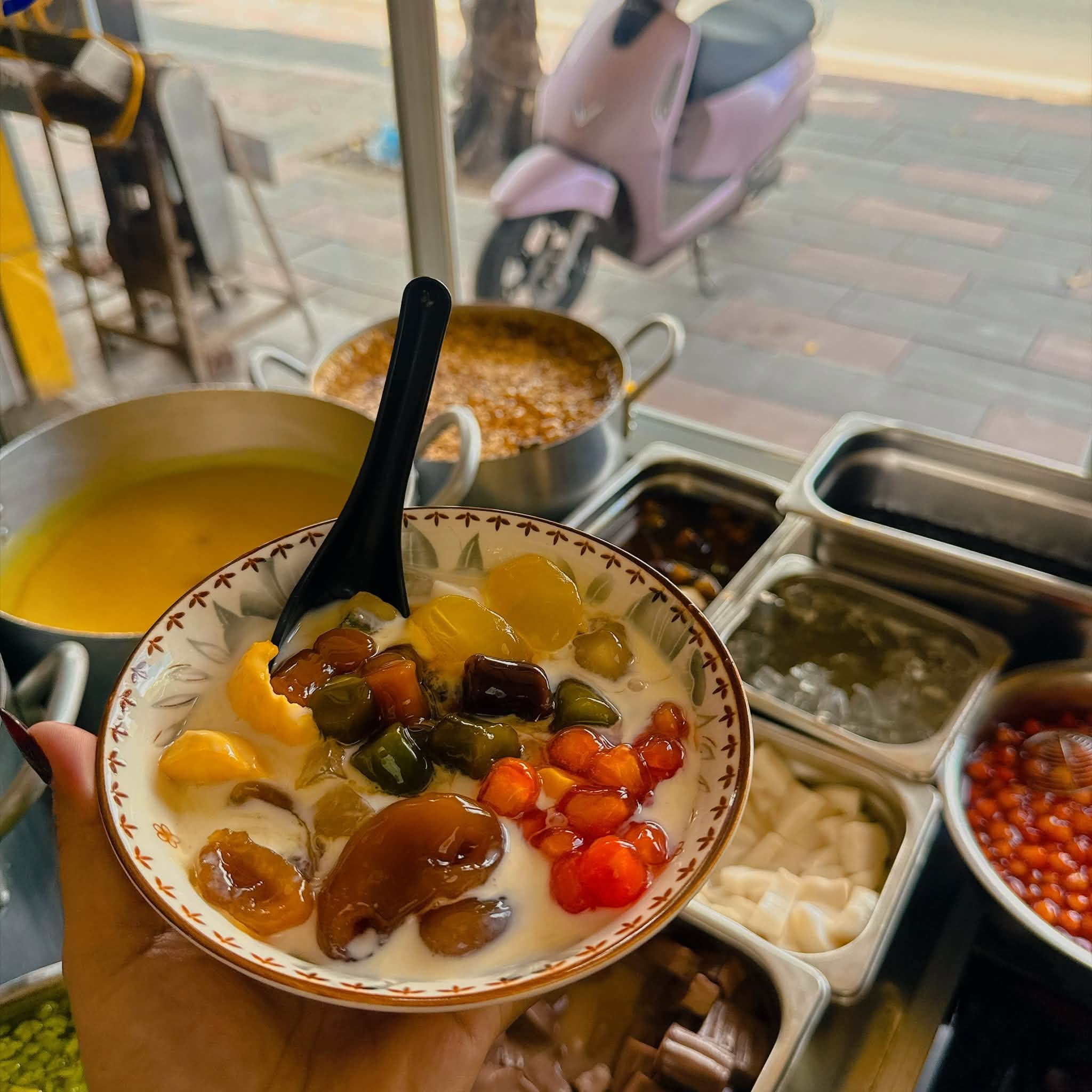
For something sweet, choose a small serving of chè, such as lotus-seed, bean or corn sweet soup. The more unusual chè bột lọc heo quay contains roast pork inside chewy tapioca dumplings in sweet syrup, so it is not vegetarian.
Colourful ingredients and a creamy liquid come together in a bowl of chè. (Source: Collected)
Save salt coffee for a separate café stop. Its creamy salted topping changes the balance of the coffee, and usually introduces dairy as well.
How to Tell Hue’s Rice Cakes Apart
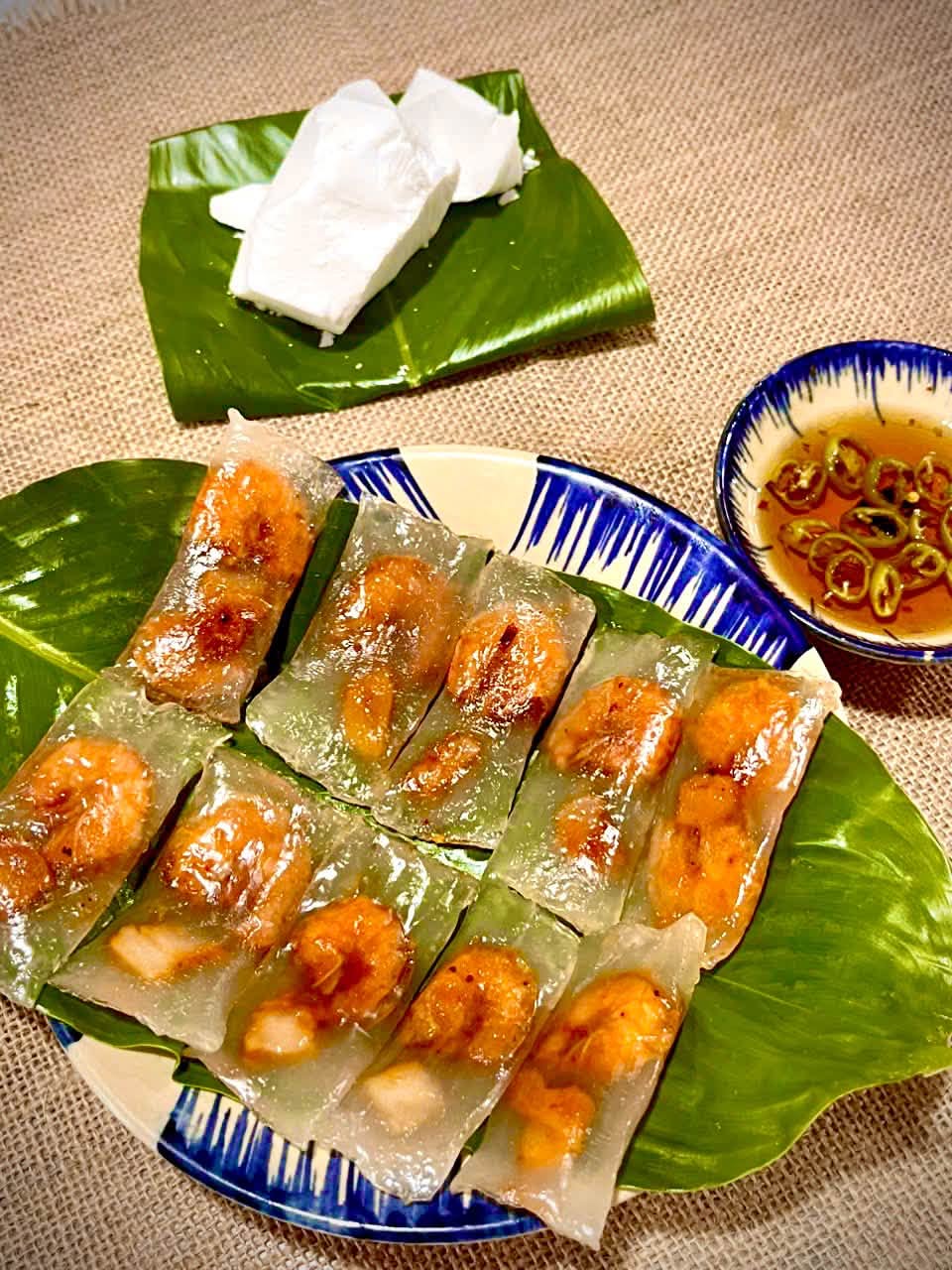
Bánh lọc has a translucent, chewy tapioca wrapper enclosing a savoury shrimp filling. (Source: Collected)
Several Hue specialities may appear under “rice cakes” on English menus, although their ingredients and textures differ. Bánh lọc, for example, uses tapioca starch. Knowing the shape is often the easiest way to recognise what arrives.
Cake
How to recognise it
Typical filling or topping
Bánh bèo
Small, soft steamed cakes served in shallow dishes
Shrimp topping, scallion oil and sometimes crisp pork additions
Translucent, chewy tapioca dumplings, wrapped or unwrapped
Shrimp and pork, with variations
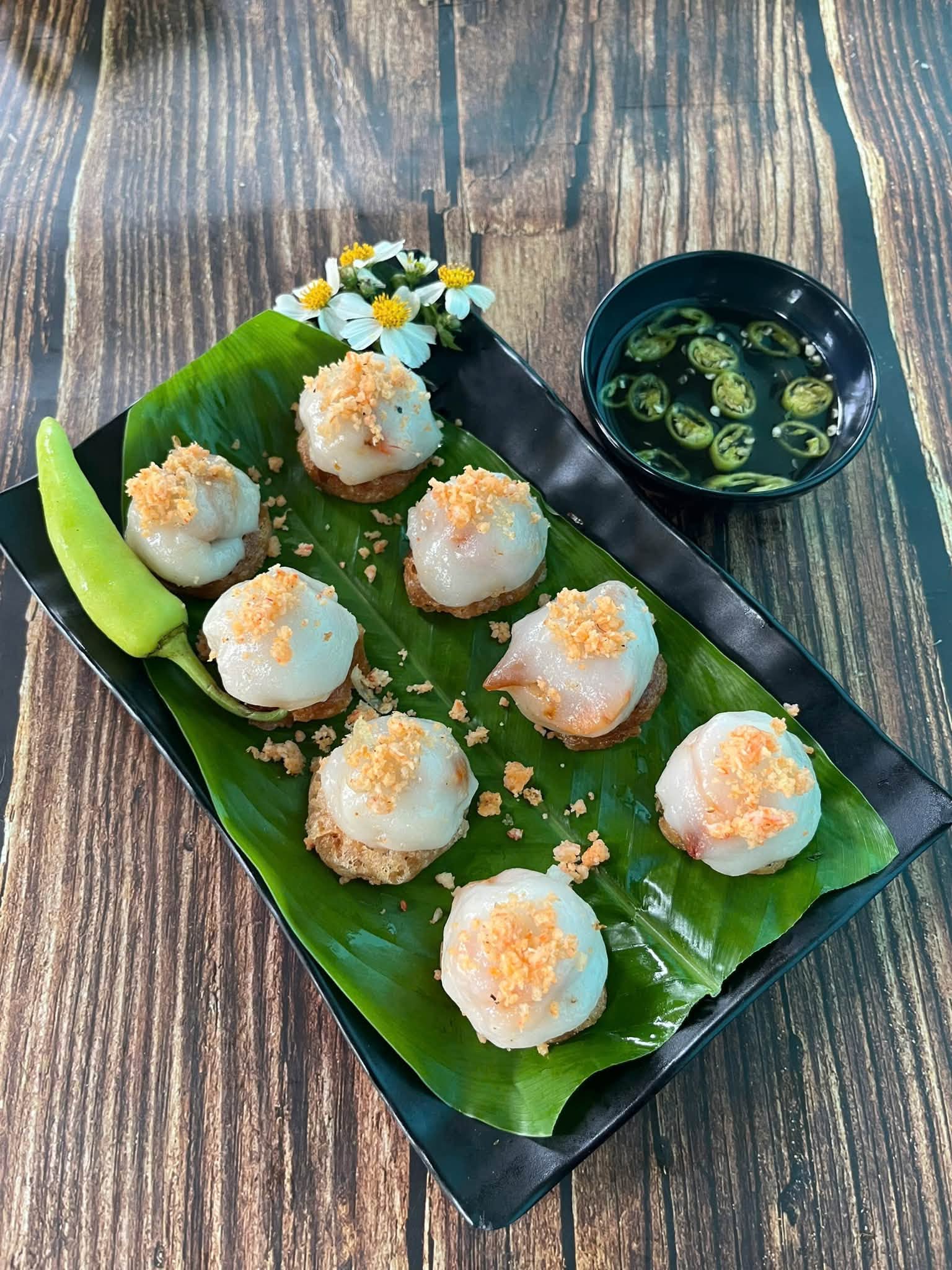
Bánh ram ít
A soft, sticky dumpling sitting on a crisp fried base
Savoury filling and shrimp toppings
Bánh ram ít pairs a soft dumpling with a crisp fried base and savoury toppings. (Source: Collected)
Order a mixed portion if the shop offers one, and ask how many pieces it includes. A tray of tiny dishes can be more substantial than it looks. Two people may prefer to share a first order before adding anything else.
Try a small amount of the supplied sauce, then adjust to taste. Fillings, cooking fats and sauces vary, including in versions described as vegetarian. If ingredients matter to you, ask before the plate is prepared.
Vegetarian Food and Hue’s Buddhist Traditions
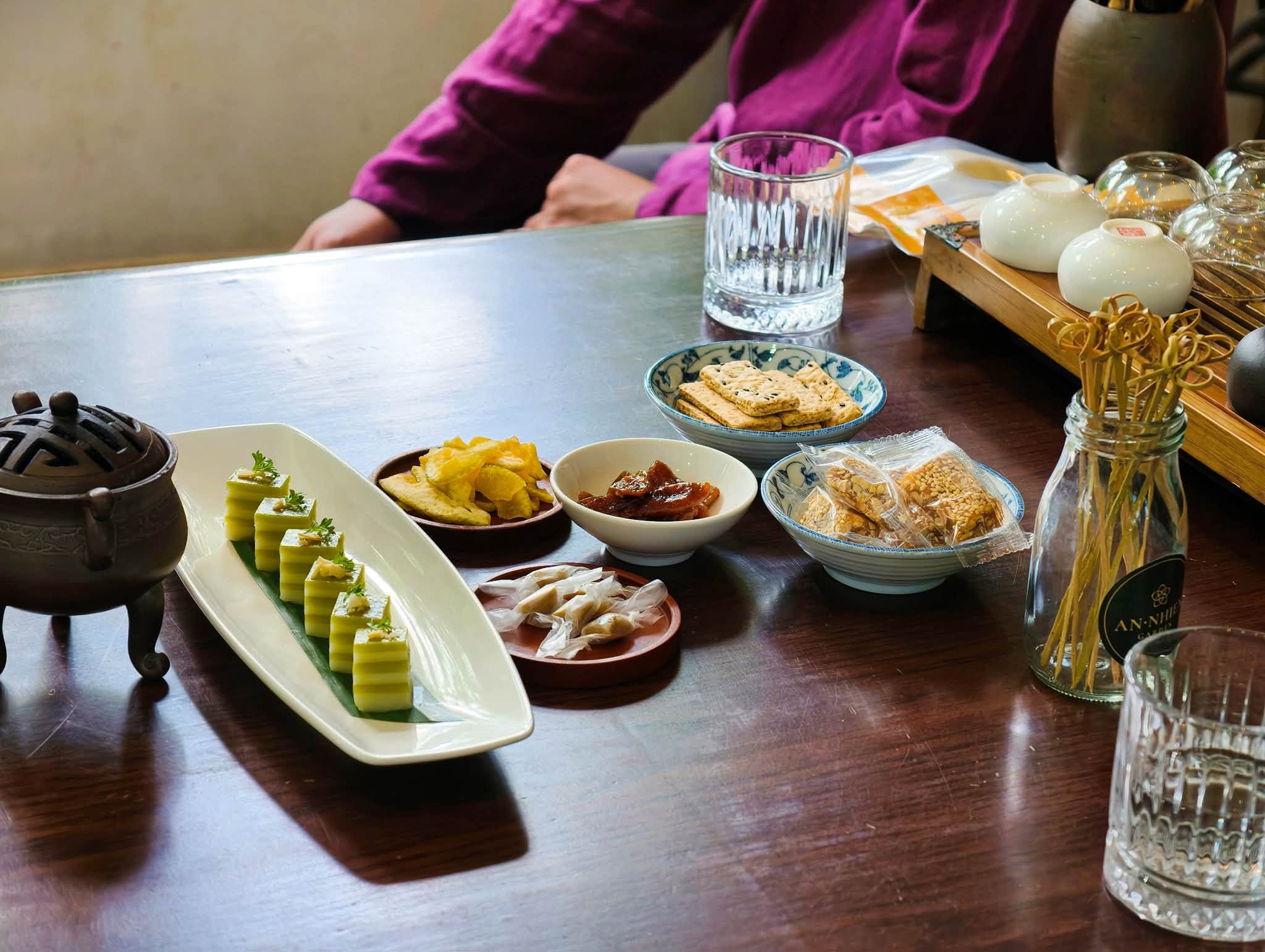
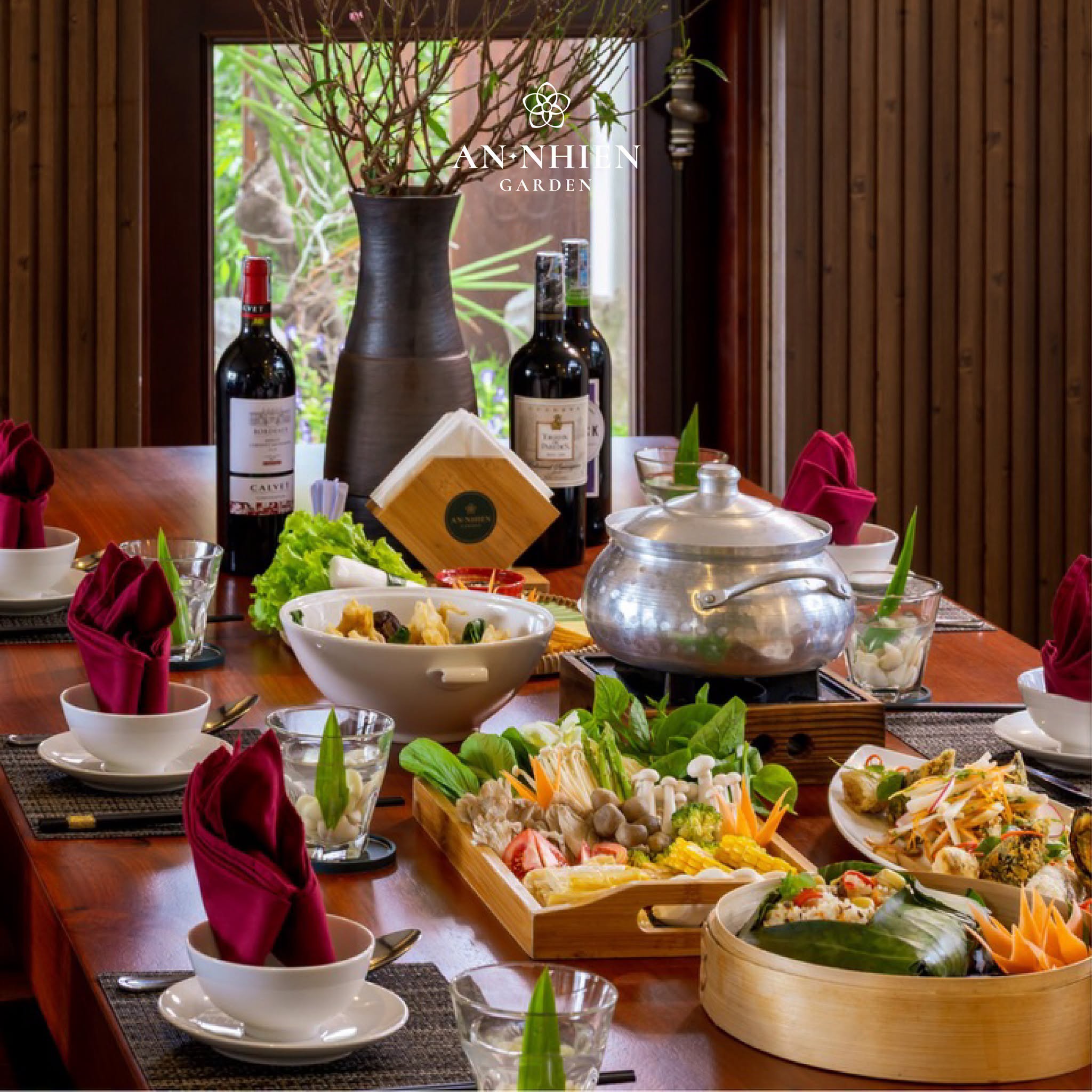
Vegetables, mushrooms and carefully presented dishes fill the table at An Nhien Garden in Hue. (Source: Collected)
Vegetarian cooking is part of Hue’s cultural life, with both everyday dishes and elaborate meals. Its Buddhist connections help explain that tradition, but you do not need to arrange a religious visit to enjoy it. A dedicated vegetarian restaurant is a practical place to begin.
Look for vả trộn chay, a vegetarian preparation of local figs, or cơm hấp lá sen chay, vegetarian rice steamed in a lotus leaf. Depending on the kitchen, you may also find mushroom dishes, tofu, soups and vegetarian cakes. Ask what is available that day rather than expecting every restaurant to serve the same selection.
The word chay helps identify vegetarian food. However, regular vả trộn can contain animal ingredients, and a vegetable dish elsewhere may use fish sauce or meat stock. Explain vegan requirements separately, including eggs and dairy.
Useful questions include:
Does the broth contain meat or seafood?
Is the dipping sauce made with fish sauce or shrimp paste?
Are eggs, milk or other dairy ingredients used?
Send dietary requirements ahead when booking an experience. If a meal at a pagoda is proposed, confirm that it has been arranged and is appropriate for visitors; do not assume walk-in meals are available.
Where to Eat and How to Plan Your Meals
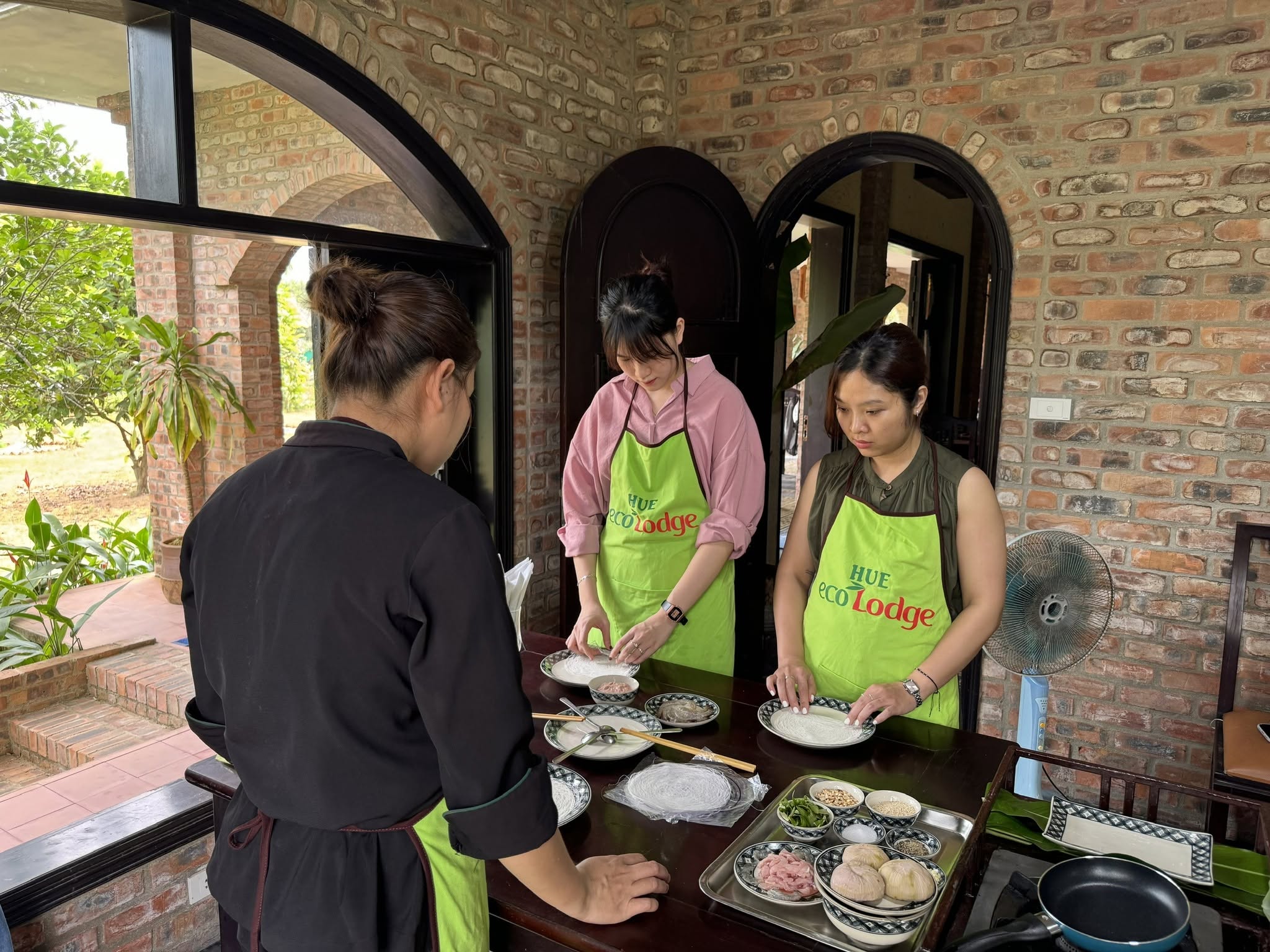
Participants prepare ingredients during a hands-on cooking session at Hue Ecolodge. (Source: Collected)
Dong Ba Market and nearby streets offer an introduction to produce and prepared food. A guided visit can help explain ingredients, while independent browsing leaves you free to follow your interests. Ask before photographing vendors and keep busy passages clear.
For cakes, choose a specialist shop where you can compare several varieties. Cồn Hến is another area to consider for clam dishes, with access checked locally during heavy rain. For a garden-house meal or cooking class, arrange the visit rather than assuming a private property welcomes diners.
Use the Hue travel guide to group meals with nearby sightseeing. The following framework leaves breathing room:
Time
Day one
Day two
Morning
Bún bò breakfast, then sightseeing
Market visit and a prebooked cooking class
Lunch
Cơm hến or another meal, according to appetite
Eat the dishes prepared in class
Afternoon
Rest, then share a mixed cake plate
Coffee or free time
Evening
Vegetarian dinner
Bánh khoái or something you have yet to try
If you only have one day, choose three food moments rather than compressing the whole table. A noodle breakfast, cake tasting and vegetarian meal make a varied introduction.
Food walk or cooking class? Choose a walk for several tastings and help ordering. Choose a class to practise techniques; confirm how much you will cook yourself. Browse our food and culinary tours to compare suitable experiences.
What should you budget? Confirm current prices, serving sizes and inclusions before ordering or booking. A guided experience includes more than the food alone.
To plan a food-focused Vietnam journey, share your interests, available time and dietary preferences. Meals, a local walk or a cooking experience can then fit comfortably around the rest of your visit.