Hanoi to Ho Chi Minh City by Train: Sleepers, Scenic Sections and Stopover Planning
November 29, 202620 min read
Travelling from Hanoi to Ho Chi Minh City by train can mean two different holidays. You might settle into a sleeper and watch Vietnam unfold on a continuous journey south. Or you might use the railway to connect several stays, stepping off for imperial history, coastal towns and time beside the sea.
The right choice depends on more than the ticket price. A long rail journey involves sleeping, eating and sharing space while the train keeps moving. Departure times determine how many nights you spend onboard, which landscapes pass in daylight and how you feel when you reach your hotel.
This guide helps you compare through trains, understand sleeper accommodation and decide whether to travel the full distance or break it into manageable sections.
Information reviewed on 29 November 2026. Timetable and fare examples are dated planning references, not a live availability check. Confirm the complete itinerary before payment.
Is the Full Hanoi–Ho Chi Minh City Train Journey Right for You?
Choose the full journey when rail travel is something you actively want to experience. Having time to read, watch ordinary landscapes and live to the train’s rhythm can be enjoyable. It becomes less appealing when every hour feels borrowed from places you would rather explore.
For a first visit with several destinations in mind, separate rail legs often make more sense. You retain the experience while allowing time for proper stays between journeys. If your holiday is short, one overnight section followed by a flight can achieve a better balance.
Your situation
A useful starting point
Main consideration
You enjoy long-distance trains and have flexible time
A through sleeper journey
Be comfortable with extended time onboard
You want to explore several regions
Separate tickets with overnight stays
More bookings and transfers to coordinate
You want one memorable rail experience
One selected section, then fly or continue by road
Choose the section for its timing and purpose
You are travelling with young children
A private compartment or shorter stages
Consider bed access, bathrooms and rest
You struggle to sleep with noise and movement
Compare flying and a daylight rail section
A better cabin cannot eliminate train movement
An overnight train can replace accommodation, but it also uses daytime hours and may leave you tired. Compare usable holiday time, total cost and comfort rather than counting hotel nights alone.
Understand the Route, Train Numbers and Arrival Dates
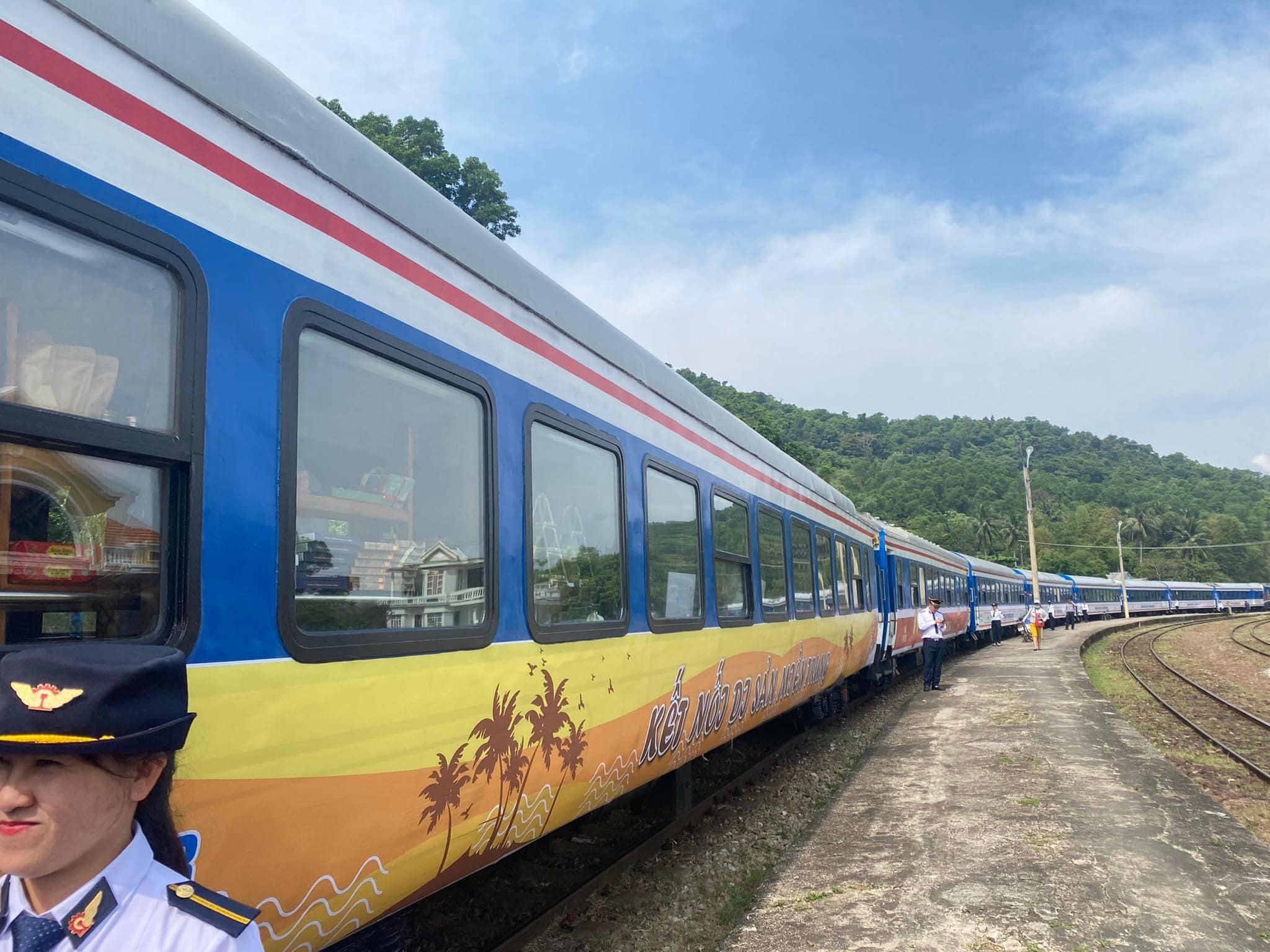
A Vietnam Railways passenger train. Confirm your exact service number, stations and arrival date before booking. (Source: Collected)
“Reunification Express” is commonly used for the north–south railway experience. When booking, you need the actual service number, travel date and station pair. Different SE trains share the broad route but have different schedules and intermediate calls.
For the full southbound journey, search from Ha Noi / Hà Nội to Sai Gon / Sài Gòn. Saigon is the railway station name used for this Ho Chi Minh City arrival. A city name in a booking search does not always identify the station you intended, so check the final ticket.
Reference timetable: Hanoi to Saigon
These examples reflect published southbound listings reviewed on 29 November 2026. Day 1 is departure day; Day 2 is the next calendar day. Listed services do not imply that every class is available or that tickets remain unsold.
Train
Hanoi departure
Saigon arrival
Arrival day
Scheduled duration
Nights onboard
SE7
06:00
17:00
Day 2
35 hours
1
SE5
08:00
18:20
Day 2
34 hours 20 minutes
1
SE9
13:00
03:26
Day 3
38 hours 26 minutes
2
SE3
19:20
05:30
Day 3
34 hours 10 minutes
2
SE1
21:45
06:30
Day 3
32 hours 45 minutes
2
A shorter scheduled journey can still contain two nights. Leaving late on Monday and arriving early on Wednesday involves Tuesday onboard and parts of two nights. A morning departure arriving the following evening has a different rhythm, despite a similar total duration.
Use Vietnam Railways’ booking website to check your date. The examples above use a dated booking-platform snapshot; they are not an independently confirmed operating notice for future dates. Verify arrival dates as well as hours, especially around holidays or timetable changes.
Sleeper Cabins — What Matters on a Long Journey?
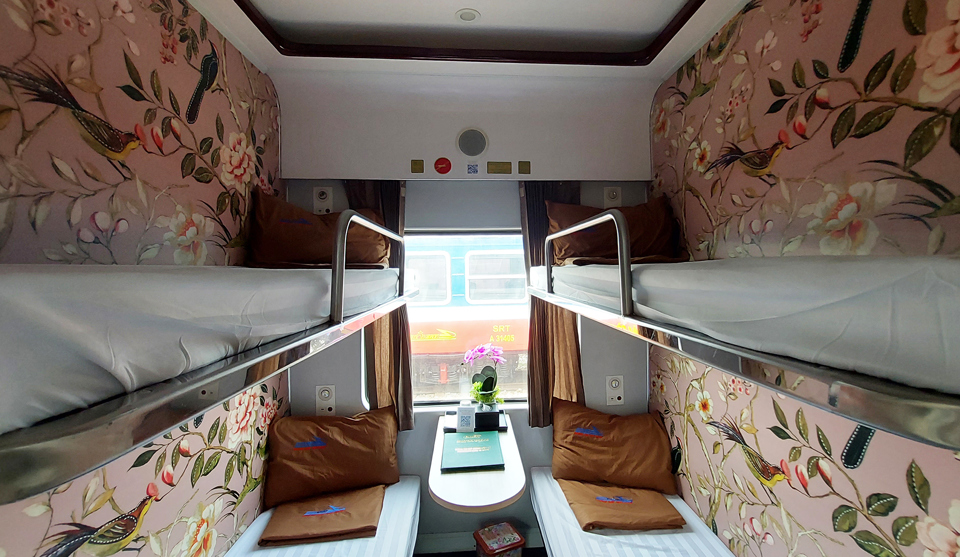
A four-berth sleeper compartment illustrates the layout. The carriage and interior assigned to your dated departure may differ. (Source: Collected)
For a journey of this length, start with the sleeping arrangement you can comfortably use. The cheapest available place may be reasonable for a short section but become a poor fit for the full trip.
Accommodation
Typical layout
Privacy when buying one place
Main advantage
Main limitation
Soft seat
A reclining passenger seat
Shared carriage
Lower-cost option where offered
No bed for overnight rest
Six-berth sleeper
Three tiers on each side
Shared compartment
More economical sleeping accommodation
More occupants and restricted space around some tiers
A four-berth compartment gives you a different occupancy and tier arrangement from a six-berth one. On a long journey, think about the hours spent awake as well as those spent lying down. Luggage, meals and getting in and out of bed all affect comfort.
Lower berths can be easier for passengers who want to avoid climbing. An upper berth requires sufficient mobility, and access arrangements vary. A request is not a confirmed allocation: check the berth shown on the ticket before paying where possible.
What “private” actually means
Two passengers buying two beds in a four-bed compartment have not necessarily booked a private room. Ask explicitly whether the remaining places can be sold, and how exclusive use is ticketed. Do not enter invented passenger details to fill unused beds; obtain the railway or supplier’s approved arrangement.
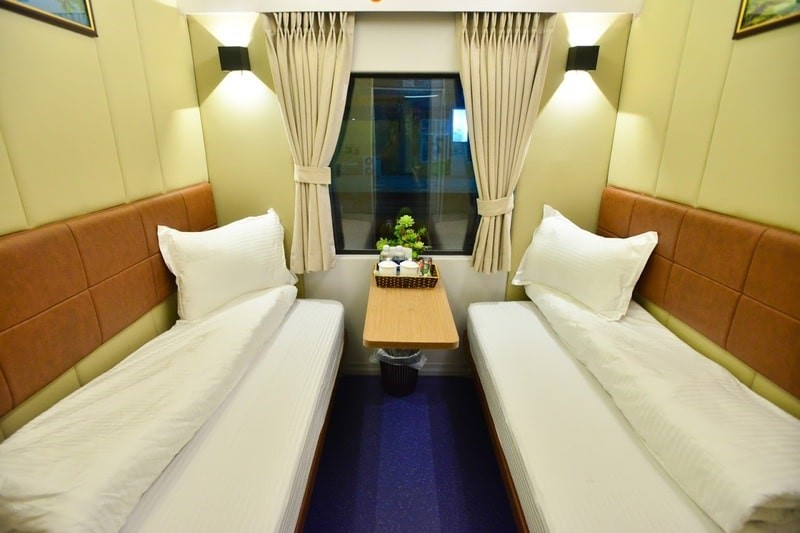
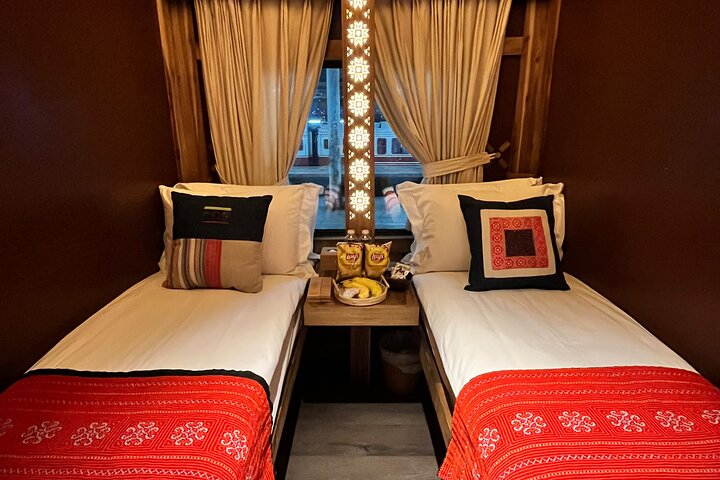
Likewise, a compartment sold privately for two is not automatically a purpose-built two-bed cabin. Ask for the layout and photographs of the exact category on your train. Specialist rail guidance describes limited two-berth accommodation on some SE services, but that does not establish availability on a particular departure.
For groups, specify whether adjacent compartments matter. For families, confirm separate-bed requirements and child fares before deciding that everyone will fit comfortably.
Are There Private Tourist Carriages or Luxury Options for the Whole Route?
An illustrative two-bed cabin. Confirm the exact layout, exclusive-use terms and operating segment of any premium product. (Source: Collected)
A through train and a tourist cabin product are separate things to verify. A scheduled train may continue to Saigon while a supplier sells its branded accommodation only between Hanoi and Central Vietnam. Seeing the same train number does not prove that the premium product covers your entire ticket.
Establish three details: which segment is supplied, what physical accommodation is guaranteed and who provides the service onboard. A ticket seller may offer useful assistance without operating its own carriage.
Option to investigate
What the published information establishes
What still needs confirmation
Standard Vietnam Railways inventory
Through services and available ticket classes can be searched by date
Exact carriage, berth and any special cabin allocation
Laman Express
Published Hanoi–Da Nang services on SE19/SE20, with several cabin configurations
A separate onward arrangement if continuing south
Livitrans
Published Central Vietnam products and southern-route enquiries
Whether the requested booking is branded accommodation or ordinary railway inventory with service
Other tourist-carriage offers
A named package may cover a selected segment
Route, carriage, layout, inclusions and substitution conditions
The Vietage by Anantara
Premium journeys connecting Da Nang, Quy Nhon and Nha Trang
Selected leg, availability and connections to other tickets
The Vietage can form part of a staged holiday; it is not a continuous Hanoi–Saigon sleeper. Its premium dining and seating experience should be assessed against the chosen Central Vietnam leg.
For any “luxury train” quotation, ask whether you stay in the same accommodation throughout. Establish if the cabin must change, where that happens and who coordinates the transfer. Compare written specifications rather than a name or a photograph from another route.
Avoid booking on the assumption that a longer advertised route guarantees a better cabin. The most useful upgrade is one that matches your requirements for sleeping, privacy and service on the exact section you will travel.
Train Fares — Compare the Total Cost, Not Just One Berth
Hanoi to Saigon train tickets vary with departure date, class, berth position and booking channel. A headline minimum is not the price of every bed on every departure.
The following displayed examples were reviewed for travel on 29 November 2026. They illustrate different available classes, rather than a like-for-like price ranking:
Service
Displayed class
Reference fare per person
SE5
Six-berth sleeper
VND 1,720,000
SE1
Six-berth sleeper
VND 1,835,000
SE7
Four-berth sleeper
VND 2,220,000
These amounts are a snapshot, not a quotation. Availability, fees and conditions must be checked again before purchase.
For a private compartment, request the total payable for your party. If two travellers must buy four places, twice the shared-berth price will not describe their actual cost. Confirm the fare basis, unused-place arrangements, inclusions and cancellation rules in writing.
Add station transfers, food, any paid early hotel access and assistance fees. When comparing separate rail legs, include accommodation and transfers between them. Stops make the trip richer, but they do not automatically make the transport cheaper.
Ask what happens if your plans change: whether a ticket is amendable, which charges apply and who handles the request. Different rail legs or branded products may have different conditions even when booked through one agency.
Scenic Sections — Choose the Timing as Carefully as the Cabin
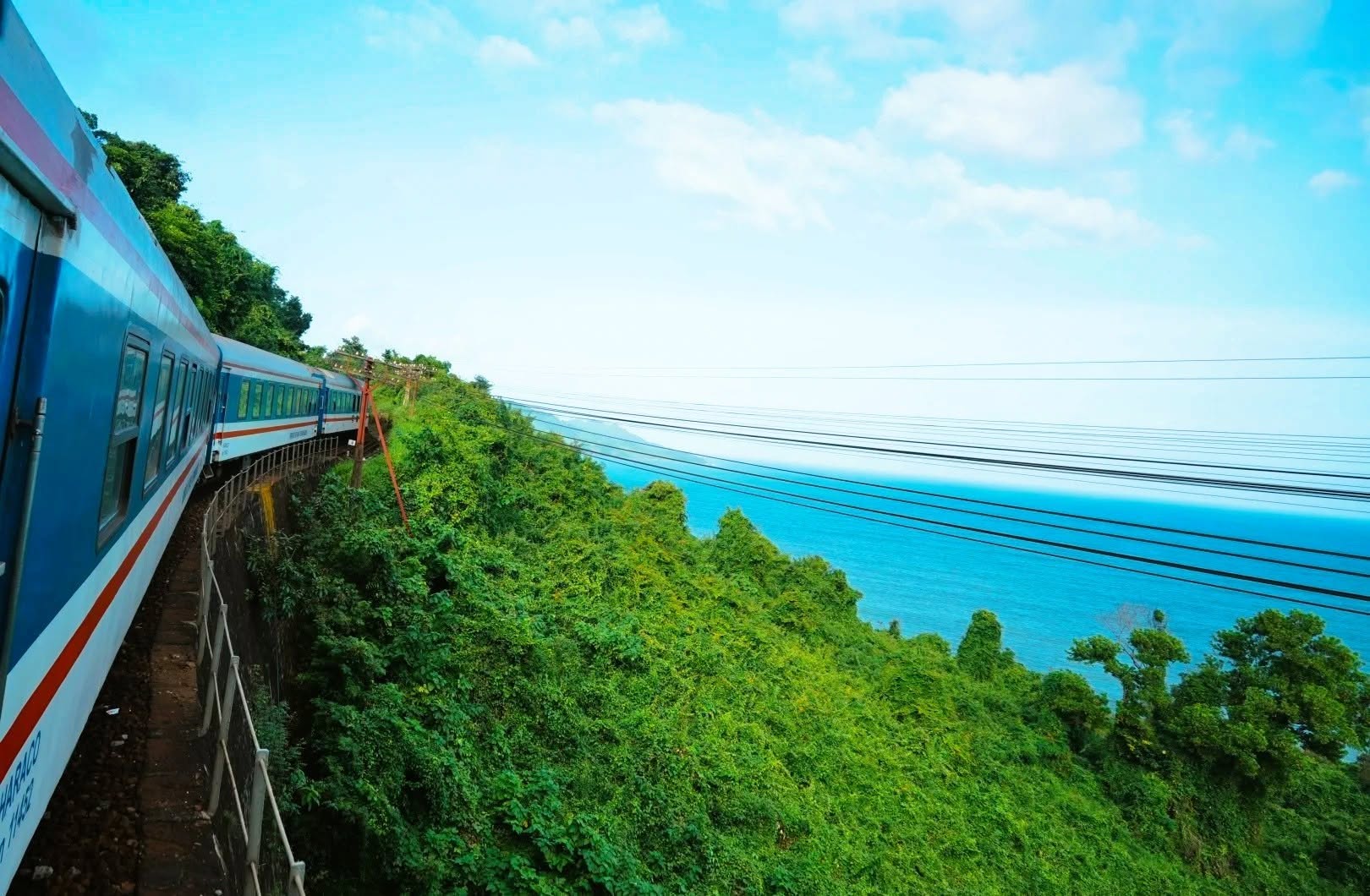
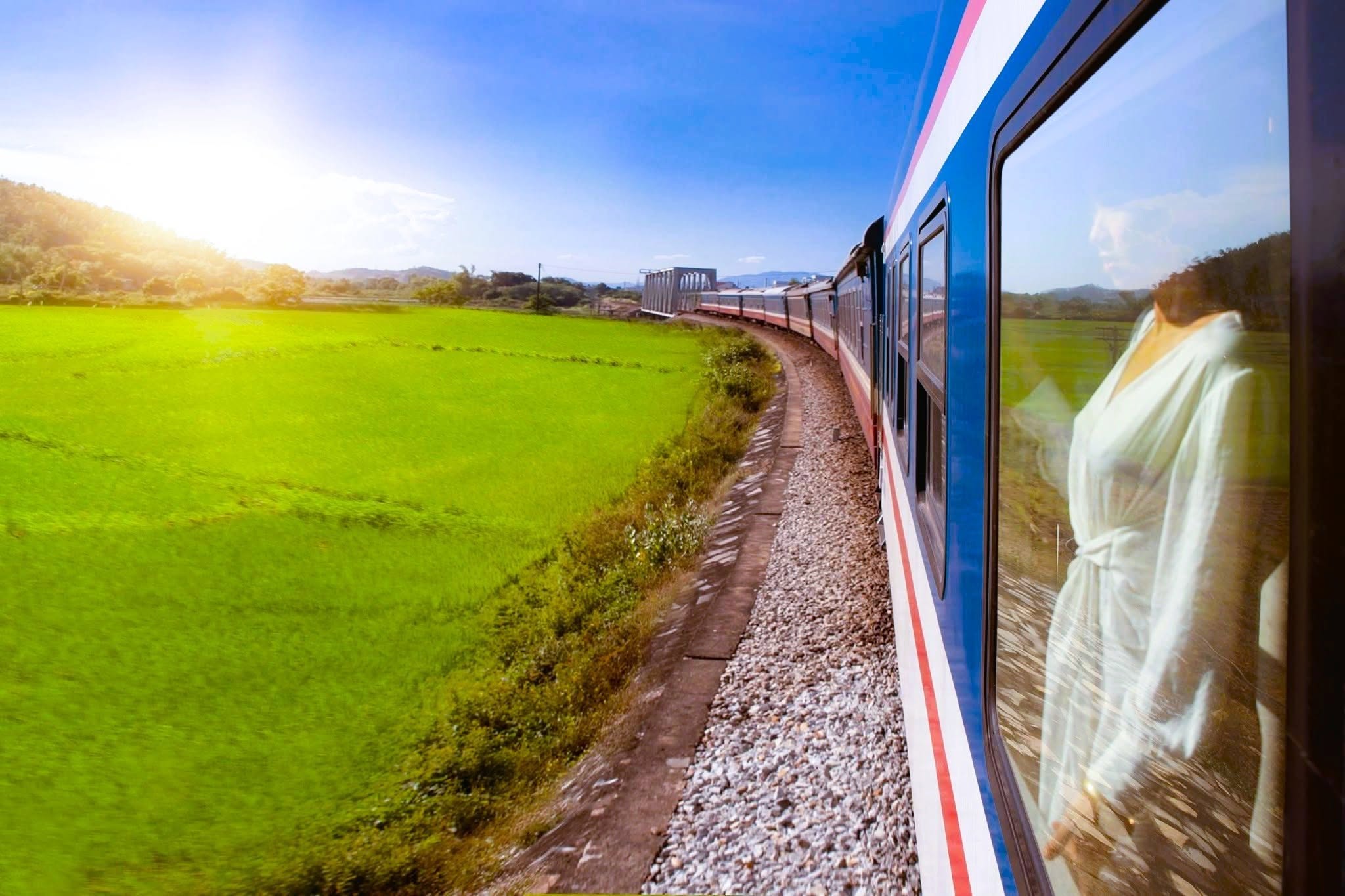
A coastal railway view illustrates the appeal of daylight travel. Visibility and the scenery seen depend on the selected service and conditions. (Source: Collected)
The full route is not a continuous coastal panorama. Settlements, fields, railway infrastructure, tunnels and stretches with restricted views are all part of the journey. That variety can be interesting, but it helps to know which landscape matters most to you.
The coastal railway between Hue and Da Nang is a key section to investigate. Around Lang Co and the Hai Van mountainside, the line offers opportunities for sea and mountain views when daylight and visibility allow. The railway has its own alignment; you do not get the road pass’s stops or viewpoints.
Section or setting
What may interest you
What to check
Approaches to towns and cities
Daily activity, changing buildings and railway life
Whether you pass in daylight
Rural stretches
Fields, settlements and regional changes
Season, visibility and the actual route
Hue–Da Nang coastal railway
Sea, mountainside curves and Lang Co surroundings
Hue and Da Nang calling times, daylight and weather
Southern coastal sections
Intermittent coastal landscapes and changing terrain
Exact timing; the line is not beside the sea throughout
Compare intermediate station times, not just departure and arrival. A service that works well for sleeping may pass your preferred scenery at night. If the Hai Van section is a priority, booking it separately in daylight gives you more control over timing.
Train delays can shift the viewing window, and low cloud or rain can obscure the landscape. Do not choose a departure that only makes sense if one particular view appears.
For photographs, look for clean glass and minimise reflections. Stay in permitted passenger areas; never use doorways or restricted spaces for a better angle. View direction changes with curves, and a berth’s description may not guarantee the window side you imagined.
Travel Straight Through or Break the Journey?
A countryside view from the train: choose whether to remain onboard or use separate rail legs between longer destination stays. (Source: Collected)
This decision usually matters more than choosing between similar through departures. Plan around the places you want to experience and the amount of continuous travel you enjoy.
Option 1: The full-distance rail experience
Stay onboard to Saigon if the long journey itself is a goal. You avoid repeated transfers, settle into one accommodation arrangement and experience the transition south at railway pace.
Allow a gentle arrival day and avoid placing an important appointment immediately afterwards. This option works best when you accept the limits of sleeping and spending long waking hours in a moving, shared environment.
Option 2: Separate legs with meaningful stays
A stay in Hue can give a staged rail journey time for central Vietnam’s imperial heritage. (Source: Collected)
Break the journey where you want more than a glimpse from the window. Each stop adds packing, station transfers and another booking, so make it earn its place in the holiday.
Stop to consider
Reason to stay
Station-to-destination distinction
Ninh Binh
Limestone countryside and boat trips
The station is not the same place as your Tam Coc or countryside accommodation
Dong Hoi
Access to the Phong Nha area
Allow a separate road transfer to your chosen base
Hue
Imperial history, food and neighbourhood walks
Plan a stay rather than trying to sightsee during a scheduled train halt
Da Nang
City, beach or access to Hoi An
Hoi An requires an onward road journey
Nha Trang
A coastal break and local exploring
City accommodation and outlying resorts involve different transfers
For a culture-focused journey, consider Hanoi–Hue, a stay in Hue, a daylight rail leg to Da Nang, time in Hoi An, then onward travel south. Use the Hue Travel Guide and Hoi An Travel Guide to judge how much time those stops deserve.
For a route with a coastal break, consider Hanoi–Central Vietnam, a stay there, onward travel to Nha Trang and finally Saigon. Check weather for your month before choosing the beach stop. The Nha Trang Travel Guide helps distinguish a city stay from a more secluded resort holiday.
These are route patterns, not schedules or bookable packages. Check each leg separately and leave enough time at destinations to make the extra travel worthwhile.
Option 3: One train section and a flight
You can experience a sleeper without making every transfer by rail. Choose one section for its timing or scenery, stay at the destination and fly onwards when that protects useful holiday time.
A stopover requires another travel plan
A through ticket does not automatically let you leave the train for sightseeing and resume on a later service. Book the individual legs required by your itinerary. A brief scheduled station stop is not a sightseeing opportunity, and branded accommodation on one section does not guarantee the same product afterwards.
Living Onboard — Meals, Bathrooms, Luggage and Sleep
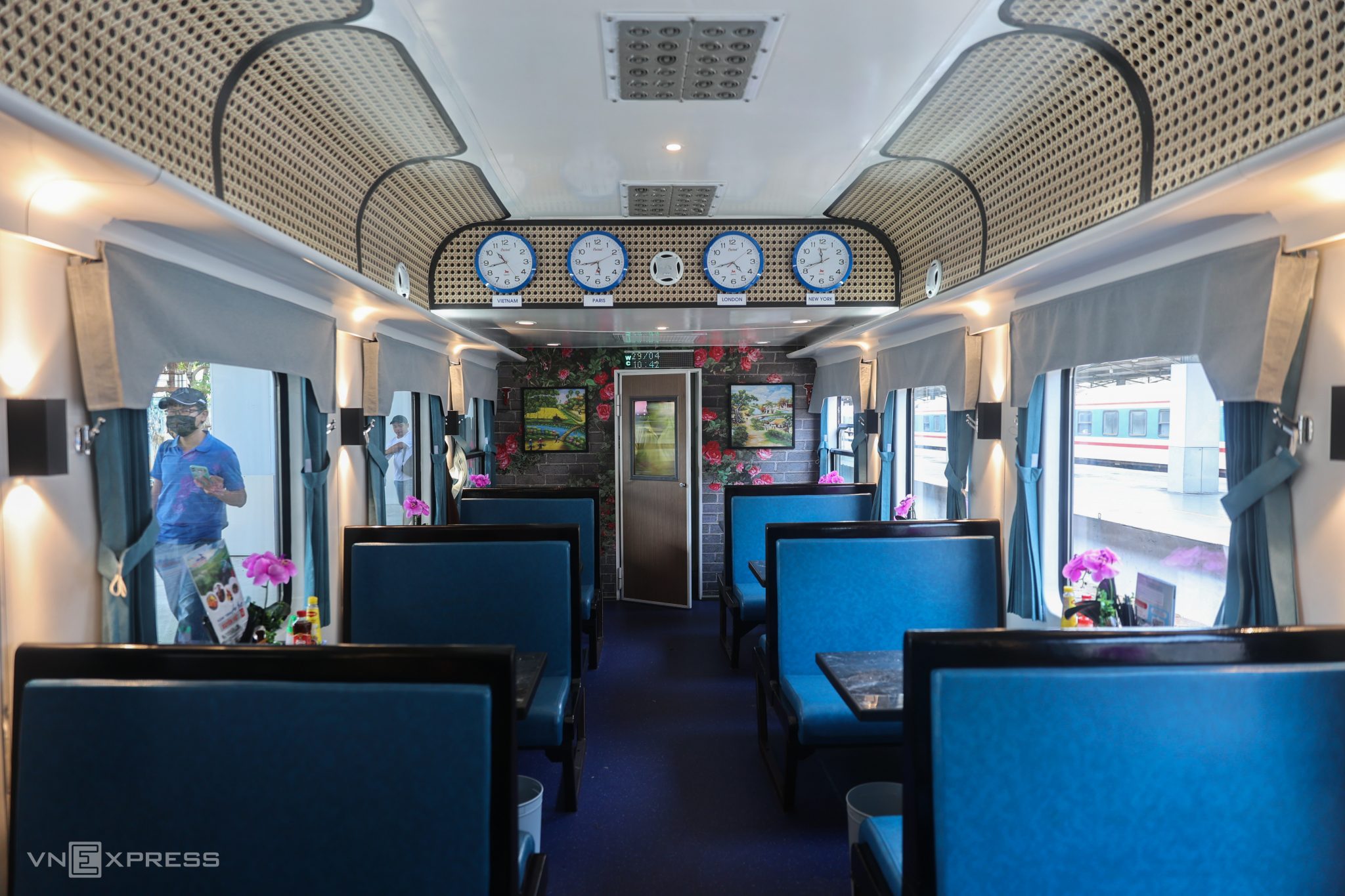
An illustrative railway dining carriage. Meal service and facilities must be checked for the accommodation and departure you book. (Source: Collected)
Think of the full journey as a short stay in a moving space. Preparation helps, especially if you normally rely on regular meal times, a particular diet or uninterrupted sleep.
Meals and drinking water
Check whether your ticket includes food and what can be bought onboard. Standard accommodation and tourist packages may differ. Bring drinking water and familiar snacks, particularly for children, but avoid relying on food that needs refrigeration throughout the journey.
If you have dietary restrictions, establish what can actually be provided. A general promise of meal service does not confirm an appropriate dish for every requirement. Eat before boarding if that simplifies a late departure, and keep essential medication accessible.
Bathrooms and washing
Plan for shared toilets unless a specific private facility has been confirmed. Ask about the actual carriage if the bathroom arrangement is important to your comfort. Do not assume there is a shower.
Pack toiletries, tissues, hand sanitiser and a small towel in an accessible bag. A change of clothes can make a long journey more comfortable. Save a full refresh for accommodation you can access after arrival rather than building expectations around hotel-style facilities onboard.
Luggage and charging
Keep a small bag with what you will need before arrival, separate from your main suitcase. Avoid leaving documents or medication under luggage that is difficult to move. Keep valuables close and ask about storage if you have bulky equipment.
Charging arrangements depend on the allocated accommodation. Bring a power bank and download tickets, maps and entertainment. Mobile coverage can weaken along the route, and advertised Wi-Fi should not be the basis of an important work commitment.
Sleep and shared space
Expect movement, station activity and occasional noise. Earplugs, an eye mask and a light layer can help. Exclusive use controls who shares your compartment but cannot remove railway noise or motion.
With children, plan simple activities and enough familiar food. For limited mobility, ask about boarding steps, bed access, corridor space and toilets before ticketing. “Comfortable cabin” is too general an answer to those practical questions.
Boarding in Hanoi and Arriving at Saigon Station
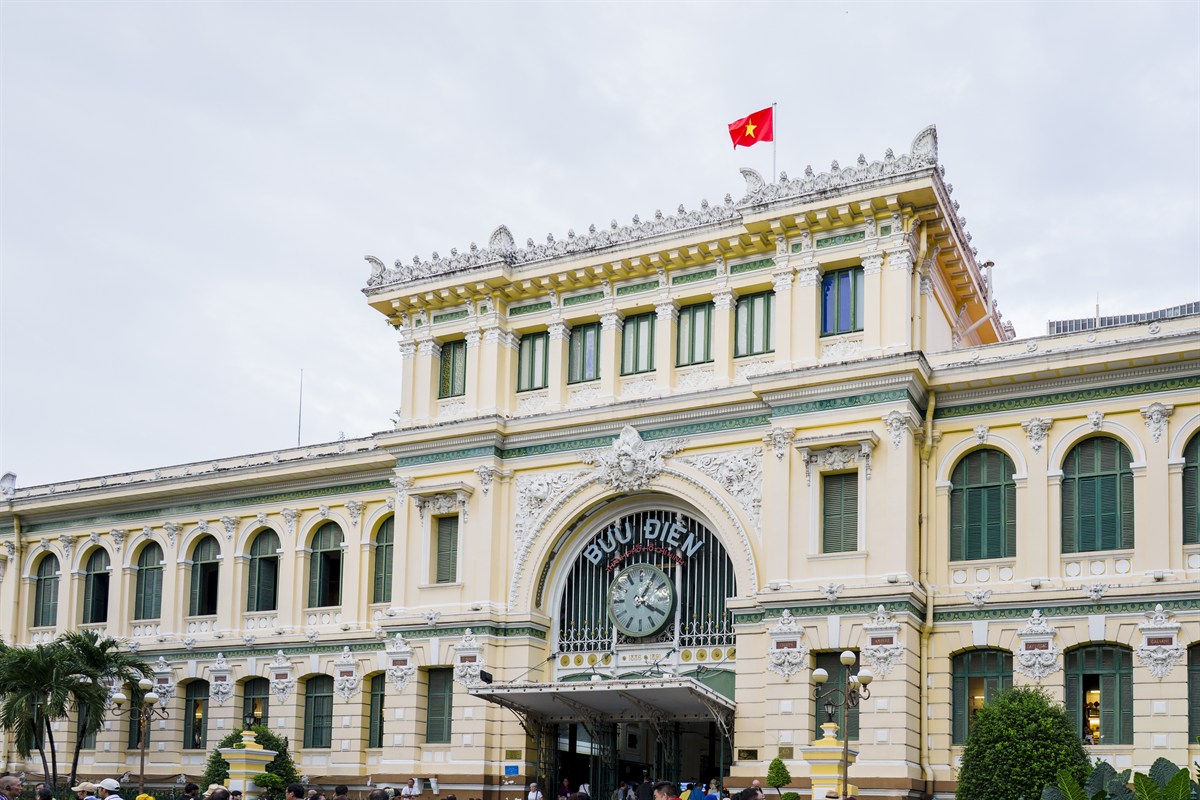
Leave time for a relaxed introduction to Ho Chi Minh City after reaching your hotel; this is the Central Post Office, not Sai Gon station. (Source: Collected)
Confirm your departure from Hanoi Railway Station on Le Duan Street and follow any supplier-specific meeting instructions. A booking voucher, ticket exchange or separate check-in point can change where you need to report.
As a practical allowance, aim to reach the correct meeting point 45–60 minutes before departure, or earlier if instructed. This is a suggested buffer, not a universal boarding rule. Keep passports, tickets and supplier contact details accessible offline, and verify passenger details before travel.
At Saigon Station, agree on a recognisable pickup point and a way to contact your driver. Your hotel’s neighbourhood affects the onward journey. Use our guide to where to stay in Ho Chi Minh City when deciding where to base yourself.
Match hotel access to your arrival
An early-morning arrival does not guarantee a room is ready. Luggage storage, early check-in subject to availability and guaranteed immediate room access are three different arrangements. Ask what the hotel can commit to, and price a guaranteed solution if a shower and bed are essential.
A very early arrival also needs a clear pickup plan. For an evening arrival, check reception arrangements and whether you want dinner before settling in. In either case, leave the first day light enough to absorb delays and tiredness.
Avoid a tight flight connection after the train. If an onward flight is important and inflexible, an overnight buffer can be a more sensible choice than relying on scheduled rail arrival alone.
Ho Chi Minh City to Hanoi — What Changes in the Other Direction?
For the reverse journey, search Saigon to Hanoi and compare the northbound departures separately. You may encounter SE2, SE4, SE6, SE8 and SE10, depending on the operating period and availability. Do not reuse the southbound table to calculate your trip.
Check when each service reaches Central Vietnam and how that aligns with daylight. A southbound scenic recommendation may be unsuitable northbound. Likewise, the cabin allocation and supplier’s advertised segment need to be confirmed for that direction.
Arrival planning changes too. A morning arrival in Hanoi can leave a long wait before normal hotel check-in, while onward travel to another destination adds another transfer. Consider finishing with time in Hanoi rather than connecting immediately to a long road journey or flight.
Before You Book: Confirm These Details
Ask for a confirmation that answers these questions:
What are the exact stations, train number, departure date and arrival date?
Which accommodation category and berth positions are confirmed?
Is the compartment shared or reserved exclusively for your party?
Does the quoted product cover the full journey or only one segment?
Are meals, bedding, assistance and transfers included?
What is the total payable, including unused places required for privacy?
What are the amendment, cancellation and substitution conditions?
How are delays handled for your pickup and hotel arrangements?
If you are splitting the route, repeat these checks for each leg. Keep all confirmations together so a change to one service can be assessed against the rest of the holiday.
Frequently Asked Questions
How long does Hanoi to Ho Chi Minh City by train take?
The reference departures in this guide take roughly 33–38½ hours. Choose the actual dated service rather than treating an average as your itinerary, and allow for delays.
Does the journey involve one night or two nights onboard?
Both patterns are possible. Morning departures may arrive the following evening; late departures can arrive on the second morning after departure. Read the calendar dates carefully.
Can two people book a private compartment?
Subject to availability and ticketing rules, you may reserve a whole four-berth compartment or a confirmed two-berth product where offered. Ask exactly what is being supplied and what the full-party price covers.
Is there a luxury sleeper for the entire route?
A premium product on one section does not establish a continuous luxury service to Saigon. Confirm the accommodation and service responsibility for every segment before booking an offer described that way.
Can I stop in Hue or Da Nang with one ticket?
Do not assume a through ticket permits a stopover followed by travel on another train. Reserve the separate legs needed for your stay and check each booking’s conditions.
Will I see the Hai Van coastal section in daylight?
That depends on intermediate calling times, season, weather and delays. A separately selected daylight Hue–Da Nang leg offers more control over the timing, without guaranteeing visibility.
Is the full journey suitable for children?
It can work for families comfortable with long rail travel. Consider sleeping arrangements, bathroom access, meals and the arrival day. Shorter stages may be easier than remaining onboard throughout.
Should I travel the whole distance or choose one section?
Travel through if the long train journey is a main interest. Split the route if you want meaningful stays, or combine one rail section with flying when time is limited.
Build the Rail Journey Around Your Holiday
The best Hanoi–Saigon rail plan begins with your interests and limits: how long you want to remain onboard, how much privacy matters and where you want to spend time. A suitable berth, a realistic arrival plan and well-chosen stops can matter more than a premium label.
Share your dates, group size, preferred sleeping arrangement and places you want to visit. Contact Vietnam Travels for help comparing available options and fitting the railway into a journey that works for you.
Sources and References
Information reviewed on 29 November 2026. Public schedules and provider descriptions are not confirmation of available inventory. Vietnam Railways’ timetable-information portal returned an error during review; the reference arrival times and displayed fares use the dated booking-platform listing below and must be reconfirmed before purchase.
Laman Express: advertised Hanoi–Da Nang service corridor and distinctions between Deluxe, VIP and Premium cabin layouts.
Livitrans — Train Time & Fare: published route products, southern-route enquiries and a tariff explicitly dated January–February 2027; not used as a November 2026 fare quote.