Phu Lang Pottery Village: Traditional Ceramics and a Craft Village Visit from Hanoi
November 27, 202614 min read
A pot becomes more interesting when you start noticing how it was made: the curve of its shoulder, the weight of its rim, a raised decoration or the way glaze gathers across its surface. At Phu Lang Pottery Village, these details introduce a craft shaped by generations of practical work and changing tastes.
This pottery village in Bac Ninh, northeast of Hanoi, is associated with earthy brown glazes, substantial forms and handmade decoration. A visit can connect finished ceramics with the decisions behind them, provided you choose the workshop and arrange the experience thoughtfully.
Come with time to observe and questions to ask. The reward is understanding what a maker does, rather than simply returning with another souvenir.
Why Visit Phu Lang Pottery Village?
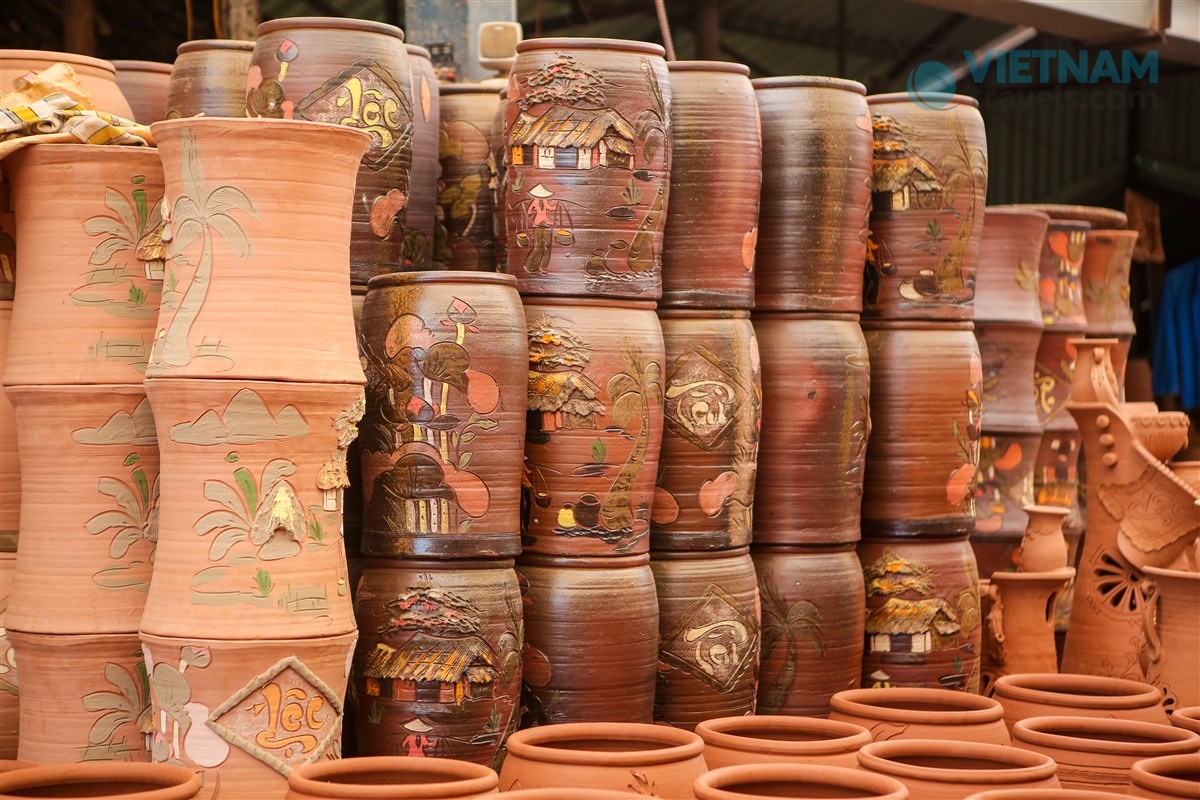
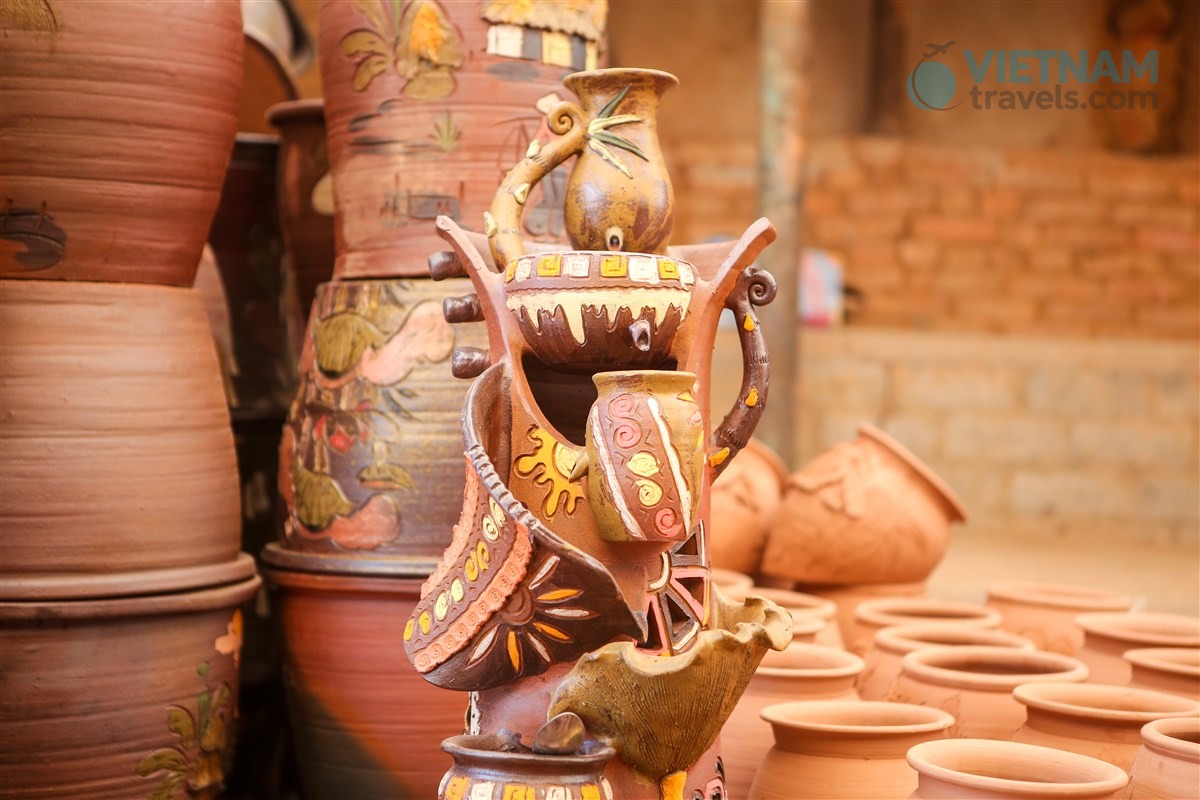
Decorated vases display the warm clay colours and handmade detail of Phu Lang pottery.
Phu Lang suits travelers interested in craft, design and the relationship between an object and everyday life. You do not need specialist knowledge to enjoy it. Watching a maker adjust a shape can give an ordinary jar or vase a new significance.
The village lies in Bac Ninh’s Cau River landscape. Older descriptions place it in the former Que Vo area; use a current workshop address and map pin when arranging your journey.
Planning question
A useful starting point
What is the main interest?
Traditional ceramics, brown glazes, shaping and raised decoration
How much time should you allow?
Around two to three hours at the destination; longer for an arranged activity
Is it suitable for a Hanoi day trip?
Yes, with transport and the workshop visit coordinated
Is booking advisable?
Yes, particularly for explanations, demonstrations or practical sessions
Will a kiln be firing?
Only if its production schedule coincides with your visit
Can children participate?
At a suitable venue with tasks adapted to their age and supervision
These are planning suggestions, not published village-wide opening hours. Phu Lang consists of working premises and individual hosts, rather than a single attraction with one admission desk.
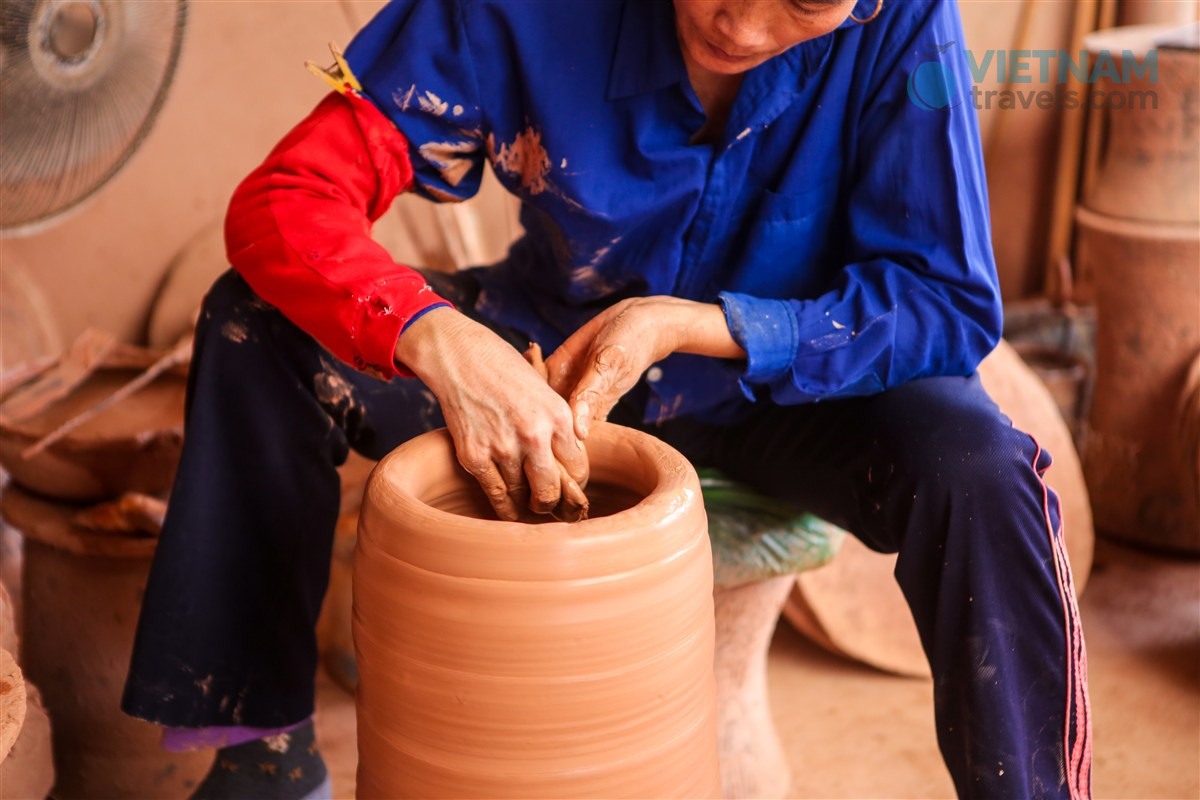
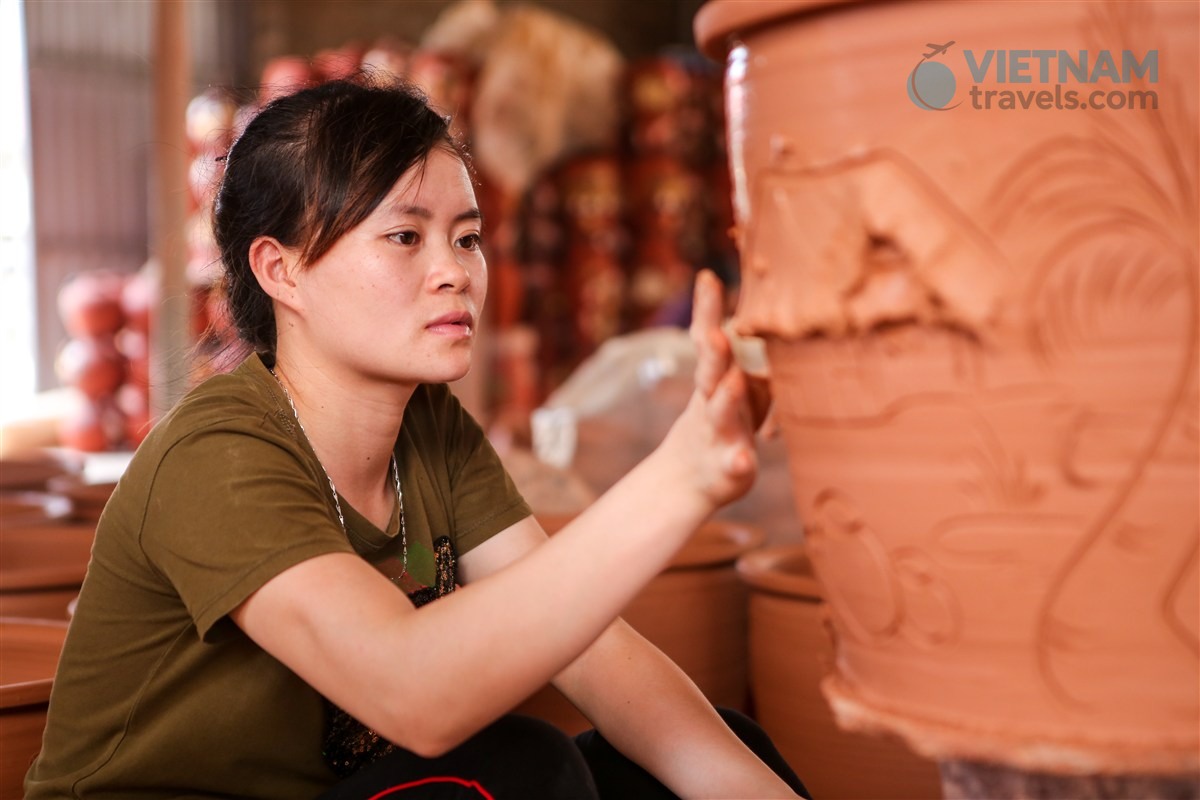
A maker shapes a tall vessel, bringing the village’s pottery tradition into view through everyday work.
Phu Lang belongs to northern Vietnam’s long ceramic history. Research discussed by the Vietnam National Museum of History traces pottery associated with the area to the early fourteenth century, during the Tran dynasty. Its story is better understood as a centuries-old tradition than reduced to an exact birthday.
The craft has served different needs: household storage and daily use, religious or ceremonial objects, and decoration. A large vessel and an ornamental piece may therefore belong to the same tradition while answering very different purposes.
This connection to use is worth exploring. Ask what a form was designed to hold, where it would have stood and whether the version in front of you follows an older model or a newer design.
Contemporary makers also create decorative ceramics and relief panels. Changing products need not mean abandoning the craft; they can reflect new customers and the need to earn a living from skilled work.
Workshop tourism is another part of that development. Paying for a well-explained visit can support time spent teaching and receiving guests, alongside income from sales. The arrangement should be clear so that a maker is not expected to stop production simply because visitors arrive.
What Makes Phu Lang Pottery Distinctive?
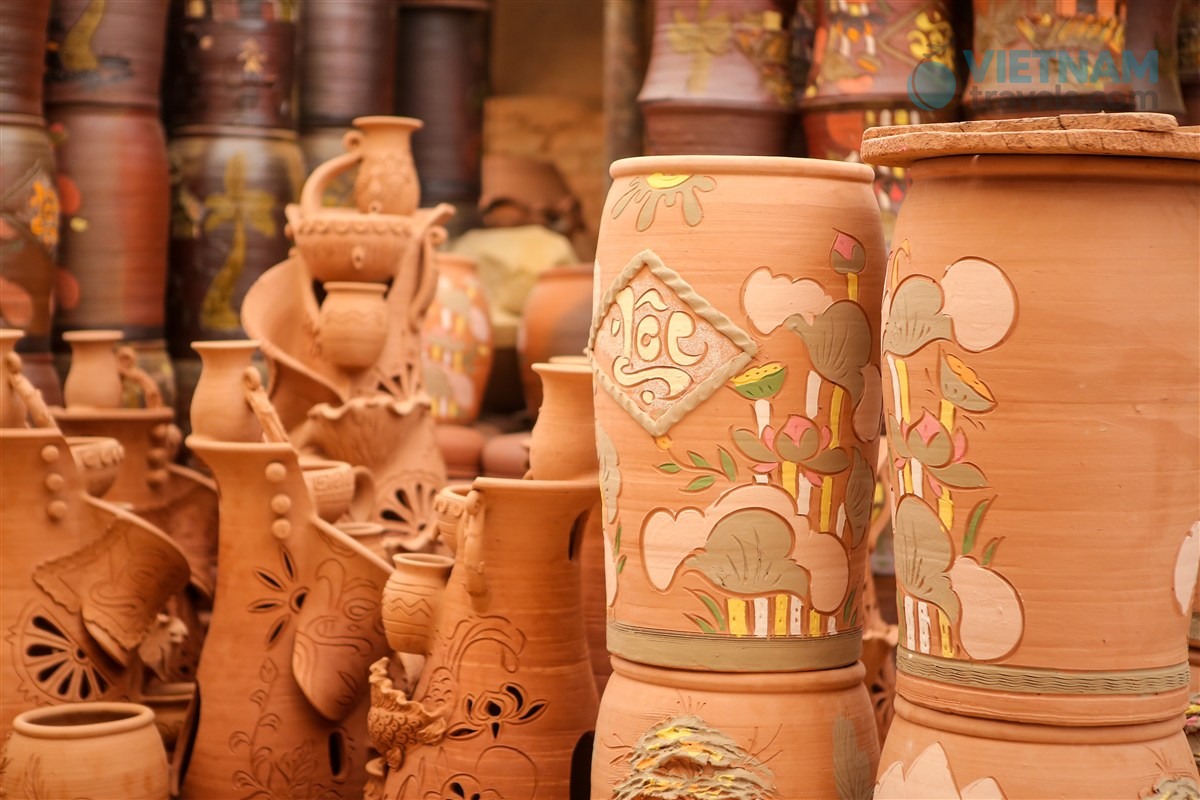
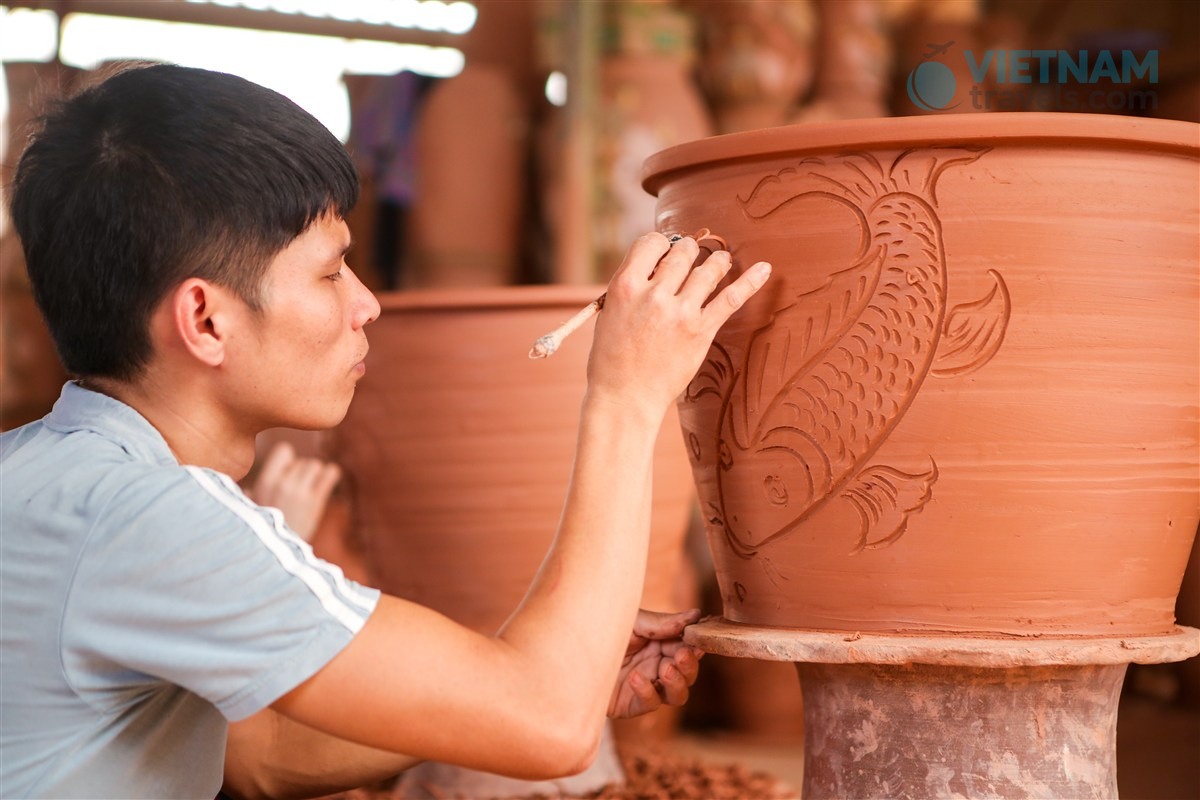
Raised decoration adds texture and character to a handmade Phu Lang vessel.
Clay, form and surface
The body of a ceramic object matters as much as its decoration. Phu Lang pottery is associated with reddish clay, although the material’s sourcing and preparation should be discussed with the individual maker rather than assumed to take place entirely within the village.
Look at the relationship between the base, belly, shoulder and mouth. Is the vessel broad and steady or narrow and elongated? Does the rim look heavy compared with the wall? These observations make a workshop visit interesting even before you understand a technical term.
An exposed foot or unglazed area, where present, may help you see the difference between the ceramic body and its surface coating. Ask permission before lifting or turning a piece.
The brown glazes known as men da luon
One of Phu Lang’s most recognizable features is the family of brown and yellow-brown finishes commonly called men da luon, often translated as “eel-skin glaze.”
The name describes an appearance. It does not mean that eel skin is an ingredient.
Colors can range through amber-like brown, yellow-brown and darker tones. Recipes, application and firing contribute to variation, so two pieces with related forms may not have identical surfaces.
Rather than asking whether every uneven shade is a defect, ask which variations the maker expects or values. A visible difference can be intentional or accepted, but handmade production does not automatically excuse functional problems.
Raised decoration and new designs
Phu Lang also has a tradition of raised decoration: details project from the surface instead of being represented only through painted lines. This gives a piece depth and changes how light falls across it.
Compare an undecorated form with an elaborate one. You may find that their appeal rests on different skills: proportion and surface in one, modeling and composition in the other.
The village’s identity is not limited to one jar shape or one decorative motif. Looking at contemporary work helps explain how makers interpret inherited techniques for present-day spaces.
From Clay to Finished Ceramic
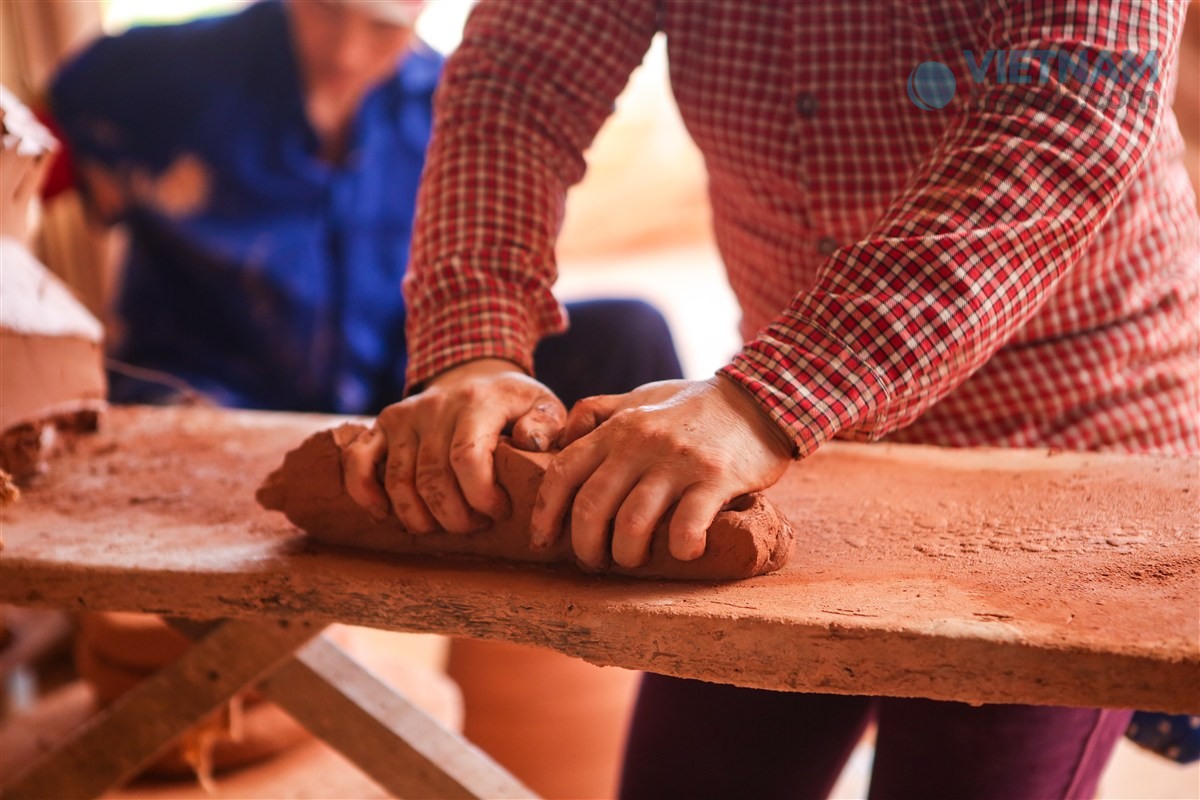
Preparing the clay is one stage in a process that continues through shaping, drying, glazing and firing.
Pottery production involves separate stages, and their timing is part of the craft. A short visit can explain the sequence, but it cannot compress it into a single session.
Stage
What to notice
What a visitor should understand
Preparing the clay
The material’s consistency and readiness for shaping
Preparation may happen before your arrival
Forming
Hand movements, tools and the support given to the shape
Methods vary with the object being made
Trimming and decoration
Adjustments to the profile and application of details
Not every piece receives raised decoration
Drying
How work is placed and protected before firing
Drying requires time and depends on the piece and conditions
Glazing
Treatment of the ceramic surface
Materials and techniques differ between workshops
Firing and cooling
The role of heat and the kiln’s operation
Production follows a cycle, not the tourist timetable
Wood firing remains an important part of documented production in Phu Lang. At a working kiln, the useful story is the knowledge needed to manage a firing, not simply the spectacle of flames.
A kiln may be prepared, loaded, operating or cooling when you arrive. Each stage offers something to explain. Ask your host what is happening rather than expecting an active firing as a standard inclusion.
Avoid relying on a single temperature or duration as the rule for the entire village. Different objects, loads and practices require different arrangements.
If your interest is technical, say so when booking. A ceramics enthusiast may want a conversation about surface treatment and firing; a family may prefer a short explanation followed by a practical activity.
What Can You Experience During a Visit?
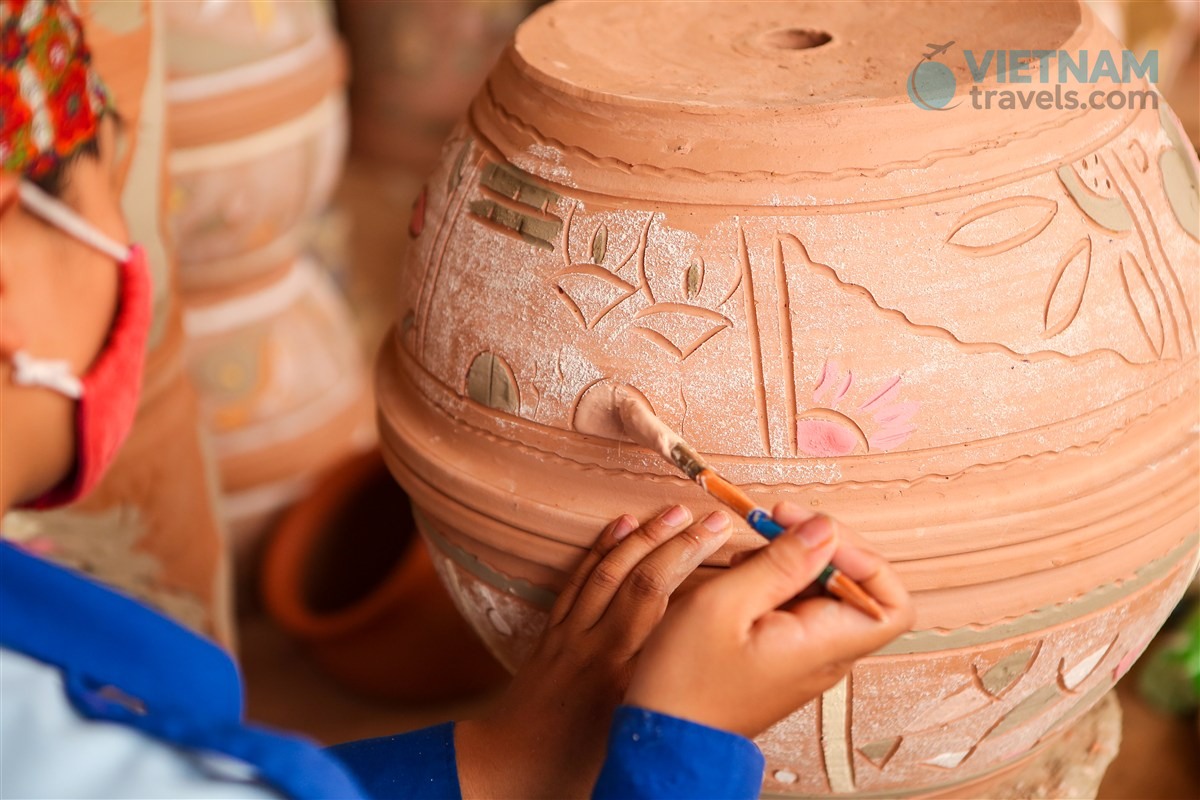
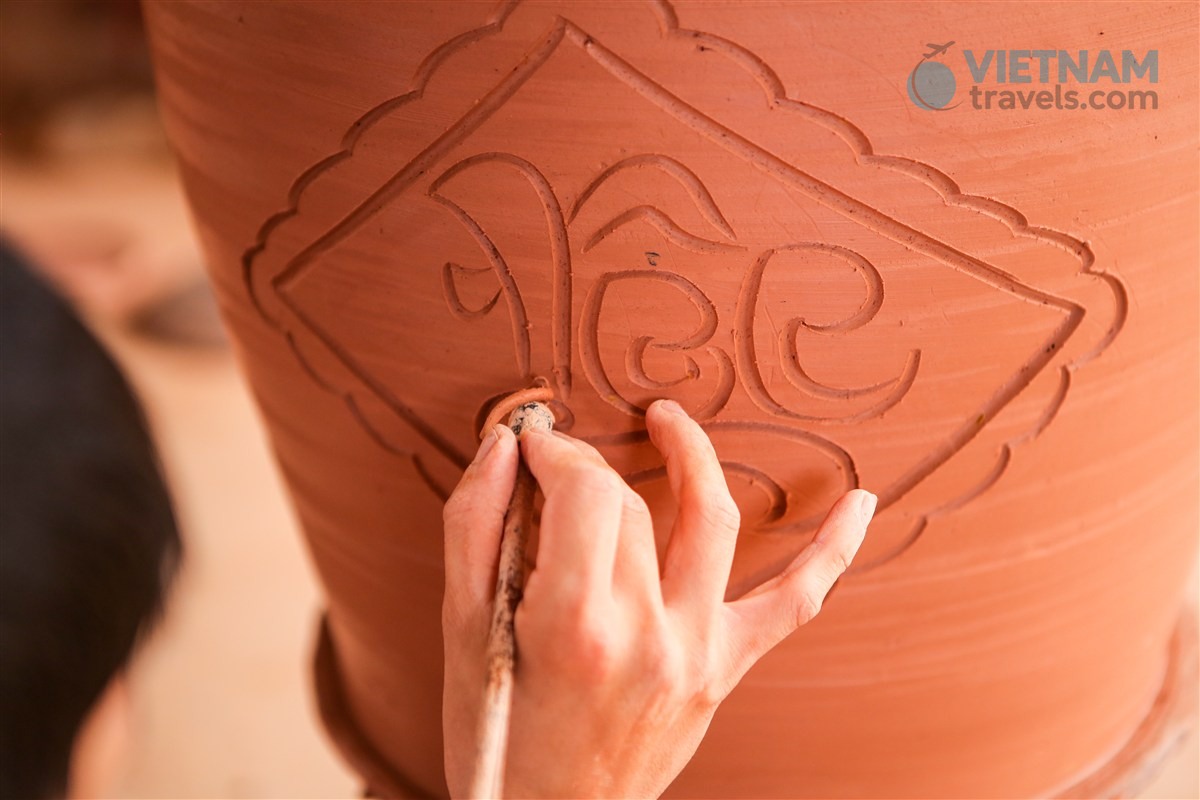
Observing detailed decoration can reveal the skill and patience behind a finished ceramic piece.
Watching production, joining a workshop and shopping are related but distinct experiences. Decide which matters most before arranging transport.
Watch a maker at work
An agreed studio visit can focus on whichever production stage is taking place. A guide or interpreter can help turn observation into a conversation about materials, use and the maker’s choices.
Useful questions include:
What is this object intended for?
Which part of the work is most difficult to judge?
What will happen to it after this stage?
How does this design differ from an older form?
A working studio is not obliged to offer a demonstration on demand. If a specific technique is important, request it beforehand.
Arrange a practical activity
Visitor activities have been documented at local venues, including Minh Tam Pottery and Tourism Cooperative. Duc Thinh is another name appearing in accounts of the village’s craft and tourism development. Treat these as places to investigate, not a guarantee of a currently available English-language program.
Confirm the activity itself: hand-building, wheel work and decorating a prepared object are different experiences.
Before booking
Ask
Instruction
Who leads the session, and in which language?
Participation
What will each guest actually do?
Materials
What is provided?
Completion
Are glazing and firing included?
Collection
When will the piece be ready?
Delivery
Can it be packed and sent, and at what cost?
Browse finished ceramics
Allow time to compare pieces and ask about their use. A shopping stop is more rewarding when you understand something about the work behind the object.
There should be no assumption that joining an activity obliges you to buy additional products. Equally, a clearly priced workshop fairly recognizes the host’s time.
Planning a Day Trip from Hanoi
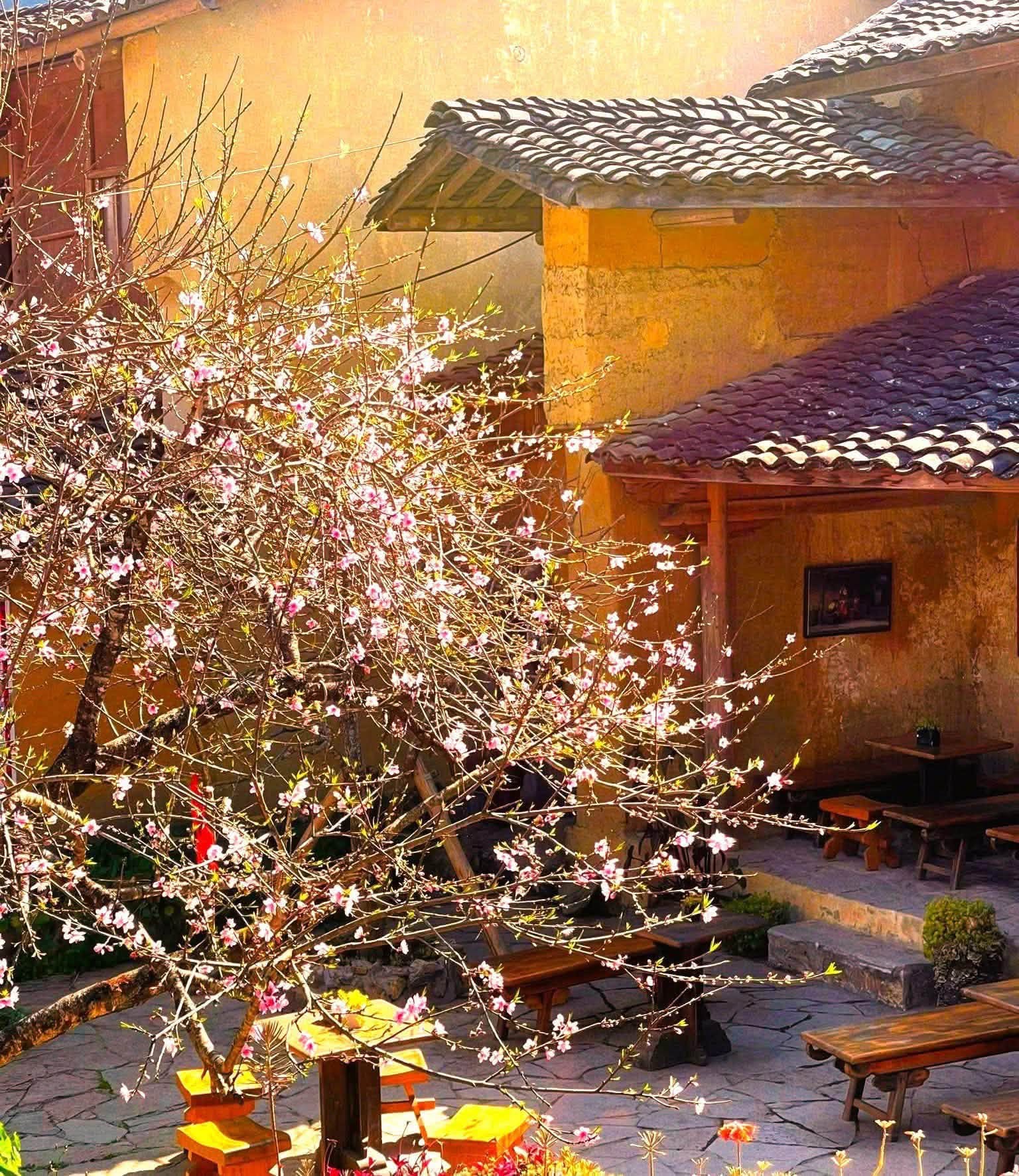
Traditional architecture provides a setting for a day exploring Phu Lang’s working pottery village.
Choose the workshop before arranging transport
Begin with a confirmed venue, meeting point and host. Phu Lang is a road excursion beyond Hanoi’s immediate urban sightseeing area, so calculate the route from your actual accommodation to the workshop rather than relying on a general village label.
Check the expected journey time for your date, traffic and stops. A car with a driver can simplify the return and carrying purchases, while a guide adds value when you want detailed discussion.
Do not assume that a driver also provides interpretation or that every workshop has an English-speaking host. Request those services explicitly.
For the rest of your stay, our Hanoi travel guide helps you balance a craft excursion with time in the city.
Build the day around one worthwhile encounter
Part of the day
Suggested focus
Departure
Travel from the agreed Hanoi pickup point
Arrival
Meet the host and introduce the craft
Workshop visit
Observe production and discuss selected pieces
Practical session
Join an activity if booked
Village time
A short walk and browsing, as conditions allow
Lunch and onward travel
Return to Hanoi or add one carefully chosen stop
This is an itinerary framework, not a confirmed operating schedule. Two to three hours at the destination can suit a focused visit; a longer activity or specialist discussion needs more time.
One additional cultural stop may work if its location and opening arrangements fit. Trying to combine Phu Lang, Bat Trang, Dong Ho, But Thap and several other places in a single day leaves little space for the craft itself.
Discuss lunch in advance, especially if you have dietary needs. Do not assume that a workshop offers meals simply because it receives visitors.
Weather and production both affect the experience
Comfortable walking conditions help, but the workshop’s schedule matters more than an ideal photography season. Rain or heat may change the outdoor portion without preventing an indoor visit.
Ask about the plan around holidays and Tet, when individual makers may change their work or visitor arrangements. A confirmed appointment is more useful than a general claim that production is always busiest in a particular month.
Phu Lang or Bat Trang: Which Visit Suits You?
Applied clay decoration shows how surface patterns take shape before firing.
Choose by the kind of encounter you want rather than treating the villages as competitors.
Decision
Phu Lang
Bat Trang
Main interest
Investigating brown glazes, forms and a selected working studio
Choosing among pottery activities, ceramic shopping and individual venues
Preparation
Arrange a host and clarify the production or activity focus
Select the exact workshop, shop or visitor venue
Timing
Allow for the separate road excursion
Calculate the journey to your selected destination
Good reason to choose it
A particular interest in Phu Lang ceramics
An activity or ceramic collection that suits your priorities
Neither village should be described as universally quieter, more authentic or better for all visitors. A thoughtfully arranged visit in either can be valuable.
If you have already visited Bat Trang, Phu Lang can broaden your understanding of Vietnamese pottery. If your main aim is a short introductory activity with children, compare the actual venues and travel arrangements before deciding.
Buying Pottery and Visiting Thoughtfully
Ask the maker about a piece’s intended use and packing before buying ceramics to take home.
Start with purpose. Is the piece intended for decoration, holding flowers, storing something or serving food? A vase and a tableware item need different assurances.
Do not infer food-contact suitability from a natural-looking glaze or traditional production. Ask the maker about the intended use and relevant product information. Also clarify suitability for hot liquids, dishwashers or microwaves where applicable.
Check weight, dimensions and packing before buying. A piece that looks manageable on a shelf may occupy much of a suitcase. Shipping requires a separate agreement covering packing, delivery charges and what happens if an item is damaged.
Inside a workshop, ask before touching products or tools. Unfired work can be easily damaged even when its surface looks dry. Keep bags clear of shelves and avoid moving objects for photographs.
Children can enjoy a suitable activity with adult supervision. Explain that a production area differs from a play space, and follow the host’s instructions around equipment and kilns.
Finally, respect a maker’s working rhythm. Ask permission for portraits, avoid blocking ongoing tasks and accept limits on access. Time spent listening can be as meaningful as time spent taking pictures.
Frequently Asked Questions
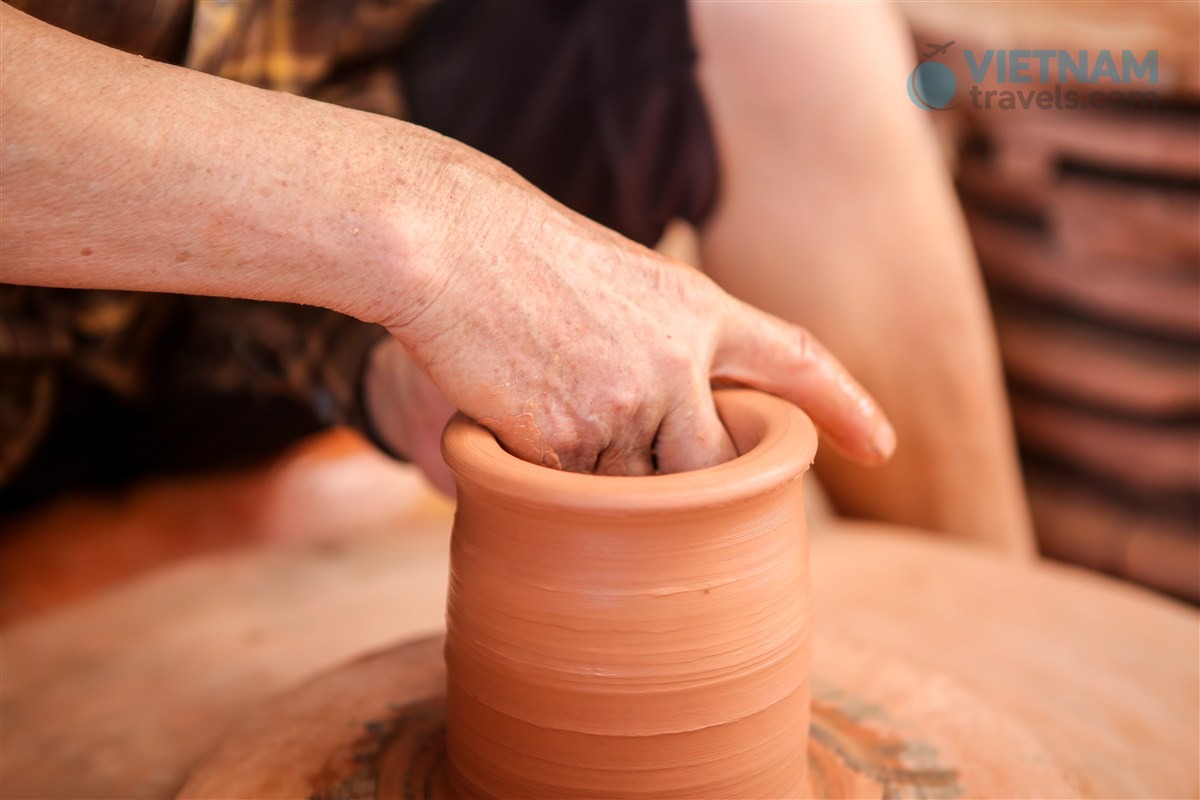
Hands shape the rim of a vessel while it turns on the wheel.
Is Phu Lang suitable for a day trip from Hanoi?
Yes. Arrange the workshop and return transport first, then decide whether the remaining time allows lunch or another stop. Travel time depends on your actual starting point and route.
Do I need to book a workshop?
Booking is advisable if you want a host, explanation or practical activity. An informal village walk does not guarantee access to working premises.
Can children try pottery making?
At a venue offering suitable activities, yes. Confirm ages, supervision, materials and the task involved. Not every production workshop is equipped to teach children.
Will I see a wood-fired kiln operating?
Only if a firing coincides with your appointment. Ask beforehand if that is important, and respect the host’s access restrictions.
Can I take my handmade piece home the same day?
Do not assume so. Freshly formed clay needs further processing. Agree what is included and whether later collection or delivery is practical.
Is Phu Lang pottery suitable for serving food?
That depends on the individual product. Ask about its intended use and supporting information rather than assuming every glazed item is tableware.
Plan Your Phu Lang Craft Village Visit
An artisan works on raised decoration; arrange your visit to learn which processes you can observe.
A worthwhile visit begins with a clear interest: observing production, understanding a ceramic style, trying an activity or choosing a piece for your home.
Build the day around that interest and allow time for the maker’s explanation. Phu Lang becomes more memorable when you leave knowing why a particular curve, surface or decoration caught your eye.
Contact us to discuss a Phu Lang craft village visit. Share your date, group size, children’s ages where relevant and preferred experience. We can help investigate suitable arrangements and confirm the details before you travel.
Make a craft village visit part of your Vietnam tours, with time to meet makers and explore at a comfortable pace.
Sources and References
Information reviewed on 27 November 2026. Historical and production sources provide background; individual workshops, activities, opening arrangements and charges require current confirmation.