Vietnam Entry Visa: Choose the Right Option for Your Trip
November 05, 20265 min read
Planning a Vietnam entry visa starts with choosing the right entry arrangement for your passport and itinerary. Compare visa exemption, e-visa and consular guidance, then check the documents and dates before you travel.
Information reviewed on 5 November 2026. Check current official rules before applying or traveling.
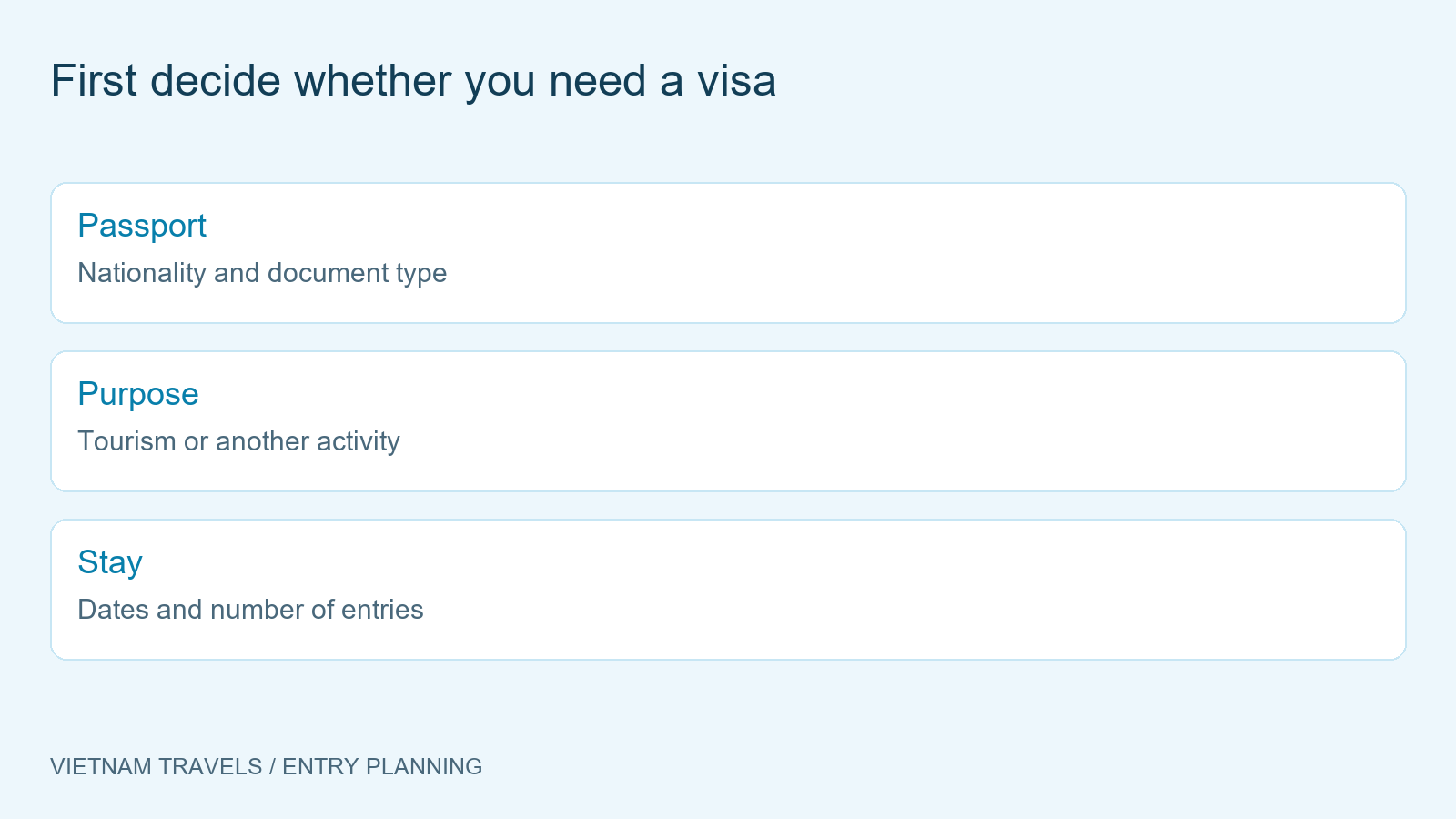
First decide whether you need a visa
First decide whether you need a visa: an illustrative planning checklist.
A Vietnam entry visa is one route to admission, but it is not the starting assumption for every passport. Begin with your nationality, passport type, intended activity and the length of the visit. Visa exemption and an issued visa are different arrangements, and an exemption available to one traveler does not automatically cover a companion.
Check the Ministry of Foreign Affairs visa exemption information, including its footnotes and effective dates. Agreements can distinguish ordinary passports from diplomatic or official passports. Tourism-specific schemes may also have different conditions from bilateral arrangements.
Write down a simple traveler profile before comparing options: the passport you will carry, the purpose of the journey, arrival and departure dates, and whether you will leave Vietnam and return. This makes advice from an airline, consulate or immigration authority much easier to apply correctly. For background, our visa-free travel overview helps explain the questions to ask without replacing the official rules.
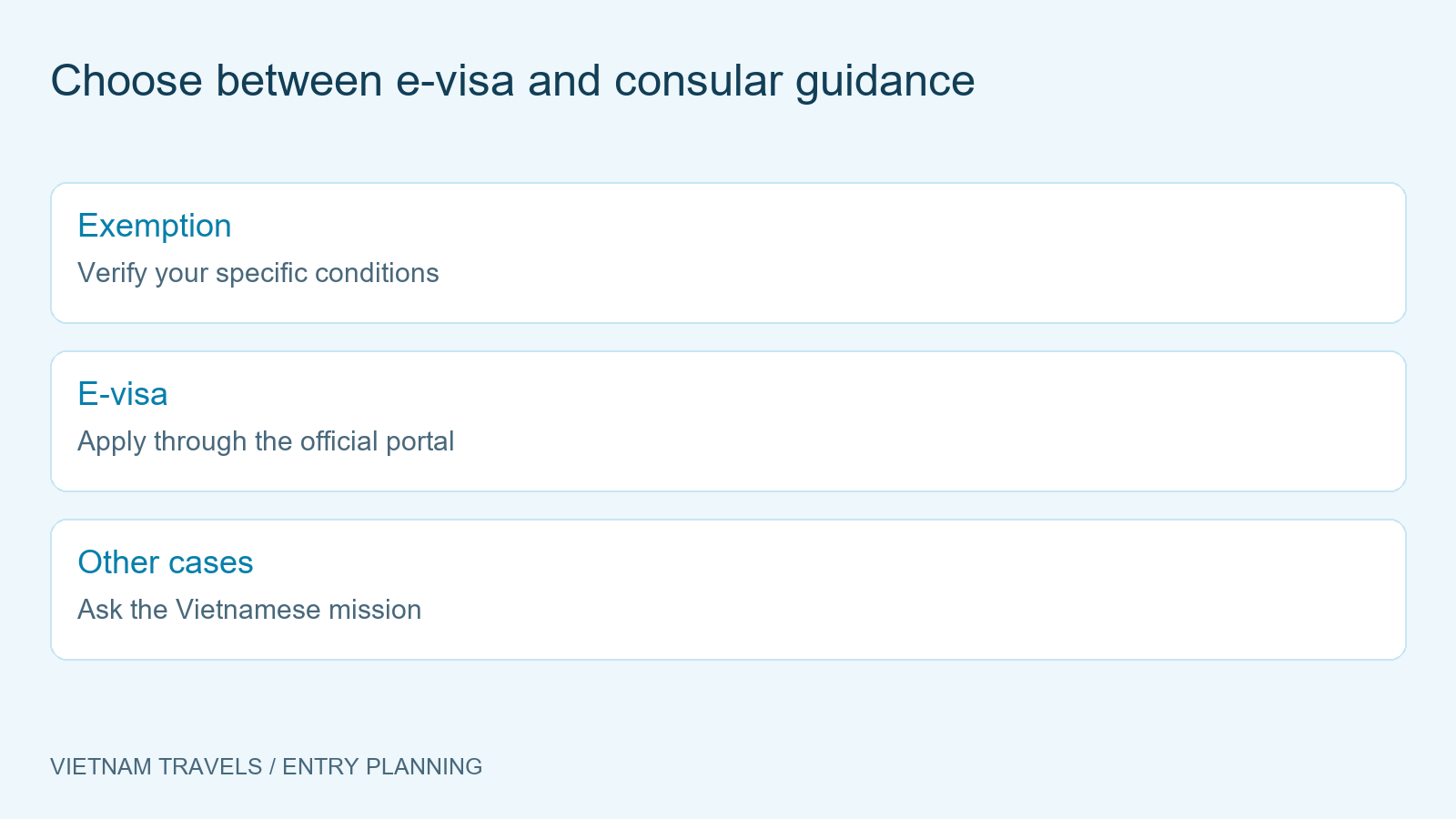
Choose between e-visa and consular guidance
Choose between e-visa and consular guidance: an illustrative planning checklist.
For travelers who need a visa, the Immigration Department's guidance describes an electronic visa with a maximum validity of 90 days and either single or multiple entry. The approved document determines your actual validity; the maximum is not an automatic allowance granted to every application.
The same official notice points applicants to evisa.gov.vn and thithucdientu.gov.vn. A commercial service can offer assistance, but it is distinct from the government application channel. Verify the domain before uploading passport information or paying.
Ask the relevant Vietnamese mission about circumstances that do not fit a straightforward visitor application, including uncertain passport eligibility or a travel purpose requiring another procedure. Do not assume a visitor entry arrangement authorizes employment or another regulated activity. A business meeting, a relocation and a beach holiday should not be treated as interchangeable simply because all involve a flight.
For the detailed online workflow, use our e-visa application guide. This article focuses on choosing and checking the entry arrangement rather than repeating every application screen.
Match the permission to the whole itinerary
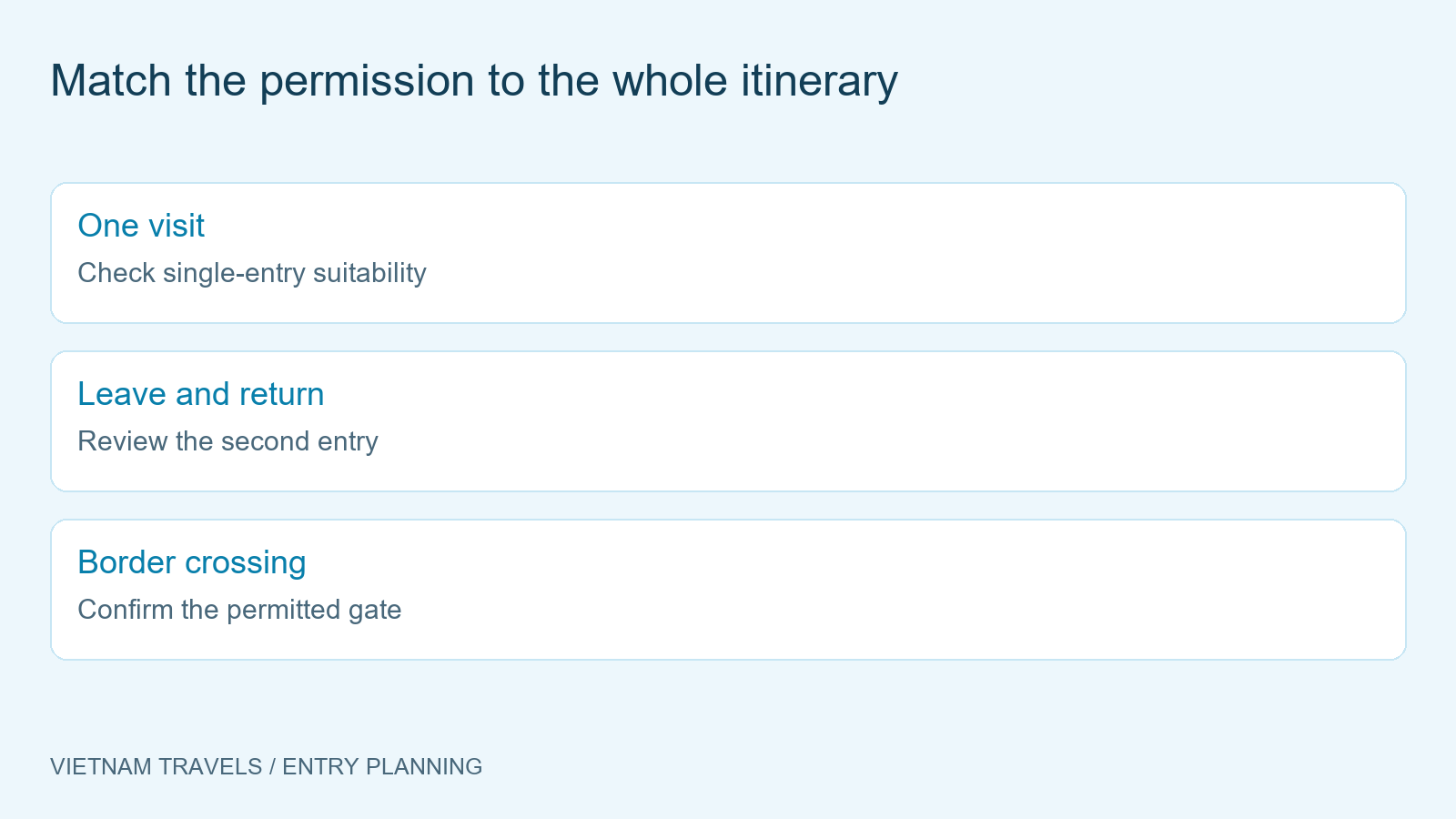
Match the permission to the whole itinerary: an illustrative planning checklist.
Build your entry plan around every international border crossing. A domestic flight between Hanoi and Da Nang differs from leaving Vietnam for a neighboring country and later coming back. The return leg needs its own entry assessment, even when both flights form part of one holiday.
One uninterrupted visit: compare the intended stay with the dates and conditions of your exemption or visa.
A regional side trip: check the return entry before you book. Do not assume that an unused part of an earlier stay remains available after departure.
An overland or sea arrival: verify the exact checkpoint against the government's current permitted border-gate list.
Check both the document's start date and its end date. Arriving later does not justify treating the printed end date as movable. If a carrier changes your route or travel date, revisit the entry plan rather than assuming that a ticket change also changes immigration permission.
For an itinerary with several cities, our international flight connections overview can help you compare gateways. Confirm the actual operating flight and entry conditions separately before committing.
Prepare documents and allow time for corrections
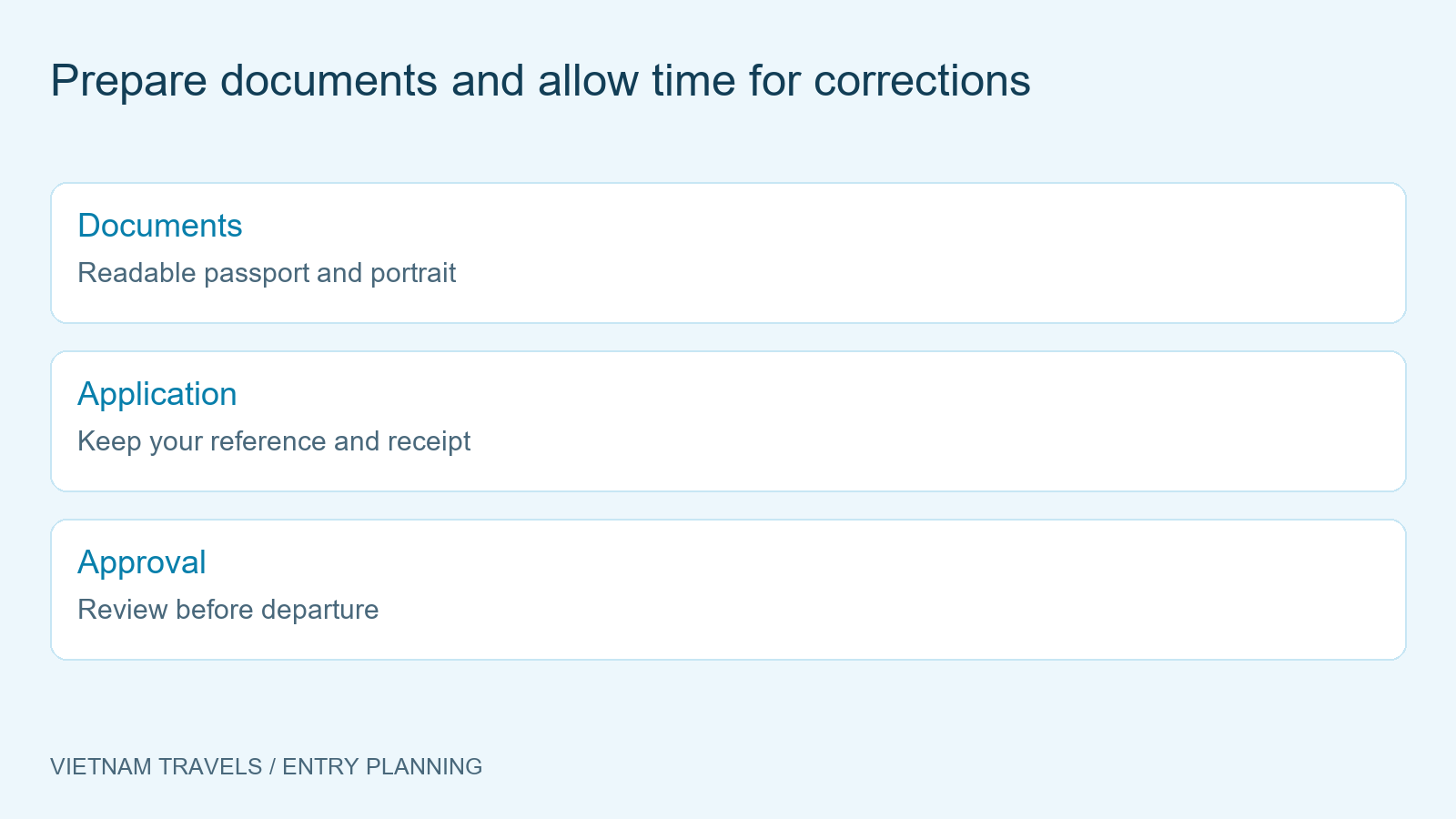
Prepare documents and allow time for corrections: an illustrative planning checklist.
The Public Service Portal of the Ministry of Public Security describes submitting application information, a portrait and the passport biodata page, then paying the fee and checking the outcome using the application code. Follow the live upload instructions rather than copying specifications from an old screenshot.
The published government fees are US$25 for a single-entry e-visa and US$50 for multiple entry. The procedure states three working days after receipt of the application and fee. Keep a practical buffer for questions or corrections; a payment receipt is not approval and the administrative timeline should not be treated as a guaranteed boarding deadline.
Compare details directly with the passport. Check the document number and dates instead of copying from a previous hotel booking.
Review the itinerary. Make sure entry type, intended dates and the planned border gate fit the journey.
Keep the reference. Save the application code and payment evidence in a place you can access while traveling.
Inspect the result. Check the approval before departure and retain a printed copy as well as an accessible digital version.
If the result contains an error, seek instructions through the official channel before traveling. Avoid sending multiple speculative applications or paying an unverified contact who promises a guaranteed outcome.
Quick Recap
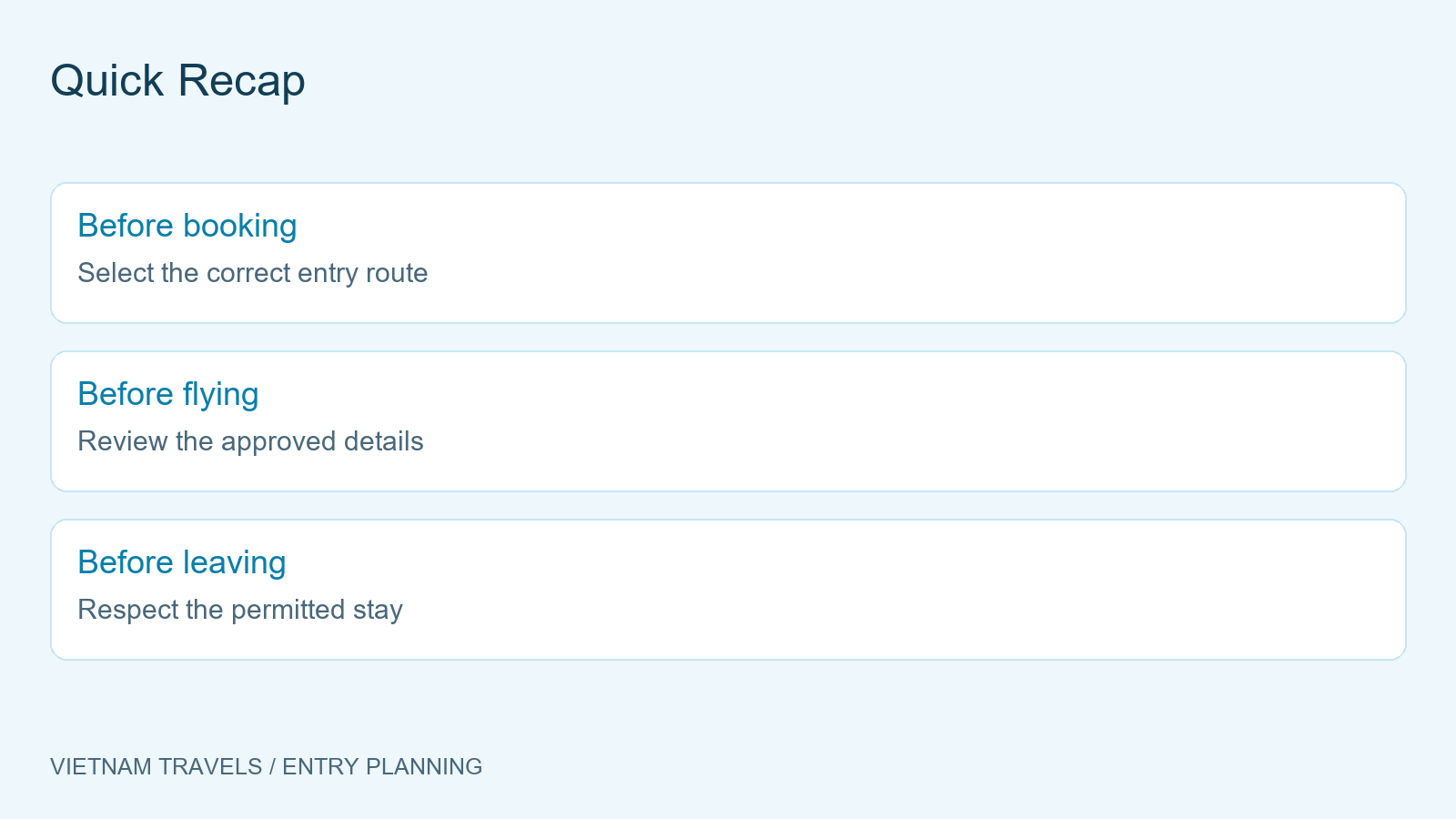
Quick Recap: an illustrative planning checklist.
The safest way to plan a Vietnam entry visa is to treat it as a document-and-itinerary decision. Establish whether an exemption applies, choose the appropriate visa route if needed, and match the permission to every arrival in the country. Keep the official approval separate from the application receipt.
At departure and arrival, carry the passport used for the application and keep the visa or relevant supporting information accessible. Follow the conditions confirmed by the immigration authority. A booking confirmation or an agency message is not a substitute for checking your own document.
Review your permitted stay after arrival and seek official guidance early if your plans change. Do not assume an extension, a new visa or a short trip across the border will resolve a problem automatically. For situations involving an unusual passport, a different travel purpose or unclear eligibility, contact the relevant Vietnamese mission or Immigration Department before making a non-refundable commitment.